Loading...
Done
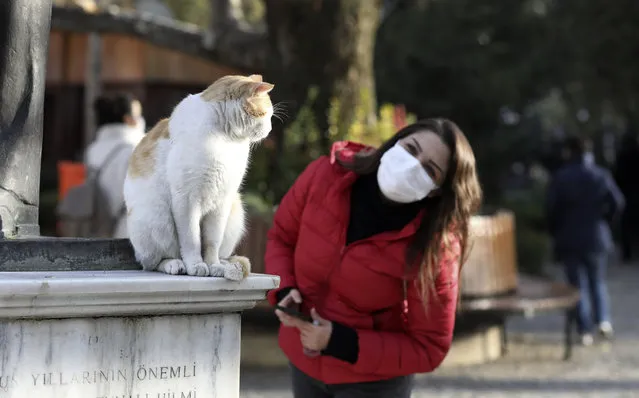
A woman wearing a mask to help protect against the spread of coronavirus, tries to communicate with Efe, a cat living in Kugulu public garden, in Ankara, Turkey, Monday, November 30, 2020.Turkey's President Recep Tayyip Erdogan has announced Monday the most widespread lockdown so far amid a surge in COVID-19 infections, extending curfews to weeknights and full lockdowns over weekends. (Photo by Burhan Ozbilici/AP Photo)

A woman wearing a mask to help protect against the spread of coronavirus, tries to communicate with Efe, a cat living in Kugulu public garden, in Ankara, Turkey, Monday, November 30, 2020.Turkey's President Recep Tayyip Erdogan has announced Monday the most widespread lockdown so far amid a surge in COVID-19 infections, extending curfews to weeknights and full lockdowns over weekends. (Photo by Burhan Ozbilici/AP Photo)
Details
29 Dec 2020 00:03:00
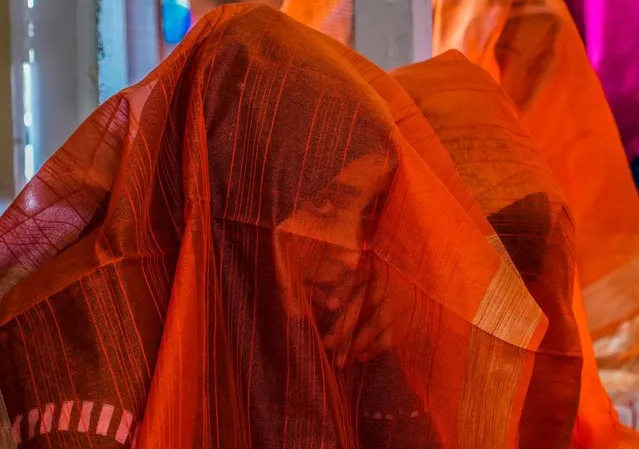
A Kashmiri Muslim bride looks through her veil during a mass wedding event in Srinagar, Indian controlled Kashmir, Thursday, June 15, 2023. Mass weddings in India are organized by social organizations primarily to help the economically backward families who cannot afford the high ceremony costs as well as the customary dowry and expensive gifts that are still prevalent in many communities. (Photo by Mukhtar Khan/AP Photo)

A Kashmiri Muslim bride looks through her veil during a mass wedding event in Srinagar, Indian controlled Kashmir, Thursday, June 15, 2023. Mass weddings in India are organized by social organizations primarily to help the economically backward families who cannot afford the high ceremony costs as well as the customary dowry and expensive gifts that are still prevalent in many communities. (Photo by Mukhtar Khan/AP Photo)
Details
22 Jun 2023 02:21:00
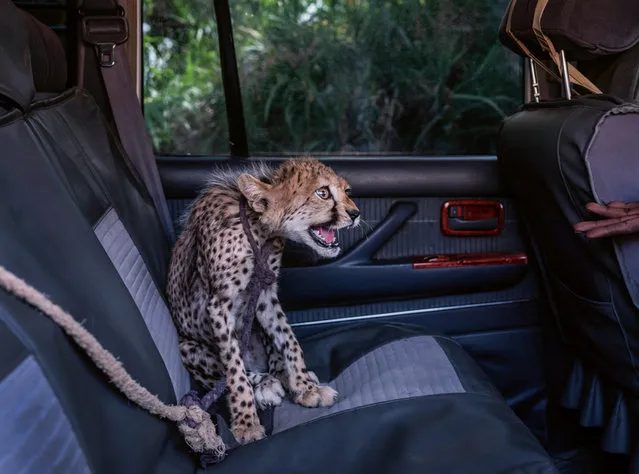
A five-month-old cheetah seated in the back of a Land Cruiser growls at an outstretched hand after being taken from traffickers in Ethiopia and driven to Harirad, Somaliland, in 2020. This photo is part of the work of more than 100 artists in Why We Photograph Animals, a new collection of wildlife photography that aims to help understand why people have photographed animals at different points in history and what it means in the present. (Photo by Nichole Sobecki/Thames & Hudson)

A five-month-old cheetah seated in the back of a Land Cruiser growls at an outstretched hand after being taken from traffickers in Ethiopia and driven to Harirad, Somaliland, in 2020. This photo is part of the work of more than 100 artists in Why We Photograph Animals, a new collection of wildlife photography that aims to help understand why people have photographed animals at different points in history and what it means in the present. (Photo by Nichole Sobecki/Thames & Hudson)
Details
28 Apr 2024 03:15:00
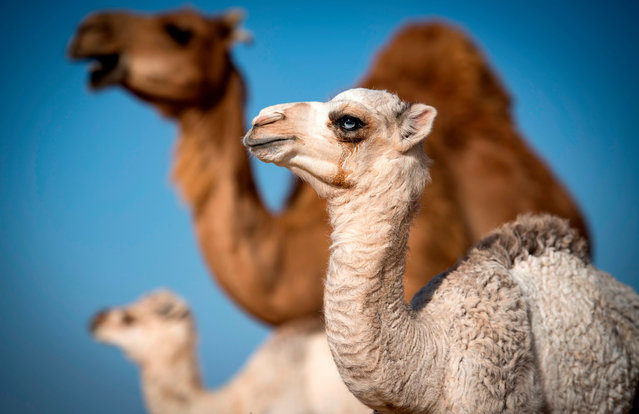
A camel calf is seen among a herd in the desert near Dakhla in Morocco-administered Western Sahara, on October 13, 2019. In the Oued Eddahab desert in Western Sahara, Habiboullah Dlimi raises dairy and racing camels just like his ancestors used to, but with a little help from modern technology. While his animals roam free and are milked traditionally, by hand, at dawn and dusk, they are watched over by hired herders and Dlimi follows GPS coordinates across the desert in a 4X4 vehicle to reach them. (Photo by Fadel Senna/AFP Photo)

A camel calf is seen among a herd in the desert near Dakhla in Morocco-administered Western Sahara, on October 13, 2019. In the Oued Eddahab desert in Western Sahara, Habiboullah Dlimi raises dairy and racing camels just like his ancestors used to, but with a little help from modern technology. While his animals roam free and are milked traditionally, by hand, at dawn and dusk, they are watched over by hired herders and Dlimi follows GPS coordinates across the desert in a 4X4 vehicle to reach them. (Photo by Fadel Senna/AFP Photo)
Details
24 Nov 2019 00:03:00
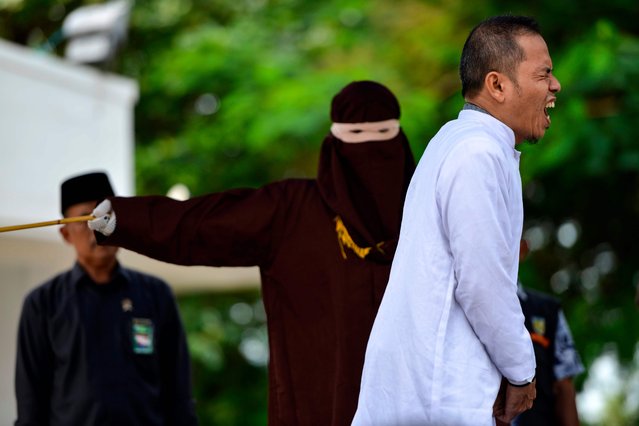
Aceh Ulema Council (MPU) member Mukhlis reacts as he is whipped in public by a member of the Sharia police in Banda Aceh on October 31, 2019. An Indonesian man working for an organisation which helped draft strict religious laws ordering adulterers to be flogged was himself publically whipped on October 31 after he was caught having an affair with a married woman. (Photo by Chaideer Mahyuddin/AFP Photo)

Aceh Ulema Council (MPU) member Mukhlis reacts as he is whipped in public by a member of the Sharia police in Banda Aceh on October 31, 2019. An Indonesian man working for an organisation which helped draft strict religious laws ordering adulterers to be flogged was himself publically whipped on October 31 after he was caught having an affair with a married woman. (Photo by Chaideer Mahyuddin/AFP Photo)
Details
26 Dec 2019 00:01:00
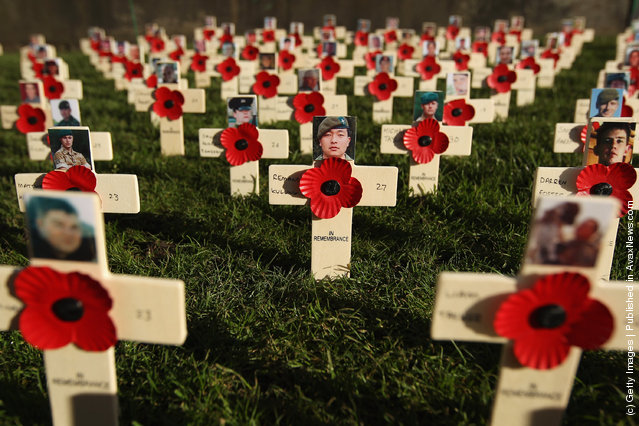
Scotlands First Field Of Remembrance Opens Ahead Of Armistice Day

Members of the public view crosses in Scotland?s first Field of Remembrance in Princess Street Gardens on November 7, 2011 in Edinburgh, Scotland. Volunteers helped plant approximately 11,000 remembrance crosses as a temporary memorial to mark the 90th anniversary of the Scottish Poppy Appeal. (Photo by Jeff J Mitchell/Getty Images)
Details
08 Nov 2011 12:16:00
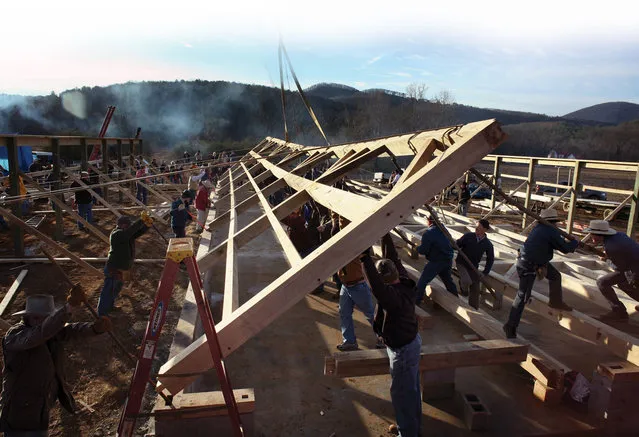
Ohio Amish Barn Raising

Teacher Scott Miller recently helped his Amish neighbors with a barn raising. Along with lending a hand in the process, Miller set up his camera to photograph the event. From 7 a.m. until 5 p.m., Miller's camera snapped away as the community created their newest building from the ground up.
Details
09 Sep 2014 09:54:00
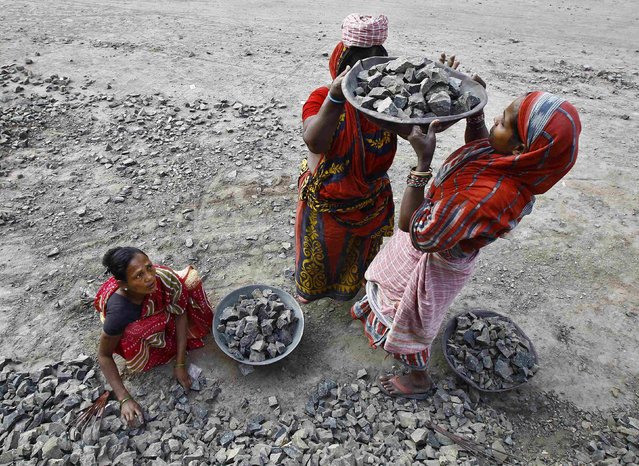
Women labourers work at the construction site of a road in Kolkata January 8, 2015. Across towns and cities in India, it is not uncommon to see women cleaning building sites, carrying bricks and or shoveling gravel - helping construct the infrastructure necessary for the country's economic and social development. (Photo by Rupak De Chowdhuri/Reuters)

Women labourers work at the construction site of a road in Kolkata January 8, 2015. Across towns and cities in India, it is not uncommon to see women cleaning building sites, carrying bricks and or shoveling gravel – helping construct the infrastructure necessary for the country's economic and social development. They help build roads, railway tracks, airports, and offices. They lay pipes for clean water supplies, cables for telecommunications, and dig the drains for sewage systems. But although women make up at least 20 percent of India's 40 million construction workers, they are less recognized than male workers with lower pay and often prone to safety hazards and sexual harassment. They are often unaware of their rights or scared to complain, say activists now trying to campaign for better treatment of women in the construction industry. (Photo by Rupak De Chowdhuri/Reuters)
Details
15 Jan 2015 13:47:00