Loading...
Done
Strange Children by John Seven

«My God! My Shoulder!», “Re-Gruntled”, 2011. (Photo by John Seven)
Details
07 Jul 2012 10:57:00
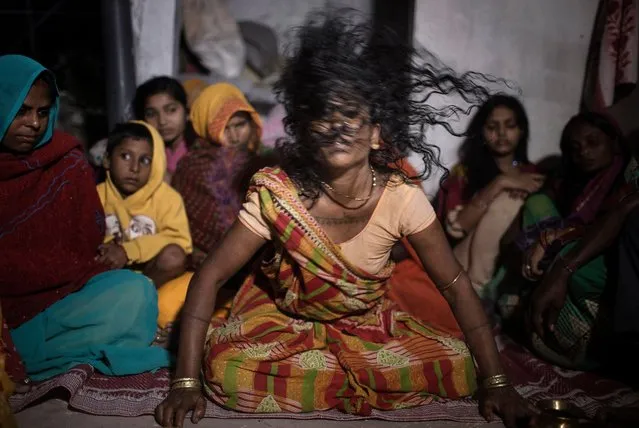
Marani Devi Chaudhary (C), aged 40, performs a ritual in front of shaman Paltan Yadav (unseen) at her home in Rajaur village in Dhanusha district, Nepal, 02 November 2017. The shaman identified Marani Devi to be possessed by their lineage god who was dissatisfied by their worship is thought by the family to have caused them misfortune and is even feared lead to their death. Therefore Marani Devi spent 1,500 USD to perform a healing ritual at the Ghost Festival held at the banks of Kamala River in Dhanusha district two days later. Every family or community has their own sacred god, called 'Kuldevta' in Nepali which means family deity or lineage god. Only family members or people within communities of the same caste can worship to the deity. They have their own rules and regulations of worship which varies from one family and community to another. Being unable to follow the rules and regulations or carry out worship is believed to cause misfortune. (Photo by Narendra Shrestha/EPA/EFE)

Marani Devi Chaudhary (C), aged 40, performs a ritual in front of shaman Paltan Yadav (unseen) at her home in Rajaur village in Dhanusha district, Nepal, 02 November 2017. The shaman identified Marani Devi to be possessed by their lineage god who was dissatisfied by their worship is thought by the family to have caused them misfortune and is even feared lead to their death. (Photo by Narendra Shrestha/EPA/EFE)
Details
17 Nov 2017 06:53:00
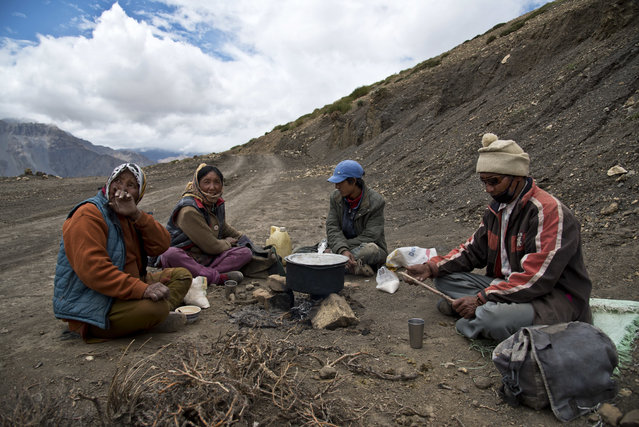
In this August 17, 2016, photo, from left to right, Chhering Chodom, 60, Tashi Yangzom, 50, Lobsang Chhering, 27, and Dorje Tandup, 58, drink milk tea on the side of the road. For centuries, the sleepy valley nestled in the Indian Himalayas remained a hidden Buddhist enclave forbidden to outsiders. Enduring the harsh year-round conditions of the high mountain desert, the people of Spiti Valley lived by a simple communal code – share the Earth's bounty, be hospitable to neighbors, and eschew greed and temptation at all turns. That's all starting to change, for better or worse. Since India began allowing its own citizens as well as outsiders to visit the valley in the early 1990s, tourism and trade have boomed. And the marks of modernization, such as solar panels, asphalt roads and concrete buildings, have begun to appear around some of the villages that dot the remote landscape at altitudes above 4,000 meters (13,000 feet). (Photo by Thomas Cytrynowicz/AP Photo)

In this August 17, 2016, photo, from left to right, Chhering Chodom, 60, Tashi Yangzom, 50, Lobsang Chhering, 27, and Dorje Tandup, 58, drink milk tea on the side of the road. For centuries, the sleepy valley nestled in the Indian Himalayas remained a hidden Buddhist enclave forbidden to outsiders. Enduring the harsh year-round conditions of the high mountain desert, the people of Spiti Valley lived by a simple communal code – share the Earth's bounty, be hospitable to neighbors, and eschew greed and temptation at all turns. That's all starting to change, for better or worse. (Photo by Thomas Cytrynowicz/AP Photo)
Details
15 Sep 2016 09:22:00
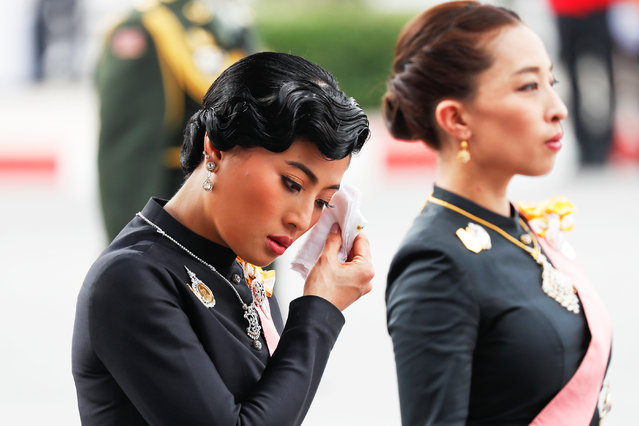
Thai Princess Bajrakitiyabha (R) and Princess Sirivannavari Nariratana take part in the funeral procession for the late Thai king Bhumibol Adulyadej in Bangkok on October 26, 2017 A sea of black- clad mourners massed across Bangkok' s historic heart early on October 26 as funeral rituals began for King Bhumibol Adulyadej, a revered monarch whose passing after a seven- decade reign has left Thailand bereft of its only unifying figure. (Photo by Damir Sagolj/Reuters)

Thai Princess Bajrakitiyabha (R) and Princess Sirivannavari Nariratana take part in the funeral procession for the late Thai king Bhumibol Adulyadej in Bangkok on October 26, 2017 A sea of black- clad mourners massed across Bangkok' s historic heart early on October 26 as funeral rituals began for King Bhumibol Adulyadej, a revered monarch whose passing after a seven- decade reign has left Thailand bereft of its only unifying figure. (Photo by Damir Sagolj/Reuters)
Details
27 Oct 2017 08:59:00
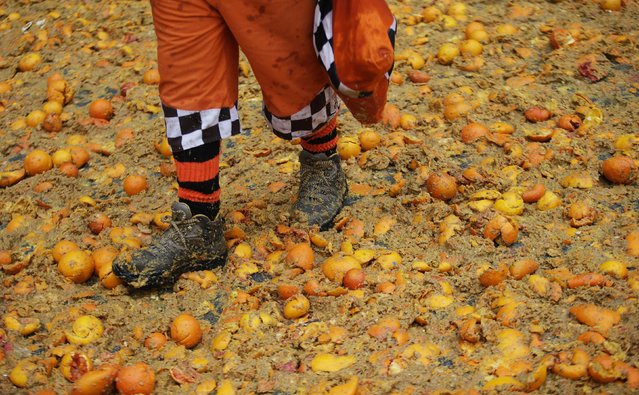
A member of a rival team walks during an annual carnival battle with oranges in the northern Italian town of Ivrea February 15, 2015. Dressed up as Middle Age kings' guards, a group of men ride in a horse-drawn carriage and pelt “foot soldiers” with oranges as thousands of people gather to re-enact a Middle Age battle when the townsfolk of Ivrea overthrew an evil king. (Photo by Max Rossi/Reuters)

A member of a rival team walks during an annual carnival battle with oranges in the northern Italian town of Ivrea February 15, 2015. Dressed up as Middle Age kings' guards, a group of men ride in a horse-drawn carriage and pelt “foot soldiers” with oranges as thousands of people gather to re-enact a Middle Age battle when the townsfolk of Ivrea overthrew an evil king. In a strange twist, instead of swords and cross bows, these days the weapons of choice are oranges. (Photo by Max Rossi/Reuters)
Details
16 Feb 2015 13:06:00
This screengrab from Thai TV Pool video taken on May 1, 2019 shows a ceremony in which Thailand's King Maha Vajiralongkorn “legally married” Suthida Vajiralongkorn na Ayudhya in Bangkok. Thailand announced on May 1, 2019 that King Maha Vajiralongkorn's long-time consort had become his fourth wife, bestowed with the title Queen Suthida – a surprise move just days before his coronation. (Photo by Bureau of the Royal Household via Reuters)

This screengrab from Thai TV Pool video taken on May 1, 2019 shows a ceremony in which Thailand's King Maha Vajiralongkorn “legally married” Suthida Vajiralongkorn na Ayudhya in Bangkok. Thailand announced on May 1, 2019 that King Maha Vajiralongkorn's long-time consort had become his fourth wife, bestowed with the title Queen Suthida – a surprise move just days before his coronation. (Photo by Bureau of the Royal Household via Reuters)
Details
03 May 2019 00:07:00
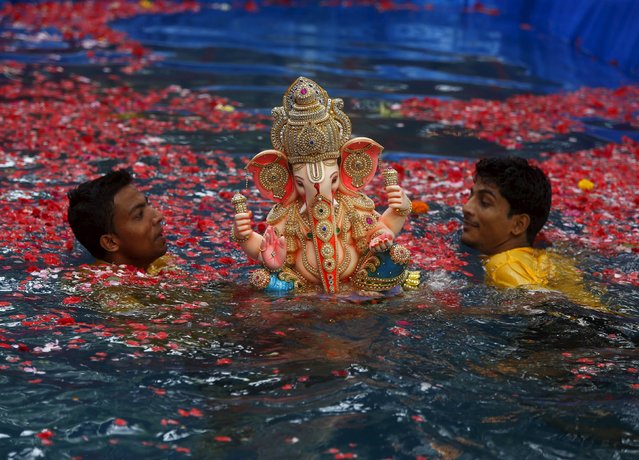
Volunteers carry an idol of the Hindu elephant god Ganesh, the deity of prosperity, in a pond for its immersion during the ten-day-long Ganesh Chaturthi festival in Mumbai, India, September 18, 2015. (Photo by Shailesh Andrade/Reuters)

Volunteers carry an idol of the Hindu elephant god Ganesh, the deity of prosperity, in a pond for its immersion during the ten-day-long Ganesh Chaturthi festival in Mumbai, India, September 18, 2015. During the festival, the idols will be taken through the streets in a procession accompanied by dancing and singing, and will be immersed in a river or the sea in accordance with the Hindu faith. (Photo by Shailesh Andrade/Reuters)
Details
19 Sep 2015 12:55:00
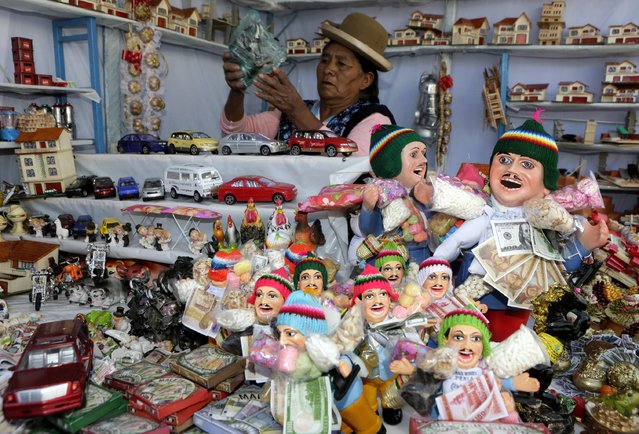
A woman sells statues of the Ekeko, god of fortune, at the traditional “Alasitas” fair in La Paz January 24, 2015. During the fair, Bolivians buy miniature versions of goods like cars, money and houses they would like to own in real life during the year. (Photo by David Mercado/Reuters)

A woman sells statues of the Ekeko, god of fortune, at the traditional “Alasitas” fair in La Paz January 24, 2015. During the fair, Bolivians buy miniature versions of goods like cars, money and houses they would like to own in real life during the year. (Photo by David Mercado/Reuters)
Details
25 Jan 2015 09:59:00