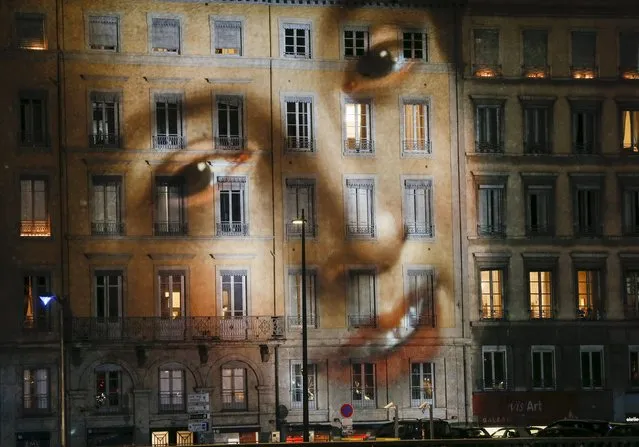
A light installation is seen on the facade on the banks of the Saone river to pay tribute to the victims of the Paris attacks in Lyon, France, December 8, 2015. (Photo by Robert Pratta/Reuters)
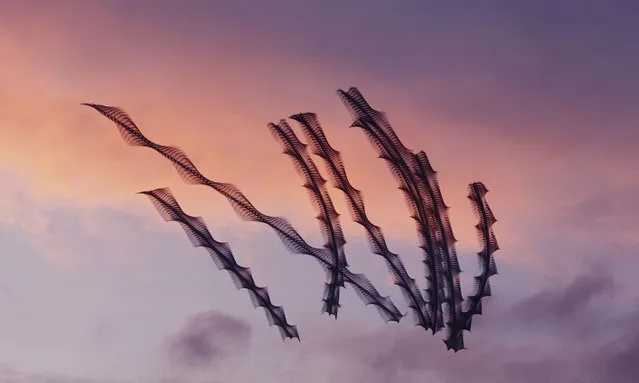
The Spanish photographer Xavi Bou digitally combines sequential pictures of birds to create a single image, or chronophotograph, that reveals the shapes of their flight paths against Catalonian skies. His work shows the variety and beauty to be found in the daily activities of the local birds, including spiralling storks, swooping starlings and giddy swifts. Here: European herring gulls at Llobregat Delta. (Photo by Xavi Bou/Rex Features/Shutterstock)
New York Islanders left wing Pierre Engvall and Columbus Blue Jackets Sean Kuraly (7) fight in the third period at UBS Arena on January 20, 2025 in Elmont, New York. (Photo by Wendell Cruz/USA TODAY Sports via Reuters)
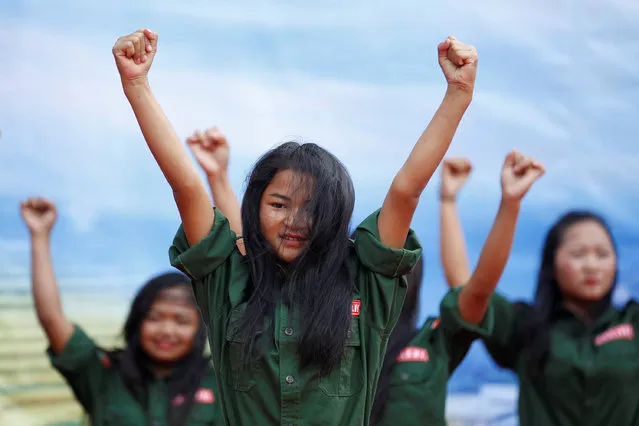
Ethnic Wa performer dressed as United Wa State Army (UWSA) soldiers perform a traditional dance in Mongmao, Wa territory in northeast Myanmar October 1, 2016. (Photo by Soe Zeya Tun/Reuters)
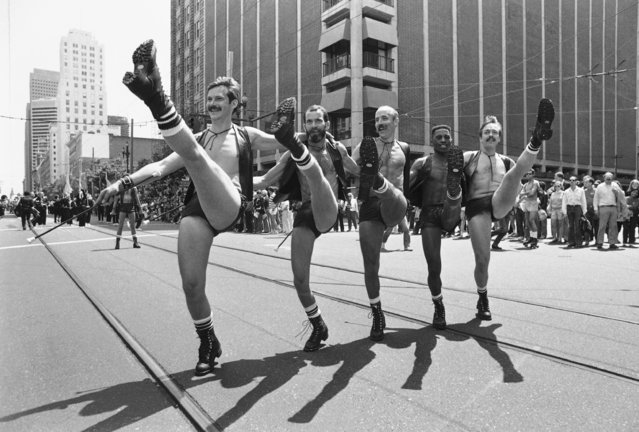
Members of the San Francisco Gay Freedom Day Marching Band and Twirling Corps do their thing down San Francisco's Market Street, June 27, 1982. Police estimate the crowd to be 300,000 for the Lesbian/Gay Freedom Day parade and rally. (Photo by Carl Viti/AP Photo)
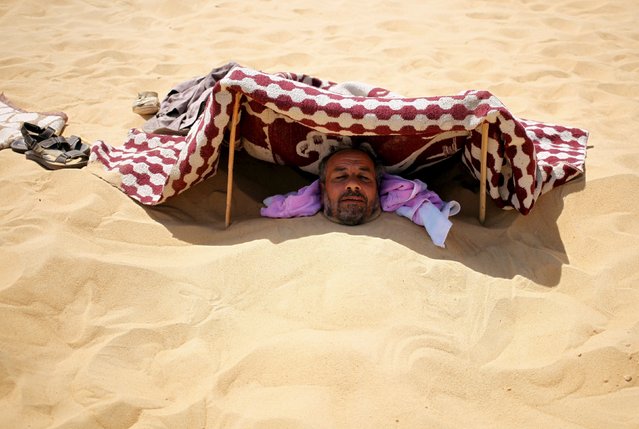
A patient buried in the hot sand looks out from under a shade that protects his face from the sun in Siwa, Egypt, August 12, 2015. In the searing heat of summer in western Egypt, at the hottest time of the day, sufferers of rheumatism, joint pain, infertility or impotence lie buried neck-deep in the sand of Siwa near Dakrour Mountain. Locals say taking a sand bath is a natural therapy with powers to cure many medical conditions. (Photo by Asmaa Waguih/Reuters)
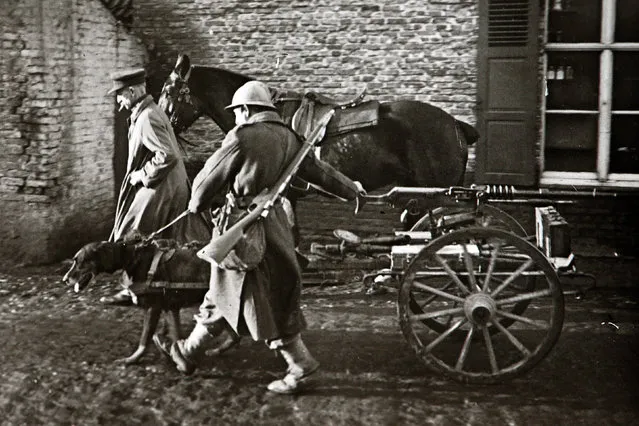
An undated archive picture shows a dog pulling a Belgian machine gun at an unknown location in northern France. A Viscount in the Armoured Cavalry Branch of the French Army left behind a collection of hundreds of glass plates taken during World War One (WWI) that have never before been published. The images, by an unknown photographer, show the daily life of soldiers in the trenches, destruction of towns and military leaders. The year 2014 marks the 100th anniversary of the start of WWI. (Photo by Collection Odette Carrez/Reuters)
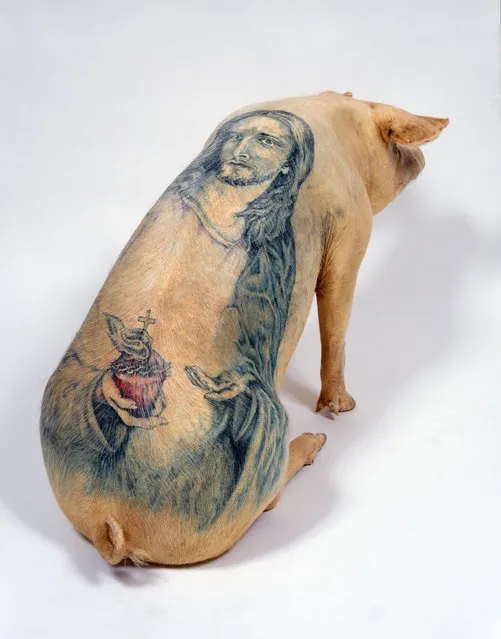
Wim Delvoye is a notorious tattoo artist, who became famous when he started tattooing live pigs. He first began in 1997 and after animal rights activists found out about what he was doing, he had to move to China to continue his business. There is nothing special about the tattoos that Wim Delvoye creates, they look mediocre at best, and the only reason why he’s famous is his acts of animal cruelty. Nevertheless, Wim states that the pigs feel just fine and are well fed and taken care off. Full anesthesia is used to ensure that the pig doesn’t feel pain during the course of the whole procedure. During this time three tattoo artists work on the tattoo simultaneously to complete it as quickly as possible. Skins of those pigs are then sold for as much as £50k a piece.