Loading...
Done
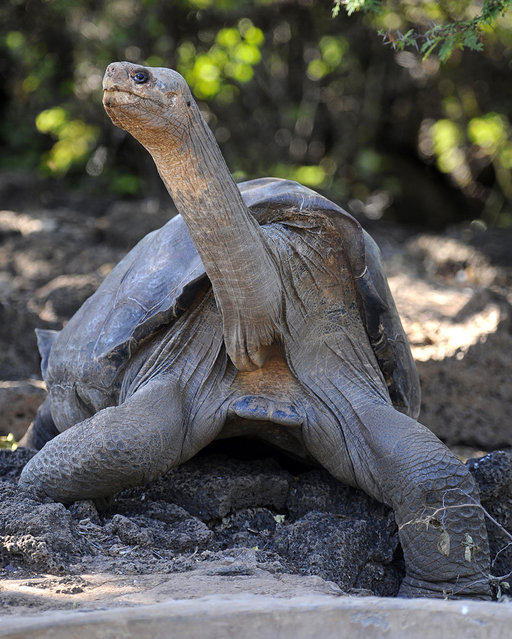
Lonesome George

“The last known individual of the subspecies was a male named Lonesome George (Spanish: El Solitario Jorge/George), who died on 24 June 2012. In his last years, he was known as the rarest creature in the world. George served as a potent symbol for conservation efforts in the Galápagos and internationally”. – Wikipedia. (Photo by Rodrigo Buendia/AFP)
Details
26 Jun 2012 14:05:00
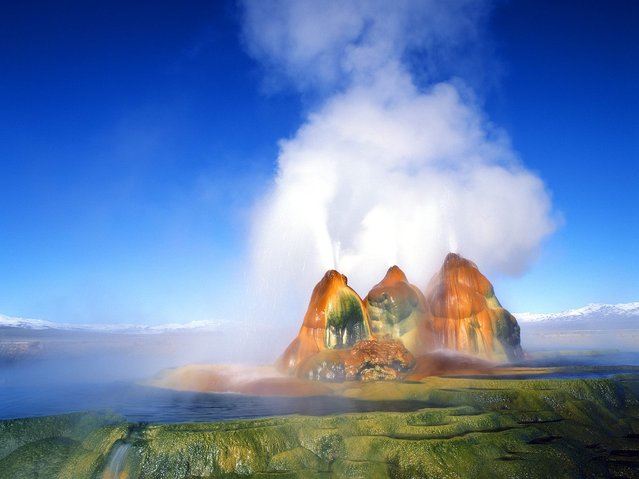
Black Rock Desert

The Black Rock Desert is an arid region of lava beds and playa, or alkali flats, situated in the Black Rock Desert-High Rock Canyon Emigrant Trails National Conservation Area, a silt playa 100 miles north of Reno that encompasses more than 300,000 acres of land and contains more than 120 miles of historic trails. It is in the northern Nevada section of the Great Basin with a lakebed that is a dry remnant of Pleistocene Lake Lahontan.
Details
22 Mar 2013 11:01:00
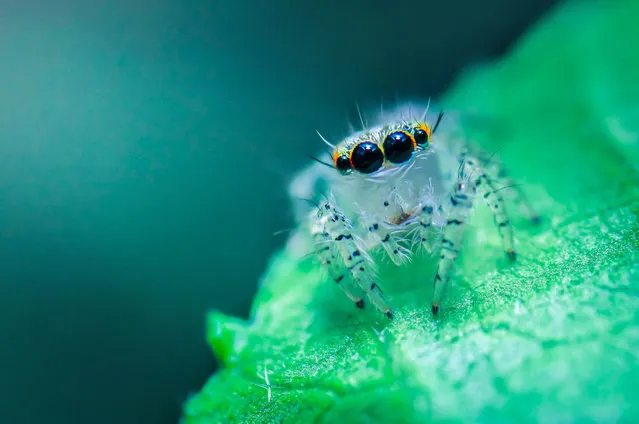
Heavy bodied jumping spider by Md Rashuidul Rabby, age 23, from Bangladesh. (Photo by Md Rashuidul Rabby/WWD2017)

Ten finalists capture the theme of “through young eyes” in this young photographers’ competition that aims to engage youth around the world in wildlife conservation. Here: Heavy bodied jumping spider by Md Rashuidul Rabby, age 23, from Bangladesh. (Photo by Md Rashuidul Rabby/WWD2017)
Details
06 Mar 2017 00:00:00
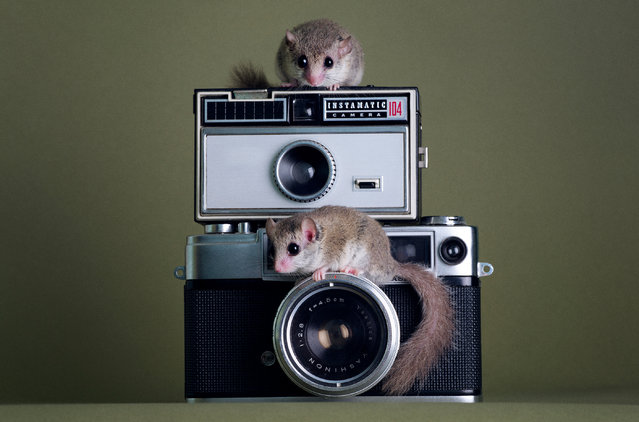
“The most difficult aspect of this shoot was to get each African pygmy dormouse – also known as micro squirrels – on to a separate camera. Once in place, they needed to remain still long enough to get them both in the frame and looking at me. Often solitary, they naturally wanted to move away”. (Photo by David Yeo/Leica Studio Mayfair/The Guardian)

David Yeo’s photography places naturally small species alongside animals that have been selectively bred to be tiny and cute. Here: “The most difficult aspect of this shoot was to get each African pygmy dormouse – also known as micro squirrels – on to a separate camera. Once in place, they needed to remain still long enough to get them both in the frame and looking at me. Often solitary, they naturally wanted to move away”. (Photo by David Yeo/Leica Studio Mayfair/The Guardian)
Details
24 Oct 2017 08:20:00
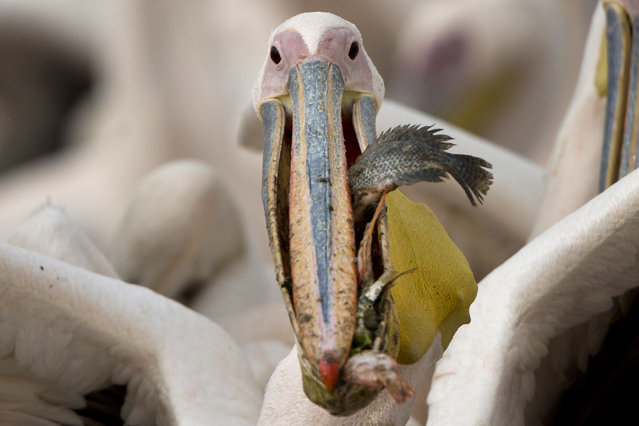
A Great White Pelicans eats fish in the Mishmar HaSharon reservoir, Israel, Wednesday, November 4, 2015. Thousands of Pelicans stop in the reservoir for food provided by the Israeli nature reserves authority as they make their way to Africa. (Photo by Ariel Schalit/AP Photo)

A Great White Pelicans eats fish in the Mishmar HaSharon reservoir, Israel, Wednesday, November 4, 2015. Thousands of Pelicans stop in the reservoir for food provided by the Israeli nature reserves authority as they make their way to Africa. (Photo by Ariel Schalit/AP Photo)
Details
11 Nov 2015 08:04:00
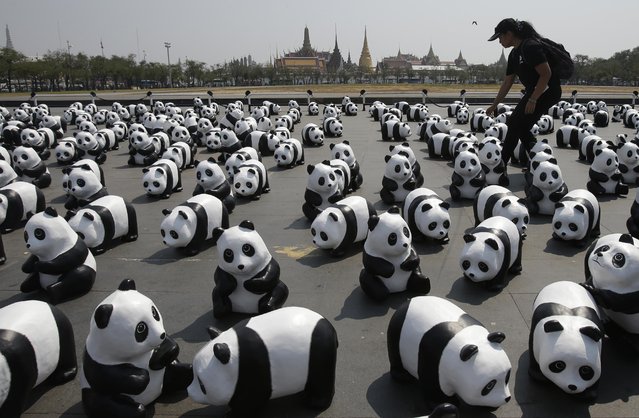
A worker displays paper pandas created by French artist Paulo Grangeon in front of the Grand Palace in Bangkok, Thailand, Friday, March 4, 2016. The exhibit is part of the World Wide Fund's project where the 1600 paper pandas symbolize the last pandas still present in nature.(Photo by Sakchai Lalit/AP Photo)

A worker displays paper pandas created by French artist Paulo Grangeon in front of the Grand Palace in Bangkok, Thailand, Friday, March 4, 2016. The exhibit is part of the World Wide Fund's project where the 1600 paper pandas symbolize the last pandas still present in nature.(Photo by Sakchai Lalit/AP Photo)
Details
05 Mar 2016 12:09:00
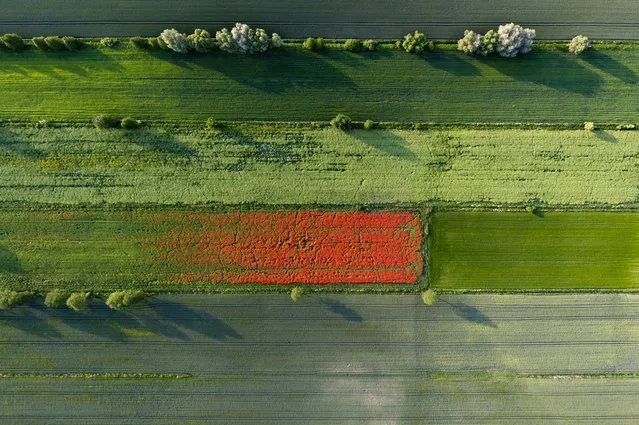
A view over fields of grain in Spring white chamomile, blue cornflower and other weeds growing amongst the grain sprouts. (Photo by Kacper Kowalski/Panos Pictures)

In his book “Side Effects”, aerial photographer Kacper Kowalski took to the skies to paint a portrait of the complex relationship between humans and nature. From the sky, he captured where nature and civilization collide into aesthetic, abstract colors and shapes. Photo: A view over fields of grain in Spring chamomile, cornflower and other weeds growing amongst the grain sprouts. (Photo by Kacper Kowalski/Panos Pictures)
Details
04 Sep 2014 08:19:00
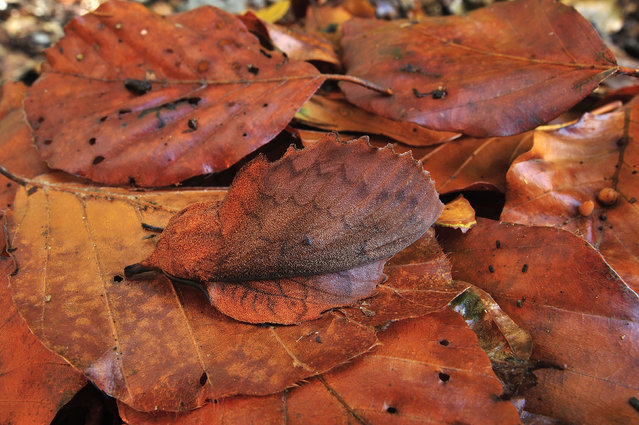
The camouflage mappet moth looks like a fall lead in Switzerland. (Photo by Thomas Marent/Caters News/Ardea)

Whether they are the hunter or the hunted, these camouflage animals show natures incredible ability to blend in with its surroundings. Pictured perfectly concealed against their natural environment, the stunning pictures show the amazing lengths some animals will go to to stay out of sight. Here: The camouflage mappet moth looks like a fall lead in Switzerland. (Photo by Thomas Marent/Caters News/Ardea)
Details
09 Oct 2014 12:58:00