Loading...
Done
Damaged vehicles sit on Yeongjong Bridge in Incheon, South Korea, Wednesday, February 11, 2015. Two people were killed and at least 42 were injured on Wednesday after a pileup involving about 100 vehicles in foggy weather on the bridge near the Incheon International Airport, South Korean officials said. (Photo by Suh Myung-gon/AP Photo/Yonhap)

Damaged vehicles sit on Yeongjong Bridge in Incheon, South Korea, Wednesday, February 11, 2015. Two people were killed and at least 42 were injured on Wednesday after a pileup involving about 100 vehicles in foggy weather on the bridge near the Incheon International Airport, South Korean officials said. (Photo by Suh Myung-gon/AP Photo/Yonhap)
Details
12 Feb 2015 12:20:00
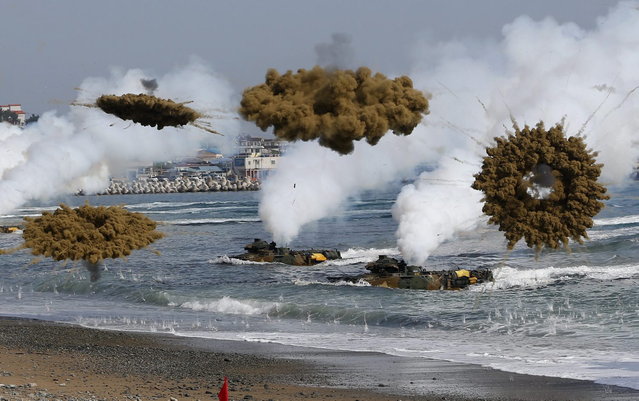
Amphibious assault vehicles of the South Korean Marine Corps throw smoke bombs as they move to land on shore during a U.S.-South Korea joint landing operation drill in Pohang March 31, 2014. The drill is part of the two countries' annual military training called Foal Eagle, which began on February 24 and runs until April 18. (Photo by Kim Hong-Ji/Reuters)

Amphibious assault vehicles of the South Korean Marine Corps throw smoke bombs as they move to land on shore during a U.S.-South Korea joint landing operation drill in Pohang March 31, 2014. The drill is part of the two countries' annual military training called Foal Eagle, which began on February 24 and runs until April 18. (Photo by Kim Hong-Ji/Reuters)
Details
31 Mar 2014 12:36:00
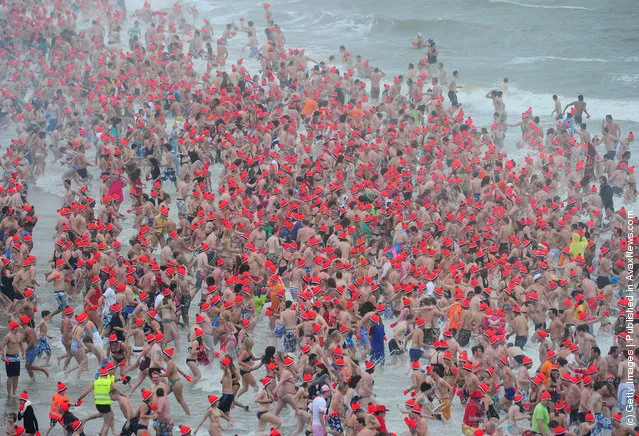
Dutch Swimmers Brave The North Sea For New Years Day Dip

Hardy Dutch swimmers brave the icy North Sea on January 1, 2012 in Scheveningen, Netherlands. A record number of 10,000 people took the plunge in this year's traditional New Year's dip. The high turnout was attributed to the mild weather with a sea temperature of 8 degrees compared to 4 degrees last year. (Photo by Jasper Juinen/Getty Images)
Details
02 Jan 2012 11:44:00
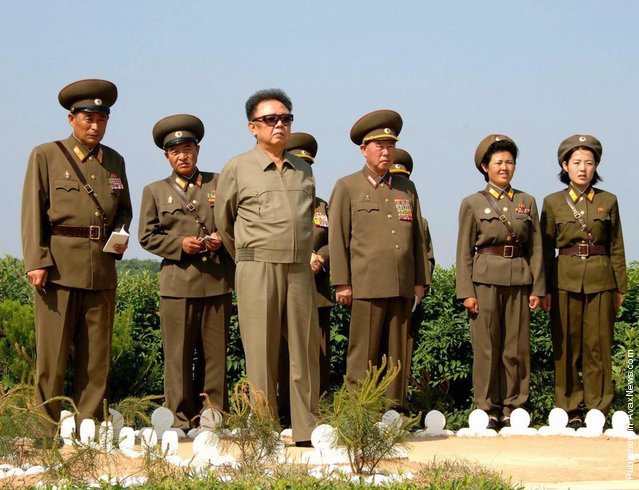
North Korean leader Kim Jong Il inspects a military unit in North Korea

“Kim Jong-il, also written as Kim Jong Il, birth name Yuri Irsenovich Kim (according to Soviet records) (16 February 1941/2 – 17 December 2011), was the supreme Leader of the Democratic People's Republic of Korea (North Korea). He was the General Secretary of the Workers' Party of Korea, the ruling party since 1948, Chairman of the the National Defence Commission of North Korea, and the Supreme Commander of the Korean People's Army, the fourth-largest standing army in the world”. – Wikipedia

Photo: North Korean leader Kim Jong Il inspects a military unit in North Korea. (Photo by Korean Central Television/Yonhap)
Details
19 Dec 2011 10:38:00
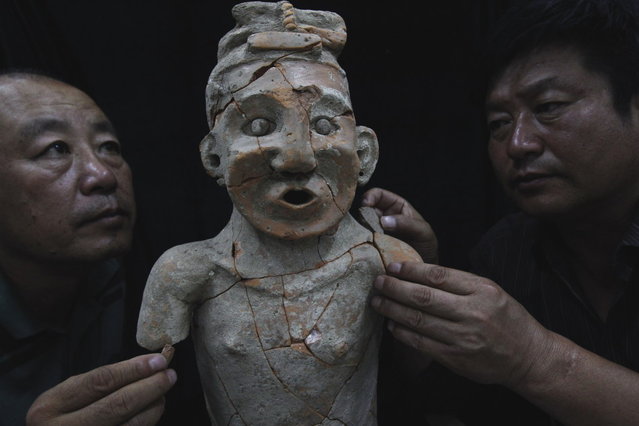
Archaeologists repair a pottery statue found in Aohan Banner, North China's Inner Mongolia autonomous region, July 3, 2012. (Photo by Xinhua)

On July 7, Chinese archaeologists from the Academy of Social Sciences announced that they have reconstituted a 5,300-year-old Mongolion pottery statue found at a relic site in North China, according to Xinhua news agency.
Details
08 Mar 2015 12:13:00
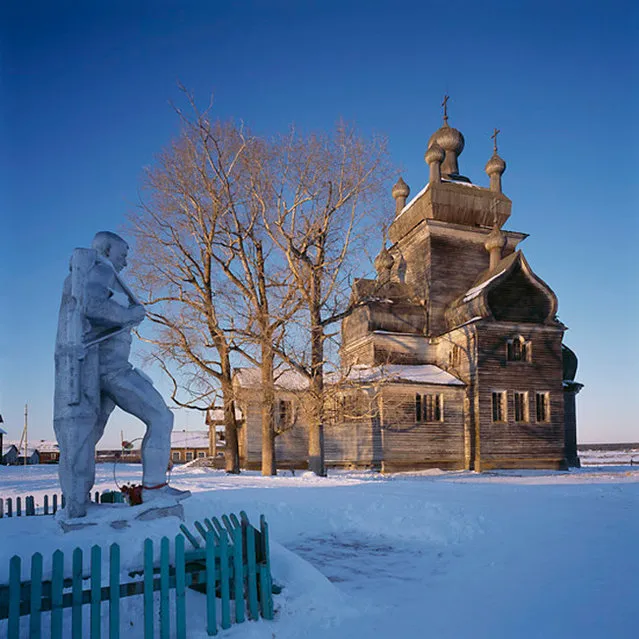
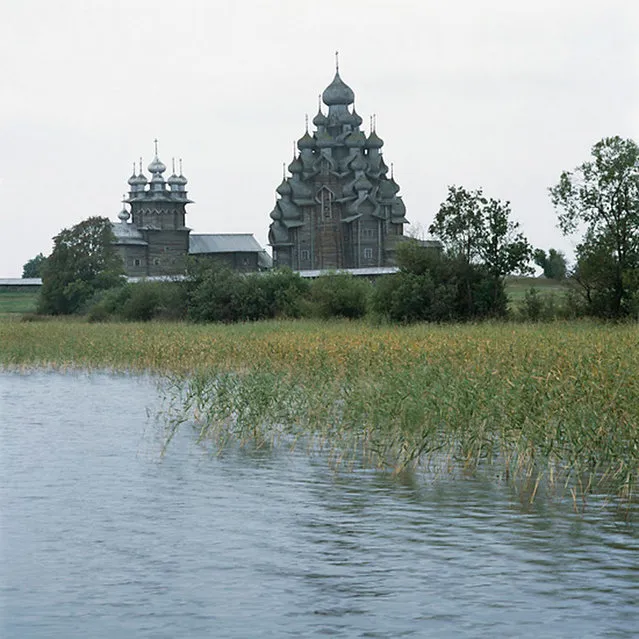
Wooden Churches - Travelling In The Russian North By Richard Davies Part 2

While communism, collectivism, worms, dry rot and casual looting failed to destroy the majestic wooden churches of Russia, it may be ordinary neglect that finally does them in. Dwindled now to several hundred remaining examples, these glories of vernacular architecture lie scattered amid the vastness of the world’s largest country. Just over a decade ago, Richard Davies, a British architectural photographer, struck out on a mission to record the fragile and poetic structures. Austerely beautiful and haunting, “Wooden Churches: Traveling in the Russian North” (White Sea Publishing; $132) is the result. Covering thousands of miles, Mr. Davies described how he and the writer Matilda Moreton tracked down the survivors from among the thousands of onion-domed structures built after Prince Vladimir converted to Christianity in 988.


See also: Wooden Churches Part1
Details
28 Nov 2013 12:13:00
Wooden Churches - Travelling In The Russian North By Richard Davies Part 1

While communism, collectivism, worms, dry rot and casual looting failed to destroy the majestic wooden churches of Russia, it may be ordinary neglect that finally does them in. Dwindled now to several hundred remaining examples, these glories of vernacular architecture lie scattered amid the vastness of the world’s largest country. Just over a decade ago, Richard Davies, a British architectural photographer, struck out on a mission to record the fragile and poetic structures. Austerely beautiful and haunting, “Wooden Churches: Traveling in the Russian North” (White Sea Publishing; $132) is the result. Covering thousands of miles, Mr. Davies described how he and the writer Matilda Moreton tracked down the survivors from among the thousands of onion-domed structures built after Prince Vladimir converted to Christianity in 988.
Details
25 Nov 2013 12:47:00
Festival-goers enjoy the mud during the annual Boryeong Mud Festival at Daecheon Beach on July 18, 2015 in Boryeong, South Korea. (Photo by Chung Sung-Jun/Getty Images)

Festival-goers enjoy the mud during the annual Boryeong Mud Festival at Daecheon Beach on July 18, 2015 in Boryeong, South Korea. The mud, which is believed to have benefical effects on the skin due to its mineral content, is sourced from mud flats near Boryeong and transported to the beach by truck. (Photo by Chung Sung-Jun/Getty Images)
Details
19 Jul 2015 10:05:00