Loading...
Done
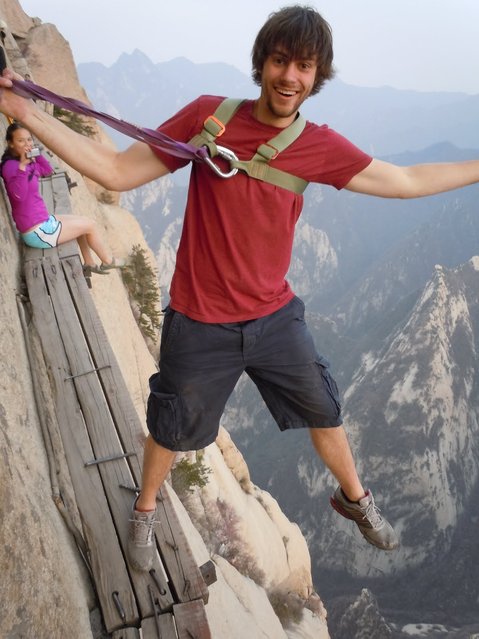
Trip to Xi'an 西安. (Photo by Grant)

“Mount Hua, or Hua Shan, or Xiyue located near the city of Huayin in Shaanxi province, about 120 kilometres (75 mi) east of Xi'an. It is one of China's Five Great Mountains, and has a long history of religious significance. Originally classified as having three peaks, in modern times the mountain is classified as five main peaks, of which the highest is the South Peak at 2,154.9 metres (7,070 ft)”. – Wikipedia

Photo: Trip to Xi'an 西安. (Photo by Grant Robinson)
Details
11 Nov 2012 11:39:00
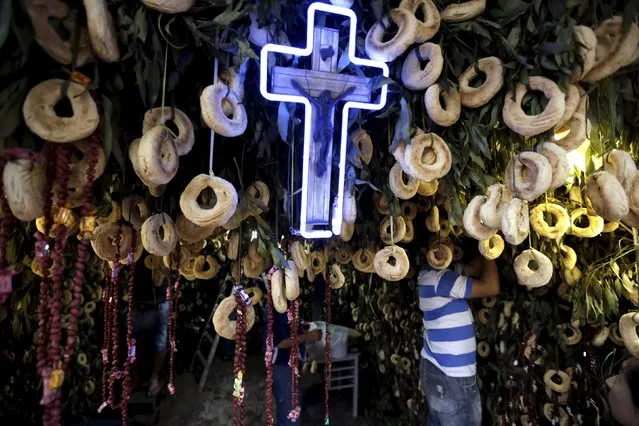
An altar is pictured after it was decorated by the Antar family with some 3,000 traditional cheese and corn buns called “chipas”, in celebration of Kurusu Ara in Asuncion May 3, 2015. (Photo by Jorge Adorno/Reuters)

An altar is pictured after it was decorated by the Antar family with some 3,000 traditional cheese and corn buns called “chipas”, in celebration of Kurusu Ara in Asuncion May 3, 2015. Kurusu Ara, the Day of the Cross, is a Catholic festival that is combined with local Gurani culture and falls annually on May 3. Paraguayans typically celebrate the festival with chipas, used to decorate religious shrines and altars. The chipas are later distributed to attendees. The buns at the top are arranged to read, “March 3 live”. (Photo by Jorge Adorno/Reuters)
Details
04 May 2015 09:18:00
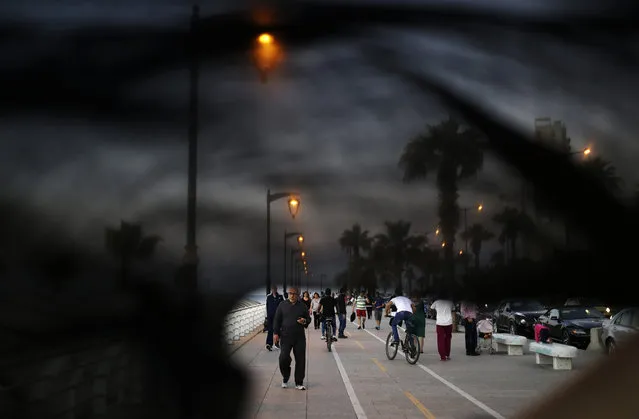
This Thursday, April 30, 2015 photo shows Lebanese citizens walking on the Corniche, or waterfront promenade in Beirut, Lebanon. (Photo by Hassan Ammar/AP Photo)

This Thursday, April 30, 2015 photo shows Lebanese citizens walking on the Corniche, or waterfront promenade in Beirut, Lebanon. This photo was shot through the lowered veil of a niqab, which is worn by some conservative Muslim women. The cloth allows women to follow a strict interpretation of their religious beliefs by preventing others from seeing their faces. (Photo by Hassan Ammar/AP Photo)
Details
18 May 2015 11:42:00
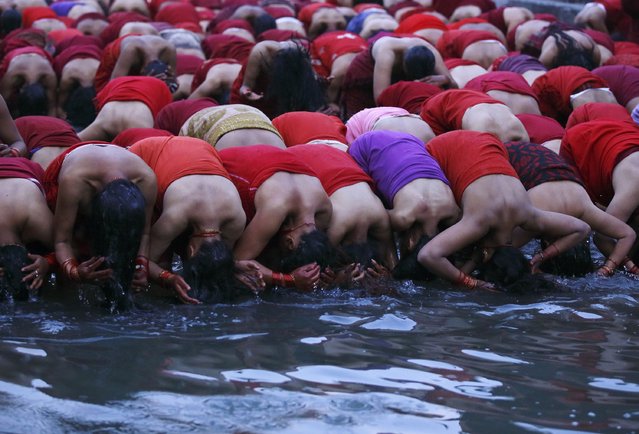
Devotees take a holy bath during the Swasthani Brata Katha festival in Kathmandu January 20, 2015. During the month-long festival, devotees recite one chapter of a Hindu tale daily from the 31-chapter sacred Swasthani Brata Katha book that is dedicated to God Madhavnarayan and Goddess Swasthani, alongside various other gods and goddesses and the miraculous feats performed by them. (Photo by Navesh Chitrakar/Reuters)

Devotees take a holy bath during the Swasthani Brata Katha festival in Kathmandu January 20, 2015. During the month-long festival, devotees recite one chapter of a Hindu tale daily from the 31-chapter sacred Swasthani Brata Katha book that is dedicated to God Madhavnarayan and Goddess Swasthani, alongside various other gods and goddesses and the miraculous feats performed by them. The devotees also go on pilgrimages to various temples, perform religious rituals, take a holy bath in the rivers and fast for a month, especially among women who believe fasting helps in their family's well-being or in getting them a good husband. (Photo by Navesh Chitrakar/Reuters)
Details
21 Jan 2015 13:50:00
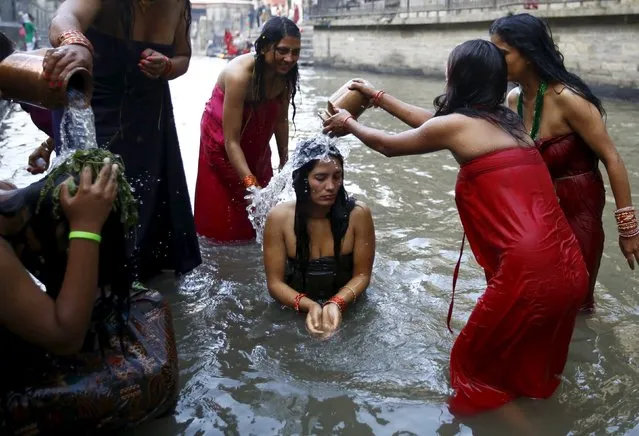
Nepalese women performs ritual as they take a holy bath in the Bagmati River, during the Rishi Panchami festival, in Kathmandu, Nepal September 18, 2015. Rishi Panchami is observed on the last day of Teej when women worship Sapta Rishi (Seven Saints) to ask for forgiveness for sins committed during their menstrual periods throughout the year. (Photo by Navesh Chitrakar/Reuters)

Nepalese women performs ritual as they take a holy bath in the Bagmati River, during the Rishi Panchami festival, in Kathmandu, Nepal September 18, 2015. Rishi Panchami is observed on the last day of Teej when women worship Sapta Rishi (Seven Saints) to ask for forgiveness for sins committed during their menstrual periods throughout the year. The Hindu religion considers menstruation as a representation of impurity and women are prohibited from taking part in religious practices during their monthly menstruations. (Photo by Navesh Chitrakar/Reuters)
Details
21 Sep 2015 12:23:00
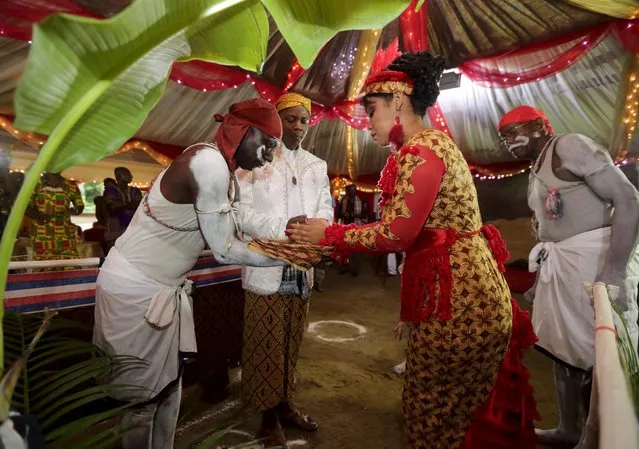
Winti spiritual leader Ramon Mac-Nack (2nd L) looks on as as his bride Melissa Karwafodi (2nd R) hands a gourd to a Maroon priest (L) as they are wedded in the first Winti marriage ever to be held in public, in district Para, Suriname, November 16, 2015. (Photo by Ranu Abhelakh/Reuters)

Winti spiritual leader Ramon Mac-Nack (2nd L) looks on as as his bride Melissa Karwafodi (2nd R) hands a gourd to a Maroon priest (L) as they are wedded in the first Winti marriage ever to be held in public, in district Para, Suriname, November 16, 2015. The Winti religion, which formed centuries ago out of elements of different religious traditions that African slaves brought with them to Suriname, was considered a form idolatry and prohibited by law since the days of slavery until it was finally officially recognized in 1971. (Photo by Ranu Abhelakh/Reuters)
Details
27 Nov 2015 05:51:00


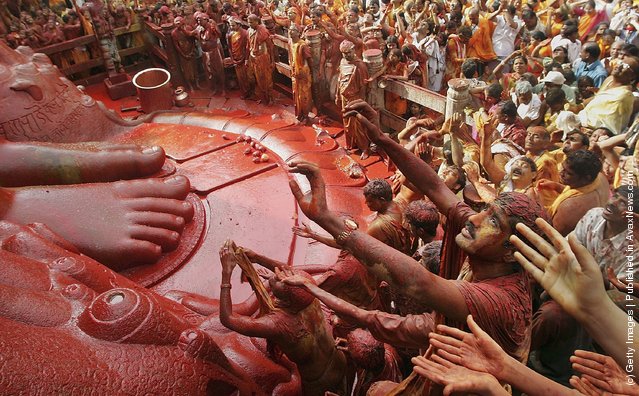
“The Mahamasthakabhisheka (or Mahamasthak Abhishek) is an important Jain festival held once every twelve years in the town of Shravanabelagola in Karnataka state, India. The festival is held in veneration of an immense 18 meter high statue of the Bhagwan (or Saint) Gomateshwara Bahubali. The anointing last took place in February 2006, and the next ceremony will occur in 2018”. – Wikipedia

Photo: A Jain Sadhu (2nd L) and devotees gather and pray at the feet of the monolithic statue of Jain sage Gomateswara during preparations for the Mahamastak Abhisheka ceremony February 7, 2006 in Shravanabelagola, India. The Mahamastak Abhisheka ceremony is held just once every twelve years where the statue will be bathed with milk, yogurt, saffron, gold coins and other religious items. The statue is said to be the world's largest monolith. The ceremony officially runs February 8-19. (Photo by Mario Tama/Getty Images)
Details
21 Jun 2011 12:27:00
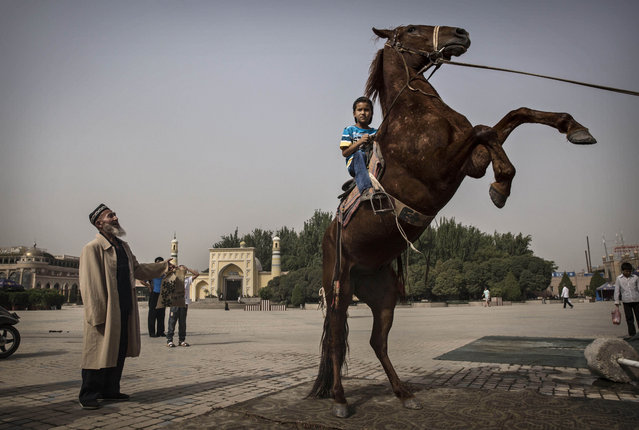
A Uyghur boy sits atop a horse as he has his picture taken outside the Id Kah Mosque before the Eid holiday  on July 28, 2014 in old Kashgar, Xinjiang Province, China. (Photo by Kevin Frayer/Getty Images)

A Uyghur boy sits atop a horse as he has his picture taken outside the Id Kah Mosque before the Eid holiday on July 28, 2014 in old Kashgar, Xinjiang Province, China. Nearly 100 people have been killed in unrest in the restive Xinjiang Province in the last week in what authorities say is terrorism but advocacy groups claim is a result of a government crackdown to silence opposition to its policies. China's Muslim Uyghur ethnic group faces cultural and religious restrictions by the Chinese government. Beijing says it is investing heavily in the Xinjiang region but Uyghurs are increasingly dissatisfied with the influx of Han Chinese and uneven economic development. (Photo by Kevin Frayer/Getty Images)
Details
10 Aug 2014 10:53:00