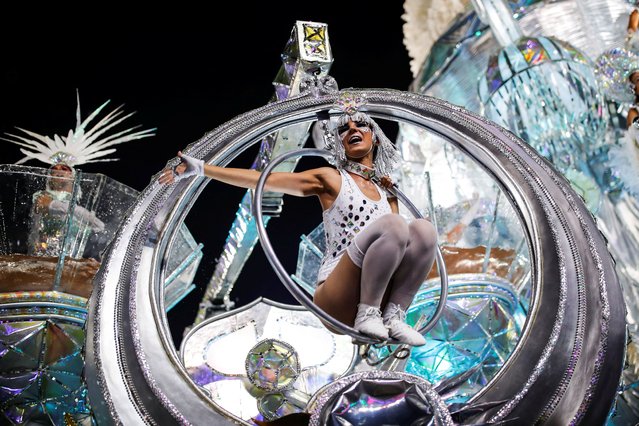
A reveller from Unidos do Viradouro samba school performs during the first night of the Carnival parade at the Sambadrome in Rio de Janeiro, Brazil, April 23, 2022. (Photo by Amanda Perobelli/Reuters)
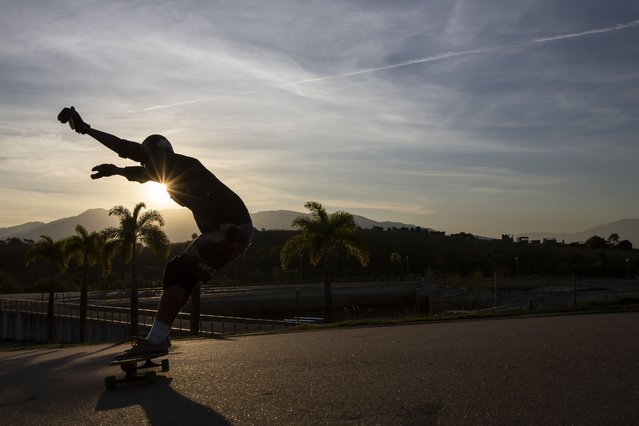
A man rides a skateboard at Radical Park in Rio de Janeiro, Brazil, Thursday, June 24, 2021. Hundreds of joggers, dog walkers, skateboarders and picnicking families come each day. (Photo by Bruna Prado/AP Photo)
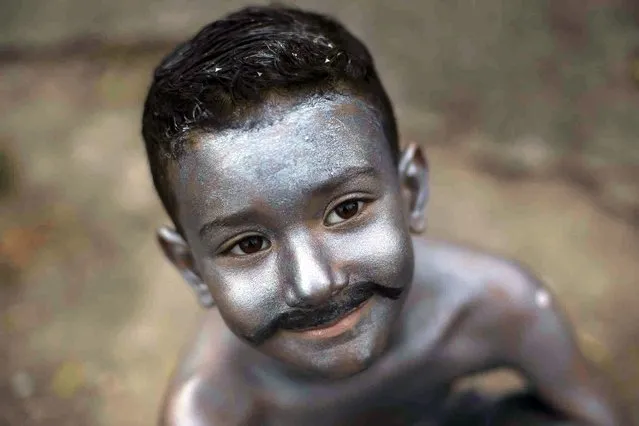
A child coated in silver body paint, smiles during the “Loucura Suburbana”, or Suburban Madness pre-Carnival parade, in Rio de Janeiro, Brazil, Thursday, February 8, 2024. (Photo by Bruna Prado/AP Photo)
Raquel Poti poses for photographers during the “Amigos da Onça” street party on the second day of Carnival on February 10, 2024 in Rio de Janeiro, Brazil. (Photo by Buda Mendes/Getty Images)
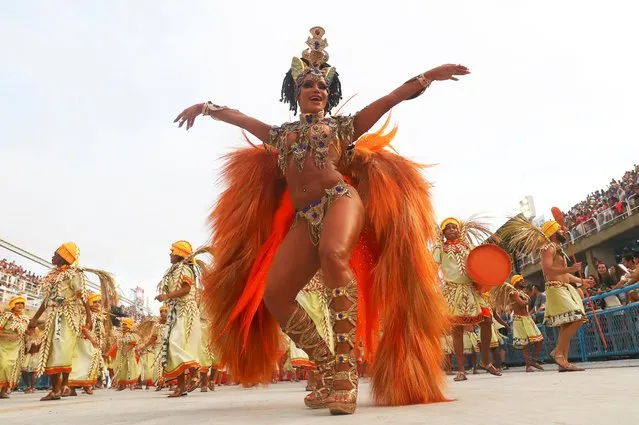
A reveller from Unidos da Tijuca samba school performs during the first night of the Carnival parade at the Sambadrome in Rio de Janeiro, Brazil on March 4, 2019. (Photo by Pilar Olivares/Reuters)
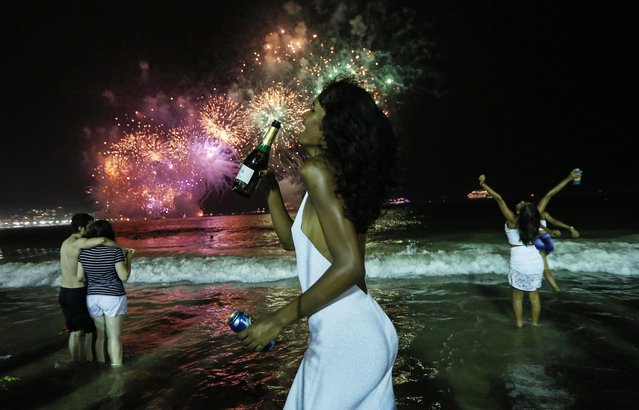
Revelers celebrate during fireworks marking the start of the New Year on Copacabana beach on January 1, 2017 in Rio de Janeiro, Brazil. (Photo by Mario Tama/Getty Images)
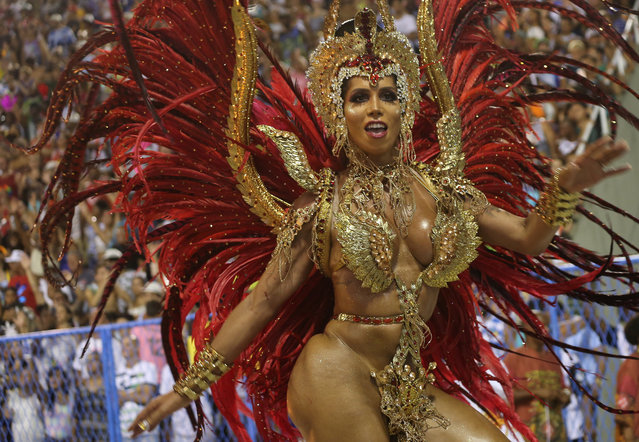
A reveller from Salgueiro performs during the second night of the Carnival parade at the Sambadrome in Rio de Janeiro, Brazil on February 13, 2018. (Photo by Sergio Moraes/Reuters)
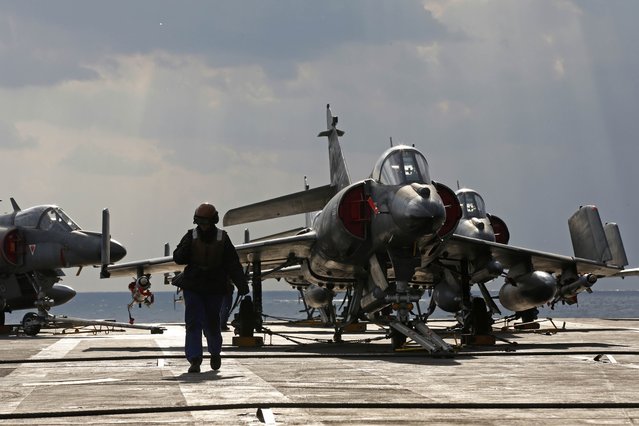
A crew members walks on the flight deck past Super Etendard fighter jets aboard France's Charles de Gaulle aircraft carrier on missino in the Gulf, January 29, 2016. (Photo by Philippe Wojazer/Reuters)