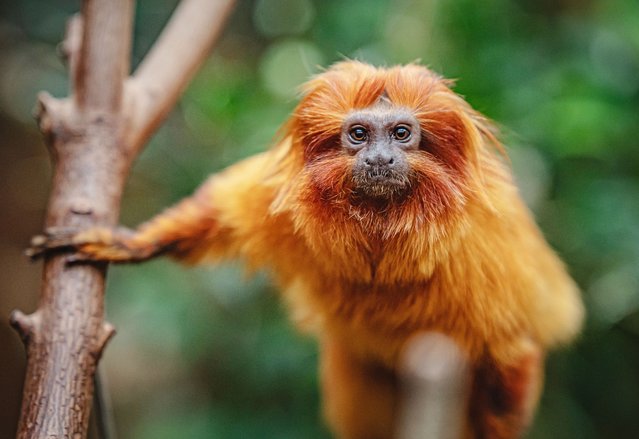
Chester Zoo in the second decade of August 2025 has welcomed a pair of tiny golden lion tamarins, named George, seven, and Leaf, 12. (Phoot by Chester Zoo)
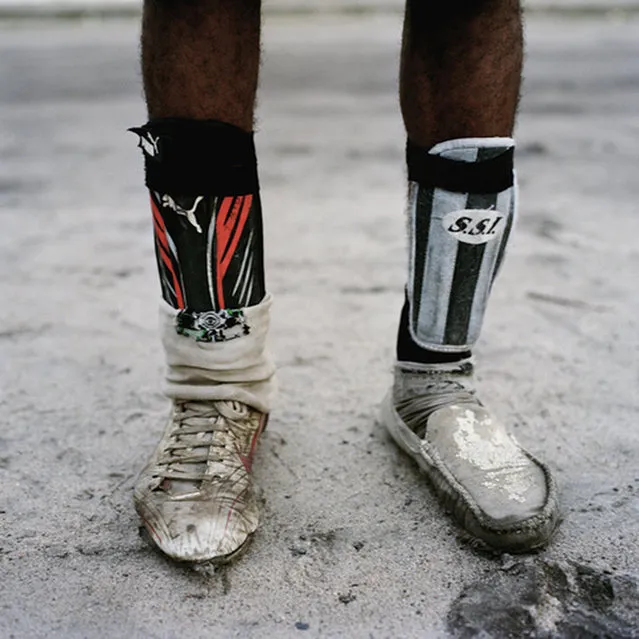
The images in Jessica Hilltout‘s Amen tell a gripping story of the joy soccer provides for Africa’s less fortunate. Inspired by her father, Hilltout set off to photograph soccer in Africa in all its shapes and sizes, coming to the conclusion that “the beautiful game exists in its purest form in what I saw — people playing for the joy of playing.”
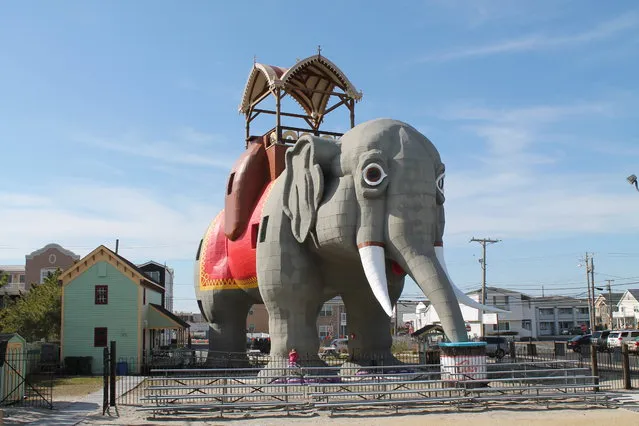
Lucy the Elephant is a six-story elephant-shaped example of novelty architecture, constructed of wood and tin sheeting in 1881 by James V. Lafferty in Margate City, Atlantic County, New Jersey, United States, two miles (3.2 km) south of Atlantic City, in an effort to sell real estate and attract tourists.
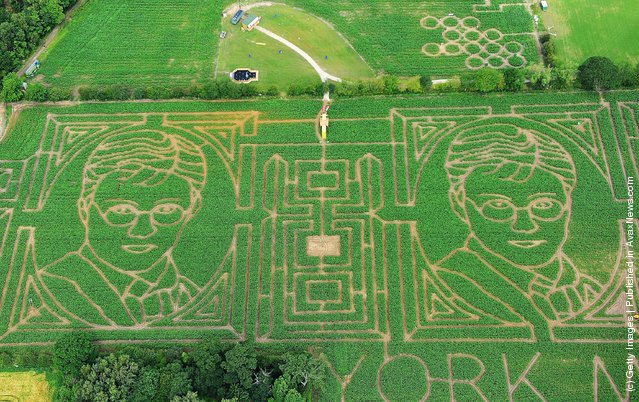
An arial view of Top Pearsy's Maize Maze in the shape of Harry Potter, on July 11, 2011 in York, England. Farmer Tom Pearcy has cut two portraits of Harry Potter in his crop of maize plants. With some subtle differences the two images create the world's largest spot the difference competition. At over 50m in diameter, and cut out of over 1 million living maize plants, the York Maze is the largest “Maize Maze” in Europe and one of the largest in the world. (Photo by Bethany Clarke/Getty Images)
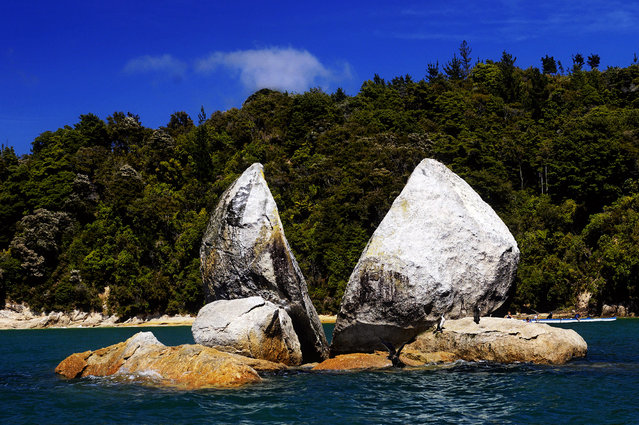
Split Apple Rock is a geological rock formation in The Tasman Bay off the northern coast of the South Island of New Zealand. Made of granite, it is in the shape of an apple which has been cut in half. It is a popular tourist attraction in the waters of the Tasman Sea approximately 50 metres off the coast between Kaiteriteri and Marahau. The rock sits in shallow water at low tide and is accessible by wading. It is also a point of interest for the many tourist boats and pleasure craft which operate along the shores of the Abel Tasman National Park. The cleft to produce two sides of the 'apple' was a natural occurrence. It is unknown when this happened and therefore the cleaving of the rock has attracted mythological explanations.
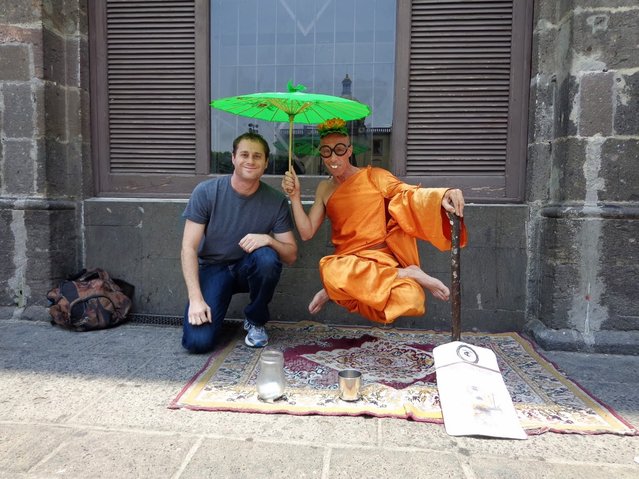
Yogis and street performers have been simulating levitation with nifty contraptions forever. They appear to be held aloft via nothing but their preternatural mental prowess. But are really enjoying the benefits of basic physics just like the rest of us when we use a chair. However, just because it’s perfectly explainable doesn’t mean it isn’t nifty. I’m especially impressed by this 2-person version and am still trying to work out how exactly the chair they’re using is shaped at the base.
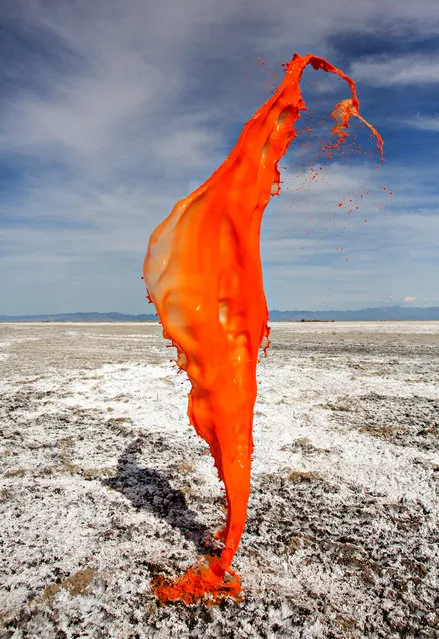
The photography duo of Floto+Warner created the series, “Colorant”, from an idea that stemmed out of a previous series and the fascination of landscapes, with results that leave one in awe. Creating shapes, not experienced in nature, they tossed colored water in the air to capture “a momentary graffiti of air and space”. Using a high shutter speed to capture these fleeting moments, Floto/Warner has produced a multi-medium series with jaw-dropping results. Photo: “Orange Salt Flats”. (Photo by Floto/Warner)
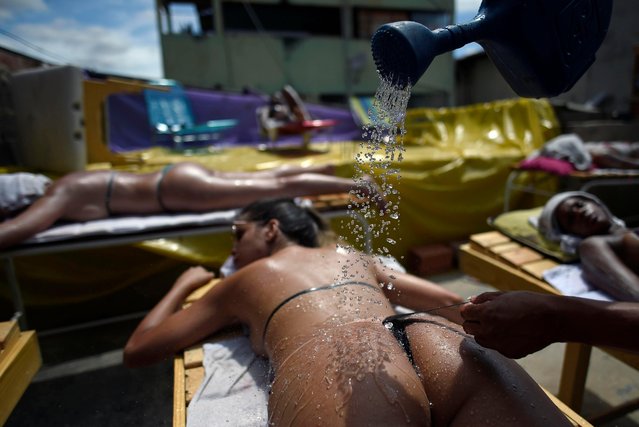
A woman is cooled down with a watering can as she sunbathes using insulating tape, at a beauty center in Belo Horizonte, Brazil, on December 21, 2017. Brazilian women take advantage of the beginning of the summer to sunbathe using the new national trend: natural tanning with insulating tape. Instead of using tiny bikinis on the beach, women avoid being bothered or stalked by getting taped in the shape of them, and lay in the sun over rooftops to enjoy the morning sun and get the perfect “marquinha” tan lines. (Photo by Douglas Magno/AFP Photo)