Loading...
Done
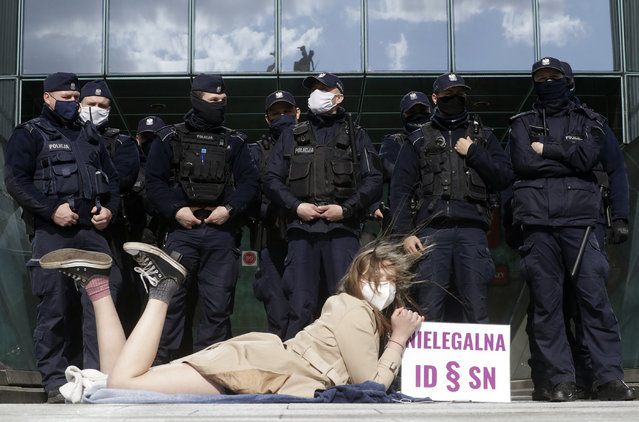
Policemen guard Poland's Supreme Court as a protester lies on the pavement in Warsaw, Poland, on Thursday, April 22, 2021. A disputed disciplinary body within Poland's Supreme Court is examining a motion that could result in the arrest of a judge who has become a symbol of the fight for an independent judiciary. The Disciplinary Chamber is due to decide whether to force Judge Igor Tuleya to answer to prosecutors about charges related to a ruling that went against the interests of the ruling Law and Justice party. Sign read in Polish “Illegal ID – SN”, where ID means Disciplinary Chamber and SN means Supreme Court. (Photo by Czarek Sokolowski/AP Photo)

Policemen guard Poland's Supreme Court as a protester lies on the pavement in Warsaw, Poland, on Thursday, April 22, 2021. A disputed disciplinary body within Poland's Supreme Court is examining a motion that could result in the arrest of a judge who has become a symbol of the fight for an independent judiciary. (Photo by Czarek Sokolowski/AP Photo)
Details
23 Apr 2021 09:34:00
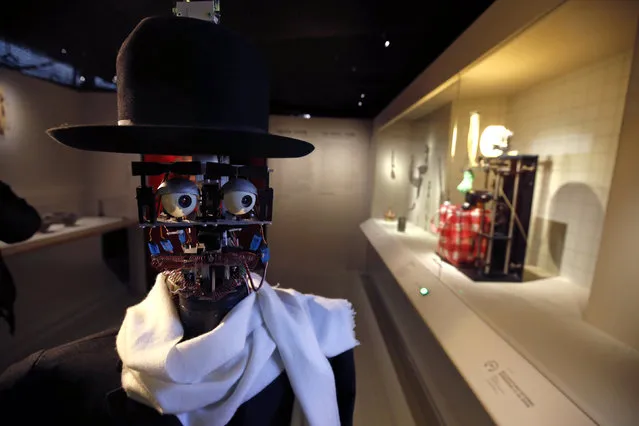
The Berenson robot strolls among visitors during the exhibition “Persona : Oddly Human” at the Quai Branly museum in Paris, France, February 23, 2016. The Berenson robot, developed in France in 2011, is the brainchild of anthropologist Denis Vidal and robotics engineer Philippe Gaussier. Its programming allows it to record reactions of museum visitors to certain pieces of art and then use the data to develop its own unique taste, which allows “Berenson” to judge whether or not it likes a certain work of art within an exhibition. (Photo by Philippe Wojazer/Reuters)

The Berenson robot strolls among visitors during the exhibition “Persona : Oddly Human” at the Quai Branly museum in Paris, France, February 23, 2016. The Berenson robot, developed in France in 2011, is the brainchild of anthropologist Denis Vidal and robotics engineer Philippe Gaussier. Its programming allows it to record reactions of museum visitors to certain pieces of art and then use the data to develop its own unique taste, which allows “Berenson” to judge whether or not it likes a certain work of art within an exhibition. (Photo by Philippe Wojazer/Reuters)
Details
25 Feb 2016 12:26:00
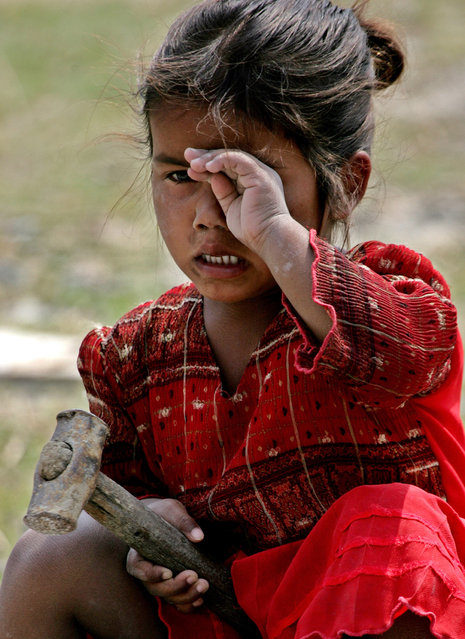
5-year-old Rina Kumari rubs her eye while cracking stones on the banks of Mahananda river in Siliguri, northeast India, March 5, 2005. Over 400 million people in India live below the internationally agreed poverty line (living on less than US $1 per day). According to estimates, several hundred thousand children work as labourers and beg on the streets in India. Photo taken on March 5, 2005. (Photo by Desmond Boylan/Reuters)

5-year-old Rina Kumari rubs her eye while cracking stones on the banks of Mahananda river in Siliguri, northeast India, March 5, 2005. Over 400 million people in India live below the internationally agreed poverty line (living on less than US $1 per day). According to estimates, several hundred thousand children work as labourers and beg on the streets in India. (Photo by Desmond Boylan/Reuters)
Details
13 Jun 2014 12:07:00
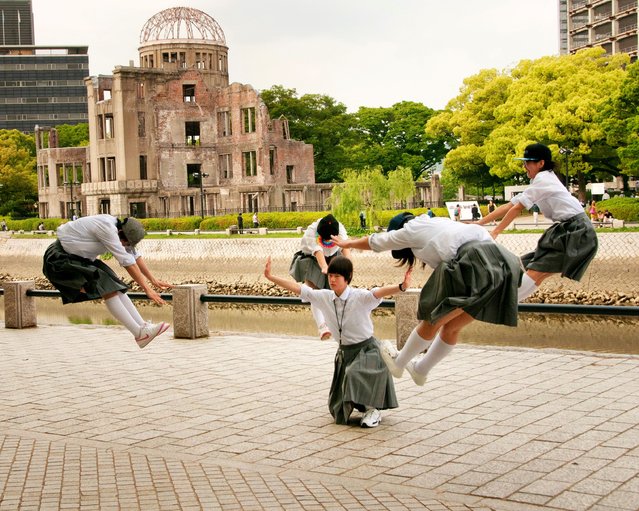
This image was taken purely by chance, when Fujioka happened to pass a group of schoolgirls striking a popular social media pose in Hiroshima in 2017. “I didn’t even notice the Atomic Bomb Dome (war memorial) behind them when I photographed this image – the girls probably didn’t either. The past and present of Hiroshima co-exists here, with a river running between”. (Photo by Aya Fujioka)

This image was taken purely by chance, when Fujioka happened to pass a group of schoolgirls striking a popular social media pose in Hiroshima in 2017. “I didn’t even notice the Atomic Bomb Dome (war memorial) behind them when I photographed this image – the girls probably didn’t either. The past and present of Hiroshima co-exists here, with a river running between”. (Photo by Aya Fujioka)
Details
19 Aug 2025 04:44:00
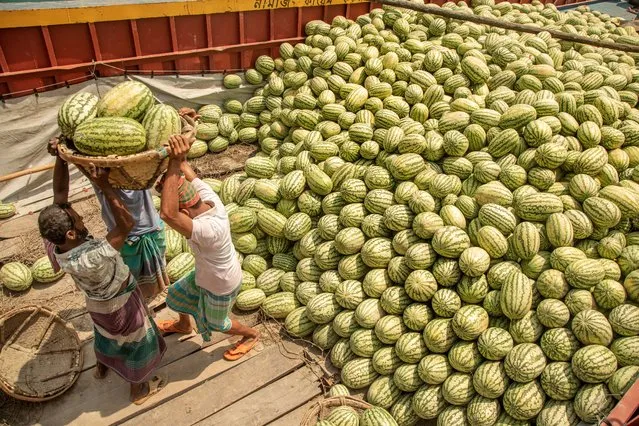
Bangladeshi laborers unload watermelons from a boat at the Buriganga River in Dhaka, Bangladesh, 03 April 2024. Watermelon is in harvesting season and is filling the city markets as it arrives from the southern part of Bangladesh. According to the Department of Agriculture Extension (DAE), Barishal has set an ambitious goal to expand watermelon cultivation to 54,002 hectares across six high-yielding districts in the division, which is 14 percent higher than last year. (Photo by Monirul Alam/EPA/EFE)

Bangladeshi laborers unload watermelons from a boat at the Buriganga River in Dhaka, Bangladesh, 03 April 2024. Watermelon is in harvesting season and is filling the city markets as it arrives from the southern part of Bangladesh. According to the Department of Agriculture Extension (DAE), Barishal has set an ambitious goal to expand watermelon cultivation to 54,002 hectares across six high-yielding districts in the division, which is 14 percent higher than last year. (Photo by Monirul Alam/EPA/EFE)
Details
19 Apr 2024 00:22:00
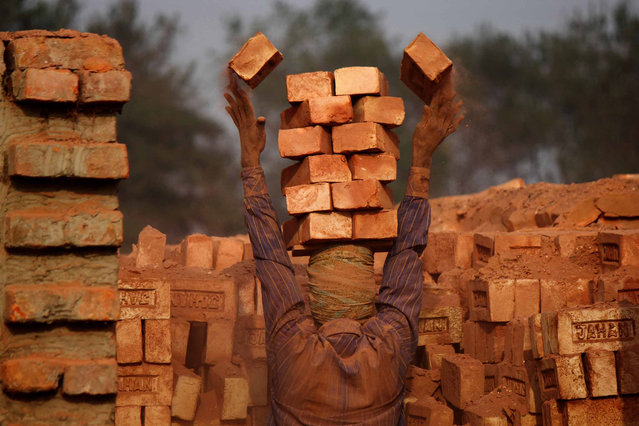
CGAP Photo Contest – South Asia Regional Winner: Bricks Worker, Bangladesh. A private enterprise worker is working at a brick field. These small businesses are creating new job opportunities for many poor people. (Photo by Moksumul Haque)

The shoemaker in Turkey, the potato seller in Vietnam, and the weaver in Bolivia are among the billions of low-income entrepreneurs who make the world go round. They are also the type of people who can benefit significantly from microfinance. Every year, the Consultative Group To Assist The Poor (or CGAP) hosts a photo contest asking entrants to submit photos based around the idea of microfinance.The purpose of the contest is to give amateur and professional photographers a chance to show the different ways that poor households manage their financial lives and make their lives better through financial inclusion. Photo: South Asia Regional Winner – “Bricks Worker”, Bangladesh. A private enterprise worker is working at a brick field. These small businesses are creating new job opportunities for many poor people. (Photo by Moksumul Haque)
Details
14 Aug 2014 10:58:00
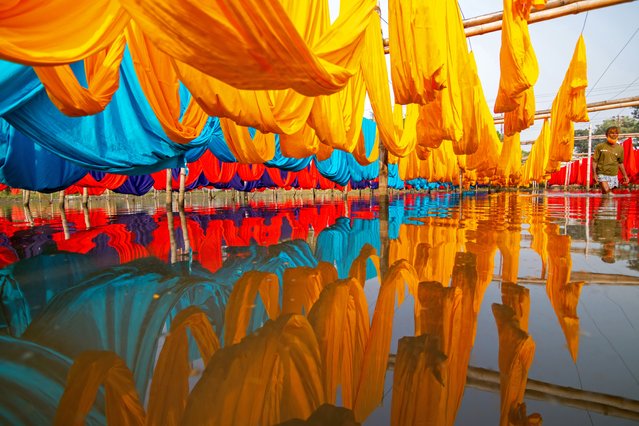
Workers hang thousands of different colorful fabrics on iron wires tied between a bamboo framework and constantly turn them so that they dry perfectly in a flooded field in Narayanganj, Bangladesh on March 16, 2022. Iron wires are used between a bamboo framework to create giant washing lines for the final part of the dying process as the fabrics are dried in the sun. Bright strands of blue, pink, orange and green-dyed cloths hang above the grassy field in a dazzling network of interlocking colors. This is the final part of the dying process after which the cloth is made into t-shirts and vests at the garment factory. (Photo by Joy Saha/ZUMA Press Wire/Rex Features/Shutterstock)

Workers hang thousands of different colorful fabrics on iron wires tied between a bamboo framework and constantly turn them so that they dry perfectly in a flooded field in Narayanganj, Bangladesh on March 16, 2022. (Photo by Joy Saha/ZUMA Press Wire/Rex Features/Shutterstock)
Details
25 Mar 2022 05:47:00
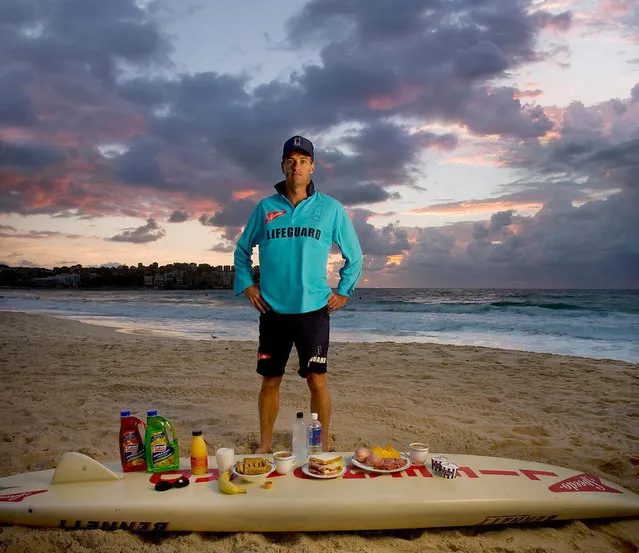
What the World Eats By Peter Menzel And Faith D'Aluisio Part 2

A stunning photographic collection featuring portraits of people from 30 countries and the food they eat in one day. In this fascinating study of people and their diets, 80 profiles are organized by the total number of calories each person puts away in a day. Featuring a Japanese sumo wrestler, a Massai herdswoman, world-renowned Spanish chef Ferran Adria, an American competitive eater, and more, these compulsively readable personal stories also include demographic particulars, including age, activity level, height, and weight. Essays from Harvard primatologist Richard Wrangham, journalist Michael Pollan, and others discuss the implications of our modern diets for our health and for the planet. This compelling blend of photography and investigative reportage expands our understanding of the complex relationships among individuals, culture, and food.
Details
02 May 2014 09:20:00