Loading...
Done
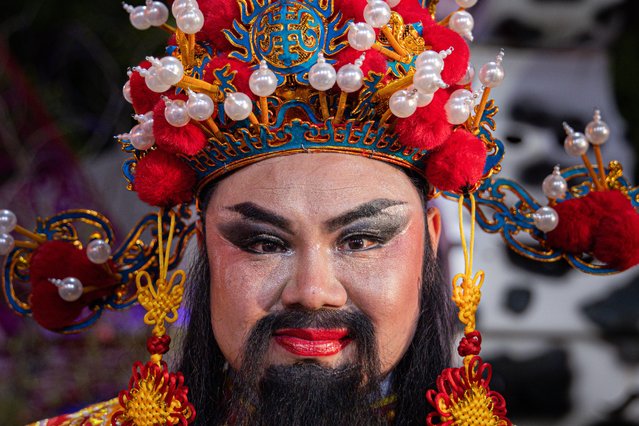
God of Wealth arrives at the Lunar New Year celebration at Thean Hou Temple on February 10, 2024, in Kuala Lumpur, Malaysia. Chinese New Year in Malaysia is marked by family gatherings, festive adornments and traditional rituals embodying a spirit of hope and renewal for the year ahead, and aims to bring joy and prosperity to all while fostering a sense of unity and hope for a successful Year of the Dragon. (Photo by Annice Lyn/Getty Images)

God of Wealth arrives at the Lunar New Year celebration at Thean Hou Temple on February 10, 2024, in Kuala Lumpur, Malaysia. Chinese New Year in Malaysia is marked by family gatherings, festive adornments and traditional rituals embodying a spirit of hope and renewal for the year ahead, and aims to bring joy and prosperity to all while fostering a sense of unity and hope for a successful Year of the Dragon. (Photo by Annice Lyn/Getty Images)
Details
18 May 2024 00:19:00
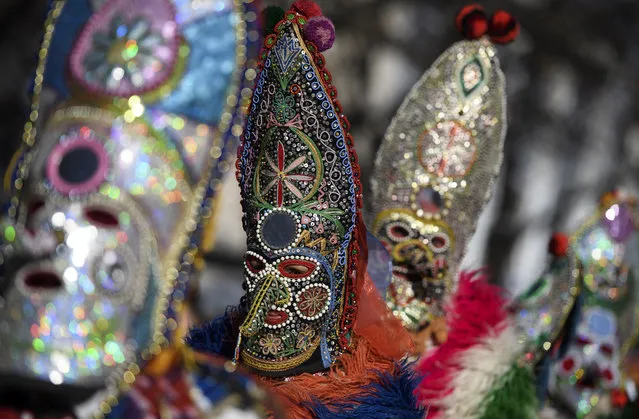
Mask dancers take part in a parade during the the International Festival of Masquerade Games “Surva” in the town of Pernik, some 30 km from Sofia, Bulgaria, 27 January 2019. In ancient times the old Thracians held the Kukeri Ritual Games in honor of god Dionysus – known as a god of wine and ecstasy. Even today these games are also known as the Dionysus' games. Among the Kukeri dancers' are many characters, including Dionysus and his satyrs as well as others from deep history such as the tsar, harachari, plyuvkachi, startzi, and pesyatzi. (Photo by Vassil Donev/EPA/EFE)

Mask dancers take part in a parade during the the International Festival of Masquerade Games “Surva” in the town of Pernik, some 30 km from Sofia, Bulgaria, 27 January 2019. In ancient times the old Thracians held the Kukeri Ritual Games in honor of god Dionysus – known as a god of wine and ecstasy. Even today these games are also known as the Dionysus' games. Among the Kukeri dancers' are many characters, including Dionysus and his satyrs as well as others from deep history such as the tsar, harachari, plyuvkachi, startzi, and pesyatzi. (Photo by Vassil Donev/EPA/EFE)
Details
31 Jan 2019 00:01:00
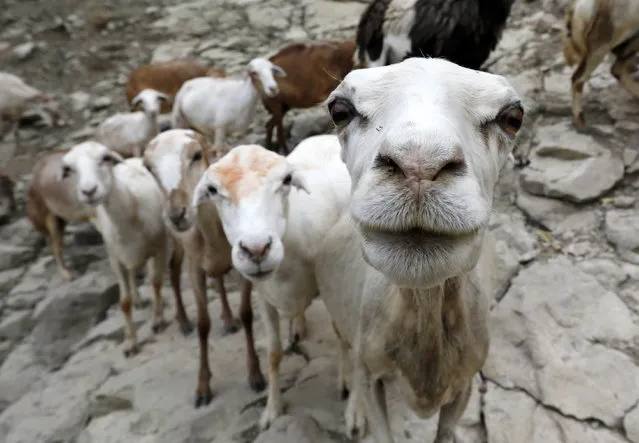
A flock of sheep and goats is led by shepherds to pastures at a mountain village on the outskirts of Sana'a, Yemen, 27 July 2023. At least eight million sheep and goats from about 470,000 pastoralist and agro pastoralist households across Yemen will be treated and vaccinated over the two years 2023 and 2024, in an effort to reduce livestock losses, improve production efficiency, and household income generation amid an acute food insecurity, the UN Food and Agriculture Organization (FAO) has reported. Livestock production in Yemen is a main income-generating activity for many rural and poor households. Yemen remains one of the worst humanitarian crises in the world with over 17 million people out of its 30-million population are food insecure due to a combination of prolonged conflicts and economic crisis. (Photo by Yahya Arhab/EPA)

A flock of sheep and goats is led by shepherds to pastures at a mountain village on the outskirts of Sana'a, Yemen, 27 July 2023. At least eight million sheep and goats from about 470,000 pastoralist and agro pastoralist households across Yemen will be treated and vaccinated over the two years 2023 and 2024, in an effort to reduce livestock losses, improve production efficiency, and household income generation amid an acute food insecurity, the UN Food and Agriculture Organization (FAO) has reported. (Photo by Yahya Arhab/EPA)
Details
01 Aug 2023 03:44:00
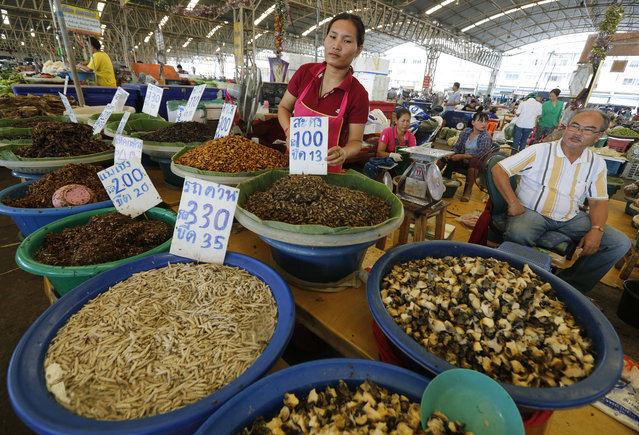
Thai vendors stand next to edible insects for sale at Talad Thai market in Pathum Thani province on the outskirts of Bangkok, Thailand, 15 July 2013. Insects have long been on the menu in Thailand, but academics and the United Nation's Food and Agriculture Organization (FAO) officials are hoping they will become a more common global source of protein and nutrients to meet the need for growing world food requirements in the future. (Photo by Narong Sangnak/EPA)

Thai vendors stand next to edible insects for sale at Talad Thai market in Pathum Thani province on the outskirts of Bangkok, Thailand, 15 July 2013. Insects have long been on the menu in Thailand, but academics and the United Nation's Food and Agriculture Organization (FAO) officials are hoping they will become a more common global source of protein and nutrients to meet the need for growing world food requirements in the future. (Photo by Narong Sangnak/EPA)
Details
22 May 2014 08:51:00
A visitor takes a selfie with “The Breach” by Leandro Erlich, during a photo call for Kew Gardens' forthcoming “Food Forever” exhibition, examining the fragile future of food and the impact of our day-to-day eating habits on the planet, at the Royal Botanic Gardens, in Kew, Richmond, Surrey on Thursday, June 16, 2022. (Photo by Dominic Lipinski/PA Images via Getty Images)

A visitor takes a selfie with “The Breach” by Leandro Erlich, during a photo call for Kew Gardens' forthcoming “Food Forever” exhibition, examining the fragile future of food and the impact of our day-to-day eating habits on the planet, at the Royal Botanic Gardens, in Kew, Richmond, Surrey on Thursday, June 16, 2022. (Photo by Dominic Lipinski/PA Images via Getty Images)
Details
19 Aug 2022 04:53:00


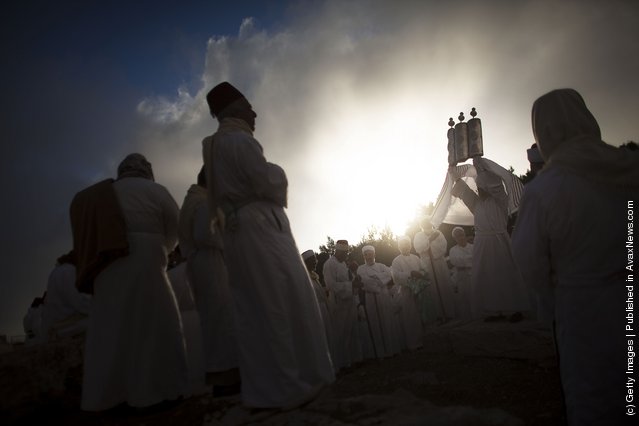
A priest of the ancient Samaritan community, wrapped in a prayer shawl, holds up a Tora scroll as worshippers pray during the holy day of Shavuot on Mount Gerizim on June 12, 2011 in Nablus, West Bank. Shavuot is a Jewish religious holiday and commemorates the anniversary of the day God is said to have given the Torah to the Israelites. (Photo by Uriel Sinai/Getty Images)
Details
13 Jun 2011 07:44:00
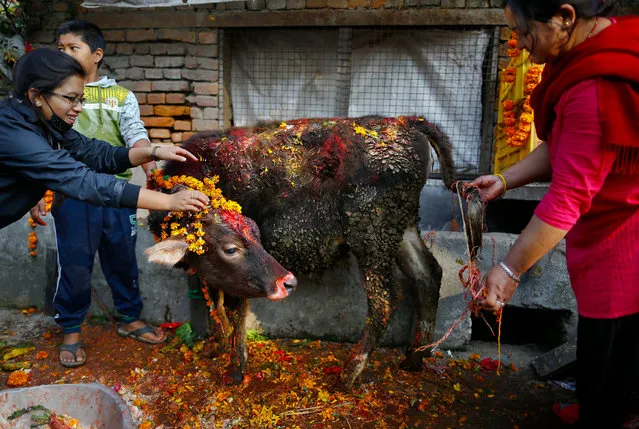
A Nepalese devotee bows in front of a cow during the 'Gai Puja', also known as the Cow Worship Day, as part of the Tihar festival in Kathmandu, Nepal, 11 November 2015. The Tihar festival is the second most important event for Nepalese Hindus. During the celebrations people worship cows, considered the incarnation of Lord Laxmi, the god of wealth. (Photo by Narendra Shrestha/EPA)

A Nepalese devotee bows in front of a cow during the 'Gai Puja', also known as the Cow Worship Day, as part of the Tihar festival in Kathmandu, Nepal, 11 November 2015. The Tihar festival is the second most important event for Nepalese Hindus. During the celebrations people worship cows, considered the incarnation of Lord Laxmi, the god of wealth. (Photo by Narendra Shrestha/EPA)
Details
14 Nov 2015 08:05:00
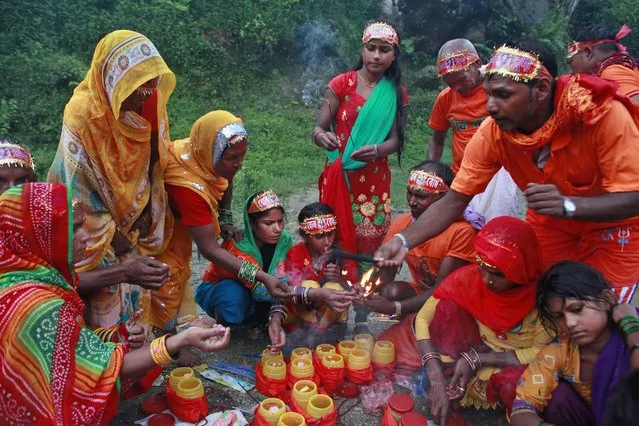
Hindu devotees perform rituals during the Bol Bom pilgrimage, on the outskirts of Kathmandu, Nepal, Monday, August 8, 2016. During this pilgrimage, devotees walk miles barefooted before offering water collected from Bagmati river, at the Pashupatinath temple in Katmandu. Shravan Somwar or Monday of Hindu calendar month of Shravan is considered auspicious for offering prayers to Lord Shiva, the god of destruction. (Photo by Niranjan Shrestha/AP Photo)

Hindu devotees perform rituals during the Bol Bom pilgrimage, on the outskirts of Kathmandu, Nepal, Monday, August 8, 2016. During this pilgrimage, devotees walk miles barefooted before offering water collected from Bagmati river, at the Pashupatinath temple in Katmandu. Shravan Somwar or Monday of Hindu calendar month of Shravan is considered auspicious for offering prayers to Lord Shiva, the god of destruction. (Photo by Niranjan Shrestha/AP Photo)
Details
09 Aug 2016 12:42:00