Loading...
Done
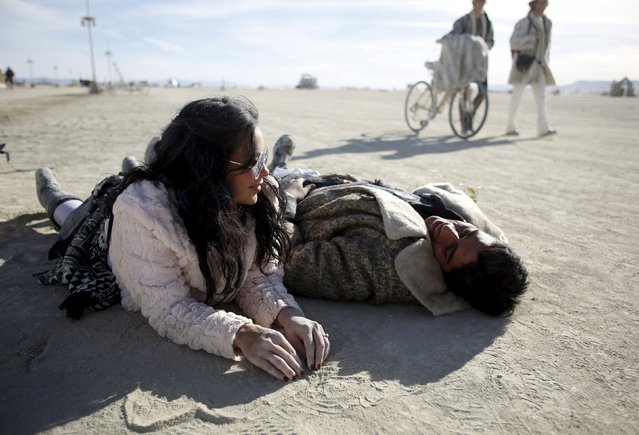
Astrid Perez (L) and Ramon Camacho lay on the Playa during the Burning Man 2015 “Carnival of Mirrors” arts and music festival in the Black Rock Desert of Nevada, September 6, 2015. Sunday marks the last day of the sold-out festival that gathered approximately 70,000 people from all over the world. (Photo by Jim Urquhart/Reuters)

Astrid Perez (L) and Ramon Camacho lay on the Playa during the Burning Man 2015 “Carnival of Mirrors” arts and music festival in the Black Rock Desert of Nevada, September 6, 2015. Sunday marks the last day of the sold-out festival that gathered approximately 70,000 people from all over the world. (Photo by Jim Urquhart/Reuters)
Details
07 Sep 2015 11:33:00
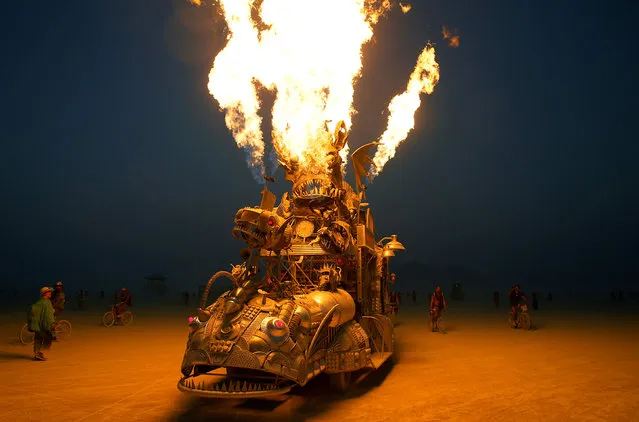
The “Rabid Transit” Burning Man art car erupts with flames from it's onboard propane poofers during the 4th day of the annual Burning Man arts and music festival in the Black Rock Desert of Nevada, U.S., August 31, 2017. (Photo by Jim Bourg/Reuters)

The “Rabid Transit” Burning Man art car erupts with flames from it's onboard propane poofers during the 4th day of the annual Burning Man arts and music festival in the Black Rock Desert of Nevada, U.S., August 31, 2017. (Photo by Jim Bourg/Reuters)
Details
02 Sep 2017 06:33:00
King Abdullah

King Abdullah of Jordan and Queen Rania who holds Princess Salma in her arms, pose for a portrait November 20, 2000 in Amman, Jordan
.
Details
28 Mar 2011 14:33:00
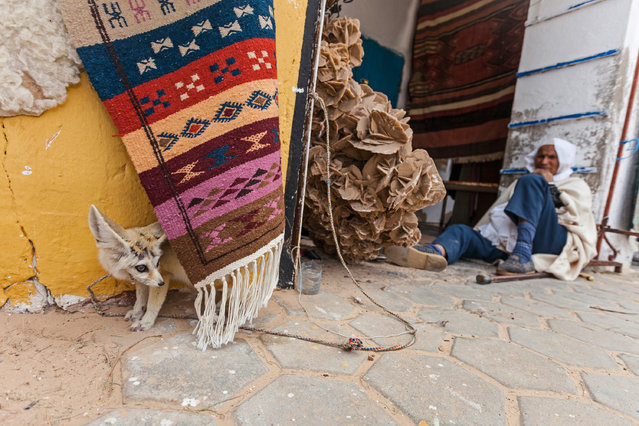
Sultan, a famous captive fennec that is displayed tied on a rope in front of a tourist shop, is the main attraction in the souk of Douz, a desert town in Tunisia. By the display of such a charismatic animal, tourists are often lured to buy things or pay for pictures. On inquiry, although Sultan has been caught as a pup in the wild, the owners of the shop reassure the foreigners stating that the animal is ‘domestic’. (Photo by Bruno D’Amicis/Fritz Pölking Prize/GDT EWPY 2015)

Sultan, a famous captive fennec that is displayed tied on a rope in front of a tourist shop, is the main attraction in the souk of Douz, a desert town in Tunisia. By the display of such a charismatic animal, tourists are often lured to buy things or pay for pictures. On inquiry, although Sultan has been caught as a pup in the wild, the owners of the shop reassure the foreigners stating that the animal is ‘domestic’. (Photo by Bruno D’Amicis/Fritz Pölking Prize/GDT EWPY 2015)
Details
23 Nov 2015 08:02:00
The once majestic building lies in ruins, with crumbling walls and chilling debris, including body bags and embalming fluids scattered throughout. Formerly an opera house, the building was transformed into a funeral home in 1946. The chilling snaps were taken by photographer Johnny Joo at the deserted House of Wills Funeral Home in Cleveland. Here: The balcony in the abandoned opera hall. (Photo by Johnny Joo/Caters News)

The once majestic building lies in ruins, with crumbling walls and chilling debris, including body bags and embalming fluids scattered throughout. Formerly an opera house, the building was transformed into a funeral home in 1946. The chilling snaps were taken by photographer Johnny Joo at the deserted House of Wills Funeral Home in Cleveland. Here: The balcony in the abandoned opera hall. (Photo by Johnny Joo/Caters News)
Details
03 Jul 2016 10:22:00
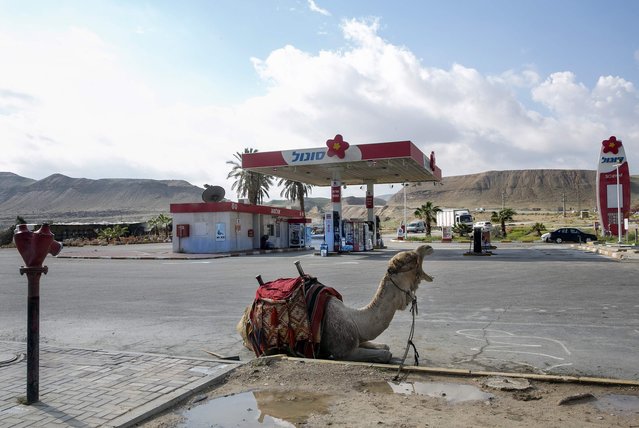
A camel rests at a fuel station in the Judean desert near the West Bank city of Jericho January 11, 2015. Reuters photographers from Mali to Mexico have shot a series of pictures of fuel stations. Whether it is plastic bottles by the roadside in Malaysia or a futuristic forecourt in Los Angeles, fuel stations help define our world. (Photo by Baz Ratner/Reuters)

A camel rests at a fuel station in the Judean desert near the West Bank city of Jericho January 11, 2015. Reuters photographers from Mali to Mexico have shot a series of pictures of fuel stations. Whether it is plastic bottles by the roadside in Malaysia or a futuristic forecourt in Los Angeles, fuel stations help define our world. Oil prices steadied above $48 a barrel on Tuesday, recovering from earlier losses as the dollar weakened against the euro. Oil prices have dropped nearly 60 percent since peaking in June 2014 on ample global supplies from the U.S. shale oil boom and a decision by OPEC to keep its production quotas unchanged. (Photo by Baz Ratner/Reuters)
Details
28 Jan 2015 12:15:00
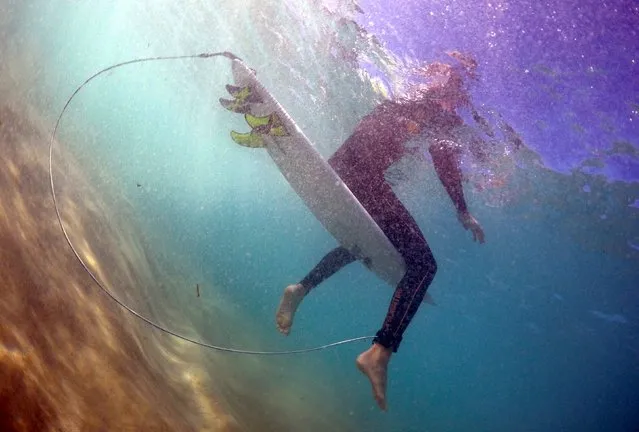
Surfer Arlen Macpherson sits on his board, which has an electronic shark repellent device installed, at Sydney's Bondi Beach in Australia, August 18, 2015. A spate of shark attacks in Australia has left some of world's top surfing beaches deserted and many people having second thoughts about taking a swim as the summer approaches. Macpherson paid A$390 for a device embedded in his surf board to repel sharks by emitting an electronic force field that overpowers its sensing organs. (Photo by David Gray/Reuters)

Surfer Arlen Macpherson sits on his board, which has an electronic shark repellent device installed, at Sydney's Bondi Beach in Australia, August 18, 2015. A spate of shark attacks in Australia has left some of world's top surfing beaches deserted and many people having second thoughts about taking a swim as the summer approaches. Macpherson paid A$390 for a device embedded in his surf board to repel sharks by emitting an electronic force field that overpowers its sensing organs. (Photo by David Gray/Reuters)
Details
19 Aug 2015 12:47:00
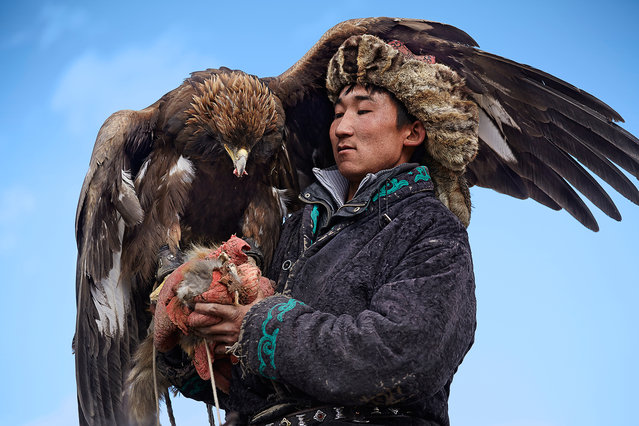
In one of the planet’s most desolate and harsh terrains, the Altai Mountains which run from Siberia in Russia down to Mongolia’s Gobi Desert, hunting with eagles is currently only practiced by a handful of Kyrgyz and Kazakhs. This form of falconry, the practice of hunting with the aid of birds of prey, can be traced back as far as 4,000 years in Central Asia. (Photo by Tariq Zaidi/The Washington Post)

In one of the planet’s most desolate and harsh terrains, the Altai Mountains which run from Siberia in Russia down to Mongolia’s Gobi Desert, hunting with eagles is currently only practiced by a handful of Kyrgyz and Kazakhs. This form of falconry, the practice of hunting with the aid of birds of prey, can be traced back as far as 4,000 years in Central Asia. Here: after a successful hunt, a proud hunter rewards his eagle by feeding it the lungs of the prey, which is considered the most highly prized part of the animal. (Photo by Tariq Zaidi/The Washington Post)
Details
22 Aug 2015 12:46:00