Loading...
Done
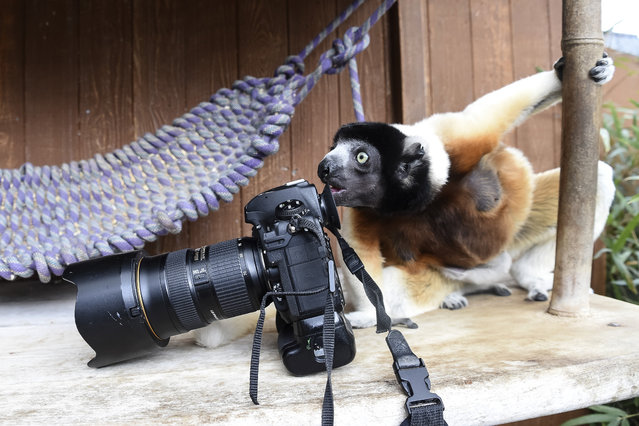
Poppy, a female Crowned sifaka, inspects a photographer's camera in the enclosure at the zoo of Mulhouse, eastern France, on March 5, 2019. The Crowned sifaka is a critically endangered species from Madagascar. (Photo by Sebastien Bozon/AFP Photo)

Poppy, a female Crowned sifaka, inspects a photographer's camera in the enclosure at the zoo of Mulhouse, eastern France, on March 5, 2019. The Crowned sifaka is a critically endangered species from Madagascar. (Photo by Sebastien Bozon/AFP Photo)
Details
10 Mar 2019 00:03:00
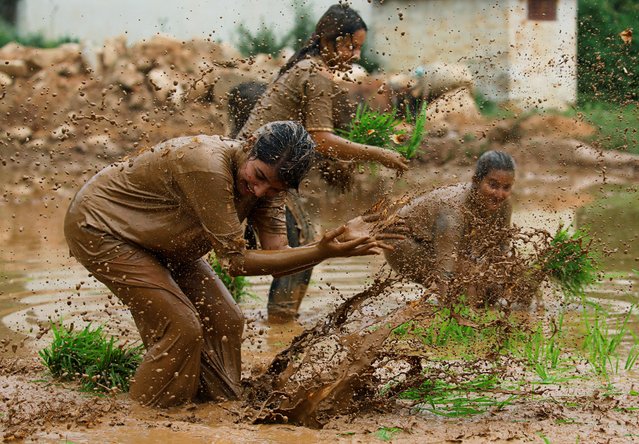
Participants play in the mud as they plant rice samplings during National Paddy Day, also called Asar Pandra, that marks the commencement of rice crop planting in paddy fields as monsoon season arrives, in Dhading, Nepal, June 30, 2019. (Photo by Navesh Chitrakar/Reuters)

Participants play in the mud as they plant rice samplings during National Paddy Day, also called Asar Pandra, that marks the commencement of rice crop planting in paddy fields as monsoon season arrives, in Dhading, Nepal, June 30, 2019. (Photo by Navesh Chitrakar/Reuters)
Details
22 Aug 2019 00:01:00
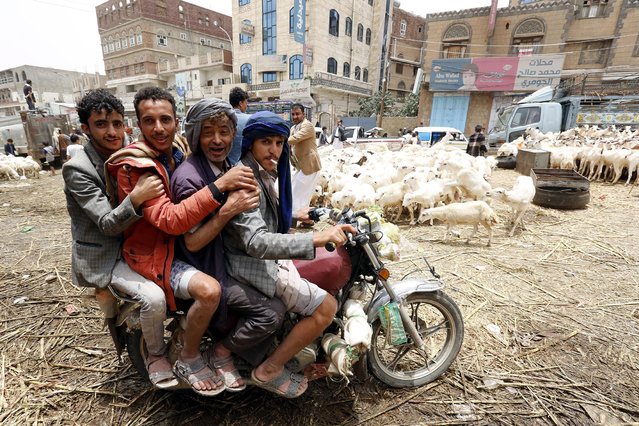
Four men ride a motorbike past sacrificial animals displayed for sale ahead of the Eid al-Adha festival at a livestock market in Sana'a, Yemen, 08 August 2019. Eid al-Adha is the holiest of the two Muslims holidays celebrated each year; it marks the yearly Muslim pilgrimage (Hajj) to visit Mecca, Islam's holiest place. Muslims slaughter a sacrificial animal and split the meat into three parts: one for family, one for friends and relatives, and one for the poor and needy. (Photo by Yahya Arhab/EPA/EFE)

Four men ride a motorbike past sacrificial animals displayed for sale ahead of the Eid al-Adha festival at a livestock market in Sana'a, Yemen, 08 August 2019. Eid al-Adha is the holiest of the two Muslims holidays celebrated each year; it marks the yearly Muslim pilgrimage (Hajj) to visit Mecca, Islam's holiest place. Muslims slaughter a sacrificial animal and split the meat into three parts: one for family, one for friends and relatives, and one for the poor and needy. (Photo by Yahya Arhab/EPA/EFE)
Details
29 Aug 2019 00:03:00
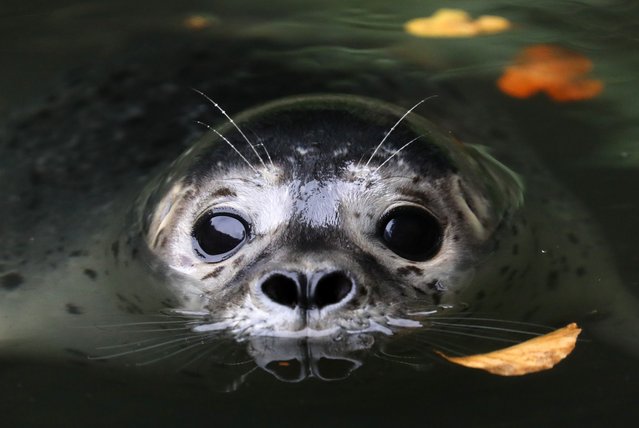
Female seal “Lotte” swims in a pool of her enclosure at the zoo in Rostock, northeastern Germany, on September 27, 2019. (Photo by Bernd Wuestneck/dpa/AFP Photo)

Female seal “Lotte” swims in a pool of her enclosure at the zoo in Rostock, northeastern Germany, on September 27, 2019. (Photo by Bernd Wuestneck/dpa/AFP Photo)
Details
29 Sep 2019 00:03:00
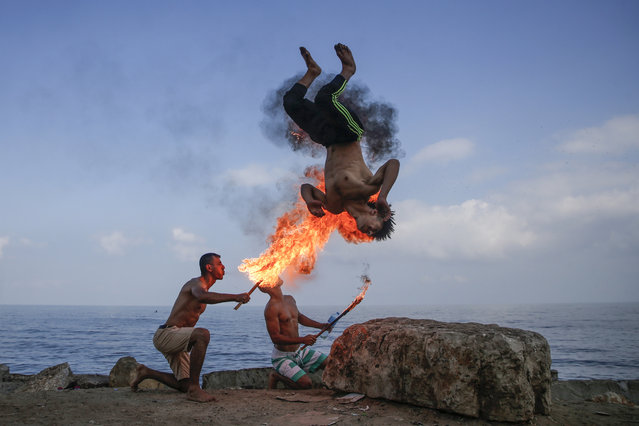
Palestinian men perform fire breathing on the beach as an entertainment for children during the summer vacation in Gaza City on August 1, 2019. (Photo by Mohammed Abed/AFP Photo)

Palestinian men perform fire breathing on the beach as an entertainment for children during the summer vacation in Gaza City on August 1, 2019. (Photo by Mohammed Abed/AFP Photo)
Details
04 Oct 2019 00:03:00
East Berliners crossing into the West Berlin on  November 11, 1989 at the Potsdamer Platz, Germany. (Photo by Kai Wiedenhoefer)

East Berliners crossing into the West Berlin on November 11, 1989 at the Potsdamer Platz, Germany. (Photo by Kai Wiedenhoefer)
Details
11 Nov 2019 00:03:00
A robot, developed by start-up firm Asimov Robotics, holds a tray with face masks and sanitizer after the two robots were launched to spread awareness about the coronavirus, in Kochi, India, March 17, 2020. (Photo by Sivaram V/Reuters)

A robot, developed by start-up firm Asimov Robotics, holds a tray with face masks and sanitizer after the two robots were launched to spread awareness about the coronavirus, in Kochi, India, March 17, 2020. (Photo by Sivaram V/Reuters)
Details
16 Apr 2020 00:01:00
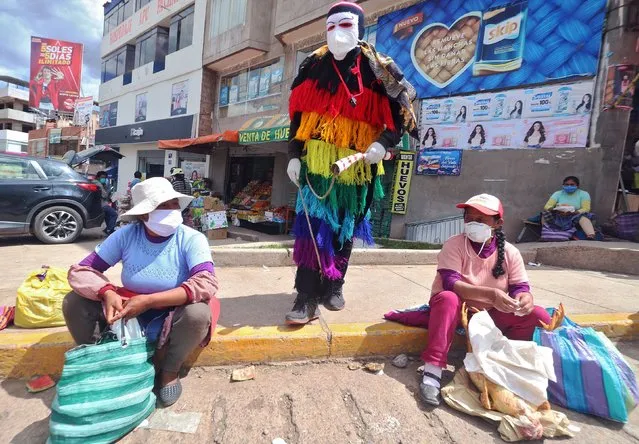
A man dressed in Andean attire as “Ukukus” or “Pabluchas”, a traditional character that acts as a vigilante imposing social order, uses a whip as a threat to force people to maintain their distance and remind them to wear face masks and gloves as a preventive measure against the novel coronavirus COVID-19, in the Vinocanchon market area in San Jeronimo district, close to the Peruvian Andean city of Cusco, on May 2, 2020. The government has identified public markets as major hotspots of the new coronavirus in Peru, where 40,459 confirmed cases and 1,124 deaths were reported on May 1. (Photo by Jose Carlos Angulo/AFP Photo)

A man dressed in Andean attire as “Ukukus” or “Pabluchas”, a traditional character that acts as a vigilante imposing social order, uses a whip as a threat to force people to maintain their distance and remind them to wear face masks and gloves as a preventive measure against the novel coronavirus COVID-19, in the Vinocanchon market area in San Jeronimo district, close to the Peruvian Andean city of Cusco, on May 2, 2020. The government has identified public markets as major hotspots of the new coronavirus in Peru, where 40,459 confirmed cases and 1,124 deaths were reported on May 1. (Photo by Jose Carlos Angulo/AFP Photo)
Details
04 May 2020 00:07:00