Loading...
Done
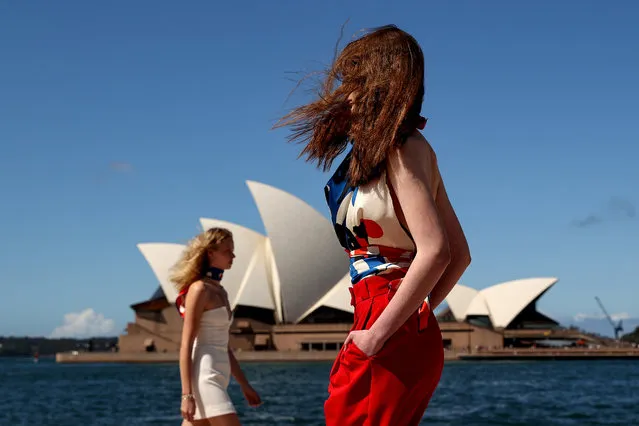
A model walks the runway during the Shona Joy “Le Long de la Côte” collection launch runway on September 21, 2023 in Sydney, Australia. (Photo by Brendon Thorne/Getty Images)

A model walks the runway during the Shona Joy “Le Long de la Côte” collection launch runway on September 21, 2023 in Sydney, Australia. (Photo by Brendon Thorne/Getty Images)
Details
19 Nov 2023 04:27:00
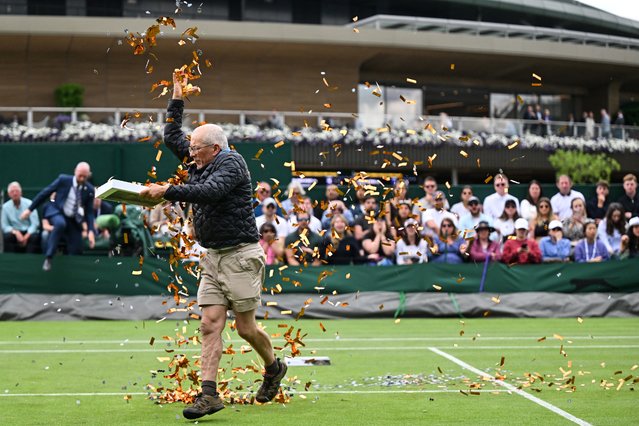
A Just Stop Oil demonstrator throws orange confetti on court 18 as he disrupts the women's singles tennis match between Australia's Daria Saville and Britain's Katie Boulter on the third day of the 2023 Wimbledon Championships at The All England Tennis Club in Wimbledon, southwest London, on July 5, 2023. (Photo by Glyn Kirk/AFP Photo)

A Just Stop Oil demonstrator throws orange confetti on court 18 as he disrupts the women's singles tennis match between Australia's Daria Saville and Britain's Katie Boulter on the third day of the 2023 Wimbledon Championships at The All England Tennis Club in Wimbledon, southwest London, on July 5, 2023. (Photo by Glyn Kirk/AFP Photo)
Details
04 Oct 2024 04:10:00
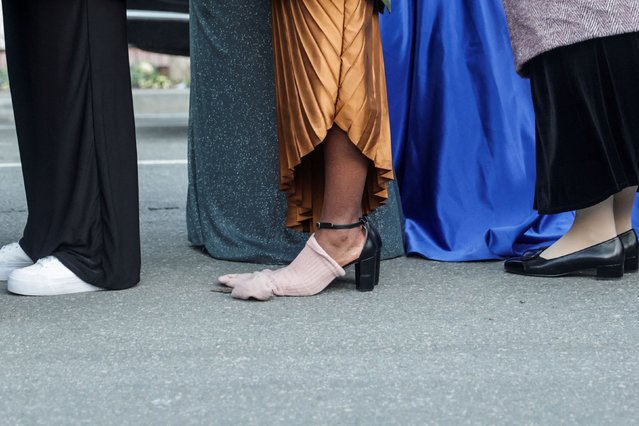
A person wears socks on shoes, as people queue to enter Liberty Inauguration ball, on inauguration day of Donald Trump's second presidential term, in Washington, U.S. January 20, 2025. (Photo by Jeenah Moon/Reuters)

A person wears socks on shoes, as people queue to enter Liberty Inauguration ball, on inauguration day of Donald Trump's second presidential term, in Washington, U.S. January 20, 2025. (Photo by Jeenah Moon/Reuters)
Details
27 Jan 2025 04:46:00
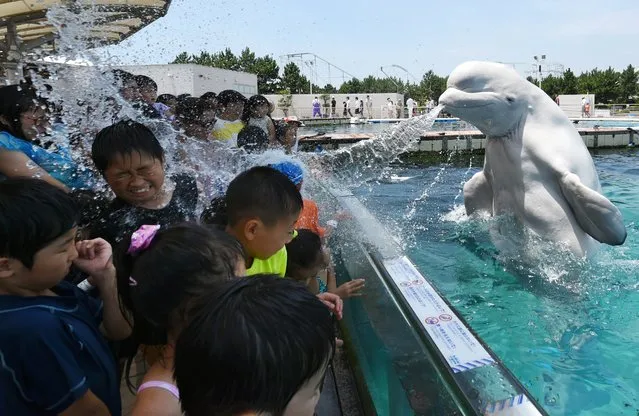
A beluga whale sprays water towards visitors during a summer attraction at the Hakkeijima Sea Paradise aquarium in Yokohama, suburban Tokyo on July 20, 2015. Tokyo's temperature climbed over 34 degree Celsius on July 20, one day after the end of the rainy season. (Photo by Toshifumi Kitamura/AFP Photo)

A beluga whale sprays water towards visitors during a summer attraction at the Hakkeijima Sea Paradise aquarium in Yokohama, suburban Tokyo on July 20, 2015. Tokyo's temperature climbed over 34 degree Celsius on July 20, one day after the end of the rainy season. (Photo by Toshifumi Kitamura/AFP Photo)
Details
21 Jul 2015 11:10:00
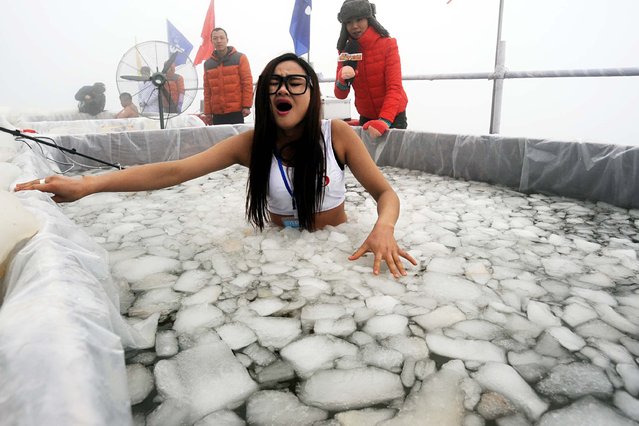
This picture taken on January 25, 2015 shows a participant taking part in an ice water challenge in Zhangjiajie, central China's Hunan province. Participants were required to stay in an ice pond, holding an ice block while eating ice-cream with an electric fan blowing at them. (Photo by AFP Photo/Stringer)

This picture taken on January 25, 2015 shows a participant taking part in an ice water challenge in Zhangjiajie, central China's Hunan province. Participants were required to stay in an ice pond, holding an ice block while eating ice-cream with an electric fan blowing at them. (Photo by AFP Photo/Stringer)
Details
31 Jan 2015 12:58:00
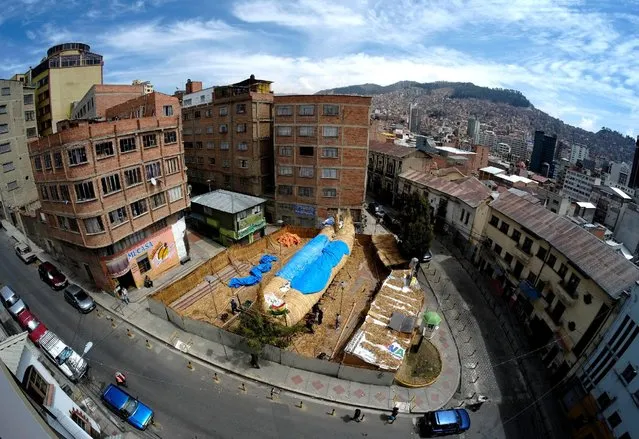
Aerial view of the “Viracocha III”, a boat made only from the totora reed, as it is being prepared to cross the Pacific from Chile to Australia on an expected six-month journey, La Paz, Bolivia, October 19, 2016. An expedition in a boat made only of reeds crafted by indigenous Bolivians is getting ready to cross the Pacific from South America to Australia, in a fresh attempt to prove that ancient mariners were capable of making the journey. Phil Buck, a 51-year-old explorer from the United States, already has led two similar expeditions and will captain the “Viracocha III” set to depart from northern Chile in February on an expected six-month journey. (Photo by David Mercado/Reuters)

Aerial view of the “Viracocha III”, a boat made only from the totora reed, as it is being prepared to cross the Pacific from Chile to Australia on an expected six-month journey, La Paz, Bolivia, October 19, 2016. An expedition in a boat made only of reeds crafted by indigenous Bolivians is getting ready to cross the Pacific from South America to Australia, in a fresh attempt to prove that ancient mariners were capable of making the journey. (Photo by David Mercado/Reuters)
Details
20 Oct 2016 10:53:00
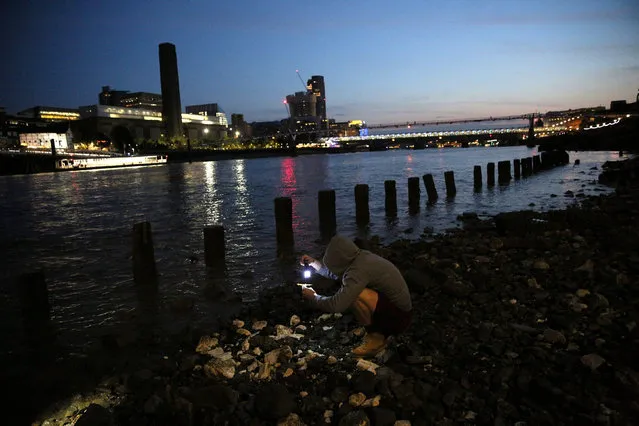
A mudlark uses a torch to look for items on the bank of the River Thames in London, Britain June 06, 2016. Mudlarking is believed to trace its origins to the 18th and 19th century, when scavengers searched the Thames' shores for items to sell. These days, history and archaeology fans are the ones hoping to find old relics such as coins, ceramics, artifacts or everyday items from across centuries. They wait for the low tide and then scour specific areas of exposed shores. "If you're in a field you could be out all day long, with the river you're restricted to about two or three hours," mudlark Nick Stevens said. While many just use the naked eye for their searches, others rely on metal detectors for which a permit from the Port of London Authority is needed. Digging also requires consent. (Photo by Neil Hall/Reuters)

A mudlark uses a torch to look for items on the bank of the River Thames in London, Britain June 06, 2016. Mudlarking is believed to trace its origins to the 18th and 19th century, when scavengers searched the Thames' shores for items to sell. These days, history and archaeology fans are the ones hoping to find old relics such as coins, ceramics, artifacts or everyday items from across centuries. their finds with the Portable Antiquities Scheme. Any item over 300 years old must be recorded. (Photo by Neil Hall/Reuters)
Details
27 Aug 2016 10:43:00
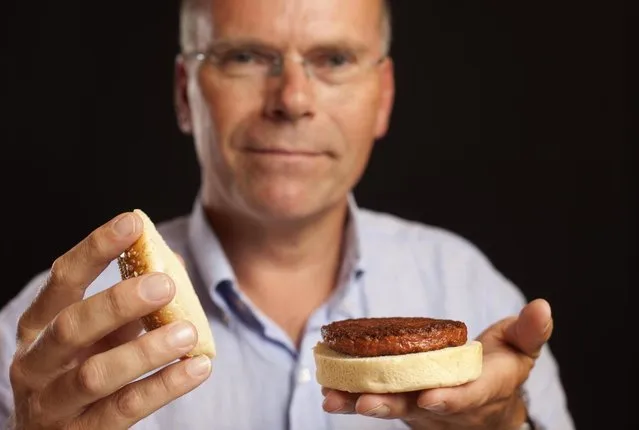
In this handout image provided by Ogilvy, a burger made from cultured beef, which has been developed by Professor Mark Post of Maastricht University in the Netherlands (pictured) is shown to the media during a press conference on August 5, 2013 in London, England. Cultured Beef could help solve the coming food crisis and combat climate change with commercial production of Cultured Beef beginning within ten to twenty years. (Photo by David Parry via Getty Images)

In this handout image provided by Ogilvy, a burger made from cultured beef, which has been developed by Professor Mark Post of Maastricht University in the Netherlands (pictured) is shown to the media during a press conference on August 5, 2013 in London, England. The in-vitro burger, cultured from cattle stem cells, the first example of what its creator says could provide an answer to global food shortages and help combat climate change, was fried in a pan and tasted by two volunteers. The burger is the result of years of research by Dutch scientist Mark Post, a vascular biologist at the University of Maastricht, who is working to show how meat grown in petri dishes might one day be a true alternative to meat from livestock.The meat in the burger has been made by knitting together around 20,000 strands of protein that has been cultured from cattle stem cells in Post's lab. (Photo by David Parry)
Details
06 Aug 2013 08:48:00