Loading...
Done
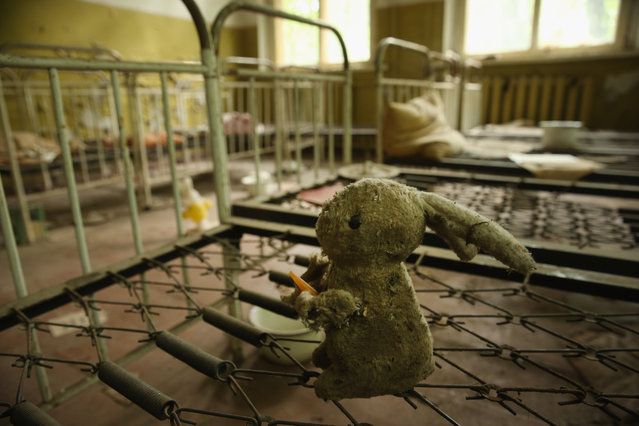
A stuffed rabbit doll sits among children's beds standing in the abandoned kindergarten of Kopachi village located inside the Chernobyl Exclusion Zone on September 29, 2015 near Chornobyl, Ukraine. Kopachi, a village that before 1986 had a population of 1,114, lies only a few kilometers south of the former Chernobyl nuclear power plant, where in 1986 workers inadvertantly caused reactor number four to explode, creating the worst nuclear accident in history. Radiation fallout was so high that authorities bulldozed and buried all of Kopachi's structures except for the kindergarten. (Photo by Sean Gallup/Getty Images)

A stuffed rabbit doll sits among children's beds standing in the abandoned kindergarten of Kopachi village located inside the Chernobyl Exclusion Zone on September 29, 2015 near Chornobyl, Ukraine. Kopachi, a village that before 1986 had a population of 1,114, lies only a few kilometers south of the former Chernobyl nuclear power plant, where in 1986 workers inadvertantly caused reactor number four to explode, creating the worst nuclear accident in history. (Photo by Sean Gallup/Getty Images)
Details
27 Apr 2016 09:28:00
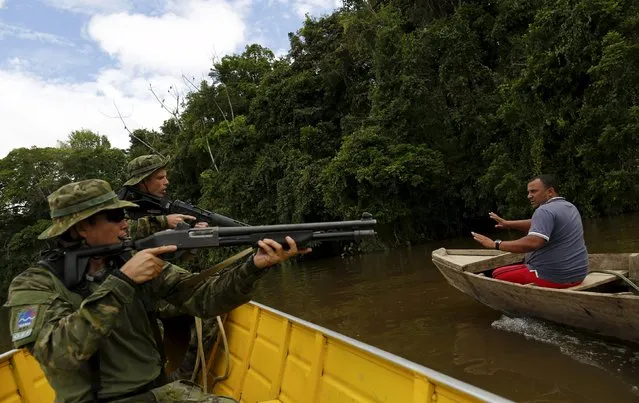
A gold prospector is detained by agents of Brazil’s environmental agency on the Uraricoera River during an operation against illegal gold mining on indigenous land, in the heart of the Amazon rainforest, in Roraima state, Brazil April 15, 2016. (Photo by Bruno Kelly/Reuters)

A gold prospector is detained by agents of Brazil’s environmental agency on the Uraricoera River during an operation against illegal gold mining on indigenous land, in the heart of the Amazon rainforest, in Roraima state, Brazil April 15, 2016. At over 9.5 million hectares, the Yanomami territory is twice the size of Switzerland and home to around 27,000 indians. The land has legally belonged to the Yanomami since 1992, but illegal miners continue to plague the area, sawing down trees and poisoning rivers with mercury in their lust for gold. (Photo by Bruno Kelly/Reuters)
Details
27 Apr 2016 10:01:00
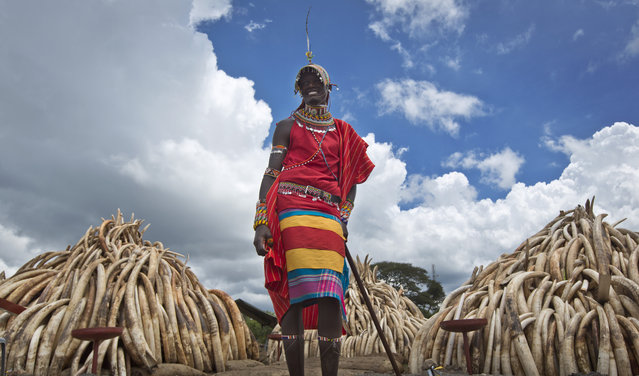
A Maasai man in ceremonial dress poses for visitors to take photographs of him in front of one of around a dozen pyres of ivory, in Nairobi National Park, Kenya Thursday, April 28, 2016. The Kenya Wildlife Service (KWS) has stacked 105 tons of ivory consisting of 16,000 tusks, and 1 ton of rhino horn, from stockpiles around the country, in preparation for it to be torched on Saturday to encourage global efforts to help stop the poaching of elephants and rhinos. (Photo by Ben Curtis/AP Photo)

A Maasai man in ceremonial dress poses for visitors to take photographs of him in front of one of around a dozen pyres of ivory, in Nairobi National Park, Kenya Thursday, April 28, 2016. The Kenya Wildlife Service (KWS) has stacked 105 tons of ivory consisting of 16,000 tusks, and 1 ton of rhino horn, from stockpiles around the country, in preparation for it to be torched on Saturday to encourage global efforts to help stop the poaching of elephants and rhinos. (Photo by Ben Curtis/AP Photo)
Details
29 Apr 2016 11:58:00
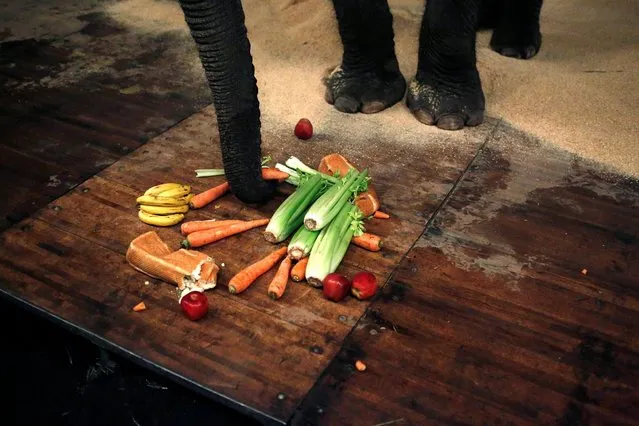
An elephant eats a snack after performing at Ringling Bros and Barnum & Bailey Circus' “Circus Extreme” show at the Mohegan Sun Arena at Casey Plaza in Wilkes-Barre, Pennsylvania, U.S., April 29, 2016. (Photo by Andrew Kelly/Reuters)

An elephant eats a snack after performing at Ringling Bros and Barnum & Bailey Circus' “Circus Extreme” show at the Mohegan Sun Arena at Casey Plaza in Wilkes-Barre, Pennsylvania, U.S., April 29, 2016. Elephants take a final bow at Ringling Bros and Barnum & Bailey Circus on Sunday, ending a 145-year spectacle that delighted fans but enraged animal activists, who say the highly publicized retirement is not enough. (Photo by Andrew Kelly/Reuters)
Details
01 May 2016 11:24:00
The Lun-class Ekranoplane was used by the Soviet Navy starting in 1987, and wasn't retired until the late 1990s, after the Soviet Union's fall. (Igor113)

“The Lun-class ekranoplan (NATO reporting name Duck) was a ground effect vehicle (GEV) designed by Rostislav Evgenievich Alexeev and used by the Soviet and Russian navies from 1987 until sometime in the late 1990s. It “flew” using the lift generated by the ground effect of its large wings when close to the surface of the water – about four metres or less. Although they might look similar and/or have related technical characteristics, ekranoplans like the Lun are not aircraft, seaplanes, hovercraft, or hydrofoils – ground effect is a separate technology altogether. The International Maritime Organization classifies these vehicles as maritime ships. The name Lun comes from the Russian for harrier”. – Wikipedia (Photo by Igor113)
Details
08 Aug 2014 10:51:00
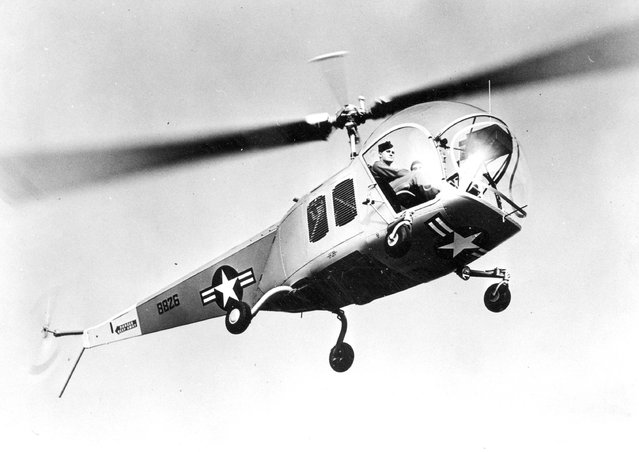
Number 10. BELL H-13 SIOUX was a two-bladed, single engine, light helicopter built by Bell Helicopter. Westland Aircraft manufactured the Sioux under license for the British military as the Sioux AH.1 and HT. (Photo by AP Photo)

Number 10. BELL H-13 SIOUX was a two-bladed, single engine, light helicopter built by Bell Helicopter. Westland Aircraft manufactured the Sioux under license for the British military as the Sioux AH.1 and HT. In 1947, the United States Air Force ordered the improved Bell Model 47A. Most were designated YR-13 and three winterized versions were designated YR-13A. The United States Army first ordered Bell 47s in 1948 under the designation H-13. These would later receive the name Sioux. The Bell-built H-13 B is seen airborne in this April 29, 1951 photo. The helicopter is equipped with a 173 horsepower engine, cruises at 85 miles per hour, climbs 900 feet in a minute and has a service ceiling of 11,500 feet. (Photo by AP Photo)
Details
08 Aug 2014 11:59:00
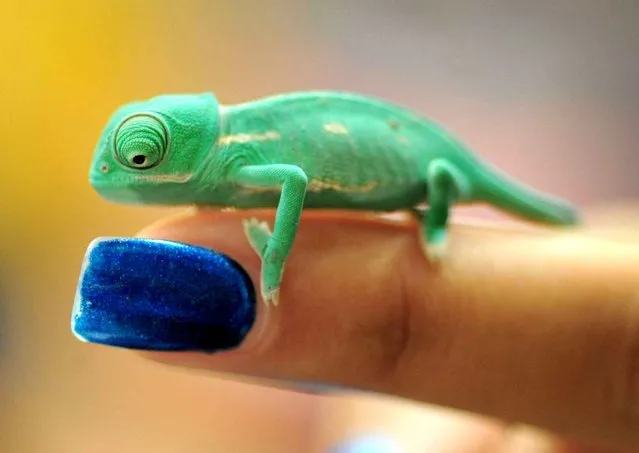
A one month old Turquoise colored Green Veiled Chameleon perches on a finger in the Cardin's Chameleons boothat Repticon 2014 Sunday, August 3, 2014 in Jacksonville, Fla. The vendor specializes in captive bred and born Veiled Chameleons and this particular specimen cost $40.00. (Photo by Bob Self/AP Photo/The Florida Times-Union)

A one month old Turquoise colored Green Veiled Chameleon perches on a finger in the Cardin's Chameleons boothat Repticon 2014 Sunday, August 3, 2014 in Jacksonville, Fla. The vendor specializes in captive bred and born Veiled Chameleons and this particular specimen cost $40.00. The Repticon reptile and Exotic Animal show made its stop in Jacksonville over Saturday and Sunday offering a variety of cold blooded critters and related supplies for sale at the University Center on the University of North Florida campus. The show, which travels nationally stops in Jacksonville several times a year according to event vendor team leader Patty Healey. (Photo by Bob Self/AP Photo/The Florida Times-Union)
Details
09 Aug 2014 11:36:00
Non-Hindus carry nets as they wait on the edge of the crater to catch offerings cast down by Hindus during the Kasodo ceremony at Mount Bromo, Probolinggo, Indonesia, August 12, 2014. The Kasodo ceremony is a way of Tengger Hindus to express their gratitude to God for good harvest and fortune. The offerings range from vegetables to chickens, from fruits to goats, from money to other valuables. (Photo by Fully Handoko/EPA)

Non-Hindus carry nets as they wait on the edge of the crater to catch offerings cast down by Hindus during the Kasodo ceremony at Mount Bromo, Probolinggo, Indonesia, August 12, 2014. The Kasodo ceremony is a way of Tengger Hindus to express their gratitude to God for good harvest and fortune. The offerings range from vegetables to chickens, from fruits to goats, from money to other valuables. (Photo by Fully Handoko/EPA)
Details
14 Aug 2014 11:06:00