Loading...
Done
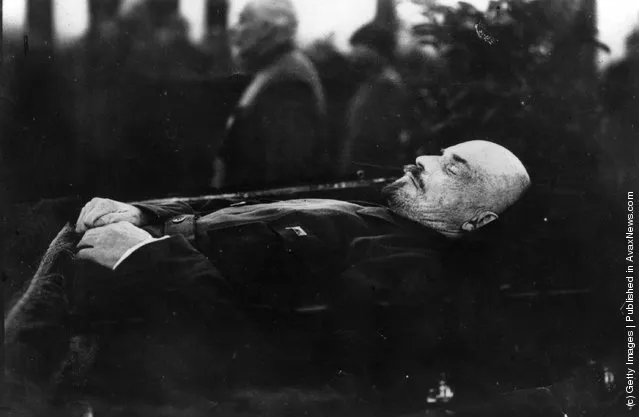
1924:  Vladimir Ilyich Lenin lying in state in the Kremlin

Photo: Vladimir Ilyich Lenin (1870 – 1924) lying in state in the Kremlin. (Photo by Hulton Archive/Getty Images). 1924

Important! For the same article in Russian language click here.

Something quite intriguing is happening within Russian-speaking internet during the last few – should you type a fully academic inquiry (at least, according to Russian academic requirements) in national search engines for "Lenin's mausoleum" – the first thing you get (even in top 10 searches) is website pages talking about black magic and occult. Website authors view this construction differently, but unconditionally agree on one thing: the mausoleum of the "leader of the world proletariat” – the essence of a magical artifact, a sort of “energy vampire”. It was built with a certain purpose: to drain the energy out of miserable Soviet citizens on one hand; and to poison the anthroposphere of one-sixth part of the earth with its vibes (the exact territory that was occupied by the former Soviet Union), depriving the Russian people of will to resist on the other hand. Complete nonsense? No doubt. Nevertheless, an intriguing one. Well, probably because some oddities do exist in mausoleum's history. These oddities are the thing we are going to discuss this time. First, let me refresh you memory on the subject.
Details
16 Oct 2011 11:27:00
Contestants of a tattoo competition pose for photographs at the China TATTOO convention in Nanning, Guangxi Zhuang Autonomous Region, China, October 24, 2015. (Photo by Reuters/Stringer)

Contestants of a tattoo competition pose for photographs at the China TATTOO convention in Nanning, Guangxi Zhuang Autonomous Region, China, October 24, 2015. The annual convention was held in Nanning from October 23 to 25 this year. (Photo by Reuters/Stringer)
Details
27 Oct 2015 08:07:00
A kingfisher dives into the leafy water of the River Alde near Rendham, Suffolk in the second decade of November 2022 and catches two fish. Kingfishers must be able to see the fish they want to catch before making their dive, so for this bird to be successful when leaves covered the surface of the water shows its true skill for survival. (Photo by Ivor Ottley/Animal News Agency)

A kingfisher dives into the leafy water of the River Alde near Rendham, Suffolk in the second decade of November 2022 and catches two fish. Kingfishers must be able to see the fish they want to catch before making their dive, so for this bird to be successful when leaves covered the surface of the water shows its true skill for survival. (Photo by Ivor Ottley/Animal News Agency)
Details
20 Nov 2022 05:49:00
A man helps a woman through a flooded neighbourhood in the aftermath of Cyclone Kenneth, in Pemba, Mozambique, April 28, 2019. (Photo by Mike Hutchings/Reuters)

A man helps a woman through a flooded neighbourhood in the aftermath of Cyclone Kenneth, in Pemba, Mozambique, April 28, 2019. (Photo by Mike Hutchings/Reuters)
Details
10 May 2019 00:01:00
Young devotees carry oil lamps in the early morning of the tenth day celebrations of Hindu Nepali festival “Dashain” at a temple in Bhaktapur on the outskirts of Kathmandu on October 24, 2023. (Photo by Prakash Mathema/AFP Photo)

Young devotees carry oil lamps in the early morning of the tenth day celebrations of Hindu Nepali festival “Dashain” at a temple in Bhaktapur on the outskirts of Kathmandu on October 24, 2023. (Photo by Prakash Mathema/AFP Photo)
Details
10 Nov 2023 05:20:00
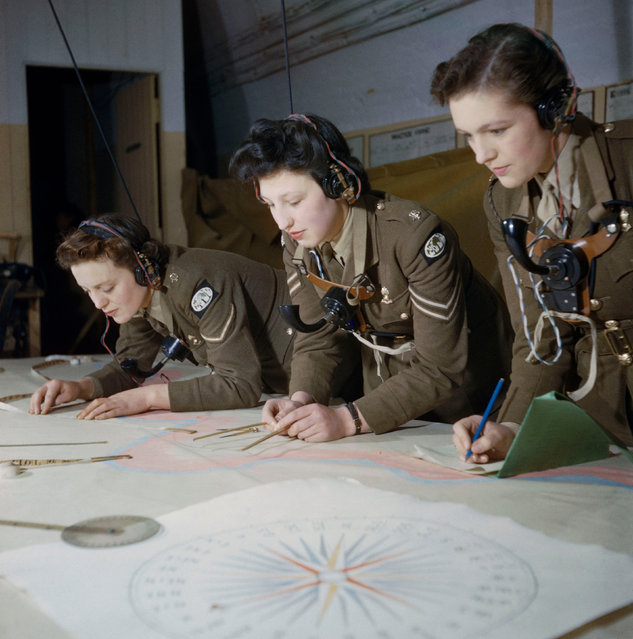
Auxiliary Territorial Service (ATS) plotters at work at Coastal Artillery Headquarters in Dover, December 1942. (Photo by Ted Dearberg/IWM/PA Wire)

Auxiliary Territorial Service (ATS) plotters at work at Coastal Artillery Headquarters in Dover, December 1942. The Auxiliary Territorial Service was the women's branch of the British Army during the Second World War. It was formed on 9 September 1938, initially as a women's voluntary service, and existed until 1 February 1949, when it was merged into the Women's Royal Army Corps. The ATS had its roots in the Women's Auxiliary Army Corps (WAAC), which was formed in 1917 as a voluntary service. During the First World War its members served in a number of jobs including clerks, cooks, telephonists and waitresses. The WAAC was disbanded after four years in 1921. (Photo by Ted Dearberg/IWM/PA Wire)
Details
13 Jul 2017 07:52:00
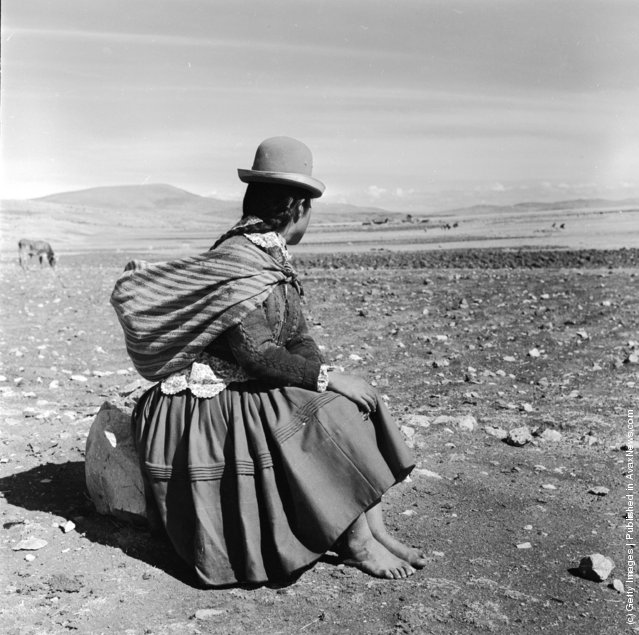
Burdened with a shawl full of her belongings, a woman stops for a rest on the road between Julaca and Puno in Peru, 1955

Burdened with a shawl full of her belongings, a woman stops for a rest on the road between Julaca and Puno in Peru. (Photo by Three Lions/Getty Images). Circa 1955
Details
09 Aug 2011 11:48:00
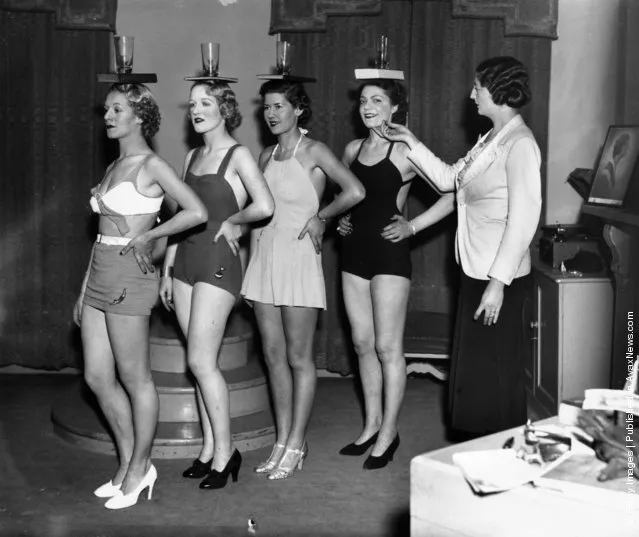
1936:  Lucie Clayton instructs pupils in the art of correct posture by balancing a glass and book on their heads at her finishing school

Lucie Clayton instructs pupils in the art of correct posture by balancing a glass and book on their heads at her finishing school in Old Cavendish Street, London. (Photo by William Vanderson/Fox Photos/Getty Images). 25th November 1936
Details
06 Sep 2011 12:06:00