Loading...
Done
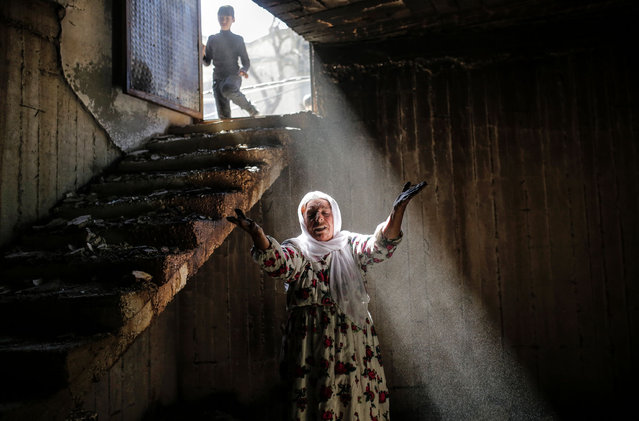
A North Korean soldier kicks a pole along the bank of Yalu River near the North Korean town of Sinuiju, opposite the Chinese border city of Dandong, February 4, 2014. (Photo by Jacky Chen/Reuters)

A North Korean soldier kicks a pole along the bank of Yalu River near the North Korean town of Sinuiju, opposite the Chinese border city of Dandong, February 4, 2014. (Photo by Jacky Chen/Reuters)
Details
14 Feb 2016 11:08:00
A woman reacts while walking among the ruins of damaged buildings following heavy fighting between government troops and Kurdish fighters, on March 2, 2016 in the southeastern Turkey Kurdish town of Cizre, near the border with Syria and Iraq. Thousands in Turkey's Kurdish-majority town of Cizre started returning to their homes today after authorities partially lifted a curfew in place since December for a controversial military operation to root out separatist rebels. (Photo by Yasin Akgül/AFP Photo)

A woman reacts while walking among the ruins of damaged buildings following heavy fighting between government troops and Kurdish fighters, on March 2, 2016 in the southeastern Turkey Kurdish town of Cizre, near the border with Syria and Iraq. Thousands in Turkey's Kurdish-majority town of Cizre started returning to their homes today after authorities partially lifted a curfew in place since December for a controversial military operation to root out separatist rebels. (Photo by Yasin Akgül/AFP Photo)
Details
03 Mar 2016 11:29:00
A woman looks at traditional Ukrainian Easter eggs “Pysanka”, installed as part of the upcoming celebrations of Easter, in central Kiev, Ukraine, April 29, 2016. A pysanka is a Ukrainian Easter egg, decorated with traditional Ukrainian folk designs using a wax-resist (batik) method. The word pysanka comes from the verb pysaty, “to write”, as the designs are not painted on, but written with beeswax. Many other eastern European ethnic groups decorate eggs using wax resist for Easter. These include the Belarusians, Bulgarians, Croats, Czechs, Hungarians, Lithuanians, Poles, Romanians, Serbs, Slovaks, Slovenes and Sorbs. (Photo by Valentyn Ogirenko/Reuters)
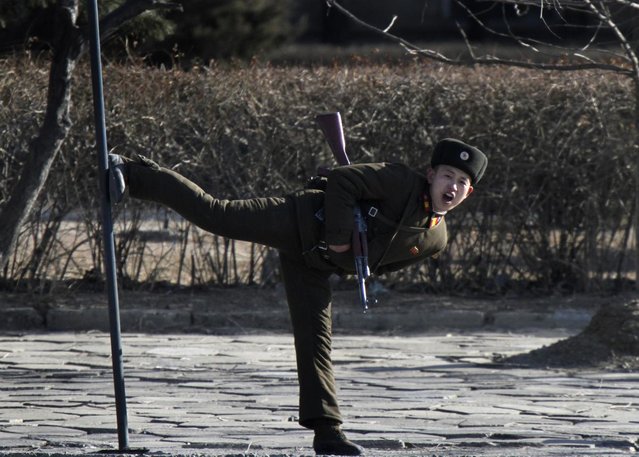

A woman looks at traditional Ukrainian Easter eggs “Pysanka”, installed as part of the upcoming celebrations of Easter, in central Kiev, Ukraine, April 29, 2016. A pysanka is a Ukrainian Easter egg, decorated with traditional Ukrainian folk designs using a wax-resist (batik) method. The word pysanka comes from the verb pysaty, “to write”, as the designs are not painted on, but written with beeswax. Many other eastern European ethnic groups decorate eggs using wax resist for Easter. These include the Belarusians, Bulgarians, Croats, Czechs, Hungarians, Lithuanians, Poles, Romanians, Serbs, Slovaks, Slovenes and Sorbs. (Photo by Valentyn Ogirenko/Reuters)
Details
30 Apr 2016 09:00:00
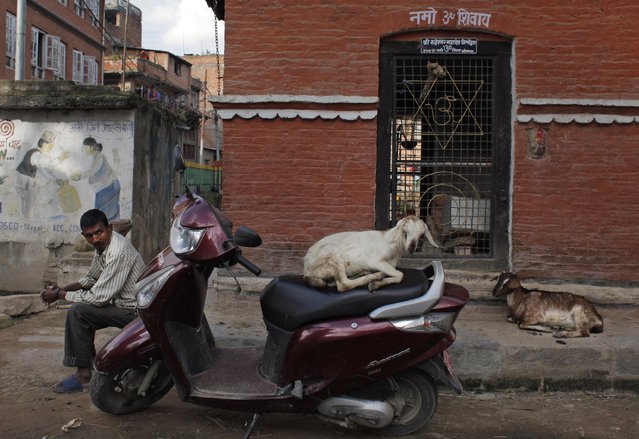
A Nepalese man sits outside a Hindu temple as a goat rests on a parked scooter in Khokana, Lalitpur District, Nepal, Monday, Sept. 26, 2016. Writing on the wall offers prayers to Hindu god Shiva. (Photo by Niranjan Shrestha/AP Photo)

A Nepalese man sits outside a Hindu temple as a goat rests on a parked scooter in Khokana, Lalitpur District, Nepal, Monday, September 26, 2016. Writing on the wall offers prayers to Hindu god Shiva. (Photo by Niranjan Shrestha/AP Photo)
Details
27 Sep 2016 09:27:00
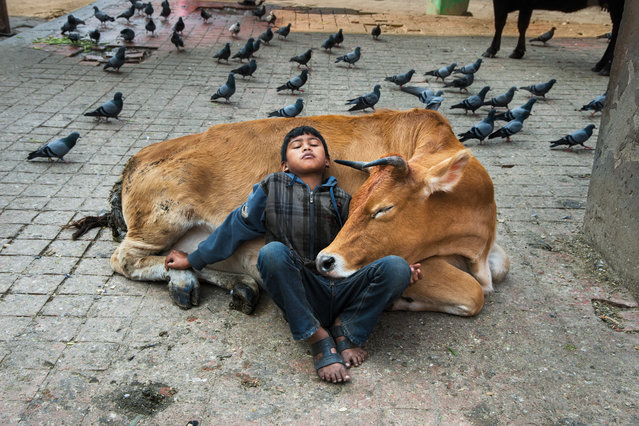
A boy rests against a cow, Kathmandu, Nepal, 2013. “Cows have been designated the national animal in Nepal. They roam freely, and are considered sacred by the 80% of Nepalis who are Hindu”. (Photo by Steve McCurry/The Guardian)

The legendary US photographer’s favourite shots of creatures and how they interact with humans feature in “Animals”, his latest book. Here: A boy rests against a cow, Kathmandu, Nepal, 2013. “Cows have been designated the national animal in Nepal. They roam freely, and are considered sacred by the 80% of Nepalis who are Hindu”. (Photo by Steve McCurry/The Guardian)
Details
07 Nov 2019 00:01:00
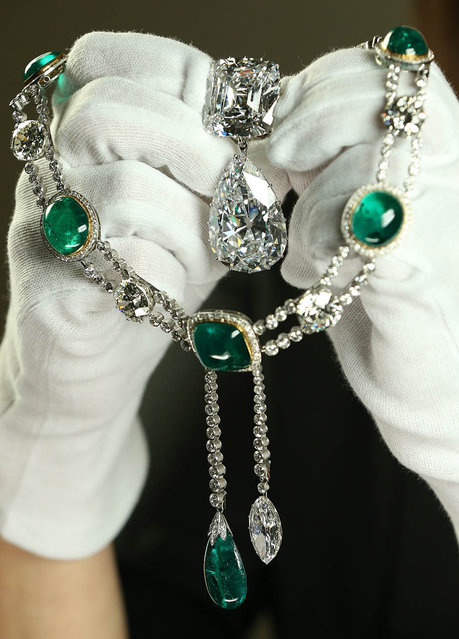
Caroline de Guitaut, Curator of Royal Collections, holds the Cullinan III and IV Broach and the Cullinan VII Delhi Durbar Necklace and Cullinan Pendant at The Queen's Gallery, Buckingham Palace

“A dazzling exhibition featuring jewelry made with the world’s largest diamond will be part of the celebrations marking the 60th anniversary of Queen Elizabeth II’s reign. The jewelry was made with a 3,106-carat diamond discovered in 1905 at the Cullinan Diamond Mine near Pretoria, the capital of South Africa. The diamond was so large that miners initially thought it was a worthless crystal and almost threw it away”... – Vidya Kauri via News.nationalpost.com

Photo: Caroline de Guitaut, Curator of Royal Collections, holds the Cullinan III and IV Broach and the Cullinan VII Delhi Durbar Necklace and Cullinan Pendant at The Queen's Gallery, Buckingham Palace on May 15, 2012 in London, England. (Photo by Peter Macdiarmid)
Details
17 May 2012 10:59:00
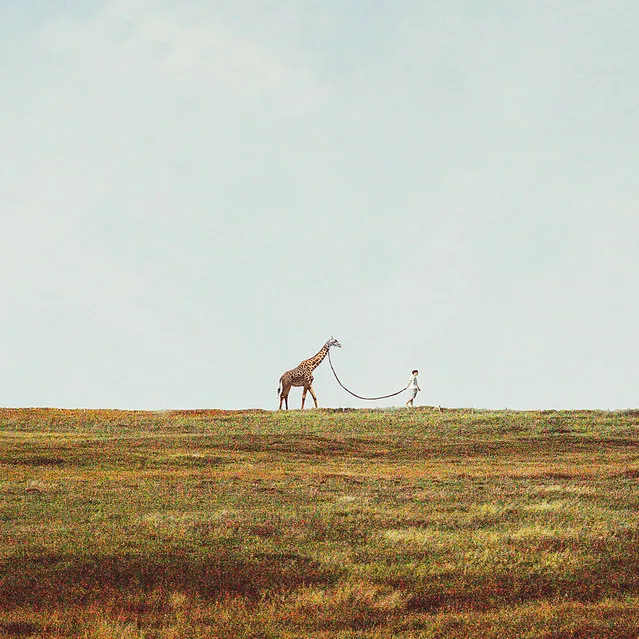
My pet. (Photo by Phillip Schumacher)

My pet. (Photo by Phillip Schumacher)
Details
15 Sep 2012 09:20:00
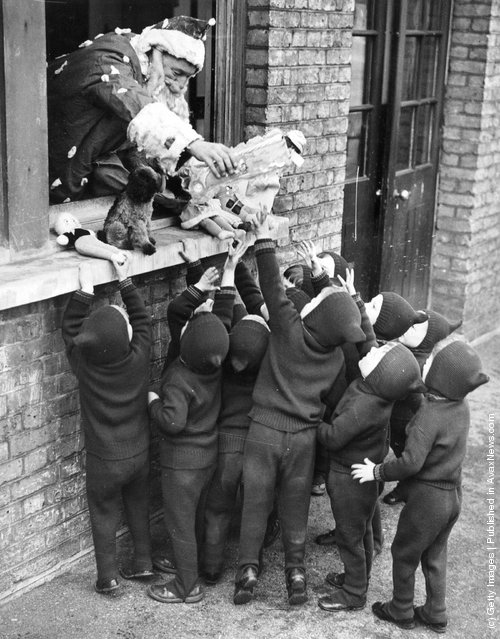
1938: Father Christmas hands out presents to children at the Aid And Adoption Society home at Leytonstone

Father Christmas hands out presents to children at the Aid And Adoption Society home at Leytonstone. (Photo by Gerry Cranham/Fox Photos/Getty Images). 7th December 1938
Details
25 Dec 2011 13:43:00