Loading...
Done
A Peru fan cheers of her team during a Quarterfinal match between Colombia and Peru at MetLife Stadium as part of Copa America Centenario US 2016 on June 17, 2016 in East Rutherford, New Jersey, US. (Photo by Chris Szagola/LatinContent/Getty Images)

A Peru fan cheers of her team during a Quarterfinal match between Colombia and Peru at MetLife Stadium as part of Copa America Centenario US 2016 on June 17, 2016 in East Rutherford, New Jersey, US. (Photo by Chris Szagola/LatinContent/Getty Images)
Details
24 Jun 2016 14:06:00
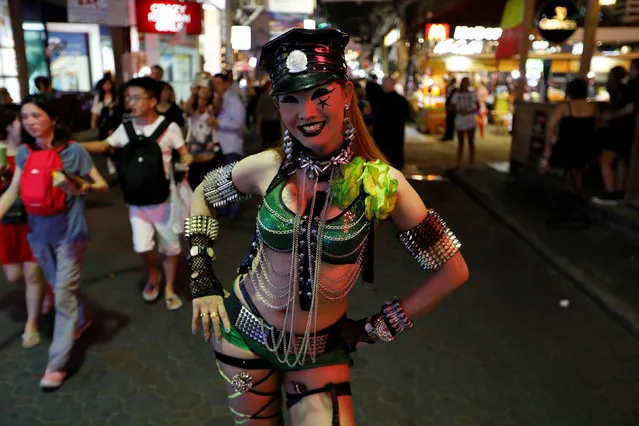
A woman promotes a go-go dance bar in Pattaya, Thailand March 25, 2017. With mascots dressed as smiling fish and a police rock band, Thai authorities launched a “Happy Zone” at the weekend to improve the image of a city notorious for sеx tourism. Stung by foreign headlines portraying the seaside resort of Pattaya as “Sin City” and “The World’s Sеx Capital”, Thailand’s junta has begun a new effort to re-brand it. Businesses in the Happy Zone are asked to make the area feel safer, there are increased security patrols, police launched a mobile phone app for visitors to summon them if an emergency occurs. (Photo by Jorge Silva/Reuters)

A woman promotes a go-go dance bar in Pattaya, Thailand March 25, 2017. With mascots dressed as smiling fish and a police rock band, Thai authorities launched a “Happy Zone” at the weekend to improve the image of a city notorious for sеx tourism. Stung by foreign headlines portraying the seaside resort of Pattaya as “Sin City” and “The World’s Sеx Capital”, Thailand’s junta has begun a new effort to re-brand it. Businesses in the Happy Zone are asked to make the area feel safer, there are increased security patrols, police launched a mobile phone app for visitors to summon them if an emergency occurs. (Photo by Jorge Silva/Reuters)
Details
28 Mar 2017 09:20:00
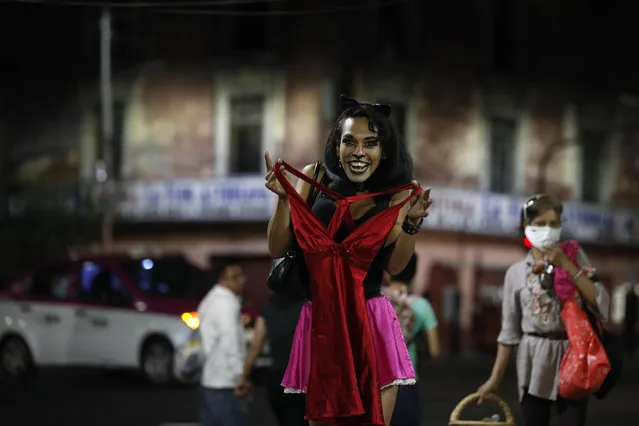
Sеx worker Geraldine, wearing cat make-up, excitedly holds up a dress she is thinking of buying from a street vendor, so that her partner, sitting nearby to keep her company, can see it, as she waits for clients outside the Revolution subway station, in Mexico City, Saturday, March 13, 2021. According to Geraldine, 30, the pandemic has cut clients and increased risks to the sеx workers but has also brought out more assistance for them too, both from dedicated organizations such as the activist group Brigada Callejera or “The Street Brigade” and from individuals who have donated food or clothing. (Photo by Rebecca Blackwell/AP Photo)


Sеx worker Geraldine, wearing cat make-up, excitedly holds up a dress she is thinking of buying from a street vendor, so that her partner, sitting nearby to keep her company, can see it, as she waits for clients outside the Revolution subway station, in Mexico City, Saturday, March 13, 2021. According to Geraldine, 30, the pandemic has cut clients and increased risks to the sеx workers but has also brought out more assistance for them too, both from dedicated organizations such as the activist group Brigada Callejera or “The Street Brigade” and from individuals who have donated food or clothing. (Photo by Rebecca Blackwell/AP Photo)
Details
25 Apr 2021 07:38:00
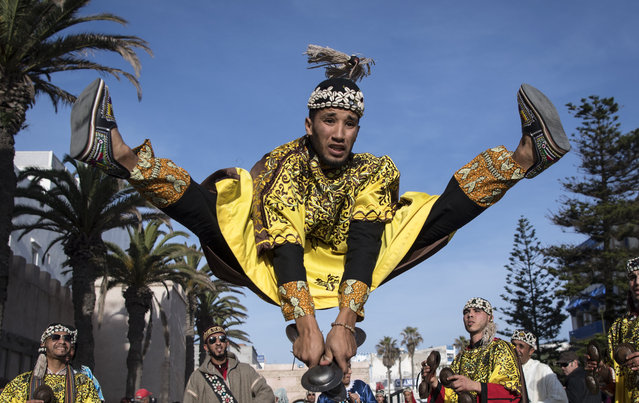
A Gnawa traditional group performs in the city of Essaouira on December 14, 2019, to celebrate the decision of adding the Gnawa culture to UNESCO's list of Intangible Cultural Heritage of Humanity. Gnawa culture, a centuries-old Moroccan practice rooted in music, African rituals and Sufi traditions, was added to UNESCO's list of Intangible Cultural Heritage of Humanity earlier in the week. Gnawa refers to a “set of musical productions, fraternal practices and therapeutic rituals where the secular mixes with the sacred”, according to the nomination submitted by Morocco. Often dressed in colourful outfits, Gnawa musicians play the guenbri, a type of lute with three strings, accompanied by steel castanets called krakebs. (Photo by Fadel Senna/AFP Photo)

A Gnawa traditional group performs in the city of Essaouira on December 14, 2019, to celebrate the decision of adding the Gnawa culture to UNESCO's list of Intangible Cultural Heritage of Humanity. Gnawa culture, a centuries-old Moroccan practice rooted in music, African rituals and Sufi traditions, was added to UNESCO's list of Intangible Cultural Heritage of Humanity earlier in the week. Gnawa refers to a “set of musical productions, fraternal practices and therapeutic rituals where the secular mixes with the sacred”, according to the nomination submitted by Morocco. Often dressed in colourful outfits, Gnawa musicians play the guenbri, a type of lute with three strings, accompanied by steel castanets called krakebs. (Photo by Fadel Senna/AFP Photo)
Details
18 Dec 2019 00:05:00
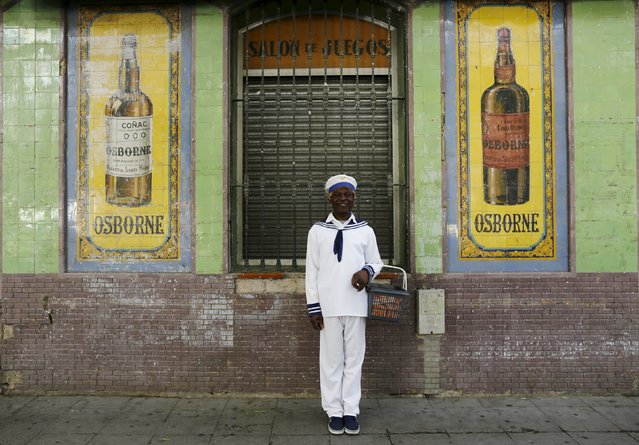
Howard Jackson, a Liberian migrant, poses for a portrait in the Andalusian capital of Seville, southern Spain March 7, 2016. (Photo by Marcelo del Pozo/Reuters)

Howard Jackson, a Liberian migrant, poses for a portrait in the Andalusian capital of Seville, southern Spain March 7, 2016. Jackson escaped civil war and spent three years crossing Africa before reaching Spain. Dressed up in one of his more than 200 costumes, from Peter Pan to Little Red Riding Hood, he is a well-known figure at an intersection entering the Spanish city of Seville where he has sold tissues to motorists for over a decade. Jackson is studying law and wants to become a judge. (Photo by Marcelo del Pozo/Reuters)
Details
24 Mar 2016 12:14:00
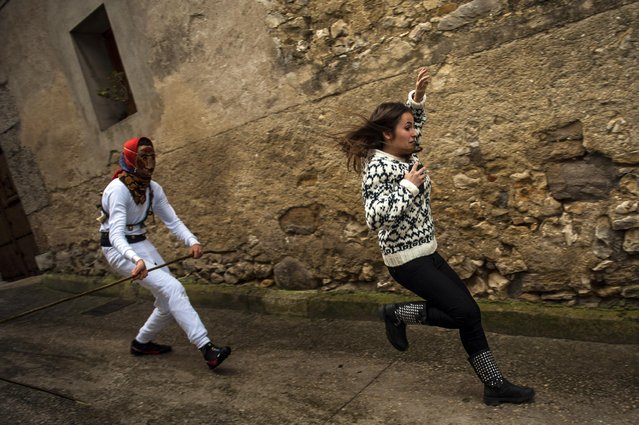
In this photo taken on Sunday, February 15, 2015 a girl runs away from a “Mamuxarro” during the carnival, in the small town of Unanu, northern Spain. While Rio de Janeiro may boast the world’s most famous carnival, the festive period of masquerades and wild and colorful costumes that precedes the Christian religious season of Lent is also a permanent and popular fixture for celebration in Spain and Portugal, with each country having its own strange and unique way of doing it. (Photo by Alvaro Barrientos/AP Photo)

In this photo taken on Sunday, February 15, 2015 a girl runs away from a “Mamuxarro” during the carnival, in the small town of Unanu, northern Spain. In the northern Spanish ancient village of Unamu, people dress up as “Mamuxarro”, folkloric figures in white with a red sash and a metal mask to cover their faces as they pursue townsfolk with sticks. According to custom, their “victims” (usually young women) must kneel and kiss the mamuxarro’s knee after he makes the sign of the cross on their forehead. (Photo by Alvaro Barrientos/AP Photo)
Details
22 Feb 2015 10:51:00
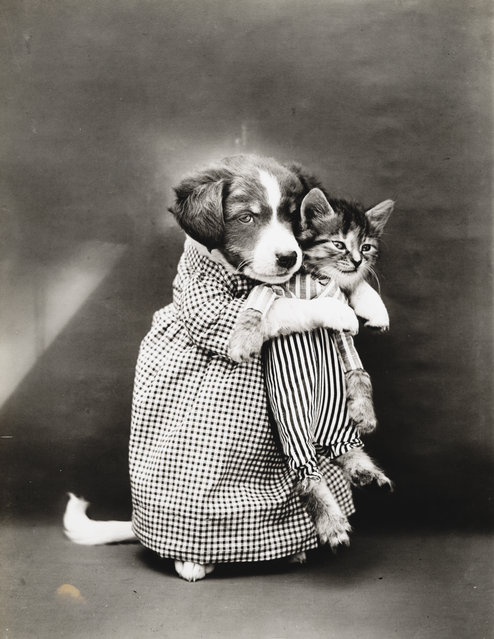
Photograph shows a puppy holding a kitten, 1914. (Photo by Harry Whittier Frees/Library of Congress)

“Harry Whittier Frees (1879–1953) was an American photographer who created novelty postcards and children's books based on his photographs of animals. He dressed the animals and posed them in human situations with props, often with captions; these can be seen as progenitors of modern lolcats”. – Wikipedia. Photo: “The nurse”. Photograph shows a puppy holding a kitten, 1914. (Photo by Harry Whittier Frees/Library of Congress)

P.S. All pictures are presented in high resolution. To see Hi-Res images – just TWICE click on any picture. In other words, click small picture – opens the BIG picture. Click BIG picture – opens VERY BIG picture (if available; this principle works anywhere on the site AvaxNews).
Details
28 Mar 2014 11:20:00
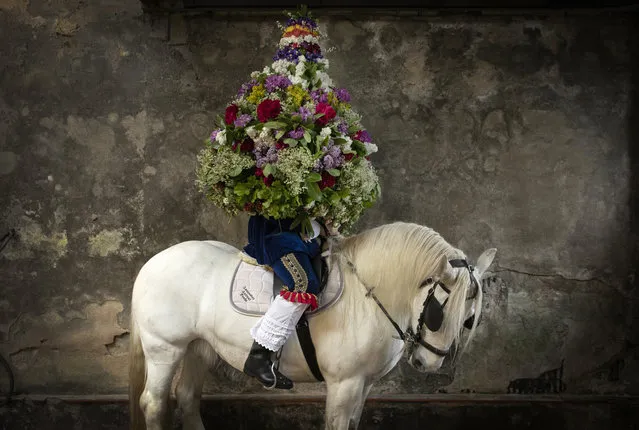
“The King”, Johnathon Haddock poses for a portrait with the Garland before the procession during “Castleton Garland Day” on May 29, 2019 in Castleton, England. The first records of Garland day date back to the 1700's and though it's true origins are not fully understood it is believed to be an ancient fertility rite with Celtic connections. The celebration also incorporates more recent elements of 'Oak Apple Day' which falls on May 29th, and celebrates the restoration of the monarchy in 1660. The garland is a framework of cut flowers which is prepared on the day by villagers before being placed on the head of the “King”, and paraded around the town on horseback with his “Consort”, also on horseback, dressed in Stuart costume. (Photo by Dan Kitwood/Getty Images)

“The King”, Johnathon Haddock poses for a portrait with the Garland before the procession during “Castleton Garland Day” on May 29, 2019 in Castleton, England. The first records of Garland day date back to the 1700's and though it's true origins are not fully understood it is believed to be an ancient fertility rite with Celtic connections. (Photo by Dan Kitwood/Getty Images)
Details
01 Jun 2019 00:07:00