Loading...
Done
A picture taken on October 17, 2017 shows Madame Tussauds museum's wax figure of US President displayed along the East Side Gallery section of the Wall in Berlin during a photo session. The wax figure will be displayed at Madame Tussauds museum in Berlin from October 20, 2017. (Photo by Jens Kalaene/AFP Photo/DPA)

A picture taken on October 17, 2017 shows Madame Tussauds museum's wax figure of US President displayed along the East Side Gallery section of the Wall in Berlin during a photo session. The wax figure will be displayed at Madame Tussauds museum in Berlin from October 20, 2017. (Photo by Jens Kalaene/AFP Photo/DPA)
Details
18 Oct 2017 09:18:00
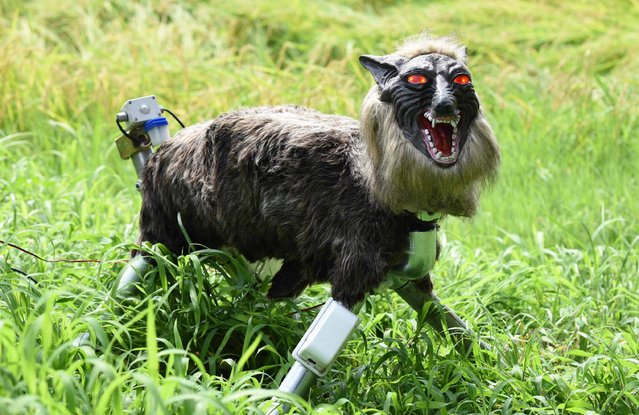
A wolf-like robot “Super Monster Wolf” stands beside a rice field to drive away wild animals that cause damages to crops in Kisarazu, Chiba prefecture, on August 25, 2017. The agricultural coopetative association JA Kisarazu-shi introduced the 65cm-long and 50cm-high robot recently on a trial basis which can detect wild animals such as boars and deers with an infrared ray sensor when they approach and intimidates them, flashing the red LED eyes and blaring 48 types of sounds including a wolf growl and human voice. (Photo by Toru Yamanaka/AFP Photo)

A wolf-like robot “Super Monster Wolf” stands beside a rice field to drive away wild animals that cause damages to crops in Kisarazu, Chiba prefecture, on August 25, 2017. The agricultural coopetative association JA Kisarazu-shi introduced the 65cm-long and 50cm-high robot recently on a trial basis which can detect wild animals such as boars and deers with an infrared ray sensor when they approach and intimidates them, flashing the red LED eyes and blaring 48 types of sounds including a wolf growl and human voice. (Photo by Toru Yamanaka/AFP Photo)
Details
27 Aug 2017 07:17:00
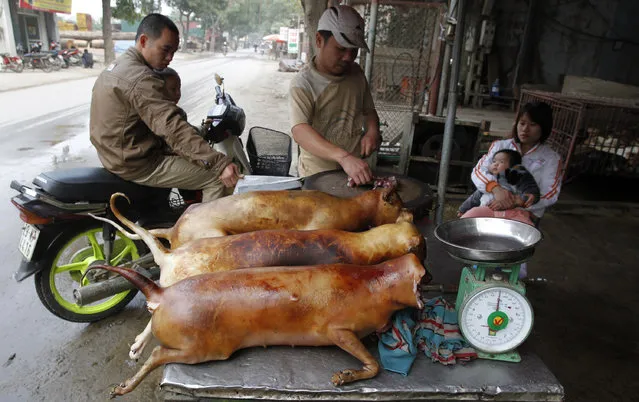
A vendor (C) cuts slaughtered dogs for sale at his roadside stall in Duong Noi village, outside Hanoi December 16, 2011. While animal rights activists have condemned eating dog meat as cruel treatment of the animals, it is still an accepted popular delicacy for some Vietnamese, as well in some other Asian countries. (Photo by Reuters/Kham)

A vendor (C) cuts slaughtered dogs for sale at his roadside stall in Duong Noi village, outside Hanoi December 16, 2011. While animal rights activists have condemned eating dog meat as cruel treatment of the animals, it is still an accepted popular delicacy for some Vietnamese, as well in some other Asian countries. Duong Noi is well-known as a dog-meat village, where hundreds of dogs are killed each day for sale as popular traditional food. Dog-eating as a custom is rooted in Vietnam and was developed as a result of poverty. One kilogram of dog meat costs about 130,000 dongs ($6.2). (Photo by Reuters/Kham)
Details
16 Jul 2013 11:40:00
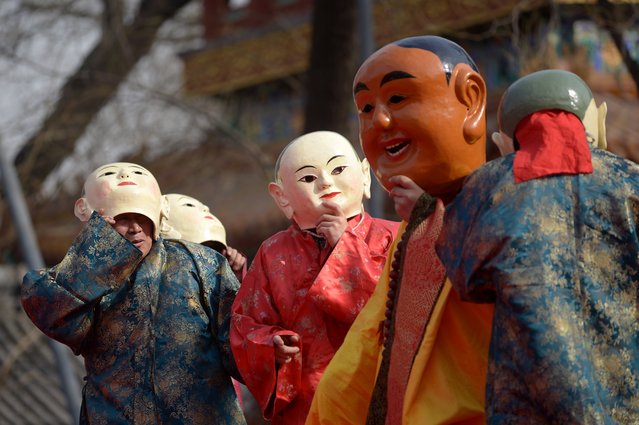
Tibetan monks dressed as demons attend the Beating Ghost festival at the Yonghe Temple, also known as the Lama Temple, in Beijing on March 19, 2015. The Beating Ghost festival, or Da Gui festival in Chinese, is an important ritual of Tibetan Buddhism and is believed to expel evil spirits and shake off troubles. (Photo by Wang Zhao/AFP Photo)

Tibetan monks dressed as demons attend the Beating Ghost festival at the Yonghe Temple, also known as the Lama Temple, in Beijing on March 19, 2015. The Beating Ghost festival, or Da Gui festival in Chinese, is an important ritual of Tibetan Buddhism and is believed to expel evil spirits and shake off troubles. (Photo by Wang Zhao/AFP Photo)
Details
22 Mar 2015 11:45:00
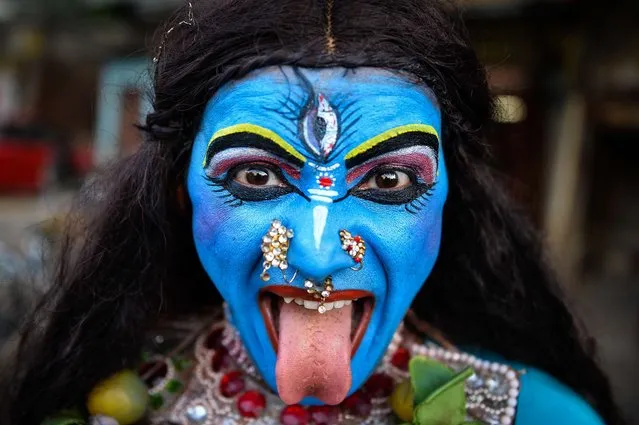
 Indian artist, Ravi Kali (32), dressed as Hindu goddess Kali, participates in a religious procession for the Hindu festival, Ganesh Chaturthi in New Delhi on September 24, 2015. (Photo by Chandan Khanna/AFP Photo)

Indian artist, Ravi Kali (32), dressed as Hindu goddess Kali, participates in a religious procession for the Hindu festival, Ganesh Chaturthi in New Delhi on September 24, 2015. (Photo by Chandan Khanna/AFP Photo)
Details
04 Oct 2015 08:01:00
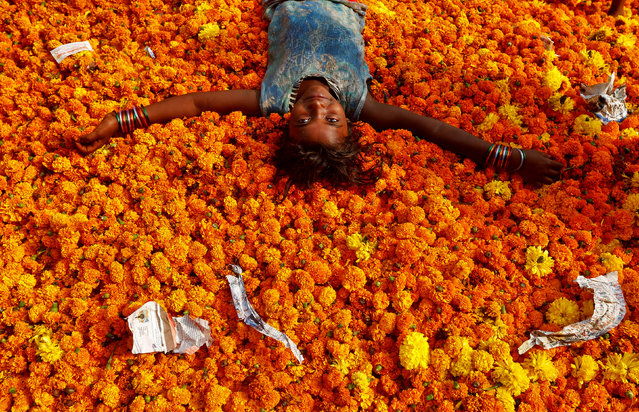
A girl plays on a pile of discarded flowers outside a market, the day after the Diwali celebrations in Mumbai, India October 31, 2016. (Photo by Shailesh Andrade/Reuters)

A girl plays on a pile of discarded flowers outside a market, the day after the Diwali celebrations in Mumbai, India October 31, 2016. (Photo by Shailesh Andrade/Reuters)
Details
01 Nov 2016 12:05:00
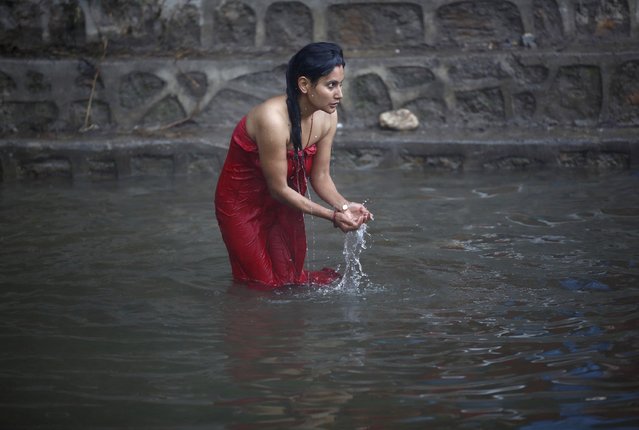
A devotee takes a holy bath in River Saali in Sankhu on the first day of Swasthani Brata Katha festival in Kathmandu January 5, 2015. During the month long festival, devotees recite one chapter of a Hindu tale daily from the 31-chapter sacred Swasthani Brata Katha book that is dedicated to God Madhavnarayan and Goddess Swasthani, alongside various other gods and goddess and the miraculous feats performed by them. (Photo by Navesh Chitrakar/Reuters)

A devotee takes a holy bath in River Saali in Sankhu on the first day of Swasthani Brata Katha festival in Kathmandu January 5, 2015. During the month long festival, devotees recite one chapter of a Hindu tale daily from the 31-chapter sacred Swasthani Brata Katha book that is dedicated to God Madhavnarayan and Goddess Swasthani, alongside various other gods and goddess and the miraculous feats performed by them. (Photo by Navesh Chitrakar/Reuters)
Details
06 Jan 2015 12:22:00
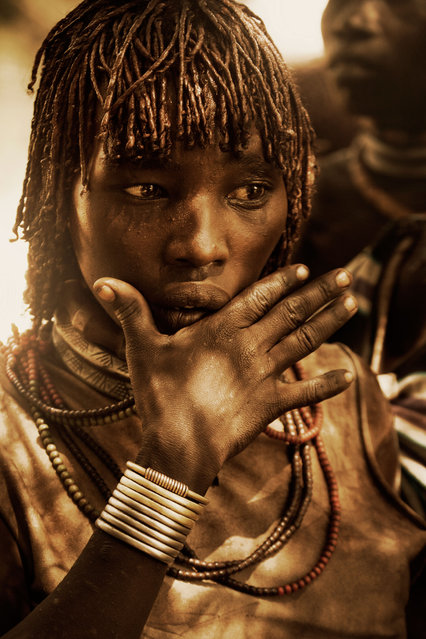
The Hamar people traditionally use red ocher clay to braid the hair of their women. (Photo by Diego Arroyo)

During his time in Ethiopia, New York-based art director and photographer Diego Arroyo spent time with the Hamar, Mursi, Dassanech, and Arbore Tribes. They, along with several others tribes, make up the 200,000 people situated in Africa’s Great Rift Valley. The people of the Omo Valley are still primarily herders and farmers, living an isolated and simple life. While they have yet to be truly touched by globalization, they could soon disappear. Their way of life is being threatened by a massive hydroelectric dam. (Photo by Diego Arroyo)
Details
13 Aug 2014 10:00:00