Loading...
Done
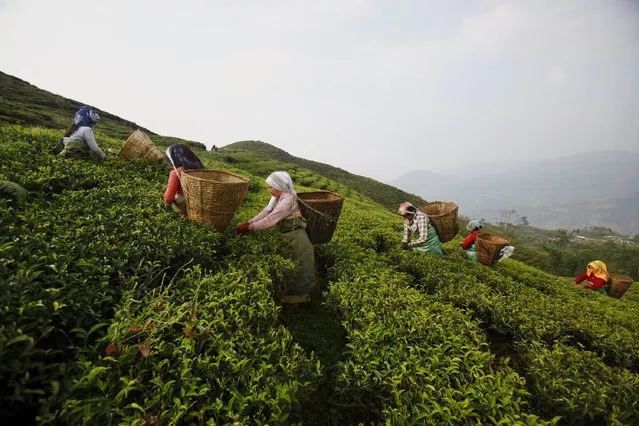
In this Sunday, November 16, 2014 photo, Nepalese women pick tea at a tea garden of Kanyam in Illam district, around 500 kilometers (310 miles) from Katmandu, Nepal. Illam is a hilly district of tea gardens and estates in eastern Nepal's Himalayan region with one of its largest and most productive tea estate being Kanyam estates. (Photo by Niranjan Shrestha/AP Photo)

In this Sunday, November 16, 2014 photo, Nepalese women pick tea at a tea garden of Kanyam in Illam district, around 500 kilometers (310 miles) from Katmandu, Nepal. Illam is a hilly district of tea gardens and estates in eastern Nepal's Himalayan region with one of its largest and most productive tea estate being Kanyam estates. The district produces orthodox tea, hand-processed or machine rolled, which is generally exported to international markets, specially Europe and the United States. Most of the tea pickers here are paid 186 Nepalese Rupees (US $ 2) for 8 hours of work everyday. (Photo by Niranjan Shrestha/AP Photo)
Details
19 Nov 2014 14:28:00
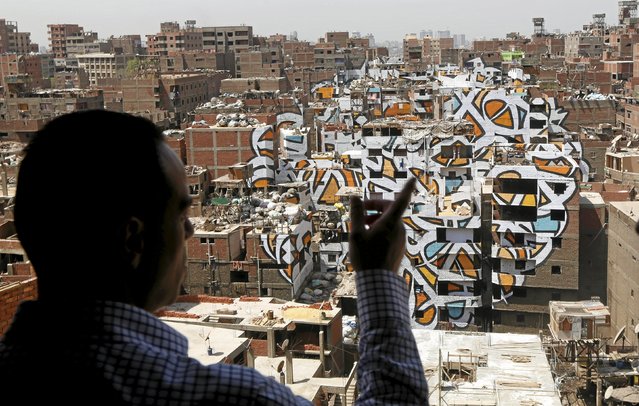
A man looks at a mural painted on the walls of houses in Zaraeeb, created by French-Tunisian artist El Seed, in the shanty area known also as Zabaleen or “Garbage City” on the Mokattam Hills in eastern Cairo, Egypt, April 4, 2016. (Photo by Amr Abdallah Dalsh/Reuters)

A man looks at a mural painted on the walls of houses in Zaraeeb, created by French-Tunisian artist El Seed, in the shanty area known also as Zabaleen or “Garbage City” on the Mokattam Hills in eastern Cairo, Egypt, April 4, 2016. (Photo by Amr Abdallah Dalsh/Reuters)
Details
15 Apr 2016 11:01:00
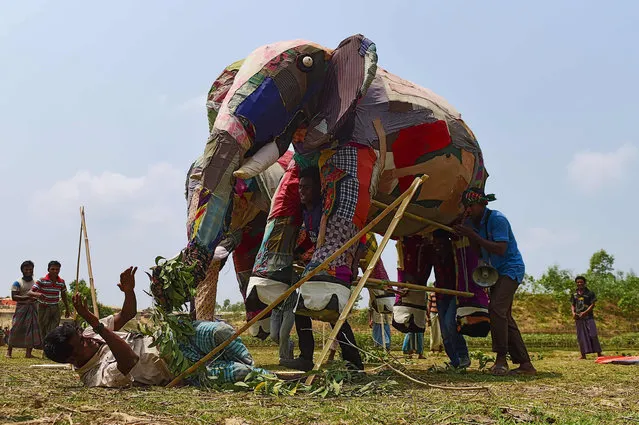
This photo taken on April 7, 2018 shows Rohingya refugee attending a demonstration of elephant resistance arranged by the UNHCR and IUCN at the Kutupalong refugee camp in Ukhia, Bangladesh. The purpose of the training day is sobering – a dozen Rohingya have been killed by wild elephants whose habitat has been consumed by Kutupalong refugee camp. (Photo by Munir Uz Zaman/AFP Photo)

This photo taken on April 7, 2018 shows Rohingya refugee attending a demonstration of elephant resistance arranged by the UNHCR and IUCN at the Kutupalong refugee camp in Ukhia, Bangladesh. The purpose of the training day is sobering – a dozen Rohingya have been killed by wild elephants whose habitat has been consumed by Kutupalong refugee camp. (Photo by Munir Uz Zaman/AFP Photo)
Details
16 May 2018 00:01:00
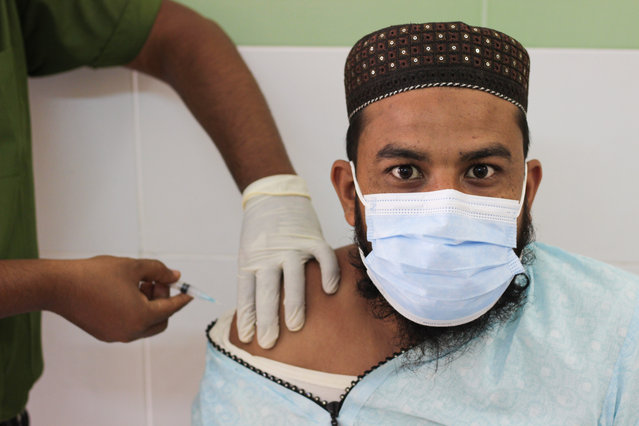
Medical staff administering the dose of Moderna COVID-19 Vaccine at the M A G Osmani Medical College & Hospital vaccination center in Sylhet, Bangladesh on July 26, 2021. (Photo by Md Rafayat Haque Khan/ZUMA Press Wire/Rex Features/Shutterstock)

Medical staff administering the dose of Moderna COVID-19 Vaccine at the M A G Osmani Medical College & Hospital vaccination center in Sylhet, Bangladesh on July 26, 2021. (Photo by Md Rafayat Haque Khan/ZUMA Press Wire/Rex Features/Shutterstock)
Details
01 Aug 2021 04:45:00
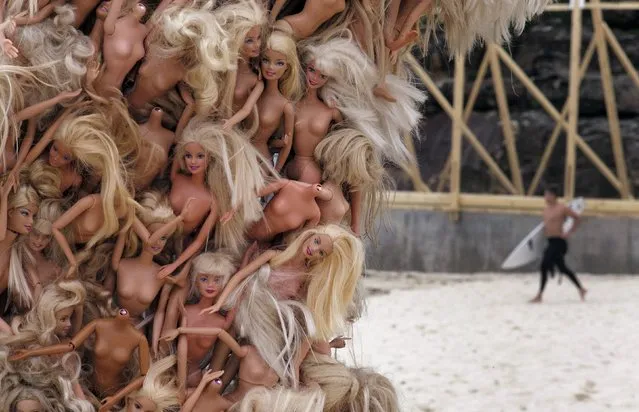
A surfer runs down the beach past hundreds of Barbie dolls comprising the sculpture 'Wave 2' by West Australian artist Annette Thas on Tamarama Beach during the 19th annual Sculptures by the Sea exhibition in Sydney, October 23, 2015. (Photo by Jason Reed/Reuters)

A surfer runs down the beach past hundreds of Barbie dolls comprising the sculpture 'Wave 2' by West Australian artist Annette Thas on Tamarama Beach during the 19th annual Sculptures by the Sea exhibition in Sydney, October 23, 2015. Sydney's coastal walk between Bondi and Tamarama has been transformed into a temporary sculpture park featuring over 100 sculptures from Australian and international artists, billed as the largest free sculpture exhibition in the world. (Photo by Jason Reed/Reuters)
Details
27 Oct 2015 08:05:00
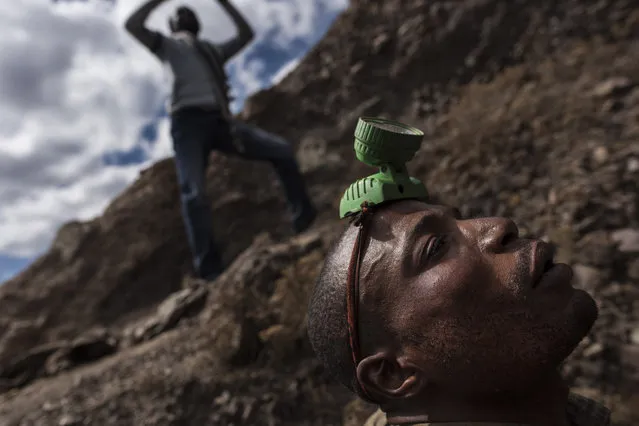
A “creuseur”, or digger, a plastic lantern on his head, readies to enter a copper and cobalt mine in Kawama, Democratic Republic of Congo on June 8, 2016. Cobalt is used in the batteries for electric cars and mobile phones. Working conditions are dangerous, often with no safety equipment or structural support for the tunnels. The diggers say they are paid on average US$2-3/day. (Photo by Michael Robinson Chavez/The Washington Post)

A “creuseur”, or digger, a plastic lantern on his head, readies to enter a copper and cobalt mine in Kawama, Democratic Republic of Congo on June 8, 2016. Cobalt is used in the batteries for electric cars and mobile phones. Working conditions are dangerous, often with no safety equipment or structural support for the tunnels. The diggers say they are paid on average US$2-3/day. (Photo by Michael Robinson Chavez/The Washington Post)
Details
30 Dec 2016 10:29:00
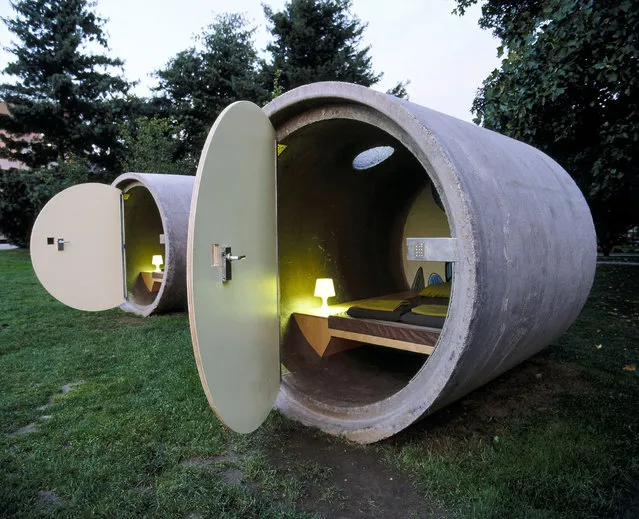
Sleepaway In A Sewer Pipe At Dasparkhotels in Austria And Germany

Das Park Hotel was designed by Austrian architect and designer Andreas Strauss , and it is located in Linz, Austria. From inside, “rooms” have been humanized by Austrian artist Thomas Latzel Ochoa, who painted illustrations on walls. Hotel is open from May till October.

Details
06 Jul 2015 09:32:00
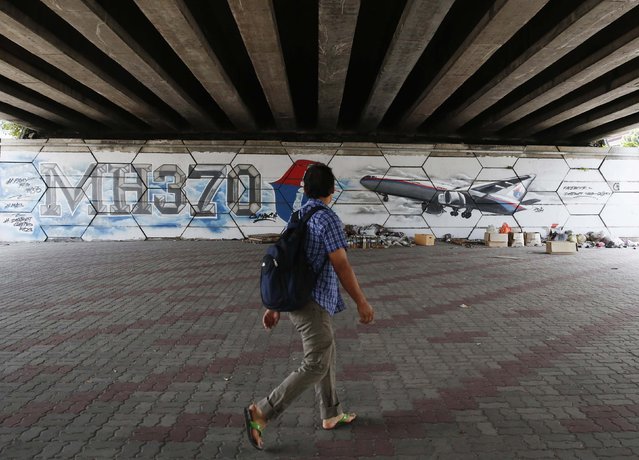
A man walks past graffiti depicting the missing Malaysia Airlines flight MH370 on the one year anniversary of its disappearance in Kuala Lumpur, March 8, 2015. Prime Minister Najib Razak said on Sunday Malaysia remains committed to the search for the missing MH370 jetliner a year after it vanished without trace and he is hopeful it will be found. REUTERS/Olivia Harris (MALAYSIA - Tags: TRANSPORT DISASTER ANNIVERSARY)

A man walks past graffiti depicting the missing Malaysia Airlines flight MH370 on the one year anniversary of its disappearance in Kuala Lumpur, March 8, 2015. Prime Minister Najib Razak said on Sunday Malaysia remains committed to the search for the missing MH370 jetliner a year after it vanished without trace and he is hopeful it will be found. REUTERS/Olivia Harris (MALAYSIA - Tags: TRANSPORT DISASTER ANNIVERSARY)
Details
13 Mar 2015 13:07:00