Loading...
Done
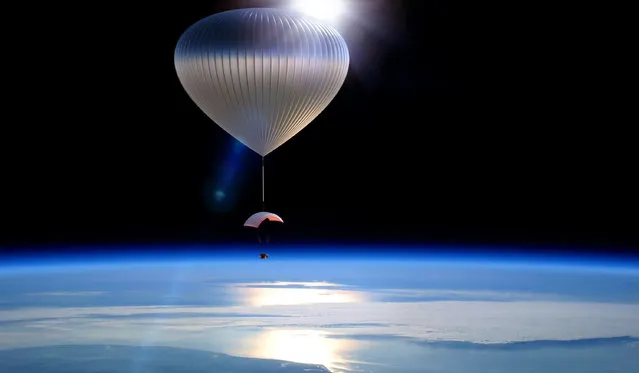
This undated image provided by World View shows World View capsule and balloon spacecraft that will rise to 100,000 feet above Earth for passengers to see the curvature of the planet and the blackness of space. (Photo by World View via AP Photo)

This undated image provided by World View shows World View capsule and balloon spacecraft that will rise to 100,000 feet above Earth for passengers to see the curvature of the planet and the blackness of space. Space tourism companies are employing designs including winged vehicles, vertical rockets with capsules and high-altitude balloons. While developers envision ultimately taking people to orbiting habitats, the moon or beyond, the immediate future involves short flights into or near the lowest reaches of space without going into orbit. (Photo by World View via AP Photo)
Details
15 Feb 2016 10:28:00
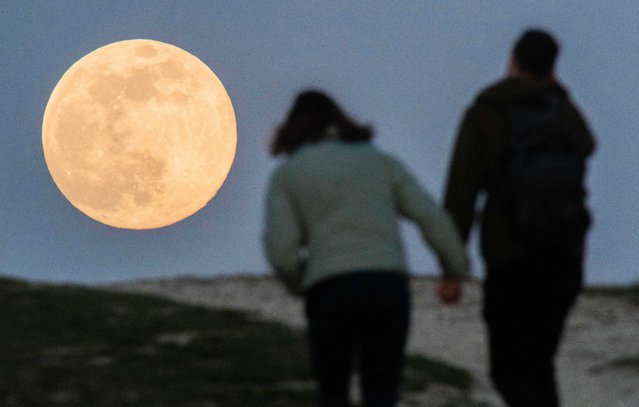
A couple is walking hand-held up Kronsberg, just outside Hanover, Germany on April 7, 2020, when the moon rises on the horizon as the so-called supermoon. The moon reaches its perigee, i.e. the point closest to the Earth's orbit, on the night of 7-8 April as a full moon and therefore appears particularly large to the human observer. (Photo by Julian Stratenschulte/dpa via ZUMA Press)

A couple is walking hand-held up Kronsberg, just outside Hanover, Germany on April 7, 2020, when the moon rises on the horizon as the so-called supermoon. The moon reaches its perigee, i.e. the point closest to the Earth's orbit, on the night of 7-8 April as a full moon and therefore appears particularly large to the human observer. (Photo by Julian Stratenschulte/dpa via ZUMA Press)
Details
09 Apr 2020 00:07:00
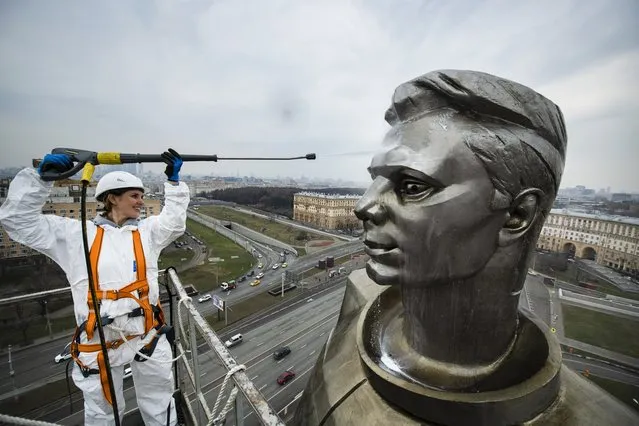
A worker cleans the statue of Yuri Gagarin, the first person who flew to space, ahead of Cosmonautics Day celebrated on April 12, in Moscow, Russia, Wednesday April 10, 2019. Cosmonautics Day marks when Soviet cosmonaut Yuri Gagarin became the first man to fly in space, in 1961, orbiting the earth once before making a safe landing. (Photo by Maxim Marmur/AP Photo)

A worker cleans the statue of Yuri Gagarin, the first person who flew to space, ahead of Cosmonautics Day celebrated on April 12, in Moscow, Russia, Wednesday April 10, 2019. Cosmonautics Day marks when Soviet cosmonaut Yuri Gagarin became the first man to fly in space, in 1961, orbiting the earth once before making a safe landing. (Photo by Maxim Marmur/AP Photo)
Details
12 Apr 2019 00:07:00
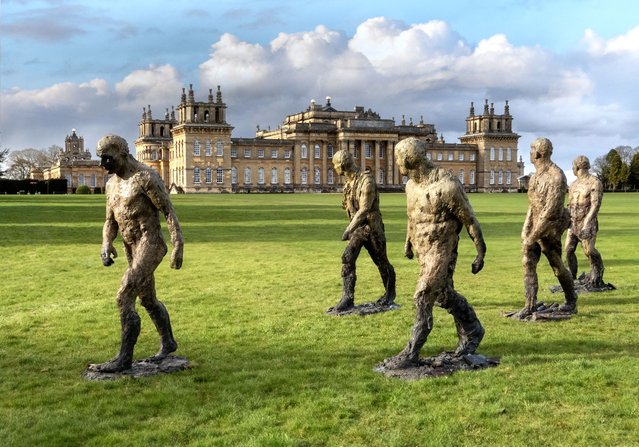
British sculptor Laurence Edwards' striking bronze figures, Walking Men, at Blenheim Palace in Oxfordshire, UK on April 9, 2024. The 8ft tall figures are seen to be anti-heroic and seem to have come from the earth itself. Branches, leaves and clods of clay are woven through them, making it unclear where human and ground begin and end. (Photo by Pete Seaward/South West News Service)

British sculptor Laurence Edwards' striking bronze figures, Walking Men, at Blenheim Palace in Oxfordshire, UK on April 9, 2024. The 8ft tall figures are seen to be anti-heroic and seem to have come from the earth itself. Branches, leaves and clods of clay are woven through them, making it unclear where human and ground begin and end. (Photo by Pete Seaward/South West News Service)
Details
21 May 2024 13:56:00
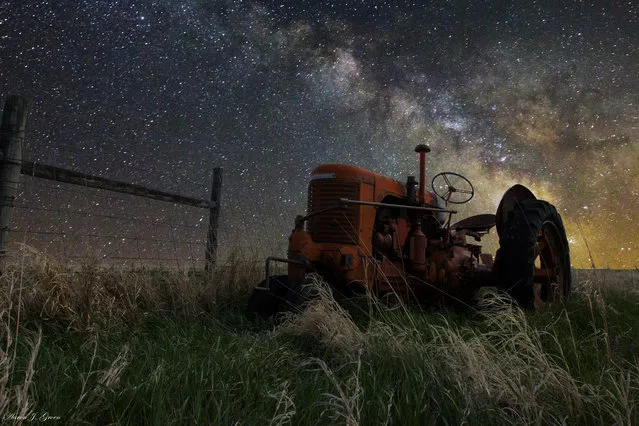
Dark Places By Aaron Groen

Looking at the photos taken by Aaron Groenom, very easy to get lost in this starry wonderland. A series of photos Dark Places - a collection of works in which the artist from South Dakota contrasts the beauty of the universe to various natural or man-made forms on Earth. Using long exposures, it captures the magical landscape filled with fabulous atmosphere, striking color palettes and far-distant galaxies.
Details
06 Jul 2013 17:56:00


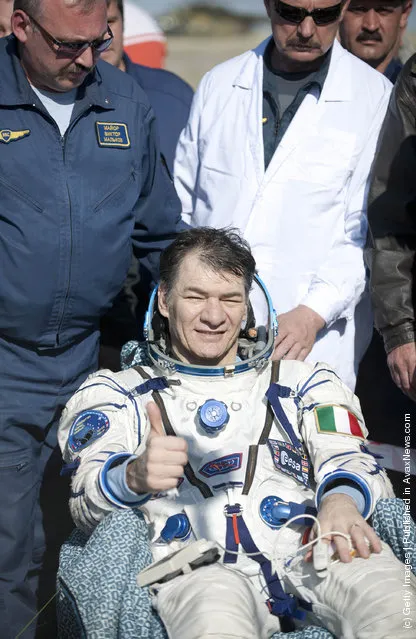
ESA astronaut Paolo Nespoli looks on after landing back on Earth from their Soyuz TMA-20 spacecraft on May 24, 2011 in Zhezkazgan, Kazakhstan. The mission of the Soyuz TMA-20 was launched last December to the International Space Station with the flight engineers Catherine Coleman from the United States, Russian cosmonaut Dmitry Kondratyev and Italian astronaut Paolo Nespoli. The next expedition is expected to launch this June. (Photo by Stephane Corvaja/ESA via Getty Images)
Details
24 May 2011 10:06:00
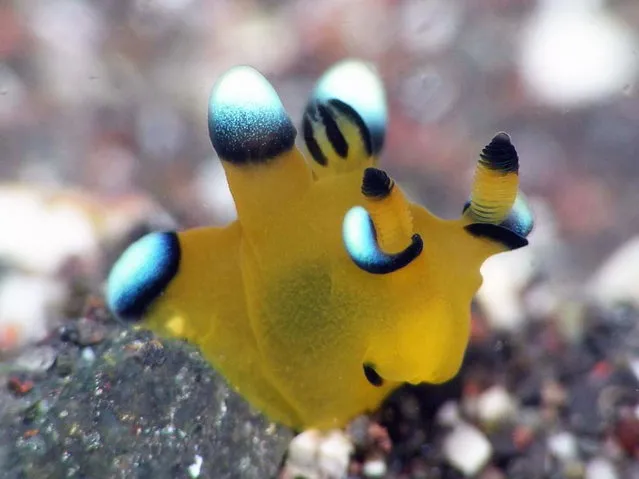
Thecacera Pacifica AKA Pikachu

If you ever wanted to meet a live Pikachu, you might have a hard time finding one. However, there is a creature on this Earth that kind of looks like one. That creature’s name is Thecacera pacifica and it is a species of a sea slug. These little critters can be found in the Indian Ocean from African coast to Indonesia and Vanuatu. Their vibrant orange and blue colors look gorgeous, making it look like some sort of anemone. Also, as you might have guessed from the striking colors of the sea slug, just like most of anemones, this creature is very toxic. Thus, keeping it as a pet isn’t an option.

Details
19 Dec 2014 12:51:00
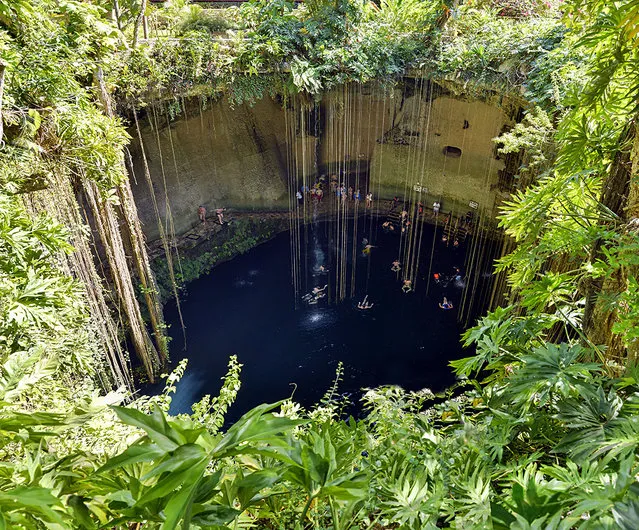
Cenote In Mexico

A cenote is a natural phenomenon, a sinkhole in the Earth’s surface. The Yucatan Peninsula in Mexico has an estimated 7,000 cenotes because it is primarily made up of porous limestone. For millions of years, rainfall slowly ate away at the limestone and a huge system of underground caves and caverns was formed. Many filled with water from rain or from the underground water table. When the roof of a water filled cave collapses, a cenote is born. The water found in a cenote may be fresh water, salt water, or both. Structurally it may be completely open, like a lake, almost completely closed with just a small opening at the top, or somewhere in between.
Details
06 Oct 2013 09:45:00