Loading...
Done
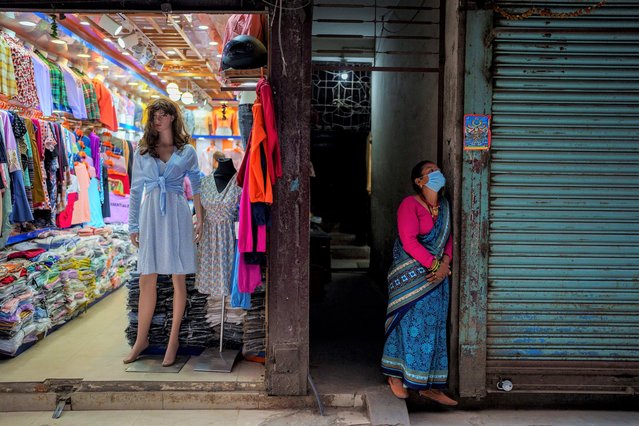
A Nepalese woman wearing a mask as a precaution against the coronavirus stands next to the clothing store in Kathmandu, Nepal, Tuesday, April 26, 2022. (Photo by Niranjan Shrestha/AP Photo)

A Nepalese woman wearing a mask as a precaution against the coronavirus stands next to the clothing store in Kathmandu, Nepal, Tuesday, April 26, 2022. (Photo by Niranjan Shrestha/AP Photo)
Details
19 Aug 2022 04:44:00
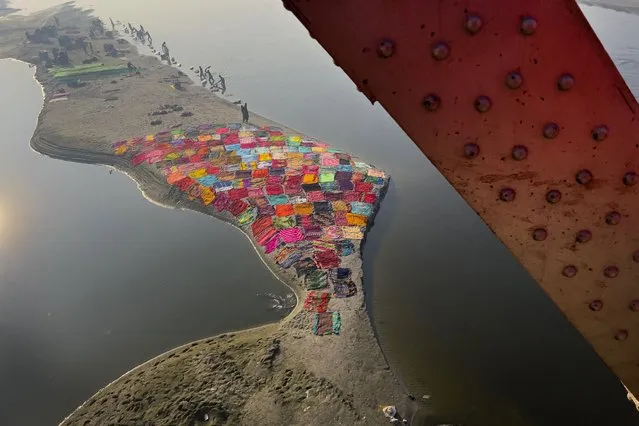
Washermen put their clothes out to dry on the banks of the River Yamuna as seen from a railway bridge near Agra, India, Saturday, December 17, 2022. (Photo by Rajesh Kumar Singh/AP Photo)

Washermen put their clothes out to dry on the banks of the River Yamuna as seen from a railway bridge near Agra, India, Saturday, December 17, 2022. (Photo by Rajesh Kumar Singh/AP Photo)
Details
22 Dec 2022 05:33:00
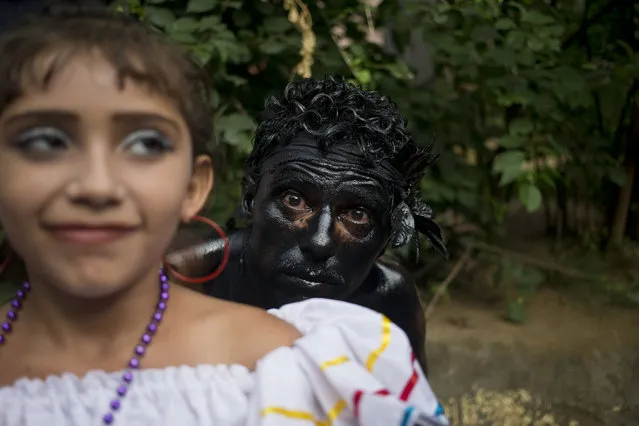
A man covered in motor oil, poses for a picture next to a girl dress a traditional clothes during a festivities in honor of Santo Domingo de Guzman in Managua, Nicaragua, Saturday, August 1, 2015. (Photo by Esteban Felix/AP Photo)

A man covered in motor oil, poses for a picture next to a girl dress a traditional clothes during a festivities in honor of Santo Domingo de Guzman in Managua, Nicaragua, Saturday, August 1, 2015. Some of the faithful coat their bodies in a black motor oil, red paint and wear traditional clothes as a promise for a prayer or miracle they believe was performed or answered by Managua's patron saint, Santo Domingo de Guzman. (Photo by Esteban Felix/AP Photo)
Details
02 Aug 2015 12:41:00
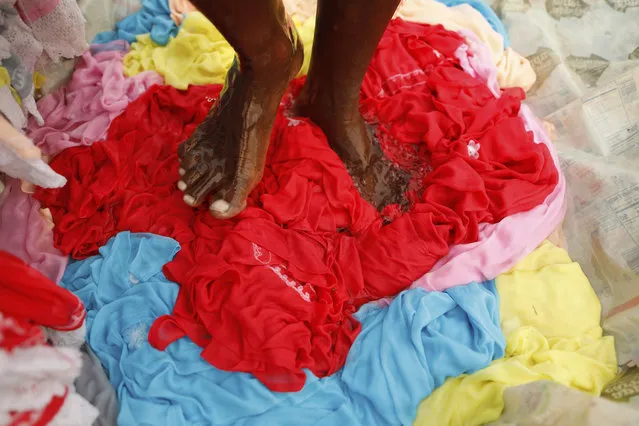
A dhobi, or a washerman washes cloths on the banks of the River Gomti in Lucknow, India, Saturday, September 12, 2020. Dhobis are traditional laundry workers who wash clothes by hand and dry them in the sun, an occupation which has been in existence for generations. Most cities in India have a Dhobi Ghat, or washermen's area, where the city's pile of clothes is laundered. This practice is still popular in India, despite of modern technology. Around 1,000 families work in Lucknow's Dhobi Ghat. However, in light of the novel coronavirus, their wages have decreased drastically. With each family earning around US$100-200 per month. (Photo by Rajesh Kumar Singh/AP Photo)

A dhobi, or a washerman washes cloths on the banks of the River Gomti in Lucknow, India, Saturday, September 12, 2020. Dhobis are traditional laundry workers who wash clothes by hand and dry them in the sun, an occupation which has been in existence for generations. Most cities in India have a Dhobi Ghat, or washermen's area, where the city's pile of clothes is laundered. This practice is still popular in India, despite of modern technology. Around 1,000 families work in Lucknow's Dhobi Ghat. However, in light of the novel coronavirus, their wages have decreased drastically. With each family earning around US$100-200 per month. (Photo by Rajesh Kumar Singh/AP Photo)
Details
25 Sep 2020 00:03:00
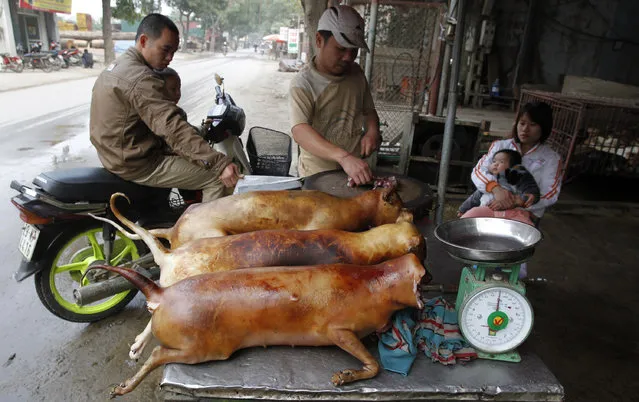
A vendor (C) cuts slaughtered dogs for sale at his roadside stall in Duong Noi village, outside Hanoi December 16, 2011. While animal rights activists have condemned eating dog meat as cruel treatment of the animals, it is still an accepted popular delicacy for some Vietnamese, as well in some other Asian countries. (Photo by Reuters/Kham)

A vendor (C) cuts slaughtered dogs for sale at his roadside stall in Duong Noi village, outside Hanoi December 16, 2011. While animal rights activists have condemned eating dog meat as cruel treatment of the animals, it is still an accepted popular delicacy for some Vietnamese, as well in some other Asian countries. Duong Noi is well-known as a dog-meat village, where hundreds of dogs are killed each day for sale as popular traditional food. Dog-eating as a custom is rooted in Vietnam and was developed as a result of poverty. One kilogram of dog meat costs about 130,000 dongs ($6.2). (Photo by Reuters/Kham)
Details
16 Jul 2013 11:40:00
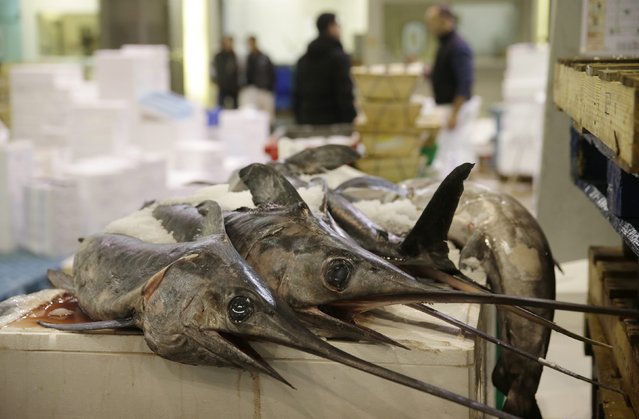
Swordfish are sold at the fish pavilion in Rungis International food market as buyers prepare for the Christmas holiday season in Rungis, south of Paris, December 11, 2015. (Photo by Philippe Wojazer/Reuters)

Rungis is a commune in the southern suburbs of Paris, France. It is best known as the location of the large wholesale food market serving the Paris metropolitan area and beyond, the Marché d'Intérêt National de Rungis, said to be the largest food market in the world. The name Rungis was recorded for the first time in a royal charter of 1124 as Rungi Villa. Here: swordfish are sold at the fish pavilion in Rungis International food market as buyers prepare for the Christmas holiday season in Rungis, south of Paris, December 11, 2015. (Photo by Philippe Wojazer/Reuters)
Details
13 Dec 2015 08:02:00
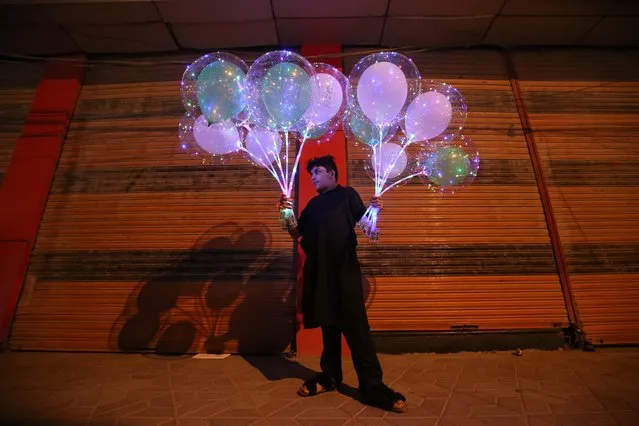
A boy sells balloons in front of a closed market as the government reduces market business hours after new cases of COVID-19 were reported across the country in Peshawar, Pakistan, 03 August 2021. Countries around the world are taking increased measures to stem the widespread of the COVID-19 disease. (Photo by Arshad Arbab/EPA/EFE)

A boy sells balloons in front of a closed market as the government reduces market business hours after new cases of COVID-19 were reported across the country in Peshawar, Pakistan, 03 August 2021. Countries around the world are taking increased measures to stem the widespread of the COVID-19 disease. (Photo by Arshad Arbab/EPA/EFE)
Details
01 Sep 2021 07:45:00
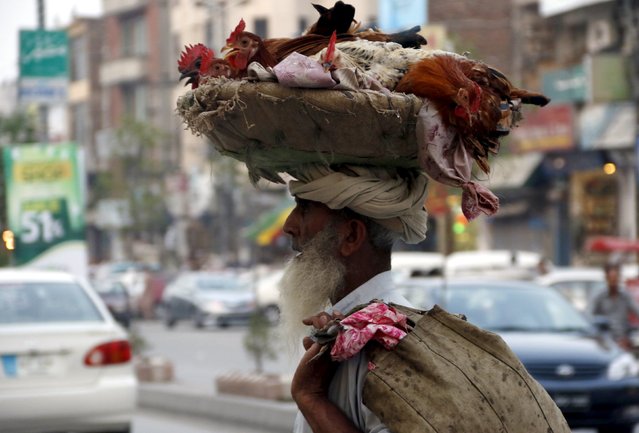
A chicken seller carries his chickens on his head in the market in Peshawar, Pakistan, August 20, 2015. (Photo by Khuram Parvez/Reuters)

A chicken seller carries his chickens on his head in the market in Peshawar, Pakistan, August 20, 2015. (Photo by Khuram Parvez/Reuters)
Details
22 Aug 2015 13:02:00