Loading...
Done
Tridacna Gigas, or Giant Clams

“The giant clam, Tridacna gigas (known as pā’ua in Cook Islands Māori), is the largest living bivalve mollusc. T. gigas is one of the most endangered clam species. It was mentioned as early as 1825 in scientific reports. One of a number of large clam species native to the shallow coral reefs of the South Pacific and Indian oceans, they can weigh more than 200 kilograms (440 lb) measure as much as 120 cm (47 in) across, and have an average lifespan in the wild of 100 years or more”. – Wikipedia

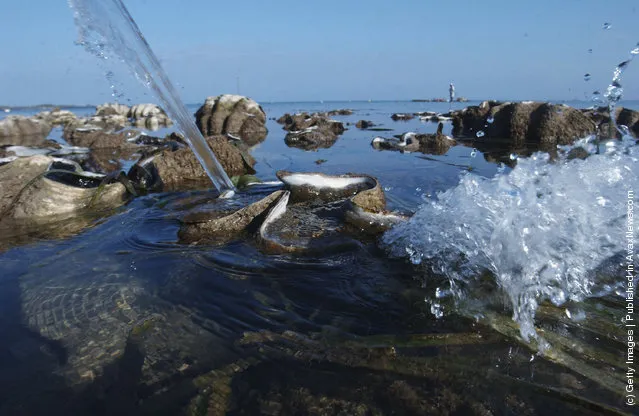
Photo: Tridacna Gigas, or Giant Clams spew water as a traditional fisherman passes by a small sanctuary on January 23, 2004 near Bolinao in the Northern Philippines. The clams, prime builders for coral reefs and providing shelter for spawning fish and other marine life, are exposed by low tides in the sanctuary. Overfishing and pollution throughout the country are not only threatening food security, but are also starting to choke one of the few working clam sanctuaries in the world. (Photo by David Greedy/Getty Images)
Details
01 Oct 2011 13:10:00
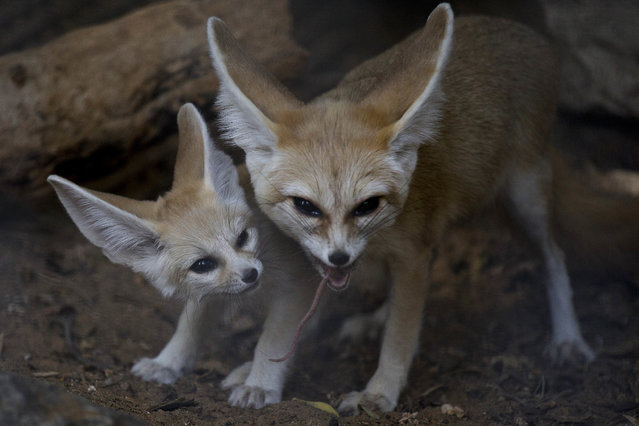
A 6-week old Fennec fox, the smallest species of foxes, and a native to the Sahara desert in Africa, looks as its mother eats in the Ramat Gan Safari Park near Tel Aviv, Israel, Sunday, November 6, 2016. Sagit Horowitz, the safari spokeswoman said four Fennec foxes were born about six weeks ago. (Photo by Ariel Schalit/AP Photo)

A 6-week old Fennec fox, the smallest species of foxes, and a native to the Sahara desert in Africa, looks as its mother eats in the Ramat Gan Safari Park near Tel Aviv, Israel, Sunday, November 6, 2016. Sagit Horowitz, the safari spokeswoman said four Fennec foxes were born about six weeks ago. (Photo by Ariel Schalit/AP Photo)
Details
13 Nov 2016 10:00:00
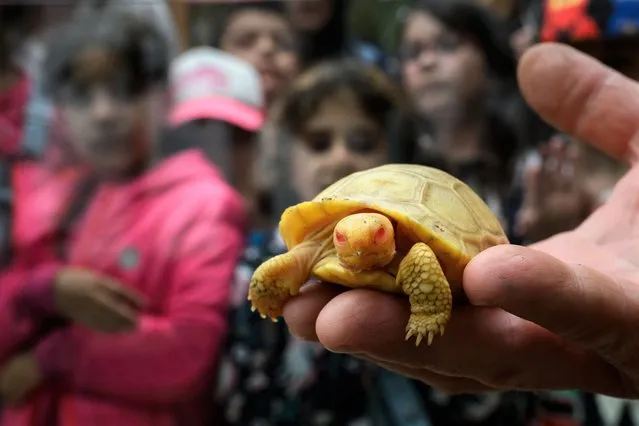
A picture taken on June 3, 2022 shows a unique albinos Galapagos giant tortoise baby, born on May 1, at the Tropicarium of Servion, western Switzerland. Albinos Galapagos tortoises have never been observed in captivity or in the nature. The Galapagos giant tortoises are strictly protected and are among the most endangered species among CITES-listed animals. (Photo by Fabrice Coffrini/AFP Photo)

A picture taken on June 3, 2022 shows a unique albinos Galapagos giant tortoise baby, born on May 1, at the Tropicarium of Servion, western Switzerland. Albinos Galapagos tortoises have never been observed in captivity or in the nature. The Galapagos giant tortoises are strictly protected and are among the most endangered species among CITES-listed animals. (Photo by Fabrice Coffrini/AFP Photo)
Details
19 Jun 2022 04:00:00
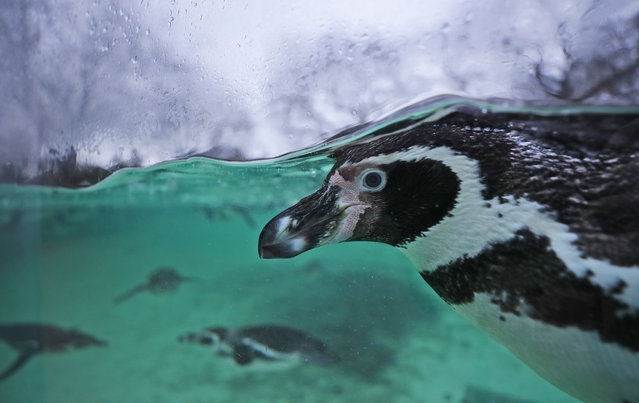
A Humboldt penguin swims in a pool during the annual stock take at ZSL London Zoo in London, Thursday, January 2, 2020. Caring for more than 500 different species, ZSL London Zoo's keepers face the challenging task of tallying up every animal large and small, every mammal, bird, reptile, fish and invertebrate at the Zoo. (Photo by Frank Augstein/AP Photo)

A Humboldt penguin swims in a pool during the annual stock take at ZSL London Zoo in London, Thursday, January 2, 2020. Caring for more than 500 different species, ZSL London Zoo's keepers face the challenging task of tallying up every animal large and small, every mammal, bird, reptile, fish and invertebrate at the Zoo. (Photo by Frank Augstein/AP Photo)
Details
05 Jan 2020 00:03:00
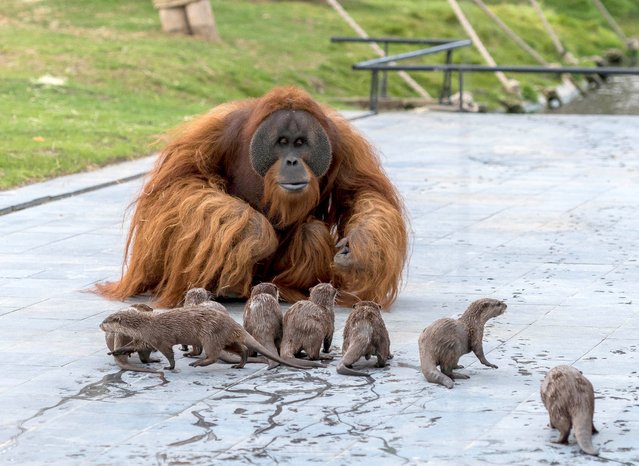
The three orangutans at Pairi Daiza zoo, Belgium, developed a “special bond” with the otters after their river was run through the ape enclosure on March 2020. The zoo said it enriched both species’ environments. An animal – and this is even more the case of orangutans, with whom humans share 97 per cent of their DNA – must be entertained, occupied, challenged and kept busy mentally, emotionally and physically at all times. (Photo by Pascale Jones/The Sun)

The three orangutans at Pairi Daiza zoo, Belgium, developed a “special bond” with the otters after their river was run through the ape enclosure on March 2020. The zoo said it enriched both species’ environments. An animal – and this is even more the case of orangutans, with whom humans share 97 per cent of their DNA – must be entertained, occupied, challenged and kept busy mentally, emotionally and physically at all times. (Photo by Pascale Jones/The Sun)
Details
05 Apr 2020 00:01:00
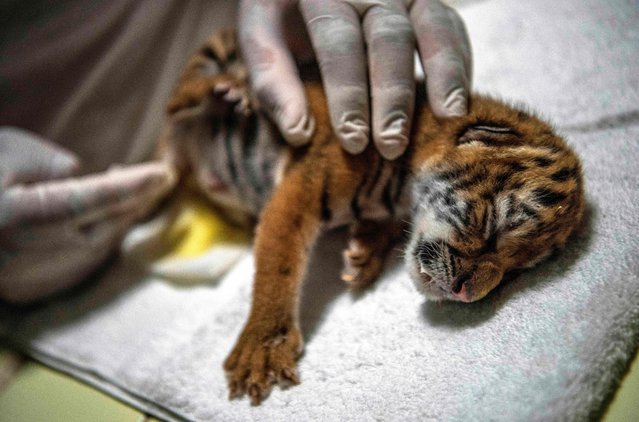
A three-day-old Bengal tiger calf is cared for after being fed at the National Zoo in Masaya on August 30, 2021. A female Bengal tiger calf was born in the National Zoo of Nicaragua, the fourth of this species in risk of extinction born in captivity in the country, and is under special care due to a limited breastfeeding capacity of the mother. (Photo by Inti Ocon/AFP Photo)

A three-day-old Bengal tiger calf is cared for after being fed at the National Zoo in Masaya on August 30, 2021. A female Bengal tiger calf was born in the National Zoo of Nicaragua, the fourth of this species in risk of extinction born in captivity in the country, and is under special care due to a limited breastfeeding capacity of the mother. (Photo by Inti Ocon/AFP Photo)
Details
05 Sep 2021 05:48:00
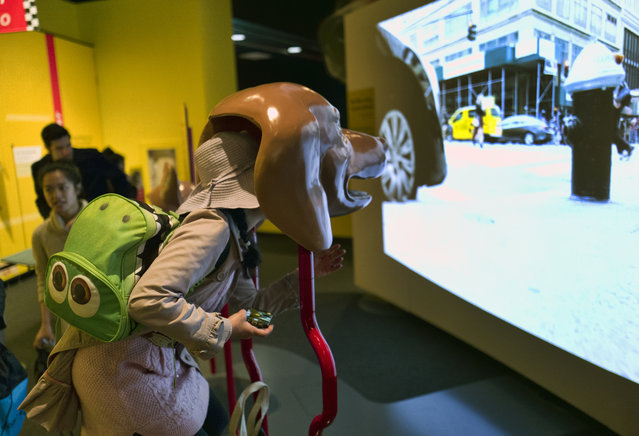
In this Tuesday, March 12, 2019 photo, a visitor takes part in an immersive experience showing visitors how dogs see from inside the head of a dog at the California Science Center in Los Angeles. A new exhibit at a Los Angeles museum examines the relationship between dogs and humans and explores why the two species seem to think so much alike and get along so well. “Dogs! A Science Tail” opens Saturday, March 16, 2019, at the California Science Center. (Photo by Richard Vogel/AP Photo)

In this Tuesday, March 12, 2019 photo, a visitor takes part in an immersive experience showing visitors how dogs see from inside the head of a dog at the California Science Center in Los Angeles. A new exhibit at a Los Angeles museum examines the relationship between dogs and humans and explores why the two species seem to think so much alike and get along so well. “Dogs! A Science Tail” opens Saturday, March 16, 2019, at the California Science Center. (Photo by Richard Vogel/AP Photo)
Details
15 Mar 2019 08:49:00
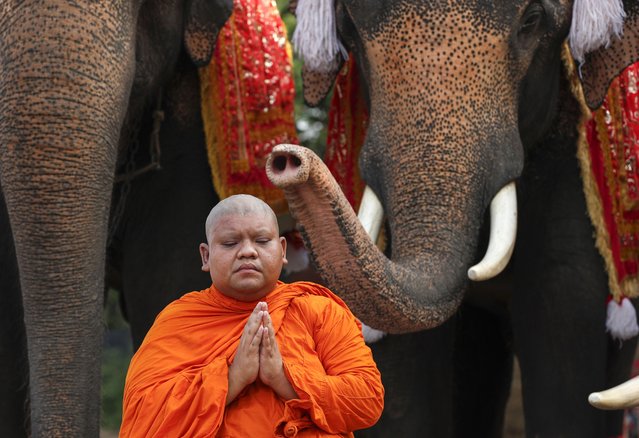
A Thai Buddhist monk performs a religious rite blessing elephants and mahouts to mark the National Elephant Day at the Ayutthaya Elephant Palace and Royal Kraal in the world heritage city of Ayutthaya, Thailand, 13 March 2025. The National Elephant Day has been observed annually on 13 March since 1998 when it was established by the Thai government, in an effort to protect and conserve Thai elephants, who are part of the Asian elephant family classified as an endangered species. (Photo by Rungroj Yongrit/EPA)

A Thai Buddhist monk performs a religious rite blessing elephants and mahouts to mark the National Elephant Day at the Ayutthaya Elephant Palace and Royal Kraal in the world heritage city of Ayutthaya, Thailand, 13 March 2025. The National Elephant Day has been observed annually on 13 March since 1998 when it was established by the Thai government, in an effort to protect and conserve Thai elephants, who are part of the Asian elephant family classified as an endangered species. (Photo by Rungroj Yongrit/EPA)
Details
03 Apr 2025 04:25:00