Loading...
Done
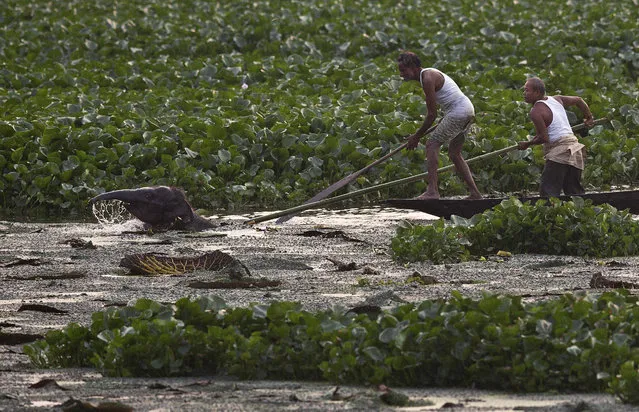
In this Friday, May 10, 2019, file photo, rescuers help a baby wild elephant cross the wetland to return to the forest at Deepor Beel wildlife sanctuary in Gauhati, India. The elephant had gotten stuck in the waters of Deepor Beel after it was separated from a herd of wild elephant that came down in search of food last night. (Photo by Anupam Nath/AP Photo)

In this Friday, May 10, 2019, file photo, rescuers help a baby wild elephant cross the wetland to return to the forest at Deepor Beel wildlife sanctuary in Gauhati, India. The elephant had gotten stuck in the waters of Deepor Beel after it was separated from a herd of wild elephant that came down in search of food last night. (Photo by Anupam Nath/AP Photo)
Details
23 May 2019 00:05:00
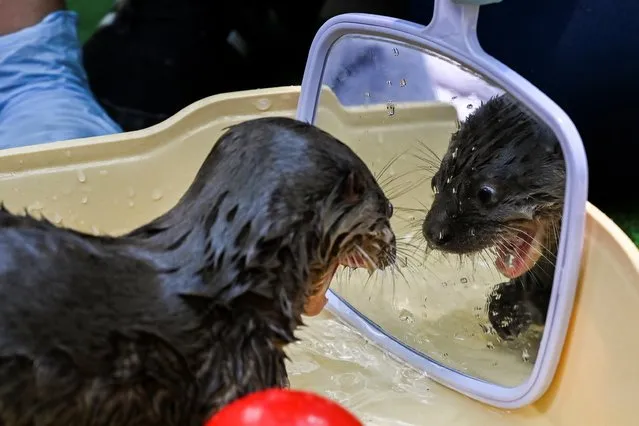
A river otter (lontra longicaudis) of 6-weeks-old looks in the mirror during a bath in the Animal Welfare Unit of the Zoo in Cali, Colombia, on October 22, 2019. The baby otter was found abandoned brought to the Cali Zoo for breeding, for its extensive experience in raising these species. According to the International Union for Conservation of Nature the river otter (lontra longicaudis) are in danger of extinction, because of mining, agriculture, pollution of rivers and housing construction in their habitat. (Photo by Luis Robayo/AFP Photo)

A river otter (lontra longicaudis) of 6-weeks-old looks in the mirror during a bath in the Animal Welfare Unit of the Zoo in Cali, Colombia, on October 22, 2019. The baby otter was found abandoned brought to the Cali Zoo for breeding, for its extensive experience in raising these species. According to the International Union for Conservation of Nature the river otter (lontra longicaudis) are in danger of extinction, because of mining, agriculture, pollution of rivers and housing construction in their habitat. (Photo by Luis Robayo/AFP Photo)
Details
27 Oct 2019 00:03:00
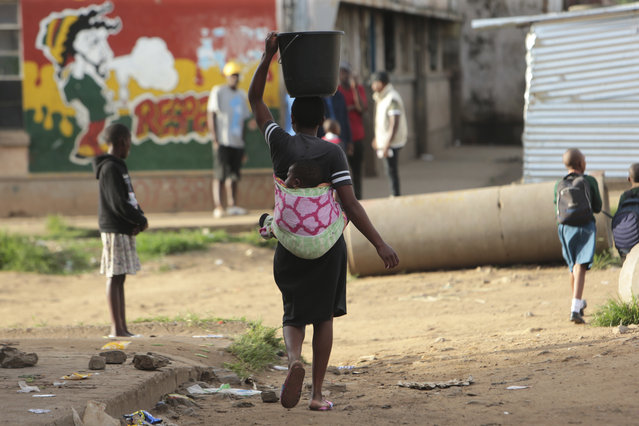
In this Monday, April 6, 2020 photo, a woman carries a her baby and a bucket of water in Harare. Lockdowns imposed to curb the coronavirus’ spread have put millions of women in Africa, Asia and elsewhere out of reach of birth control and other sexual and reproductive health needs. Confined to their homes with husbands and others, they face unwanted pregnancies and little idea of when they can reach the outside world again. (Photo by Tsvangirayi Mukwazhi/AP Photo)

In this Monday, April 6, 2020 photo, a woman carries a her baby and a bucket of water in Harare. Lockdowns imposed to curb the coronavirus’ spread have put millions of women in Africa, Asia and elsewhere out of reach of birth control and other sexual and reproductive health needs. Confined to their homes with husbands and others, they face unwanted pregnancies and little idea of when they can reach the outside world again. (Photo by Tsvangirayi Mukwazhi/AP Photo)
Details
30 May 2020 00:01:00
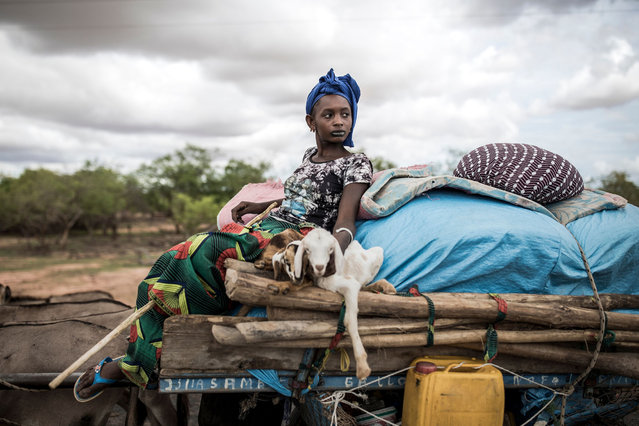
A Fulani Pastoralist carries two baby sheep on her donkey cart as her family move on northwards in Barkedji, Senegal on July 21, 2020. Thousands of Pastoralist families will start the movement north in the next weeks. With the first rains comes fresh grass and water for the Fulani herders' livestock, it also marks the point where most of the Pastoralist will move northwards until the dry season. (Photo by John Wessels/AFP Photo)

A Fulani Pastoralist carries two baby sheep on her donkey cart as her family move on northwards in Barkedji, Senegal on July 21, 2020. Thousands of Pastoralist families will start the movement north in the next weeks. With the first rains comes fresh grass and water for the Fulani herders' livestock, it also marks the point where most of the Pastoralist will move northwards until the dry season. (Photo by John Wessels/AFP Photo)
Details
04 Aug 2020 00:05:00
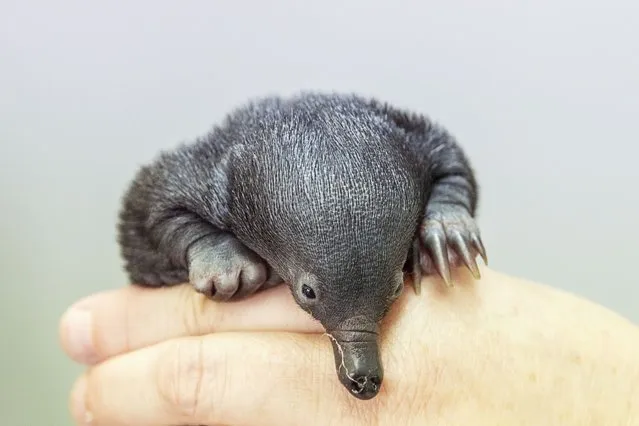
“Smudge” an orphaned echidna puggle is held by Veterinary nurse Sarah Male ahead of its feeding on November 07, 2022 in Sydney, Australia. Echidnas, sometimes known as spiny anteaters, are native to Australia. A baby echidna was found orphaned by the side of the road and is being cared for at Sydney's Taronga Zoo hospital. The care is intensive with several feedings per day, and the echidna is housed in temperature-controlled environment to aid its recovery and growth. (Photo by Jenny Evans/Getty Images)

“Smudge” an orphaned echidna puggle is held by Veterinary nurse Sarah Male ahead of its feeding on November 07, 2022 in Sydney, Australia. Echidnas, sometimes known as spiny anteaters, are native to Australia. A baby echidna was found orphaned by the side of the road and is being cared for at Sydney's Taronga Zoo hospital. The care is intensive with several feedings per day, and the echidna is housed in temperature-controlled environment to aid its recovery and growth. (Photo by Jenny Evans/Getty Images)
Details
04 Jan 2024 19:37:00
British rock singer, musician, one of the founders and member of the band Black Sabbath, which had a significant influence on the emergence of such musical styles as hard rock and heavy metal Ozzy Osbourne, pictured at home two weeks after the birth of his baby boy Jack. 25th November 1985. The heavy metal star, who fronted Black Sabbath before a long solo career, has died aged 76 in Birmingham, UK on July 22, 2025. (Photo by Mike Maloney/Mirrorpix via Getty Images)

British rock singer, musician, one of the founders and member of the band Black Sabbath, which had a significant influence on the emergence of such musical styles as hard rock and heavy metal Ozzy Osbourne, pictured at home two weeks after the birth of his baby boy Jack. 25th November 1985. The heavy metal star, who fronted Black Sabbath before a long solo career, has died aged 76 in Birmingham, UK on July 22, 2025. (Photo by Mike Maloney/Mirrorpix via Getty Images)
Details
25 Jul 2025 03:07:00
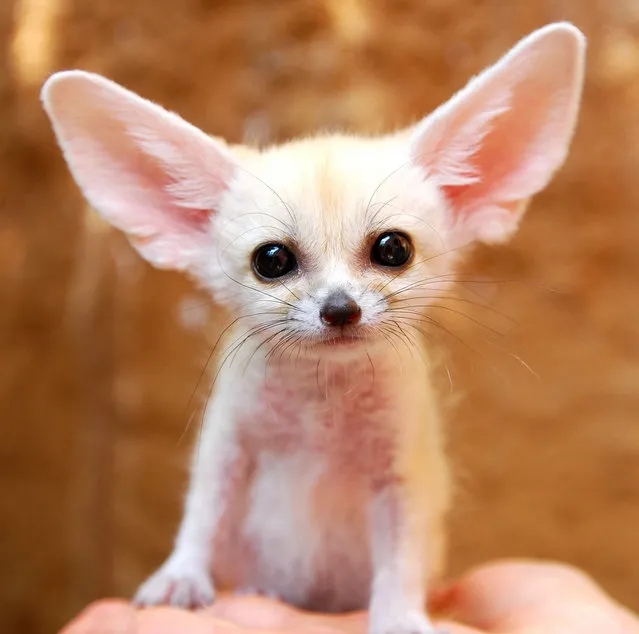
Baby Fennec Fox

“The fennec fox or fennec (Vulpes zerda) is a small nocturnal fox found in the Sahara of North Africa. Its most distinctive feature is its unusually large ears, which serve to dissipate heat”. – Wikipedia. (Photo by In Cherl Kim)
Details
14 Sep 2012 12:15:00
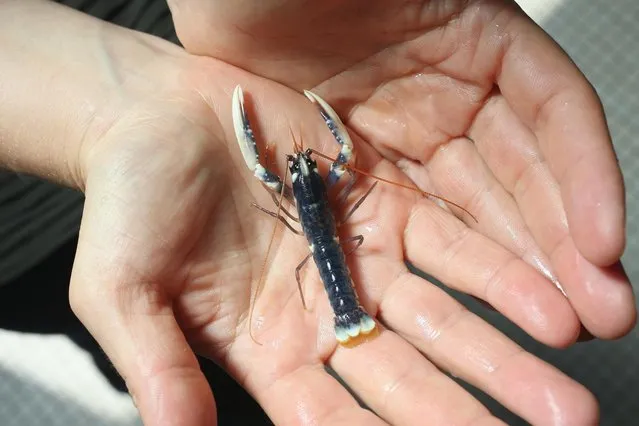
Isabel Schmalenbach, an environmental scientist with the Helgoland Biological Institute (Biologische Anstalt Helgoland), part of the Alfred Wegener Institute for Polar and Marine Research, holds a one-year old baby European lobster (Homarus gammarus) raised at the institute on August 3, 2013 on Helgoland Island, Germany. (Photo by Sean Gallup/Getty Images)

Isabel Schmalenbach, an environmental scientist with the Helgoland Biological Institute (Biologische Anstalt Helgoland), part of the Alfred Wegener Institute for Polar and Marine Research, holds a one-year old baby European lobster (Homarus gammarus) raised at the institute on August 3, 2013 on Helgoland Island, Germany. Later in the day Schmalenbach and her colleagues released a total of 415 one-year old lobsters into the North Sea as part of an effort to repopulate the lobster population around Helgoland (also called Heligoland). In the 19th century local fishermen caught up to 80,000 lobsters a year in the surrounding waters, combined with the heavy allied bombing of the island during and after World War II, as well as other environmental factors, decimated the lobster population. (Photo by Sean Gallup)

Details
05 Aug 2013 08:39:00