Loading...
Done
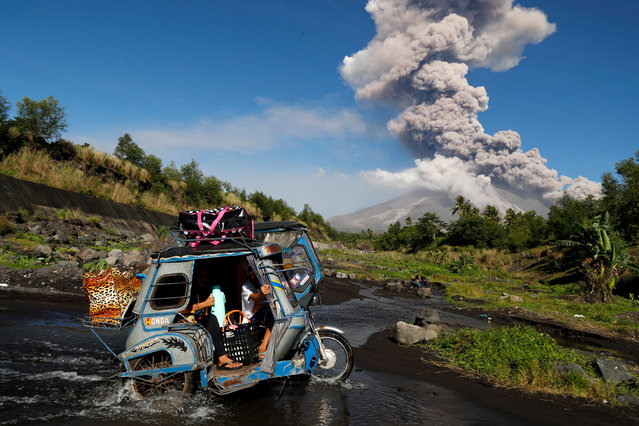
Filipino villagers escape to a safe area as the Mayon Volcano erupts anew in the town of Daraga, Albay province, Philippines, 23 January 2018. The Philippine Institute of Volcanology and Seismology (PHIVOLCS) agency on 22 January raised the alert level for the Mayon Volcano amid fears of a bigger eruption over the next few hours or days. More than 26,000 people have been evacuated to shelters in the area. “The Danger Zone is extended to 8 kilometers radius from the summit vent. The public is strongly advised to be vigilant and desist from entering this danger zone”, PHIVOLCS added. (Photo by Francis R. Malasig/EPA/EFE)

Filipino villagers escape to a safe area as the Mayon Volcano erupts anew in the town of Daraga, Albay province, Philippines, 23 January 2018. The Philippine Institute of Volcanology and Seismology (PHIVOLCS) agency on 22 January raised the alert level for the Mayon Volcano amid fears of a bigger eruption over the next few hours or days. (Photo by Francis R. Malasig/EPA/EFE)
Details
24 Jan 2018 08:52:00
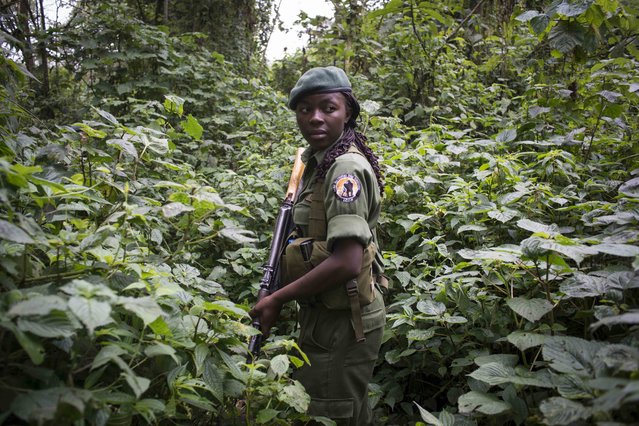
Aline, along with other rangers and park staff visit the gorilla's in the parks Mikeno sector, where the majority of the gorilla families live in Virunga National Park. Therefore there has been a surge of poaching and violence in the area. For the first time, women have taken up the most dangerous job in wildlife, becoming para-military rangers at the Virunga National Park in DR Congo. Virunga is Africa's oldest national park and home to over 200 of the world's 800 remaining mountain gorillas. For two decades it has been at the centre of a war. Hundreds of rebels operate in the park and over 150 park rangers have died protecting it from them. (Photo by Monique Jaques)

Aline, along with other rangers and park staff visit the gorilla's in the parks Mikeno sector, where the majority of the gorilla families live in Virunga National Park. Therefore there has been a surge of poaching and violence in the area. For the first time, women have taken up the most dangerous job in wildlife, becoming para-military rangers at the Virunga National Park in DR Congo. (Photo by Monique Jaques)
Details
08 Oct 2016 11:46:00
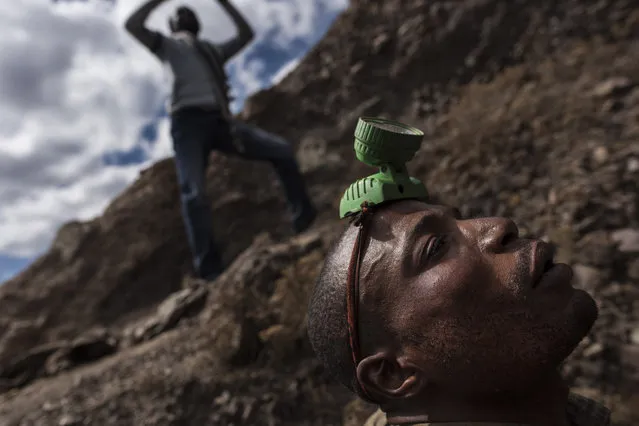
A “creuseur”, or digger, a plastic lantern on his head, readies to enter a copper and cobalt mine in Kawama, Democratic Republic of Congo on June 8, 2016. Cobalt is used in the batteries for electric cars and mobile phones. Working conditions are dangerous, often with no safety equipment or structural support for the tunnels. The diggers say they are paid on average US$2-3/day. (Photo by Michael Robinson Chavez/The Washington Post)

A “creuseur”, or digger, a plastic lantern on his head, readies to enter a copper and cobalt mine in Kawama, Democratic Republic of Congo on June 8, 2016. Cobalt is used in the batteries for electric cars and mobile phones. Working conditions are dangerous, often with no safety equipment or structural support for the tunnels. The diggers say they are paid on average US$2-3/day. (Photo by Michael Robinson Chavez/The Washington Post)
Details
30 Dec 2016 10:29:00
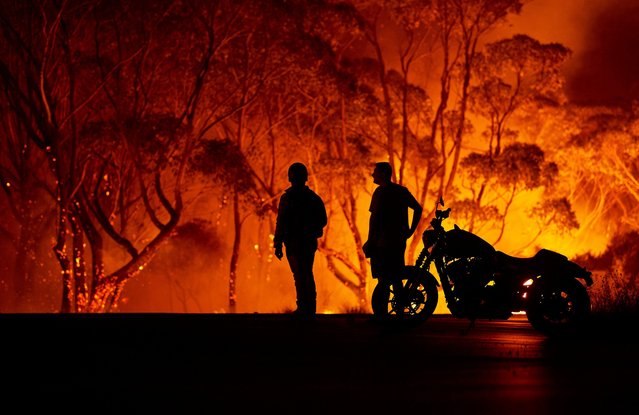
Residents look on as flames burn through bush on January 04, 2020 in Lake Tabourie, Australia. A state of emergency has been declared across NSW with dangerous fire conditions forecast for Saturday, as more than 140 bushfires continue to burn. There have been eight confirmed deaths in NSW since Monday 30 December. 1365 homes have been lost, while 3.6 million hectares have been burnt this fire season. (Photo by Brett Hemmings/Getty Images)

Residents look on as flames burn through bush on January 04, 2020 in Lake Tabourie, Australia. A state of emergency has been declared across NSW with dangerous fire conditions forecast for Saturday, as more than 140 bushfires continue to burn. There have been eight confirmed deaths in NSW since Monday 30 December. 1365 homes have been lost, while 3.6 million hectares have been burnt this fire season. (Photo by Brett Hemmings/Getty Images)
Details
06 Jan 2020 00:03:00
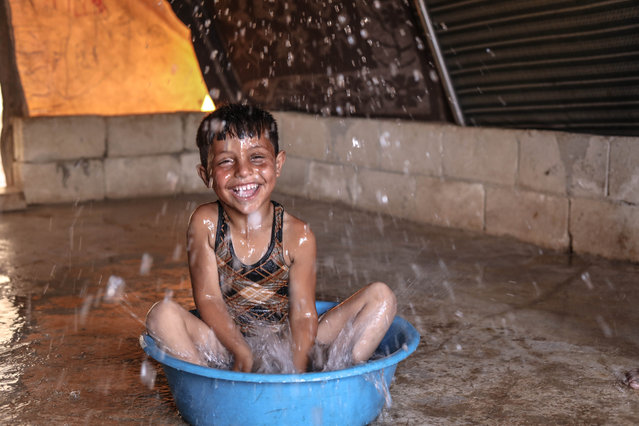
A child sitting in a washbowl filled with water cools himself as civilians struggle with protecting themselves from the dangers of extreme heat at the refugee camp, in Idlib, Syria on July 13, 2023. The civilians, who fled from the attacks of the Syrian Army, live under harsh conditions without infrastructure and electricity while the temperature reaches 47 Celsius in the region. (Photo by Izzeddin Kasim/Anadolu Agency via Getty Images)

A child sitting in a washbowl filled with water cools himself as civilians struggle with protecting themselves from the dangers of extreme heat at the refugee camp, in Idlib, Syria on July 13, 2023. The civilians, who fled from the attacks of the Syrian Army, live under harsh conditions without infrastructure and electricity while the temperature reaches 47 Celsius in the region. (Photo by Izzeddin Kasim/Anadolu Agency via Getty Images)
Details
02 Aug 2023 03:13:00
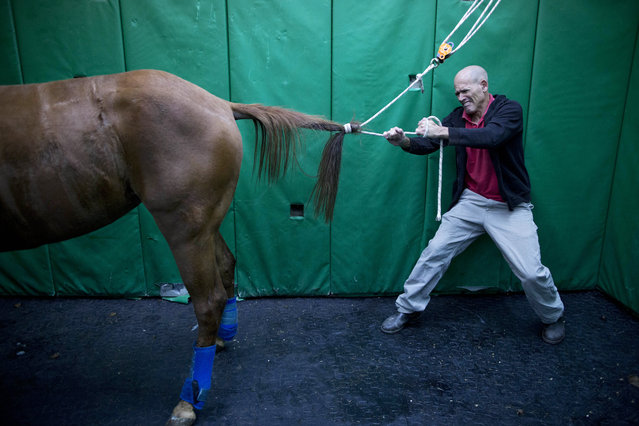
In this Wednesday, December 2, 2015 photo, Dr. Gal Kelmer, head of the department of large animals, unties a horse after its operation at the University's Koret School of Veterinary Medicine in Rishon Lezion, Israel. “Horses have an instinctive response of flight from danger”, Kelmer said. “The minute they wake up they start trying to stand and run, even if they don't have control of their limbs. So then they fall”. (Photo by Oded Balilty/AP Photo)

In this Wednesday, December 2, 2015 photo, Dr. Gal Kelmer, head of the department of large animals, unties a horse after its operation at the University's Koret School of Veterinary Medicine in Rishon Lezion, Israel. “Horses have an instinctive response of flight from danger”, Kelmer said. “The minute they wake up they start trying to stand and run, even if they don't have control of their limbs. So then they fall”. (Photo by Oded Balilty/AP Photo)
Details
15 Dec 2015 08:04:00
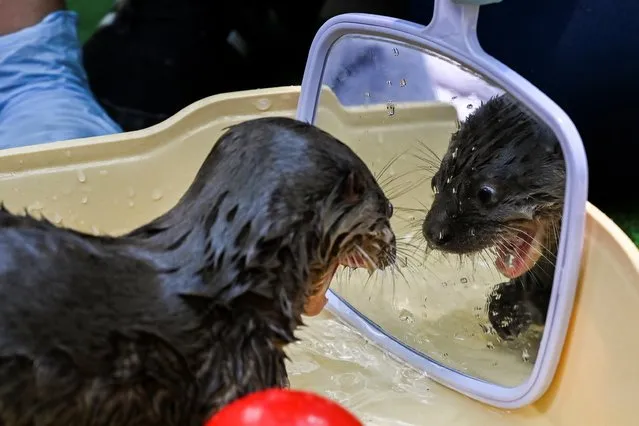
A river otter (lontra longicaudis) of 6-weeks-old looks in the mirror during a bath in the Animal Welfare Unit of the Zoo in Cali, Colombia, on October 22, 2019. The baby otter was found abandoned brought to the Cali Zoo for breeding, for its extensive experience in raising these species. According to the International Union for Conservation of Nature the river otter (lontra longicaudis) are in danger of extinction, because of mining, agriculture, pollution of rivers and housing construction in their habitat. (Photo by Luis Robayo/AFP Photo)

A river otter (lontra longicaudis) of 6-weeks-old looks in the mirror during a bath in the Animal Welfare Unit of the Zoo in Cali, Colombia, on October 22, 2019. The baby otter was found abandoned brought to the Cali Zoo for breeding, for its extensive experience in raising these species. According to the International Union for Conservation of Nature the river otter (lontra longicaudis) are in danger of extinction, because of mining, agriculture, pollution of rivers and housing construction in their habitat. (Photo by Luis Robayo/AFP Photo)
Details
27 Oct 2019 00:03:00
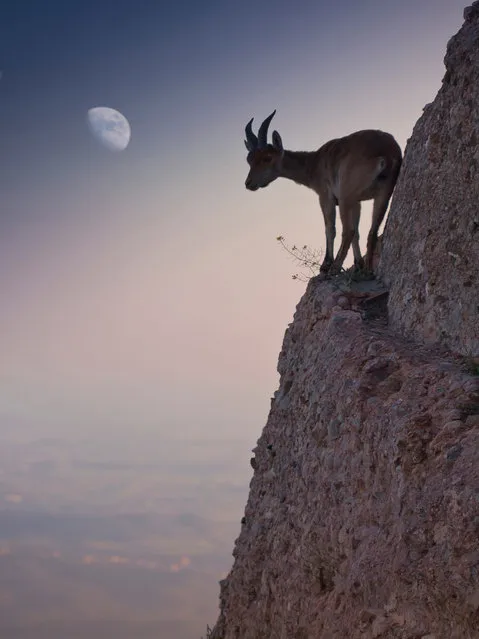
“For a bouquet of flowers”. Photographs made ​​in the last hours of the day. A goat is directed by a dangerous way to eat a small bouquet of flowers. Location: España, Barcelona, Montserrat. (Photo and caption by Renato Lopez Baldo/National Geographic Traveler Photo Contest)

“For a bouquet of flowers”. Photographs made ​​in the last hours of the day. A goat is directed by a dangerous way to eat a small bouquet of flowers. Location: España, Barcelona, Montserrat. (Photo and caption by Renato Lopez Baldo/National Geographic Traveler Photo Contest)

ATTENTION! All pictures are presented in high resolution. To see Hi-Res images – just TWICE click on any picture. In other words, click small picture – opens the BIG picture. Click BIG picture – opens VERY BIG picture.
Details
25 Jun 2013 12:51:00