Loading...
Done
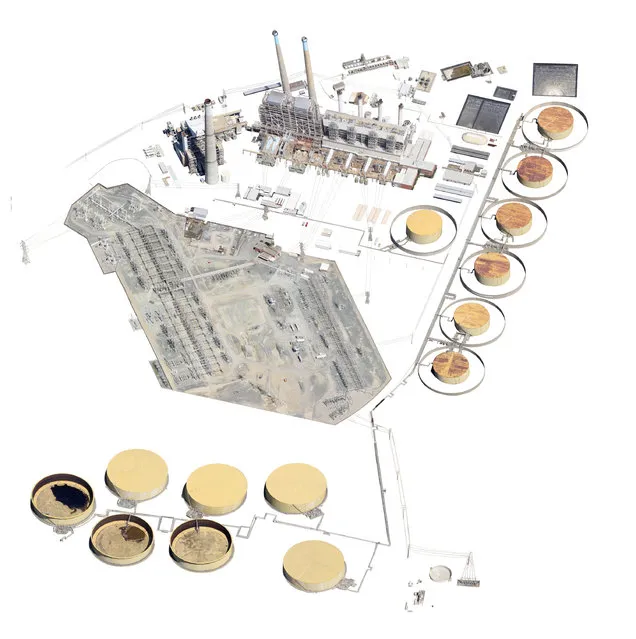
Natural gas plant in Pittsburg, CA (detail of Power Landscape), 2013. (Photo by Jenny Odell)

Jenny Odell repurposes online imagery mostly from Google Maps, but also from YouTube, Craigslist, and other sites. In her “Satellite Collections”, for example, she incorporated aerial views of swimming pools, basketball courts, parking lots, and other recognizable structures, seen from space. Her more recent series, “Satellite Landscapes”, includes painstakingly isolated Google Maps imagery of oil refineries, wastewater treatment plants, solar farms, etc. This work is meant as a reminder of our physically determined and vulnerable existence, since we depend on many of these things for survival and maintenance of our way of life. Photo: Natural gas plant in Pittsburg, CA (detail of Power Landscape), 2013. (Photo by Jenny Odell)
Details
19 Mar 2014 07:28:00
Journeys and adventures winner – This is My Jungle. A wild elephant attacks a jeep full of people. “We should respect nature and care more about it, but we should also avoid taking unnecessary and reckless risks”. (Photo by Savvi Sergey/SIPA Contest)

Journeys and adventures winner – This is My Jungle. A wild elephant attacks a jeep full of people. “We should respect nature and care more about it, but we should also avoid taking unnecessary and reckless risks”. (Photo by Savvi Sergey/SIPA Contest)
Details
27 Oct 2021 06:55:00
A dhobi, or a washerman washes cloths on the banks of the River Gomti in Lucknow, India, Saturday, September 12, 2020. Dhobis are traditional laundry workers who wash clothes by hand and dry them in the sun, an occupation which has been in existence for generations. Most cities in India have a Dhobi Ghat, or washermen's area, where the city's pile of clothes is laundered. This practice is still popular in India, despite of modern technology. Around 1,000 families work in Lucknow's Dhobi Ghat. However, in light of the novel coronavirus, their wages have decreased drastically. With each family earning around US$100-200 per month. (Photo by Rajesh Kumar Singh/AP Photo)

A dhobi, or a washerman washes cloths on the banks of the River Gomti in Lucknow, India, Saturday, September 12, 2020. Dhobis are traditional laundry workers who wash clothes by hand and dry them in the sun, an occupation which has been in existence for generations. Most cities in India have a Dhobi Ghat, or washermen's area, where the city's pile of clothes is laundered. This practice is still popular in India, despite of modern technology. Around 1,000 families work in Lucknow's Dhobi Ghat. However, in light of the novel coronavirus, their wages have decreased drastically. With each family earning around US$100-200 per month. (Photo by Rajesh Kumar Singh/AP Photo)
Details
25 Sep 2020 00:03:00
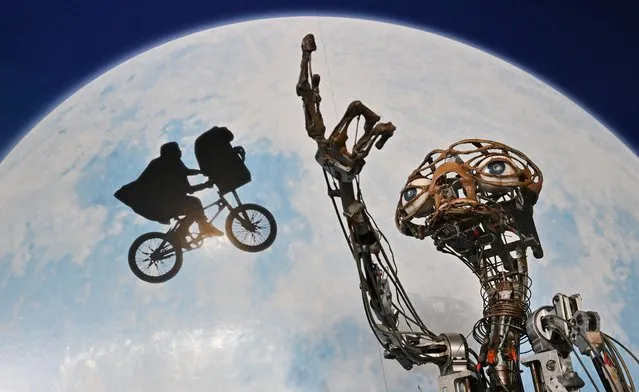
The original first mechatronic E.T. character from Steven Spielberg's 1982 film “E.T. the Extra Terrestrial” on display at Julien's Auctions in Beverly Hills, California on December 12, 2022, ahead of the “Julien's Auctions and TCM Present: Icons & Idols: Hollywood”. The auction will take place in-person and online on December 17 and 18. (Photo by Frederic J. Brown/AFP Photo)

The original first mechatronic E.T. character from Steven Spielberg's 1982 film “E.T. the Extra Terrestrial” on display at Julien's Auctions in Beverly Hills, California on December 12, 2022, ahead of the “Julien's Auctions and TCM Present: Icons & Idols: Hollywood”. The auction will take place in-person and online on December 17 and 18. (Photo by Frederic J. Brown/AFP Photo)
Details
18 Dec 2022 23:55:00
American social media personality, golf instructor and former professional golfer Paige Spiranac attends MAXIM Hot 100 Experience at Hyde Beach at SLS South Beach on July 16, 2022 in Miami Beach, Florida. (Photo by Aaron Davidson/Getty Images)

American social media personality, golf instructor and former professional golfer Paige Spiranac attends MAXIM Hot 100 Experience at Hyde Beach at SLS South Beach on July 16, 2022 in Miami Beach, Florida. (Photo by Aaron Davidson/Getty Images)
Details
11 Oct 2023 04:26:00
At the Krasnopresnenskaya station, the benches come from the Cathedral of Christ-Sauveur, which was built from 1839 to 1883 in memory of the victory of Russia against the army of Napoleon I. The cathedral was destroyed under Stalin in 1931, but the benches remained intact. Metro architects decided to install them in some stations. (Photo by Didier Bizet/The Washington Post)

At the Krasnopresnenskaya station, the benches come from the Cathedral of Christ-Sauveur, which was built from 1839 to 1883 in memory of the victory of Russia against the army of Napoleon I. The cathedral was destroyed under Stalin in 1931, but the benches remained intact. Metro architects decided to install them in some stations. (Photo by Didier Bizet/The Washington Post)
Details
24 Jan 2018 06:23:00
Michael O'Neal of San Francisco won first place in the animals category in the 2014 iPhone Photography Awards. (Photo by Michael O'Neal)

The contest began in 2007, and since then photographers from more than 70 countries have entered. Photo: Michael O'Neal of San Francisco won first place in the animals category in the 2014 iPhone Photography Awards. (Photo by Michael O'Neal)
Details
14 Jul 2014 13:14:00
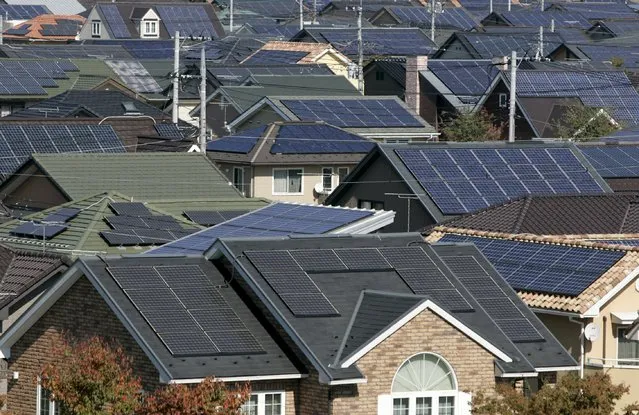
Rooftops of solar powered houses are pictured in Ota, 80 km northwest of Tokyo in this October 28, 2008 file photo. One by one, Japan is turning off the lights at the giant oil-fired power plants that propelled it to the ranks of the world's top industrialised nations. With nuclear power in the doldrums after the Fukushima disaster, it's solar energy that is becoming the alternative. (Photo by Yuriko Nakao/Reuters)

Rooftops of solar powered houses are pictured in Ota, 80 km northwest of Tokyo in this October 28, 2008 file photo. One by one, Japan is turning off the lights at the giant oil-fired power plants that propelled it to the ranks of the world's top industrialised nations. With nuclear power in the doldrums after the Fukushima disaster, it's solar energy that is becoming the alternative. Solar power is set to become profitable in Japan as early as this quarter, according to the Japan Renewable Energy Foundation (JREF), freeing it from the need for government subsidies and making it the last of the G7 economies where the technology has become economically viable. (Photo by Yuriko Nakao/Reuters)
Details
24 Nov 2015 08:04:00