Loading...
Done
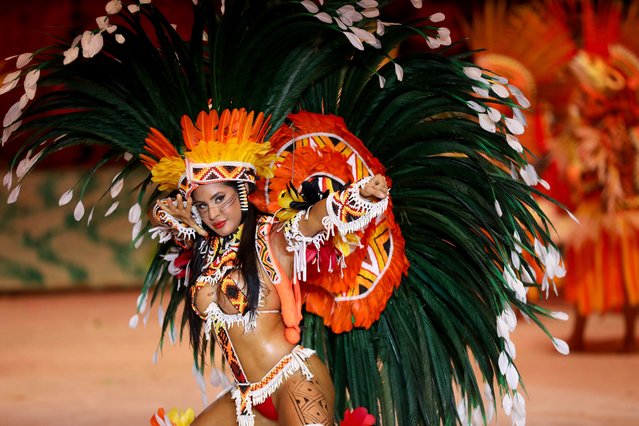
A member of the Boi Bumba Garantido association performs during the Boi Bumba folklore festival at the Bumbodromo in Parintins, Amazonas State, Brazil, on June 28, 2024. Parintins is well-known internationally for its Boi Bumba folklore festival, which lasts for three days in late June and whose themes, costumes, and songs are based on indigenous cultures of the Amazon rainforest. (Photo by Michael Dantas/AFP Photo)

A member of the Boi Bumba Garantido association performs during the Boi Bumba folklore festival at the Bumbodromo in Parintins, Amazonas State, Brazil, on June 28, 2024. Parintins is well-known internationally for its Boi Bumba folklore festival, which lasts for three days in late June and whose themes, costumes, and songs are based on indigenous cultures of the Amazon rainforest. (Photo by Michael Dantas/AFP Photo)
Details
23 Oct 2025 04:17:00


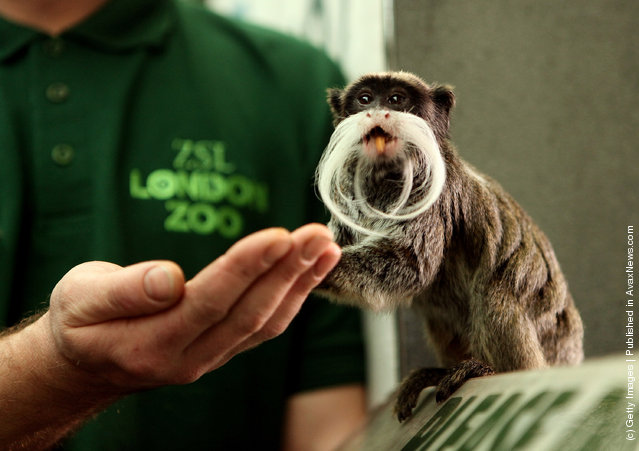
An Emperor Tamarin monkey, native to the Amazon rainforest, experiences its new home in the living rainforest enclosure at ZSL London Zoo on March 25, 2010 in London, England. Entitled “Rainforest Life” the large temperature and humidity controlled bio-dome is home to free-roaming monkeys, sloths, tree anteaters and tropical birds. The exhibit, which is opening in the International Year of Biodiversity, will be open to the public from March 27, 2010. (Photo by Oli Scarff/Getty Images)
Details
19 Apr 2011 11:48:00


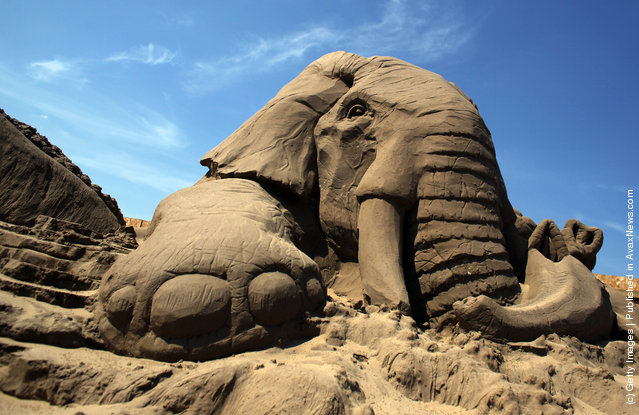
The sun shines on Weston-super-Mare's Sand Sculpture Festival and the sand art currently being displayed on July 4, 2011 in Weston-Super-Mare, England. Now in its fourth year and with a Amazon Jungle theme for 2011, the seaside resort's event attracts top sand sculptors from across the world and runs throughout the summer months. (Photo by Matt Cardy/Getty Images)
Details
05 Jul 2011 11:45:00
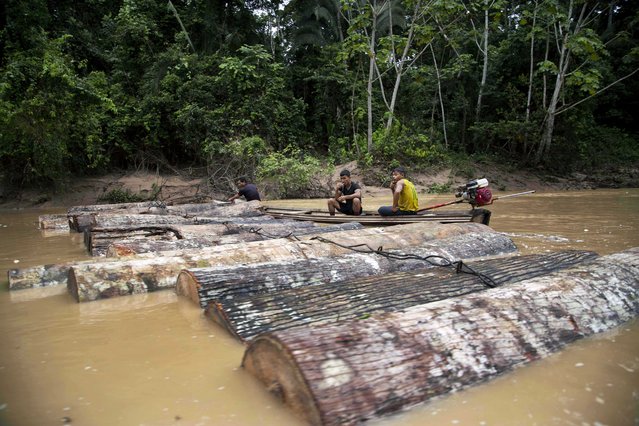
In this March 17, 2015 photo, Ashaninka Indian men, identified by locals as illegal loggers, tie tree trunks together to move them along the Putaya River near the hamlet of Saweto, Peru. Illegal logging persists unabated in this remote Amazon community where four indigenous leaders who resisted it were slain in September. The Putaya River is the waterway that transports felled trees, cut both legally and illegally, to the city of Pucallpa. (Photo by Martin Mejia/AP Photo)

In this March 17, 2015 photo, Ashaninka Indian men, identified by locals as illegal loggers, tie tree trunks together to move them along the Putaya River near the hamlet of Saweto, Peru. Illegal logging persists unabated in this remote Amazon community where four indigenous leaders who resisted it were slain in September. The Putaya River is the waterway that transports felled trees, cut both legally and illegally, to the city of Pucallpa. (Photo by Martin Mejia/AP Photo)
Details
27 Mar 2015 12:40:00
Villagers from the Porto Novo community load into their canoes arapaima or pirarucu, the largest freshwater fish species in South America and one of the largest in the world, while fishing in Poco Fundo lake along a branch of the Solimoes river, one of the main tributaries of the Amazon, in the Mamiraua nature reserve near Fonte Boa about 600 km (373 miles) west of Manaus, November 26, 2013. (Photo by Bruno Kelly/Reuters)

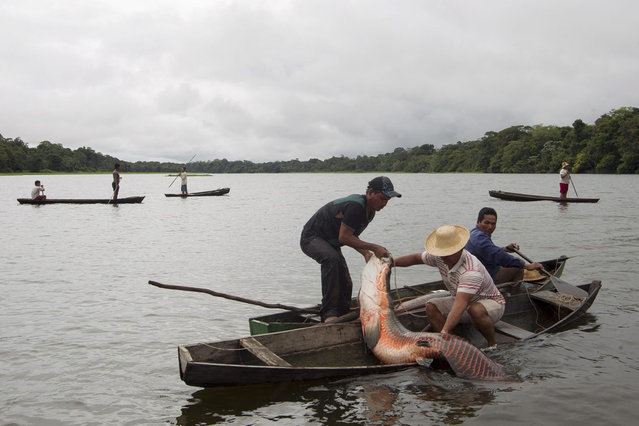
Villagers from the Porto Novo community load into their canoes arapaima or pirarucu, the largest freshwater fish species in South America and one of the largest in the world, while fishing in Poco Fundo lake along a branch of the Solimoes river, one of the main tributaries of the Amazon, in the Mamiraua nature reserve near Fonte Boa about 600 km (373 miles) west of Manaus, November 26, 2013. Catching the arapaima, a fish that is sought after for its meat and is considered by biologists to be a living fossil, is only allowed once a year by Brazil's environmental protection agency. The minimum size allowed for a fisherman to keep an arapaima is 1.5 meters (4.9 feet). (Photo by Bruno Kelly/Reuters)
Details
17 Dec 2013 08:03:00
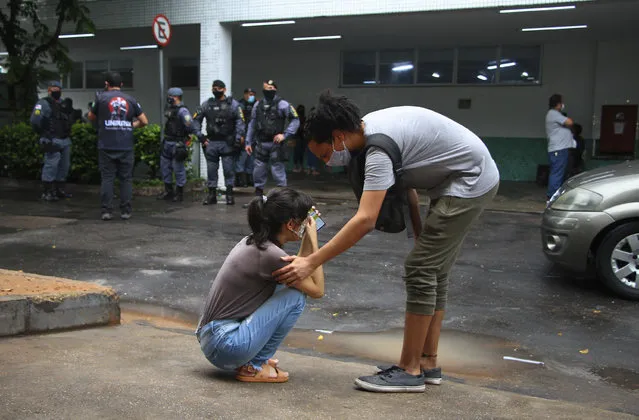
Raissa Floriano whose father is hospitalized with CCOVID-19, cries during a protest amid the new coronavirus pandemic outside the 28 Agosto Hospital, in Manaus, Brazil, Thursday, January 14, 2021. Scores of COVID-19 patients in the Amazon rainforest's biggest city will be transferred out of state as the local health system collapses and dwindling stocks of oxygen tanks begin to falter. (Photo by Edmar Barros/AP Photos)

Raissa Floriano whose father is hospitalized with CCOVID-19, cries during a protest amid the new coronavirus pandemic outside the 28 Agosto Hospital, in Manaus, Brazil, Thursday, January 14, 2021. Scores of COVID-19 patients in the Amazon rainforest's biggest city will be transferred out of state as the local health system collapses and dwindling stocks of oxygen tanks begin to falter. (Photo by Edmar Barros/AP Photos)
Details
16 Jan 2021 00:07:00
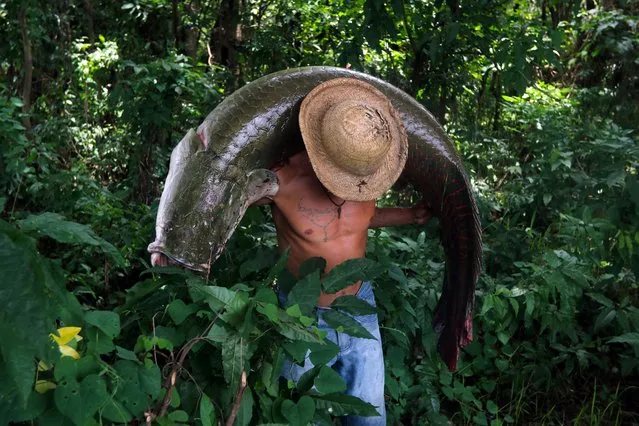
A fisherman carries a large Pirarucu (Arapaima gigas) at the Piagacu-Purus Sustainable Development Reserve in Amazonas state, Brazil, on October 24, 2019. The pirarucu -a giant fish of the Amazon, that had been on the verge of extinction- can measure up to three meters and weigh more than 200 kilos. The soft and tasty white meat fish is nowadays served in renowned restaurants in Rio de Janeiro. (Photo by Ricardo Oliveira/AFP Photo)

A fisherman carries a large Pirarucu (Arapaima gigas) at the Piagacu-Purus Sustainable Development Reserve in Amazonas state, Brazil, on October 24, 2019. The pirarucu -a giant fish of the Amazon, that had been on the verge of extinction- can measure up to three meters and weigh more than 200 kilos. The soft and tasty white meat fish is nowadays served in renowned restaurants in Rio de Janeiro. (Photo by Ricardo Oliveira/AFP Photo)
Details
31 Oct 2019 00:07:00
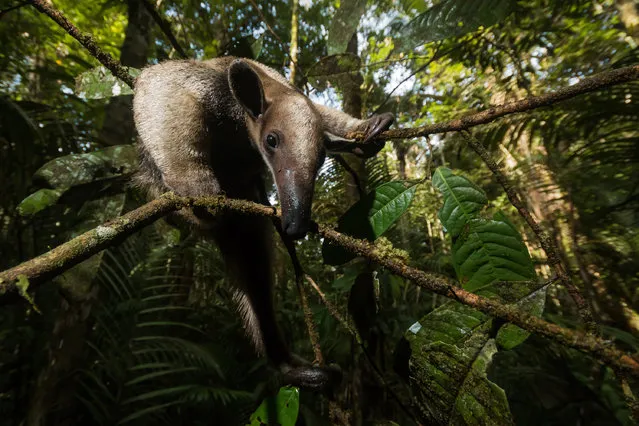
Individuals and populations student winner. Limbing in the Tropics, photographed in Manaus, Brazil. While walking in the Amazon rainforest looking for bat roosts to set up mist nets to capture bats for scientific research, a faint and almost imperceptible noise suddenly caught this photographer’s attention. An anteater was climbing with exceptional ability in a tangled mess of branches and lianas. With an unbelievable calmness, the animal watched the photographer at work and seemed to enjoy being the subject of an impromptu photography session in the most biodiverse ecosystem on Earth. (Photo by Adrià López Baucells/University of Lisbon/British Ecological Society)

Individuals and populations student winner. Limbing in the Tropics, photographed in Manaus, Brazil. While walking in the Amazon rainforest looking for bat roosts to set up mist nets to capture bats for scientific research, a faint and almost imperceptible noise suddenly caught this photographer’s attention. An anteater was climbing with exceptional ability in a tangled mess of branches and lianas. (Photo by Adrià López Baucells/University of Lisbon/British Ecological Society)
Details
05 Dec 2018 00:03:00