Loading...
Done
Sikorsky H-5 helicopters

“Igor Sikorsky (May 25, 1889 – October 26, 1972), born Igor Ivanovich Sikorsky was a Russian American pioneer of aviation in both helicopters and fixed-wing aircraft. He designed and flew the world's first multi-engine fixed-wing aircraft, the Russky Vityaz in 1913, and the first airliner, Ilya Muromets, in 1914. After immigrating to the United States in 1919, Sikorsky founded the Sikorsky Aircraft Corporation in 1923, and developed the first of Pan American Airways' ocean-conquering flying boats in the 1930s. In 1939 Sikorsky designed and flew the Vought-Sikorsky VS-300, the first viable American helicopter, which pioneered the rotor configuration used by most helicopters today. Sikorsky would modify the design into the Sikorsky R-4, which became the world's first mass-produced helicopter in 1942”. – Wikipedia

Photo: Westland Sikorsky H-5's, used by British European Airways Helicopters, which fly between London and Birmingham. The Sikorsky H-5, (aka R-5, S-51, HO3S-1, or Horse) (R-5 until 1948; company designation VS-327) is a helicopter built by Sikorsky Aircraft Corporation, formerly used by the United States Air Force, and its predecessor, the United States Army Air Forces, as well as the United States Navy and United States Coast Guard (with the designations HO2S and HO3S). (Photo by Harrison /Topical Press Agency/Getty Images). 22nd May 1951
Details
06 Sep 2011 10:18:00
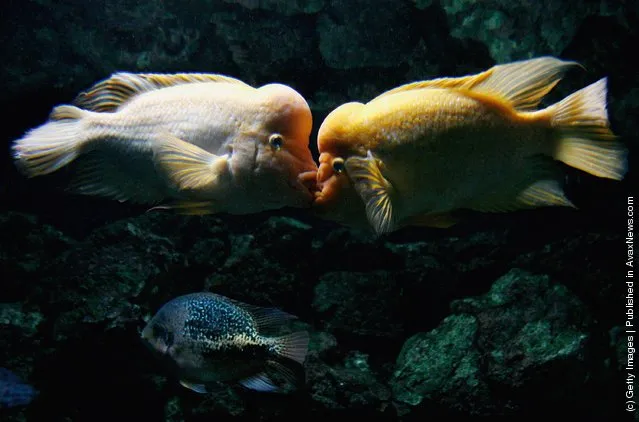
Midas Cichlid a.k.a. Amphilophus Citrinellus

“Amphilophus citrinellus is a large cichlid fish endemic to the San Juan River and adjacent watersheds in Costa Rica and Nicaragua. In the aquarium trade A. citrinellus is often sold under the trade name of Midas cichlid. A. citrinellus are omnivorous and their diet consists of plant material, molluscs and smaller fish”. – Wikipedia

Photo: Two Midas Cichlid (lat: amphilophus citrinellus) fish are seen in an aquarium at Hellabrunn zoo on December 23, 2009 in Munich, Germany. (Photo by Alexandra Beier/Getty Images)
Details
17 Aug 2011 11:29:00
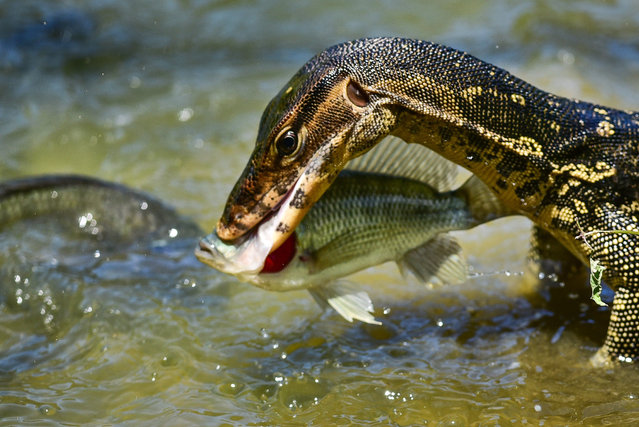
A lizard is seen hunting for fish during the daytime on May 04, 2017 in West Sumatra, Indonesia. (Photo by Riau Images/Barcroft Images)

A lizard is seen hunting for fish during the daytime on May 04, 2017 in West Sumatra, Indonesia. (Photo by Riau Images/Barcroft Images)
Details
07 May 2017 09:48:00
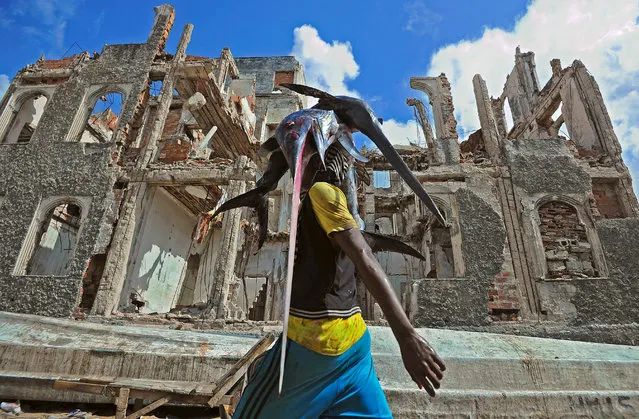
A fisherman carries a sailfish on his head to the fish market in Hamarweyne near the port of Mogadishu on April, 4, 2016. (Photo by Mohamed Abdiwahab/AFP Photo)

A fisherman carries a sailfish on his head to the fish market in Hamarweyne near the port of Mogadishu on April, 4, 2016. (Photo by Mohamed Abdiwahab/AFP Photo)
Details
07 Apr 2016 15:25:00
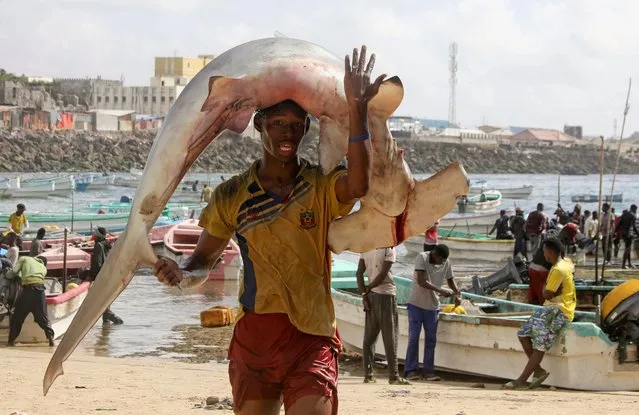
Osman Abdulahi carries fish at the Orobo beach in Hamarweyne district of Mogadishu, Somalia on November 5, 2021. (Photo by Feisal Omar/Reuters)

Osman Abdulahi carries fish at the Orobo beach in Hamarweyne district of Mogadishu, Somalia on November 5, 2021. (Photo by Feisal Omar/Reuters)
Details
19 Nov 2021 08:54:00
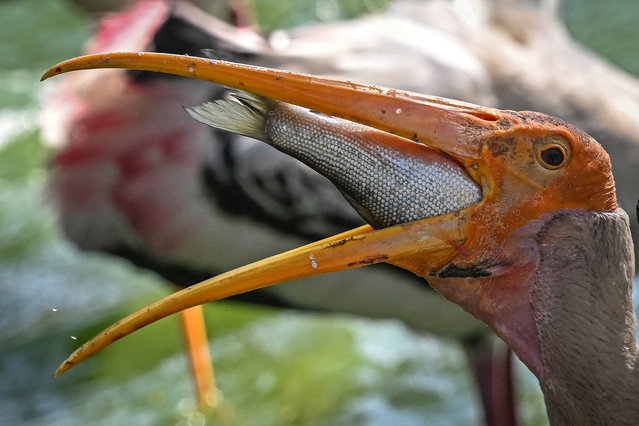
A painted stork eats a fish as it is pictured in the Delhi Zoo in New Delhi on December 5, 2024. (Photo by Sajjad Hussain/AFP Photo)

A painted stork eats a fish as it is pictured in the Delhi Zoo in New Delhi on December 5, 2024. (Photo by Sajjad Hussain/AFP Photo)
Details
15 Dec 2024 02:32:00
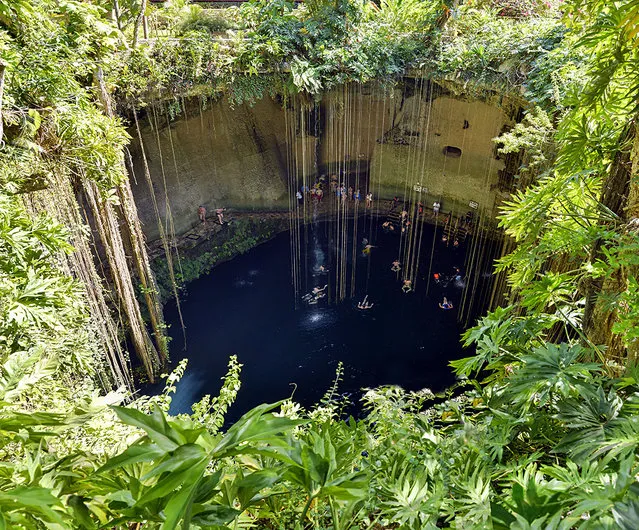
Cenote In Mexico

A cenote is a natural phenomenon, a sinkhole in the Earth’s surface. The Yucatan Peninsula in Mexico has an estimated 7,000 cenotes because it is primarily made up of porous limestone. For millions of years, rainfall slowly ate away at the limestone and a huge system of underground caves and caverns was formed. Many filled with water from rain or from the underground water table. When the roof of a water filled cave collapses, a cenote is born. The water found in a cenote may be fresh water, salt water, or both. Structurally it may be completely open, like a lake, almost completely closed with just a small opening at the top, or somewhere in between.
Details
06 Oct 2013 09:45:00
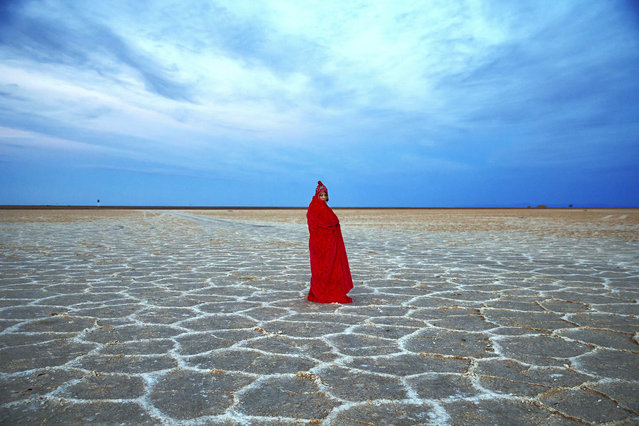
In this picture taken on Thursday, December 1, 2016, an Iranian woman covers herself with a blanket due to the cold,  while visiting Khour salt lake during her tour of the Mesr desert about 305 miles (500 kilometers) southeast of the capital Tehran, Iran. Deserts make up parts of Iran which have recently become tourist destination for young Iranians looking for a break on their weekend. The increase in tourists to the desert has stimulated economic growth in the area. (Photo by Ebrahim Noroozi/AP Photo)

In this picture taken on Thursday, December 1, 2016, an Iranian woman covers herself with a blanket due to the cold, while visiting Khour salt lake during her tour of the Mesr desert about 305 miles (500 kilometers) southeast of the capital Tehran, Iran. Deserts make up parts of Iran which have recently become tourist destination for young Iranians looking for a break on their weekend. The increase in tourists to the desert has stimulated economic growth in the area. (Photo by Ebrahim Noroozi/AP Photo)
Details
13 Dec 2016 07:26:00