Loading...
Done
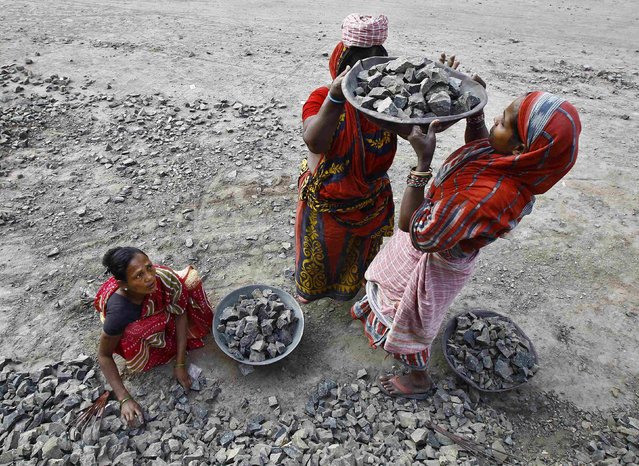
Women labourers work at the construction site of a road in Kolkata January 8, 2015. Across towns and cities in India, it is not uncommon to see women cleaning building sites, carrying bricks and or shoveling gravel - helping construct the infrastructure necessary for the country's economic and social development. (Photo by Rupak De Chowdhuri/Reuters)

Women labourers work at the construction site of a road in Kolkata January 8, 2015. Across towns and cities in India, it is not uncommon to see women cleaning building sites, carrying bricks and or shoveling gravel – helping construct the infrastructure necessary for the country's economic and social development. They help build roads, railway tracks, airports, and offices. They lay pipes for clean water supplies, cables for telecommunications, and dig the drains for sewage systems. But although women make up at least 20 percent of India's 40 million construction workers, they are less recognized than male workers with lower pay and often prone to safety hazards and sexual harassment. They are often unaware of their rights or scared to complain, say activists now trying to campaign for better treatment of women in the construction industry. (Photo by Rupak De Chowdhuri/Reuters)
Details
15 Jan 2015 13:47:00
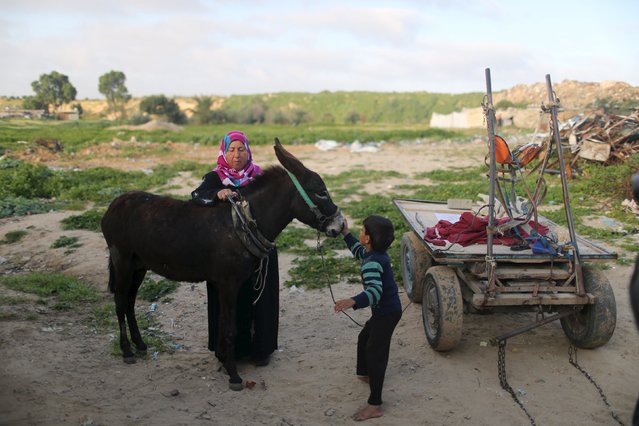
Palestinian woman Jihan Abu Muhsen prepares her donkey with her son Kareem before going work collecting bricks for sale from sites of demolished buildings, at her dwelling in Khan Younis in the southern Gaza Strip March 8, 2016. Abu Muhsen gathers bricks from the sites of demolished buildings and sells them to recycling factories. She earns around 20 shekels ($5) a day and her 10-year-old son Mohammad helps her when he is not at school. (Photo by Ibraheem Abu Mustafa/Reuters)

Palestinian woman Jihan Abu Muhsen prepares her donkey with her son Kareem before going work collecting bricks for sale from sites of demolished buildings, at her dwelling in Khan Younis in the southern Gaza Strip March 8, 2016. Abu Muhsen gathers bricks from the sites of demolished buildings and sells them to recycling factories. She earns around 20 shekels ($5) a day and her 10-year-old son Mohammad helps her when he is not at school. (Photo by Ibraheem Abu Mustafa/Reuters)
Details
19 Apr 2016 13:32:00
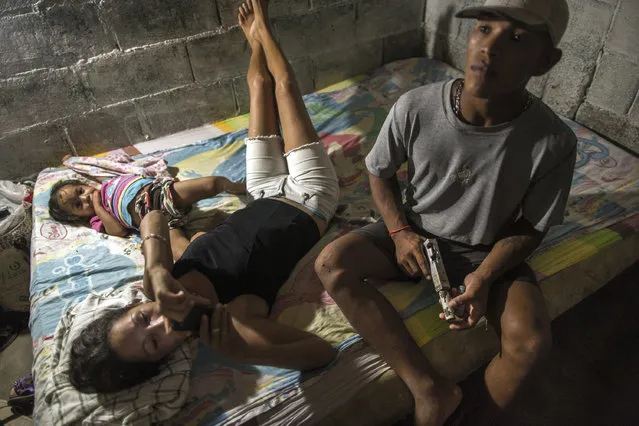
In this November 7, 2016 photo, “El Menor”, a member of “Los Cainos” self-defense group formed by the Marval fishing family, holds a homemade gun before starting a night patrol to help protect fishermen from pirate attacks in Punta de Araya, Sucre state, Venezuela. Pirates are terrorizing the coastal state of Sucre, once home to the world's fourth-largest tuna fleet and a thriving fishing industry. (Photo by Rodrigo Abd/AP Photo)

In this November 7, 2016 photo, “El Menor”, a member of “Los Cainos” self-defense group formed by the Marval fishing family, holds a homemade gun before starting a night patrol to help protect fishermen from pirate attacks in Punta de Araya, Sucre state, Venezuela. Pirates are terrorizing the coastal state of Sucre, once home to the world's fourth-largest tuna fleet and a thriving fishing industry. (Photo by Rodrigo Abd/AP Photo)
Details
09 Dec 2016 11:46:00
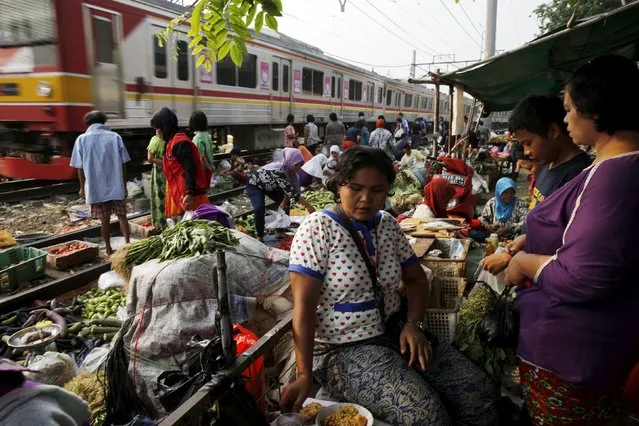
A vendor (C) serves customers at a vegetable market as a commuter train passes in Jakarta October 2, 2015. Indonesia's high annual inflation rate cooled in September and should drop more by year-end, but it likely will be 2016 before the central bank can cut interest rates to help an economy growing at its slowest pace in six years. (Photo by Reuters/Beawiharta)

A vendor (C) serves customers at a vegetable market as a commuter train passes in Jakarta October 2, 2015. Indonesia's high annual inflation rate cooled in September and should drop more by year-end, but it likely will be 2016 before the central bank can cut interest rates to help an economy growing at its slowest pace in six years. (Photo by Reuters/Beawiharta)
Details
05 Oct 2015 08:02:00
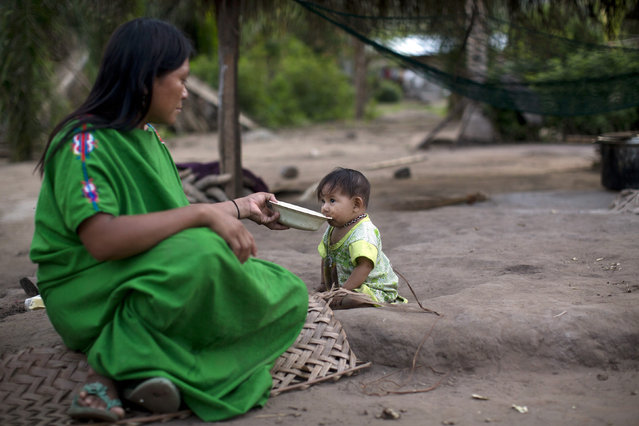
In this November 19, 2015 photo, Ester Melendez feeds banana porridge to her nine-month-old daughter Dina, in Pichiquia, an Ashaninka indigenous community in Peru's Junin region. Incursions and assaults by loggers, miners, colonists and leftist guerrillas have reduced the lands of the Ashaninka people in the Peruvian Amazon, leaving many of the 97,000 members of the group malnourished, despite efforts by the government and independent organizations to help. (Photo by Rodrigo Abd/AP Photo)

In this November 19, 2015 photo, Ester Melendez feeds banana porridge to her nine-month-old daughter Dina, in Pichiquia, an Ashaninka indigenous community in Peru's Junin region. Incursions and assaults by loggers, miners, colonists and leftist guerrillas have reduced the lands of the Ashaninka people in the Peruvian Amazon, leaving many of the 97,000 members of the group malnourished, despite efforts by the government and independent organizations to help. (Photo by Rodrigo Abd/AP Photo)
Details
10 Dec 2015 08:00:00
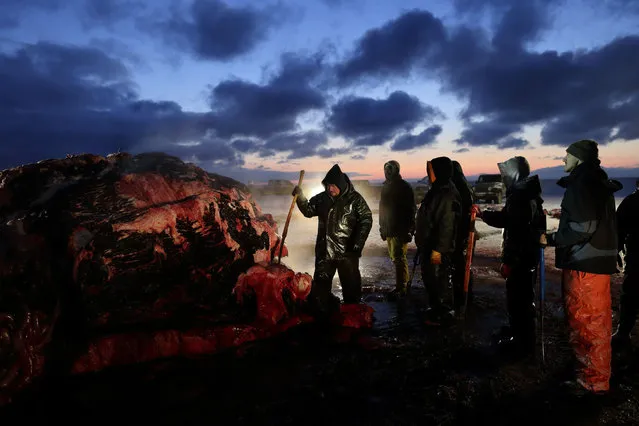
In this October 7, 2014, photo, Fredrick Brower, center, helps cut up a bowhead whale caught by Inupiat subsistence hunters on a field near Barrow, Alaska. Drawing on tradition, and keeping within the closely monitored Aboriginal subsistence whaling guidelines, a bowhead whale is carved and divided by a crew armed with knives and hooks, and then shared according to custom. (Photo by Gregory Bull/AP Photo)

In this October 7, 2014, photo, Fredrick Brower, center, helps cut up a bowhead whale caught by Inupiat subsistence hunters on a field near Barrow, Alaska. Drawing on tradition, and keeping within the closely monitored Aboriginal subsistence whaling guidelines, a bowhead whale is carved and divided by a crew armed with knives and hooks, and then shared according to custom. (Photo by Gregory Bull/AP Photo)
Details
07 Nov 2014 12:58:00
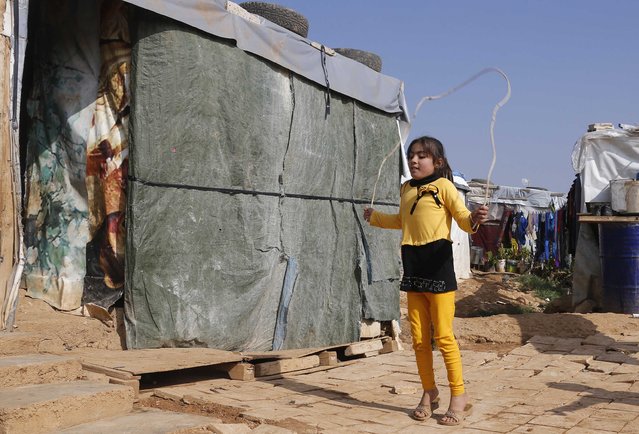
A Syrian refugee girl plays outside a tent at a refugee camp in Zahle in the Bekaa valley November 18, 2014. In October, Lebanon, which has the highest per capita concentration of refugees in the world at one in four residents, said it could not cope with more than one million Syrians and has asked for funds to help look after them. (Photo by Mohamed Azakir/Reuters)

A Syrian refugee girl plays outside a tent at a refugee camp in Zahle in the Bekaa valley November 18, 2014. In October, Lebanon, which has the highest per capita concentration of refugees in the world at one in four residents, said it could not cope with more than one million Syrians and has asked for funds to help look after them. (Photo by Mohamed Azakir/Reuters)
Details
19 Nov 2014 14:22:00
A marcher helps carrying a multicolor flag during the annual gay pride parade in Warsaw, Poland, Saturday, June 13, 2015. Gay rights activists held their 15th yearly "Equality Parade" as Poland slowly grows more accepting of gays and lesbians, but where gay marriage, and even legal partnerships, still appear to be a far-off dream. This year's parade comes amid a right-wing political shift, a possible setback for the LGBT community. (AP Photo/Alik Keplicz)

A marcher helps carrying a multicolor flag during the annual gay pride parade in Warsaw, Poland, Saturday, June 13, 2015. Gay rights activists held their 15th yearly "Equality Parade" as Poland slowly grows more accepting of gays and lesbians, but where gay marriage, and even legal partnerships, still appear to be a far-off dream. This year's parade comes amid a right-wing political shift, a possible setback for the LGBT community. (AP Photo/Alik Keplicz)
Details
15 Jun 2015 13:27:00