Loading...
Done
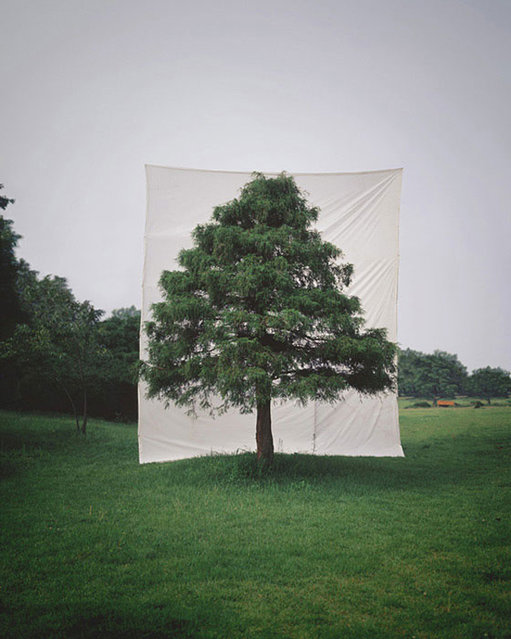
The Lonely Tree By  Myoung Ho Lee

Myoung Ho Lee‘s 2007 Tree series is about as peaceful and serene as the scenery itself. In the series, the young South Korean photographer touches upon the subjects of physical isolation and visual confirmation. By placing the tree in front of a stark white background, Lee creates a false separation that plays a delightful game with the mind’s eye.
Details
30 May 2014 09:23:00
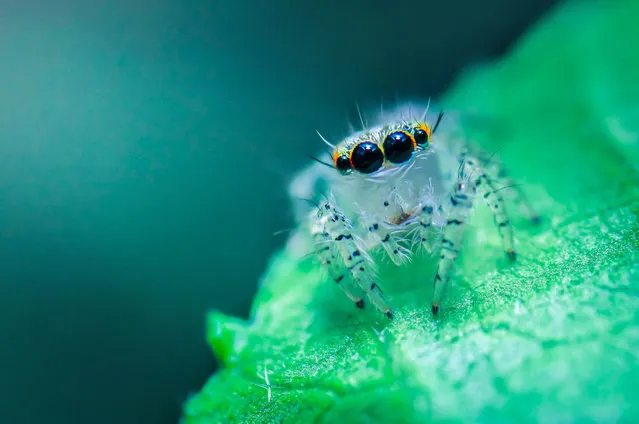
Heavy bodied jumping spider by Md Rashuidul Rabby, age 23, from Bangladesh. (Photo by Md Rashuidul Rabby/WWD2017)

Ten finalists capture the theme of “through young eyes” in this young photographers’ competition that aims to engage youth around the world in wildlife conservation. Here: Heavy bodied jumping spider by Md Rashuidul Rabby, age 23, from Bangladesh. (Photo by Md Rashuidul Rabby/WWD2017)
Details
06 Mar 2017 00:00:00
Two Faces Cat Named Frank And Louie

A Massachusetts cat with two faces has become the world’s longest surviving so called “janus” feline at 12 years of age. The cat, who is named Frank and Louie, has two mouths, two noses and three eyes. Frank and Louie have one brain, so the faces react in unison.
Details
14 Mar 2013 11:47:00


Actress Rosario Dawson (“Men in Black II”, “25th Hour”, “Sin City”, “Death Proof”, “Eagle Eye”, “Alexander”, “Percy Jackson and the Olympians”) walks the runway at the Fashion For Relief at Forville market during the 64th Annual Cannes Film Festival on May 16, 2011 in Cannes, France. (Photo by Ian Gavan/Getty Images)
Details
17 May 2011 10:25:00
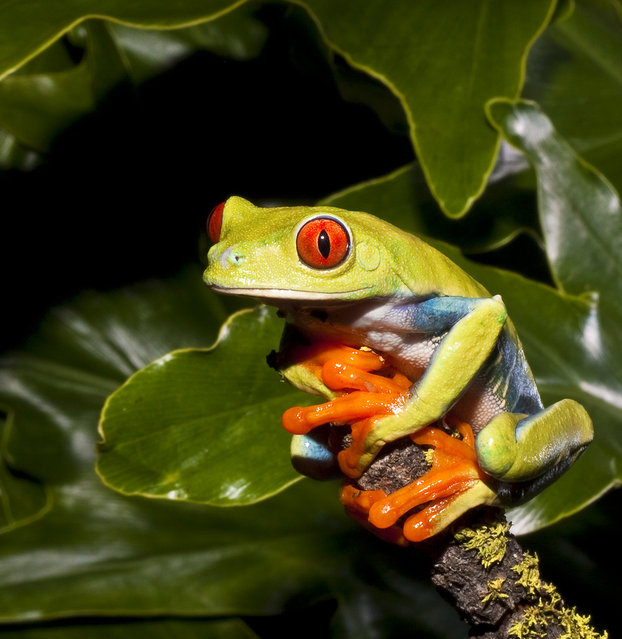
The Red-eyed Treefrog (Agalychnis callidryas)

“The Red-eyed Treefrog (Agalychnis callidryas) is an arboreal hylid native to Neotropical rainforests in Central America. Red-eyed tree frogs, as their name states, have red eyes with vertically narrowed noses, a vibrant green body with yellow and blue vertically striped sides, and orange or yellow webbed feet and toes”. – Wikipedia. (Photo by Donald Quintana)
Details
26 Jun 2012 10:13:00
Revellers in Newcastle, England on the last Friday before Christmas, December 20, 2019. (Photo by Scott Heppell/PA Images via Getty Images)

Revellers in Newcastle, England on the last Friday before Christmas, December 20, 2019. Black Eye Friday festive mayhem hit the nation; Christmas celebrations kicked off with a bang across the country as revellers flocked to pubs and clubs for the biggest night of the year. (Photo by Scott Heppell/PA Images via Getty Images)
Details
22 Dec 2019 00:07:00
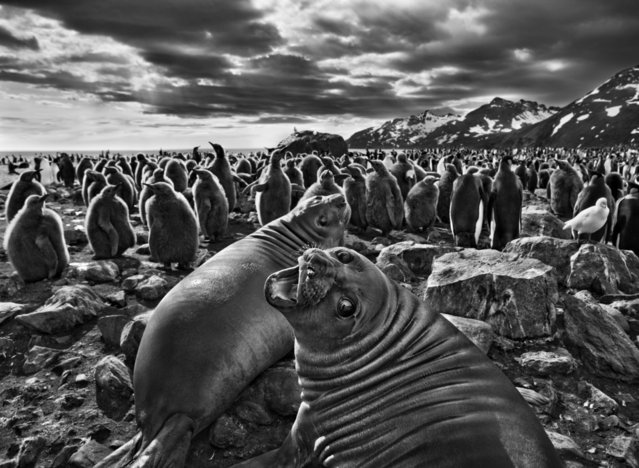
On South Georgia, a barren island in the far South Atlantic, a pair of southern elephant seal calves beckon before a colony of king penguins. “The male seals can grow to almost five tons,” says Salgado, “but these are just babies. This one looked at me with beautiful eyes”. (Photo by Sebastião Salgado/Amazonas/Contact Press Images)

Sebastião Salgado is a Brazilian documentary photographer living in Paris. He has produced several books, and his work has been exhibited extensively around the world. His latest work, «Genesis», premieres at The Natural History Museum in London on April 11, on view through September 8, 2013. Photo: On South Georgia, a barren island in the far South Atlantic, a pair of southern elephant seal calves beckon before a colony of king penguins. “The male seals can grow to almost five tons,” says Salgado, “but these are just babies. This one looked at me with beautiful eyes”. (Photo by Sebastião Salgado/Amazonas/Contact Press Images)
Details
30 Apr 2013 12:17:00
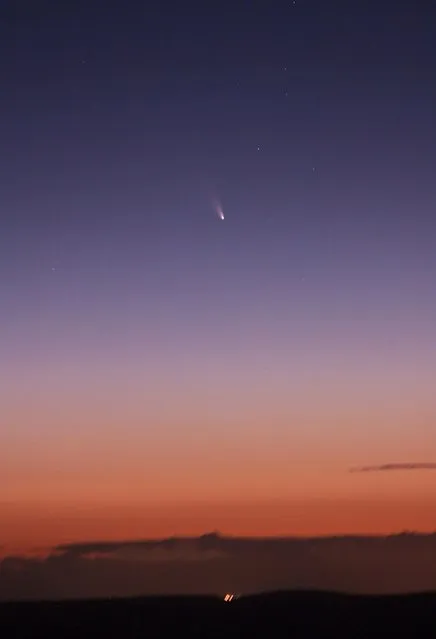
This image provided by NASA shoaws the comet PANSTARRS as seen from Mount Dale, Western Australia on March 5, 2013. According to NASA on March 10, it will make its closest approach to the sun about 28 million miles (45 million kilometers) away. As it continues its nightly trek across the sky, the comet may get lost in the sun's glare but should return and be visible to the naked eye by March 12. (Photo by AP Photo/NASA)

It’s time to start watching for Comet PANSTARRS, one of two comets to get excited about in 2013. Photo: This image provided by NASA shoaws the comet PANSTARRS as seen from Mount Dale, Western Australia on March 5, 2013. According to NASA on March 10, it will make its closest approach to the sun about 28 million miles (45 million kilometers) away. As it continues its nightly trek across the sky, the comet may get lost in the sun's glare but should return and be visible to the naked eye by March 12. (Photo by AP Photo/NASA)
Details
13 Mar 2013 08:03:00