Loading...
Done
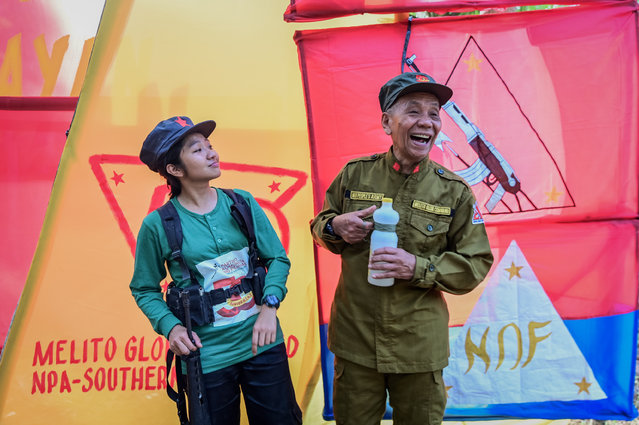
Jaime “Ka Diego” Padilla (R), spokesperson of the Melito Glor Command of the New People's Army (NPA), and Ka Kathryn (Comrade Kathryn) (L) react during their 50th founding anniversary celebration at an undisclosed location in the mountains of Sierra Madre, Philippines, 31 March 2019. (Photo by Alecs Ongcal/EPA/EFE)

Jaime “Ka Diego” Padilla (R), spokesperson of the Melito Glor Command of the New People's Army (NPA), and Ka Kathryn (Comrade Kathryn) (L) react during their 50th founding anniversary celebration at an undisclosed location in the mountains of Sierra Madre, Philippines, 31 March 2019. (Photo by Alecs Ongcal/EPA/EFE)
Details
27 Apr 2019 00:01:00


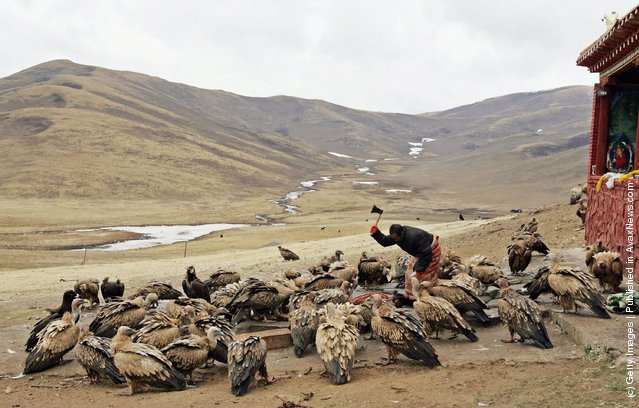
“Sky burial or ritual dissection was once a common funerary practice in Tibet wherein a human corpse is cut in specific locations and placed on a mountaintop, exposing it to the elements or the mahabhuta and animals – especially to birds of prey. The location of the sky burial preparation and place of execution are understood in the Vajrayana traditions as charnel grounds. In Tibet the practice is known as jhator, which literally means, «giving alms to the birds»”. – Wikipedia

Photo: A burial master chops bones of a body to feed vultures during a celestial burial ceremony on April 19, 2006 in Dari County of Guoluo Prefecture, Qinghai Province, northwest China. Celestial burial is a traditional funeral of Tibetan people, which began in the 7th century. (Photo by China Photos/Getty Images)

Details
18 Jun 2011 12:12:00
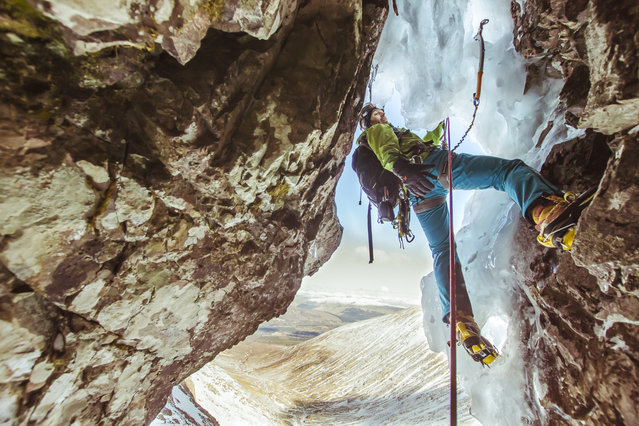
“Winter Climbing from inside Ben Nevis”. The view from inside the mountain, as a winter climber passes through the cave on Minus Three gully. Photo location: Ben Nevis, Fort William, Scotland. (Photo and caption by Daniel Wildey/National Geographic Photo Contest)

“Winter Climbing from inside Ben Nevis”. The view from inside the mountain, as a winter climber passes through the cave on Minus Three gully. Photo location: Ben Nevis, Fort William, Scotland. (Photo and caption by Daniel Wildey/National Geographic Photo Contest)
Details
24 Jun 2014 12:18:00
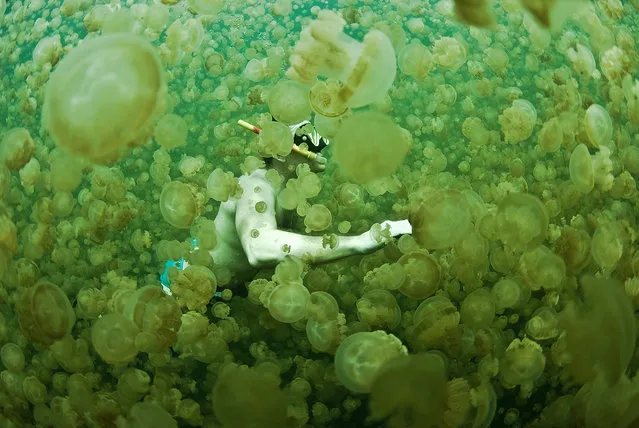
Jellyfish Lake

Jellyfish Lake (Palauan: Ongeim'l Tketau, “Fifth Lake”) is a marine lake located on Eil Malk island in Palau. Eil Malk is part of the Rock Islands, a group of small, rocky, mostly uninhabited islands in Palau's Southern Lagoon, between Koror and Peleliu. There are about 70 other marine lakes located throughout the Rock Islands. Jellyfish Lake is one of Palau's most famous dive (snorkeling only) sites. It is notable for the millions of golden jellyfish which migrate horizontally across the lake daily.
Details
02 Feb 2014 12:23:00
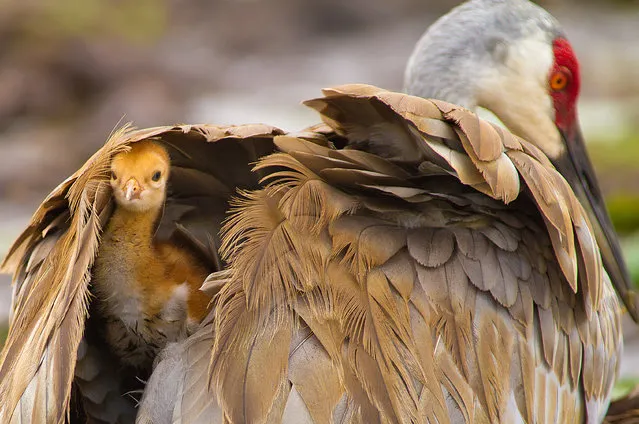
“Hiding In The Shadows”. This Baby Sandhill taking refuge under Moms wings while sitting on her second egg. I witnessed this baby being born earlier that day,and the next morning saw the other one hatch,what a sight to see. Photo location: Deland, Florida. (Photo and caption by Scott Helfrich/National Geographic Photo Contest)

“Hiding In The Shadows”. This Baby Sandhill taking refuge under Moms wings while sitting on her second egg. I witnessed this baby being born earlier that day,and the next morning saw the other one hatch,what a sight to see. Photo location: Deland, Florida. (Photo and caption by Scott Helfrich/National Geographic Photo Contest)
Details
08 Dec 2013 11:51:00
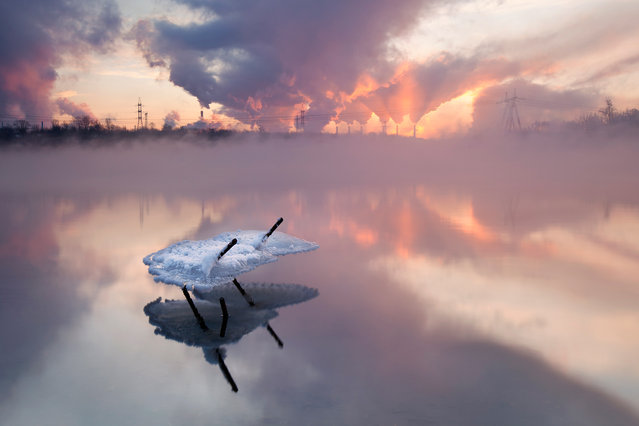
“Winter shapes, Moscow river”. Moscow river at this part is never covered by ice. When the temperature is very low it's possible to see a strong fog. Morning light and pipes of the oli factory creates a fantastic landscape. Photo location: Moscow, Russia. (Photo and caption by Sergey Rumyantsev/National Geographic Photo Contest)

“Winter shapes, Moscow river”. Moscow river at this part is never covered by ice. When the temperature is very low it's possible to see a strong fog. Morning light and pipes of the oli factory creates a fantastic landscape. Photo location: Moscow, Russia. (Photo and caption by Sergey Rumyantsev/National Geographic Photo Contest)
Details
11 Dec 2013 08:33:00
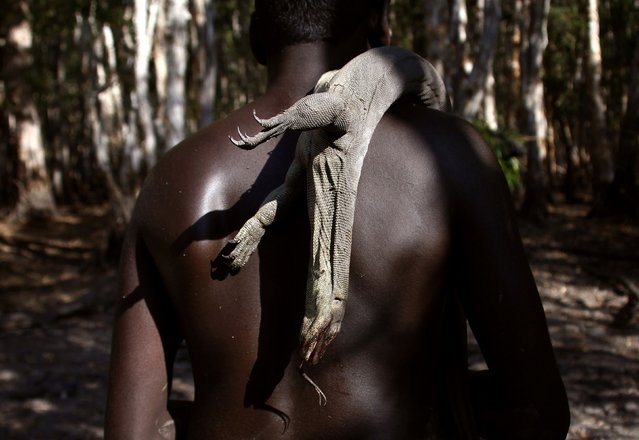
Australian Aboriginal hunter Marcus Gaykamangu of the Yolngu people, carries an Australian native lizard called a goanna over his shoulder as he walks away from a billabong near the “out station” of Yathalamarra, located on the outksirts of the community of Ramingining in East Arnhem Land November 22, 2014. (Photo by David Gray/Reuters)

Australian Aboriginal hunter Marcus Gaykamangu of the Yolngu people, carries an Australian native lizard called a goanna over his shoulder as he walks away from a billabong near the “out station” of Yathalamarra, located on the outksirts of the community of Ramingining in East Arnhem Land November 22, 2014. (Photo by David Gray/Reuters)
Details
11 Dec 2014 13:19:00
A man poses for a pictures, as he transport logs on his bull-cart to make charcoal at La Campanera village, NIcaragua, May 22, 2015. Around 300 families live off the sale of charcoal in this area located in the dry corridor of Nicaragua. Friday marks World Environment Day. Picture taken May 22, 2015. REUTERS/Oswaldo Rivas

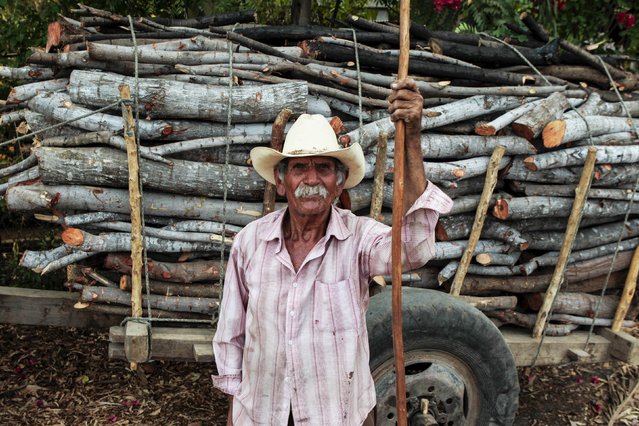
A man poses for a pictures, as he transport logs on his bull-cart to make charcoal at La Campanera village, Nicaragua, May 22, 2015. Around 300 families live off the sale of charcoal in this area located in the dry corridor of Nicaragua. Friday marks World Environment Day. Picture taken May 22, 2015. REUTERS/Oswaldo Rivas
Details
18 Jun 2015 10:27:00