Rikkie Valerie Kolle, a transgender woman who was crowned Miss Netherlands, puts on her makeup in Voorthuizen, Netherlands on July 12, 2023. (Photo by Piroschka van de Wouw/Reuters)
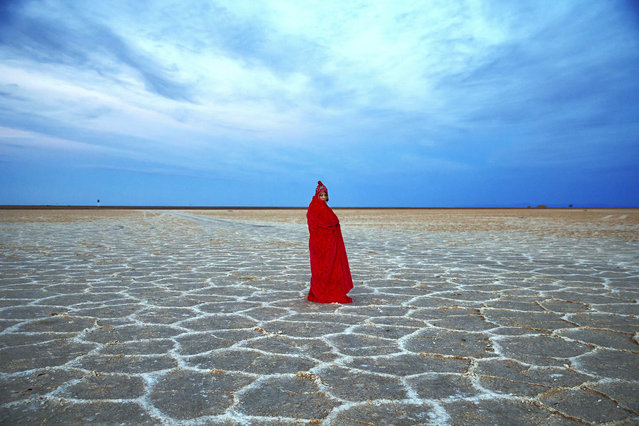
In this picture taken on Thursday, December 1, 2016, an Iranian woman covers herself with a blanket due to the cold, while visiting Khour salt lake during her tour of the Mesr desert about 305 miles (500 kilometers) southeast of the capital Tehran, Iran. Deserts make up parts of Iran which have recently become tourist destination for young Iranians looking for a break on their weekend. The increase in tourists to the desert has stimulated economic growth in the area. (Photo by Ebrahim Noroozi/AP Photo)
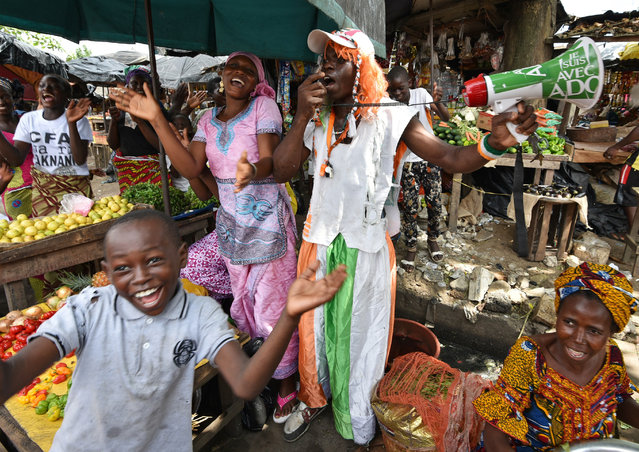
A period of relative stability has put the Iranian capital No1 on the list of world cities that have achieved biggest improvements in liveability over the past five years, as calculated by the Economist Intelligence Unit. The “most improved” top 10 contains some unexpected names. So, eg, the fourth place: Abidjan, Ivory Coast. Latest ranking: 128; Ranking five years ago: 131; Five-year index movement: 3.8%. Here: A supporter of Ivory Coast president Alassane Ouattara campaigns in a market in the city’s Koumassi quarter. (Photo by Sia Kambou/AFP Photo)
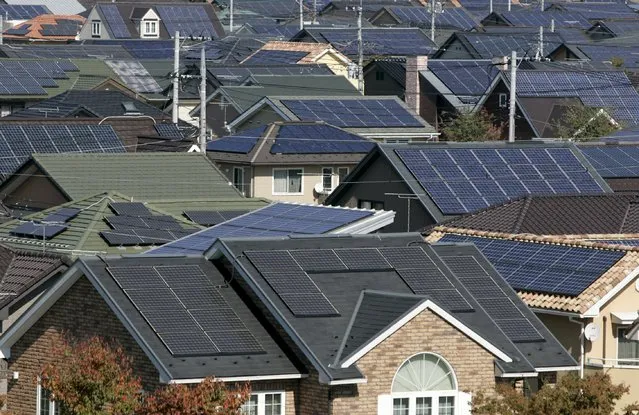
Rooftops of solar powered houses are pictured in Ota, 80 km northwest of Tokyo in this October 28, 2008 file photo. One by one, Japan is turning off the lights at the giant oil-fired power plants that propelled it to the ranks of the world's top industrialised nations. With nuclear power in the doldrums after the Fukushima disaster, it's solar energy that is becoming the alternative. Solar power is set to become profitable in Japan as early as this quarter, according to the Japan Renewable Energy Foundation (JREF), freeing it from the need for government subsidies and making it the last of the G7 economies where the technology has become economically viable. (Photo by Yuriko Nakao/Reuters)
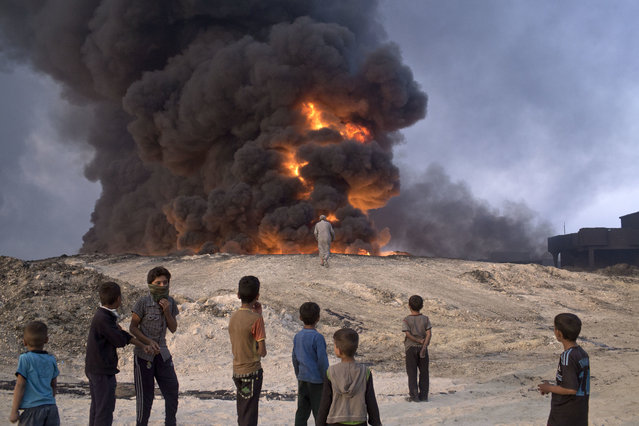
in Qayyarah, about 31 miles (50 km) south of Mosul, Iraq, Sunday, October 23, 2016.in Qayyarah, some 50 kilometers south of Mosul, Iraq, Sunday, Oct. 23, 2016. Islamic State fighters torched a sulfur plant south of Mosul, sending a cloud of toxic fumes into the air that mingled with oil wells the militants had lit on fire to create a smoke screen. (Photo by Marko Drobnjakovic/AP Photo)
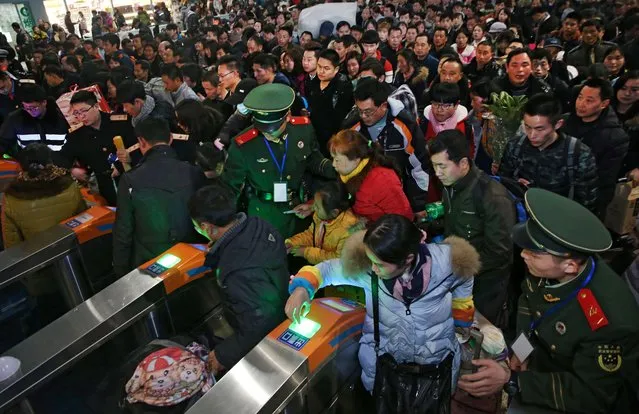
Chinese paramilitary guards monitoring passengers as they head to their train to travel to their hometowns for the “Spring Festival” or Lunar New Year at Nantong Railway Station in Jiangsu province, near Shanghai Travellers taking part in the world' s largest annual human migration must be home by January 27 to usher in the new year on January 28. (Photo by AFP Photo/Stringer)
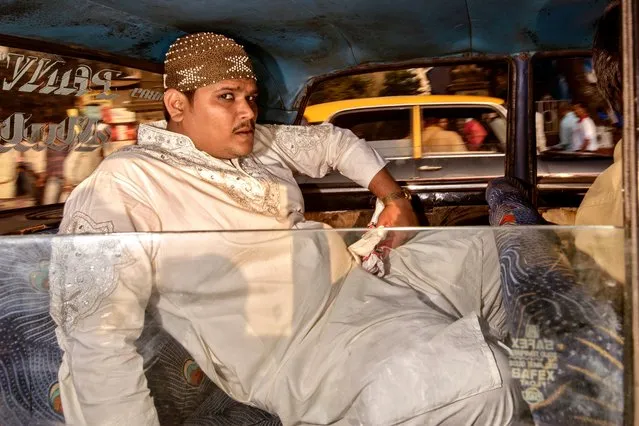
In Dougie Wallace’s photos of Mumbai taxis, the chatter, yelling, and constant horns of the city are almost audible. A selection of his images is on show at Gayfield Creative Spaces, Edinburgh, as part of the Retina photography festival until 30 July. For four years, the Glasgow-born Wallace focused his photos on one kind of taxi in particular: the Premier Padmini, a 1960s workhorse painted in black and yellow. Locally known as “Kaali-Peeli”, there were once more than 60,000 of them in the Indian city. But thanks to laws restricting pollution, the cars now are fast disappearing from Mumbai’s streets. (Photo by Dougie Wallace/The Guardian)