Loading...
Done
A humanoid robot named “Yangyang” shows a facial expression during its demonstration at the Global Mobile Internet Conference (GMIC) 2015 in Beijing, China, April 29, 2015. (Photo by Kim Kyung-Hoon/Reuters)

A humanoid robot named “Yangyang” shows a facial expression during its demonstration at the Global Mobile Internet Conference (GMIC) 2015 in Beijing, China, April 29, 20155. The android was produced jointly by China's Shanghai Yangyang Intellegent Robot Science Service center and Japanese professor Hiroshi Ishiguro, with the aim of popularising robotics among the young. (Photo by Kim Kyung-Hoon/Reuters)
Details
30 Apr 2015 10:50:00
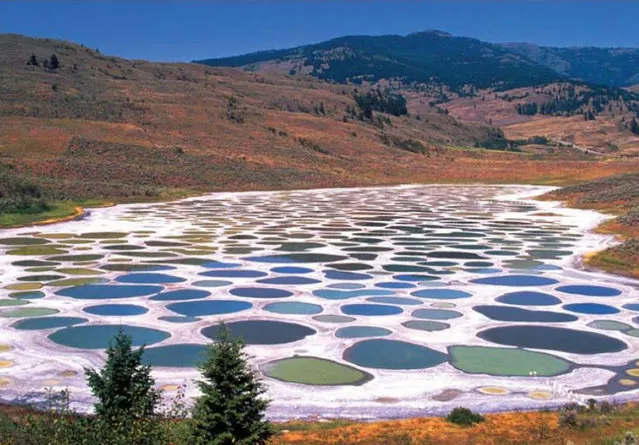
Kliluk, the Spotted Lake, Canada

Originally known to the First Nations of the Okanagan Valley as Khiluk, which was- and remains today revered as a sacred site producing therapeutic waters. During World War I the minerals of Spotted Lake were used in manufacturing ammunition. Later the area came under the control of the Ernest Smith Family, for a term of about 40 years. In 1979 Smith attempted to create interest in a spa at the lake. The First Nations responded with an effort to buy the lake; in October 2001 they finally struck a deal. First Nations arranged the purchase of 22 hectares of land for a total of $720,000, and contributed about 20% of the cost. The Indian Affairs Department paid the remainder.
Details
06 Mar 2015 12:59:00
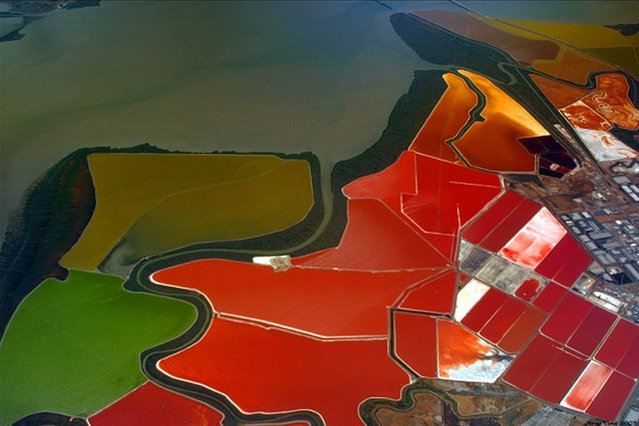
Salt ponds in San Francisco Bay

Salt evaporation ponds, also called salterns or salt pans, are shallow artificial ponds designed to produce salts from sea water or other brines. The seawater or brine is fed into large ponds and water is drawn out through natural evaporation which allows the salt to be subsequently harvested. The ponds also provide a productive resting and feeding ground for many species of waterbirds, which may include endangered species. The ponds are commonly separated by levees.
Details
11 Oct 2012 12:49:00
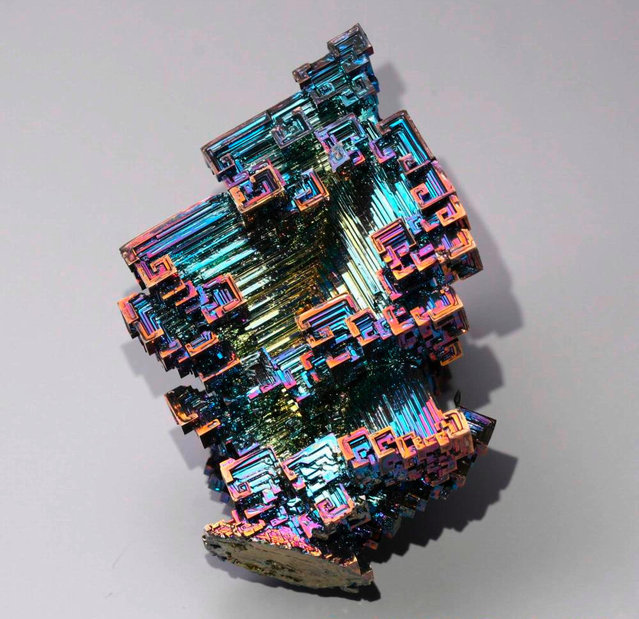
Amazing Bismuth Crystal

Bismuth is a chemical element with symbol Bi and atomic number 83. Bismuth, a pentavalent poor metal, chemically resembles arsenic and antimony. Elemental bismuth may occur naturally, although its sulfide and oxide form important commercial ores. The free element is 86% as dense as lead. It is a brittle metal with a silvery white color when freshly produced, but is often seen in air with a pink tinge owing to surface oxidation. Bismuth is the most naturally diamagnetic and has one of the lowest values of thermal conductivity among metals.
Details
16 Feb 2013 16:56:00
A rocket, similar to the Al-Qassam rockets used against Israeli is prepared for launch

“The Qassam rocket is a simple steel artillery rocket developed and deployed by the Izz ad-Din al-Qassam Brigades, the military arm of Hamas. Three models have been produced and used between 2001 and 2011”. – Wikipedia

Photo: A rocket, similar to the Al-Qassam rockets used against Israeli is prepared for launch as new members of the Islamic Jihad fighters show their skills as they attend a military show in the former Israeli jewish settlement of Atsmona September 26, 2008 in Rafah, southern of Gaza Strip. (Photo by Abid Katib/Getty Images)
Details
29 Nov 2011 09:33:00
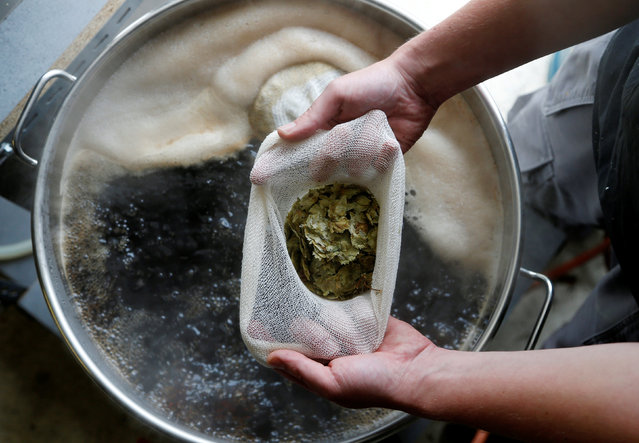
Arnaud Laloy, member of the Belgian Homebrewers association, adds hop in the brewing process to create his own beer in the garage of his house in Neufchateau, Belgium, August 11, 2016. (Photo by Francois Lenoir/Reuters)

In a country where some 200 breweries produce well over 1,000 different beers, surely no one is considering brewing their own? Wrong. Here: Arnaud Laloy, member of the Belgian Homebrewers association, adds hop in the brewing process to create his own beer in the garage of his house in Neufchateau, Belgium, August 11, 2016. (Photo by Francois Lenoir/Reuters)
Details
20 Aug 2016 11:30:00
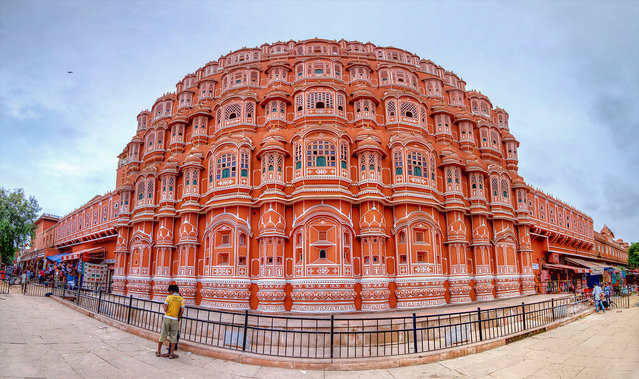
Hawa Mahal India

Hawa Mahal, which translates as the Palace of Winds, was built in 1799 by Maharaja Sawai Pratap Singh. The design of the palace was created by Shreyansh Jain to resemble the crown of Krishna. The design of this unique five-story building is akin to a honeycomb. The main purpose of this building was to allow royal ladies to watch the street below while remaining unseen, since during those times they had a strict code of dressing, which meant covering their faces. The palace was designed to produce the Venturi effect, which created natural air conditioning and kept the interior relatively cool during hot summers.
Details
22 Nov 2014 13:22:00
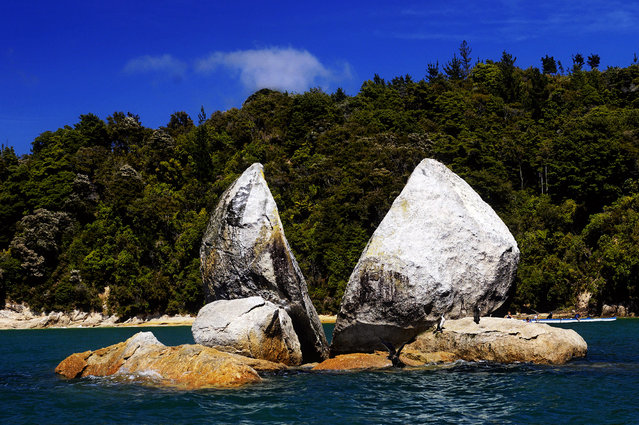
Split Apple Rock

Split Apple Rock is a geological rock formation in The Tasman Bay off the northern coast of the South Island of New Zealand. Made of granite, it is in the shape of an apple which has been cut in half. It is a popular tourist attraction in the waters of the Tasman Sea approximately 50 metres off the coast between Kaiteriteri and Marahau. The rock sits in shallow water at low tide and is accessible by wading. It is also a point of interest for the many tourist boats and pleasure craft which operate along the shores of the Abel Tasman National Park. The cleft to produce two sides of the 'apple' was a natural occurrence. It is unknown when this happened and therefore the cleaving of the rock has attracted mythological explanations.
Details
19 Oct 2013 10:58:00