Loading...
Done
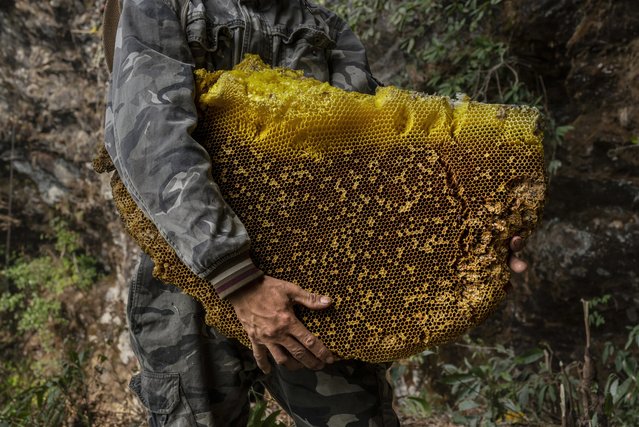
A Chinese ethnic Lisu honey hunter holds a large piece of wax from a hive while gathering wild cliff honey in a gorge on May 10, 2019 near Mangshi, in Dehong prefecture, Yunnan province China. (Photo by Kevin Frayer/Getty Images)

A Chinese ethnic Lisu honey hunter holds a large piece of wax from a hive while gathering wild cliff honey in a gorge on May 10, 2019 near Mangshi, in Dehong prefecture, Yunnan province China. (Photo by Kevin Frayer/Getty Images)
Details
08 Jun 2019 00:01:00
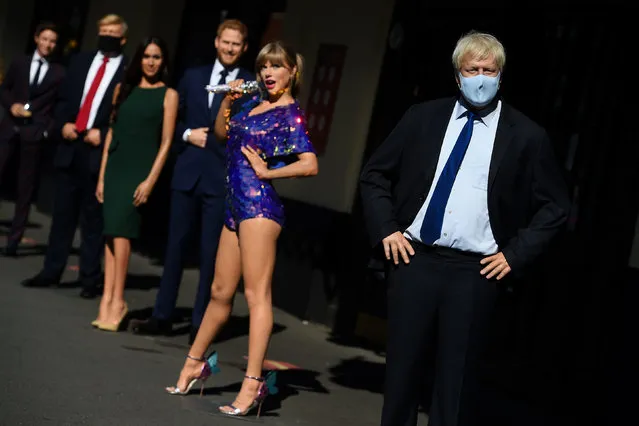
Wax figures, including Prime Minister Boris Johnson, US President Donald Trump and Taylor Swift, in the entrance line at Madame Tussaud's in London on July 30, 2020, as the attraction prepares to reopen to the public following the easing of lockdown restrictions in England. (Photo by Kirsty O'Connor/PA Images via Getty Images)

Wax figures, including Prime Minister Boris Johnson, US President Donald Trump and Taylor Swift, in the entrance line at Madame Tussaud's in London on July 30, 2020, as the attraction prepares to reopen to the public following the easing of lockdown restrictions in England. (Photo by Kirsty O'Connor/PA Images via Getty Images)
Details
01 Aug 2020 00:07:00
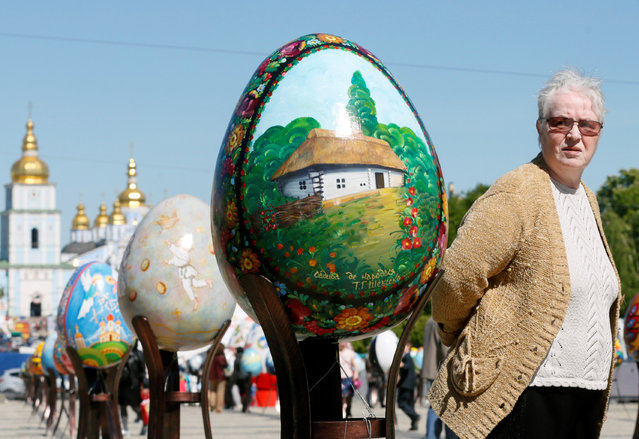
A woman looks at traditional Ukrainian Easter eggs “Pysanka”, installed as part of the upcoming celebrations of Easter, in central Kiev, Ukraine, April 29, 2016. A pysanka is a Ukrainian Easter egg, decorated with traditional Ukrainian folk designs using a wax-resist (batik) method. The word pysanka comes from the verb pysaty, “to write”, as the designs are not painted on, but written with beeswax. Many other eastern European ethnic groups decorate eggs using wax resist for Easter. These include the Belarusians, Bulgarians, Croats, Czechs, Hungarians, Lithuanians, Poles, Romanians, Serbs, Slovaks, Slovenes and Sorbs. (Photo by Valentyn Ogirenko/Reuters)

A woman looks at traditional Ukrainian Easter eggs “Pysanka”, installed as part of the upcoming celebrations of Easter, in central Kiev, Ukraine, April 29, 2016. A pysanka is a Ukrainian Easter egg, decorated with traditional Ukrainian folk designs using a wax-resist (batik) method. The word pysanka comes from the verb pysaty, “to write”, as the designs are not painted on, but written with beeswax. Many other eastern European ethnic groups decorate eggs using wax resist for Easter. These include the Belarusians, Bulgarians, Croats, Czechs, Hungarians, Lithuanians, Poles, Romanians, Serbs, Slovaks, Slovenes and Sorbs. (Photo by Valentyn Ogirenko/Reuters)
Details
30 Apr 2016 09:00:00
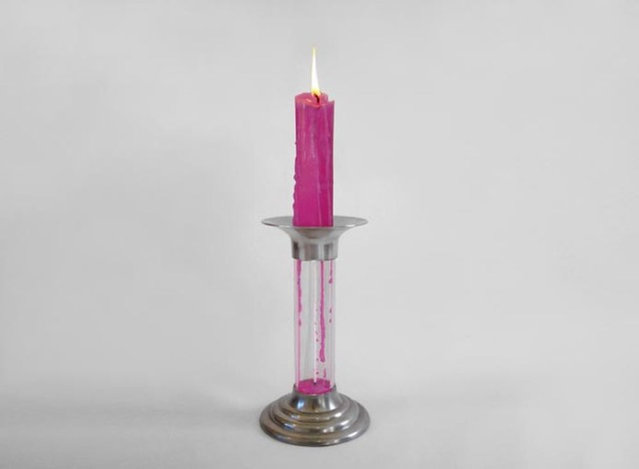
Rekindle Candle By Benjamin Shine

The Rekindle Candle is a clever candlestick holder that regenerates the candle as it burns by forming the melted wax into a new candle. The newly-formed candle can then be placed on top of the holder and the process can be started again. Rekindle Candle was designed by Benjamin Shine.
Details
23 Aug 2014 17:37:00
American singer Demi Lovato unveils her “badass” new wax figure at Madame Tussauds Las Vegas on October 1, 2024. She marveled at the likeness and attention to detail on her tattoos – joking the only thing missing is her new engagement ring. The figure is adorned in the skirt and top from Demi's Alternative Press Magazine photoshoot, with the entire look generously donated by Demi herself. (Photo by Key Lime/Madame Tussauds USA/The Mega Agency)

American singer Demi Lovato unveils her “badass” new wax figure at Madame Tussauds Las Vegas on October 1, 2024. She marveled at the likeness and attention to detail on her tattoos – joking the only thing missing is her new engagement ring. The figure is adorned in the skirt and top from Demi's Alternative Press Magazine photoshoot, with the entire look generously donated by Demi herself. (Photo by Key Lime/Madame Tussauds USA/The Mega Agency)
Details
18 Oct 2024 04:05:00
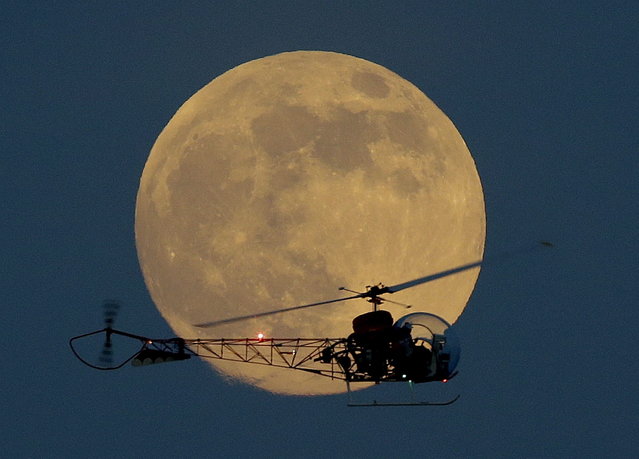
The moon is seen in its waxing gibbous stage as it rises behind the helicopter from the original Batman television show, which people can ride at the New Jersey State Fair, Saturday, June 22, 2013, in East Rutherford, N.J. The moon, which will reach its full stage on Sunday, is expected to be 13.5 percent closer to earth during a phenomenon known as supermoon. (Photo by Julio Cortez/AP Photo)

The moon is seen in its waxing gibbous stage as it rises behind the helicopter from the original Batman television show, which people can ride at the New Jersey State Fair, Saturday, June 22, 2013, in East Rutherford, N.J. The moon, which will reach its full stage on Sunday, is expected to be 13.5 percent closer to earth during a phenomenon known as supermoon. (Photo by Julio Cortez/AP Photo)
Details
24 Jun 2013 12:17:00
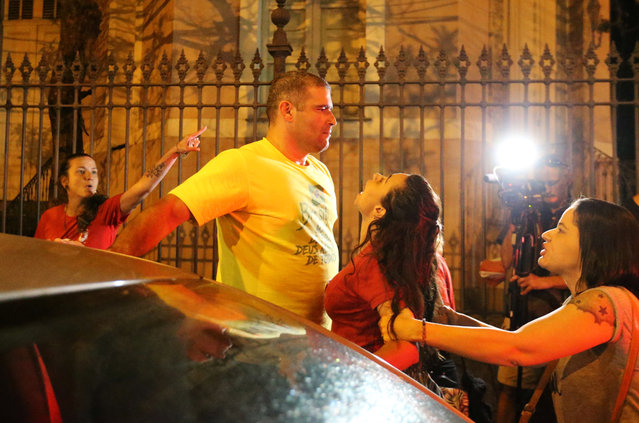
Supporters of Fernando Haddad react to a supporter (in yellow) of Jair Bolsonaro during a runoff election in Rio de Janeiro, Brazil on October 28, 2018. (Photo by Sergio Moraes/Reuters)

Supporters of Fernando Haddad react to a supporter (in yellow) of Jair Bolsonaro during a runoff election in Rio de Janeiro, Brazil on October 28, 2018. Bolsonaro, a brash far-right congressman who has waxed nostalgic for Brazil's old military dictatorship, won the presidency of Latin America's largest nation Sunday as voters looked past warnings that the former army captain would erode democracy and embraced a chance for radical change after years of turmoil. (Photo by Sergio Moraes/Reuters)
Details
30 Oct 2018 00:01:00
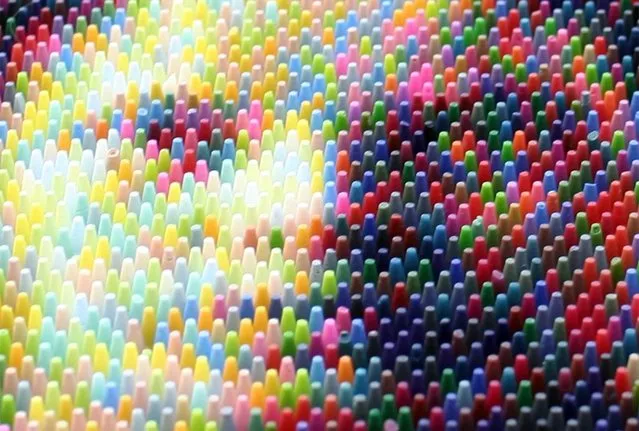
Art by Christian Faur

Christian Faur is an artist based in Granville, Ohio. Looking for a new technique, he experimented with painting with wax, but he didn’t feel the results were satisfactory.Then, at Christmas in 2005, his young daughter opened a box of 120 Crayola crayons he’d bought her, and everything clicked into place. Faur decided he would create pictures out of the crayons themselves, packing thousands of them together so they become like the colored pixels on a TV screen. He starts each work by scanning a photo into a computer and breaking the image down into colored blocks He then draws a grid that shows him exactly where to place each crayon The finished artworks are packed tightly into wooden frames. He actually makes the crayons himself, hand-casting each one in a mould.
Details
28 Jul 2012 10:03:00