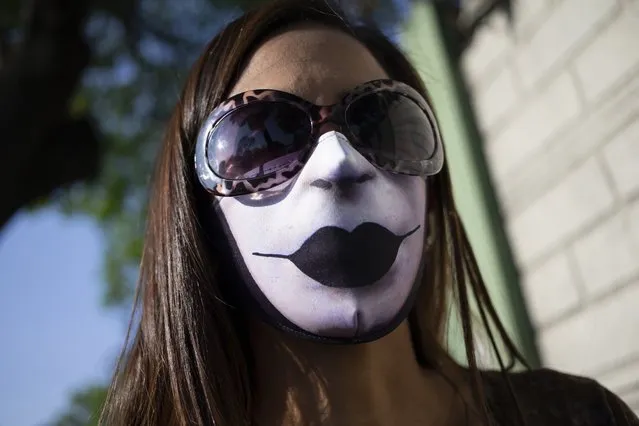
A woman wears a mask with printed lips, amid the spread of the new coronavirus in Caracas, Venezuela, Thursday, April 30, 2020. (Photo by Ariana Cubillos/AP Photo)
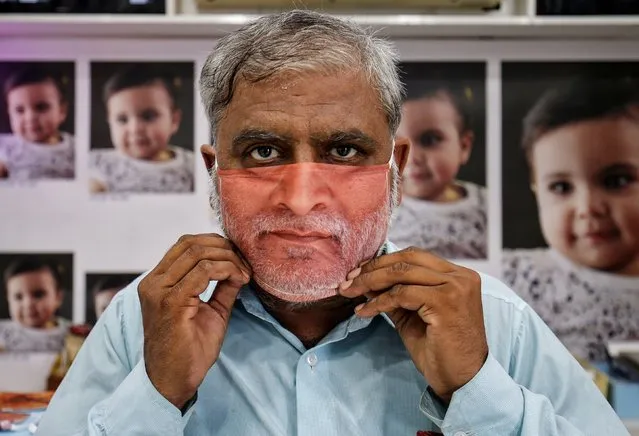
A man tries on a face mask with his portrait printed on it, amid the spread of the coronavirus disease (COVID-19), at a photo studio in Gandhinagar, India, May 27, 2020. (Photo by Amit Dave/Reuters)
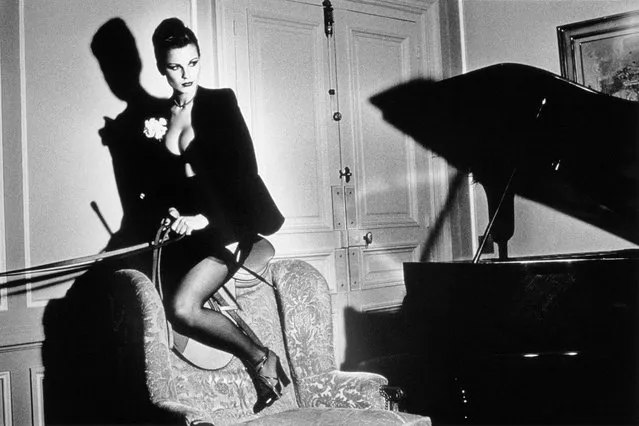
Vintage Newton, a pop-up exhibition of Helmut Newton prints from 1974-1984, opens in west London at the ONGallery. These prints, which feature Charlotte Rampling and Elsa Peretti, were produced from a series of transparencies that he considered his most provocative and important. Here: Saddle II. (Photo by Helmut Newton)
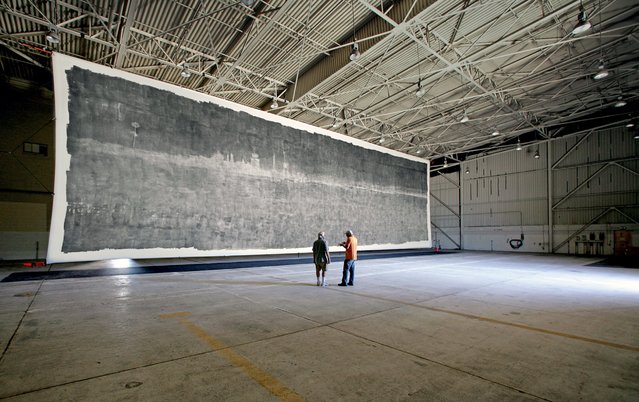
The Great Picture” is a black and white panoramic print of Marine Corps Air Station El Toro, an old military outpost. The print measures 111 feet wide by 32 feet high on seamless white muslin cloth. (Photo by Caters News)
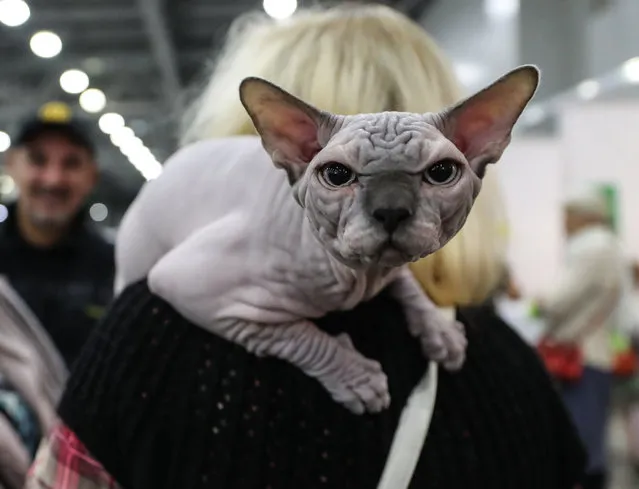
A Sphynx cat at the 2017 Grand Prix Royal Canin international cat show at the Crocus Expo Exhibition Centre in Moscow, Russia on December 2, 2017. (Photo by Sergei Savostyanov/TASS/Barcroft Images)
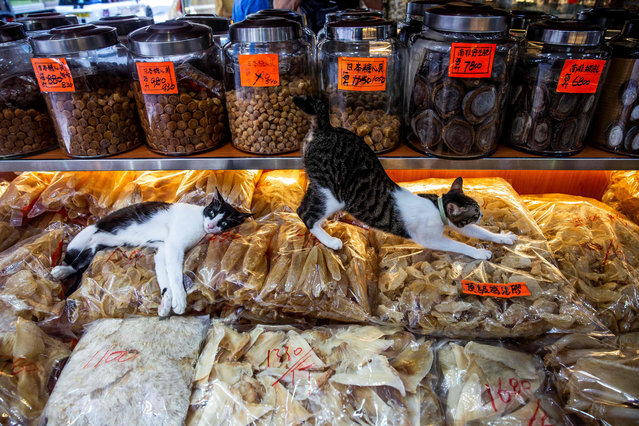
A cat stretches on top of dried seafood in a shop in the Sheung Wan district of Hong Kong on August 7, 2020. International Cat Day, celebrated on August 8, is a day to raise awareness for cats and learn about ways to help and protect them. (Photo by Isaac Lawrence/AFP Photo)
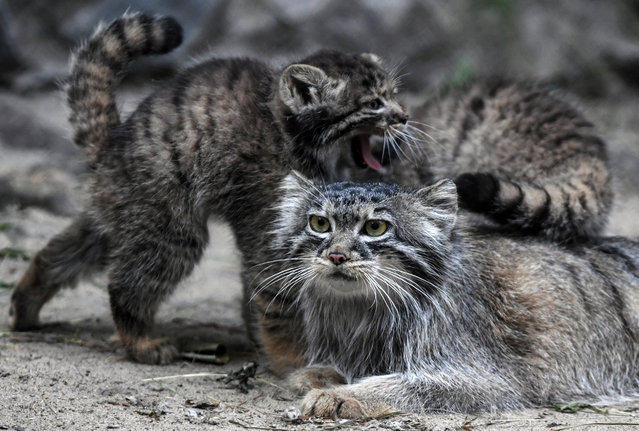
Pallas' s cat kittens with theit mother in an enclosure at the Novosibirsk Zoo, Novosibirsk, Russia on July 11, 2018. Pallas' s cat, also known as manul, is a small wild cat native to montane steppes of the Central Asia and listed as an endangered species. (Photo by Kirill Kukhmar/TASS)
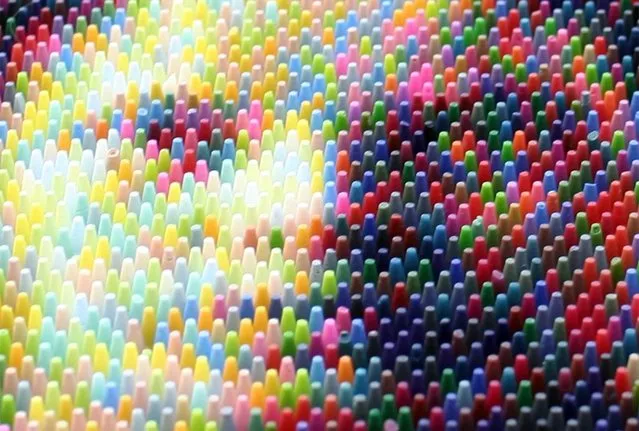
Christian Faur is an artist based in Granville, Ohio. Looking for a new technique, he experimented with painting with wax, but he didn’t feel the results were satisfactory.Then, at Christmas in 2005, his young daughter opened a box of 120 Crayola crayons he’d bought her, and everything clicked into place. Faur decided he would create pictures out of the crayons themselves, packing thousands of them together so they become like the colored pixels on a TV screen. He starts each work by scanning a photo into a computer and breaking the image down into colored blocks He then draws a grid that shows him exactly where to place each crayon The finished artworks are packed tightly into wooden frames. He actually makes the crayons himself, hand-casting each one in a mould.