Loading...
Done
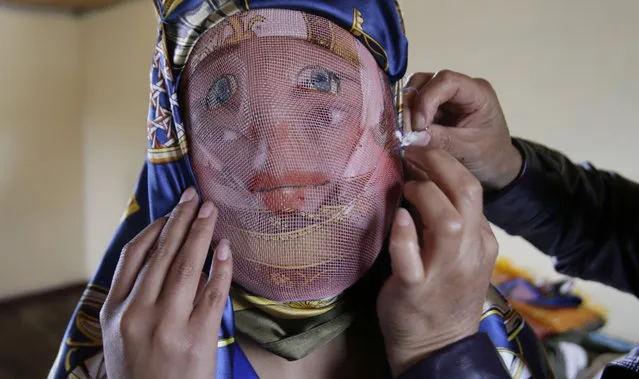
A young man dressed as “La Llorona”, participates in a parade called “La Calabiuza” on the eve of the Day of the Dead in Tonacatepeque, El Salvador, November 1, 2019. (Photo by Jose Cabezas/Reuters)

A young man dressed as “La Llorona”, participates in a parade called “La Calabiuza” on the eve of the Day of the Dead in Tonacatepeque, El Salvador, November 1, 2019. (Photo by Jose Cabezas/Reuters)
Details
06 Nov 2019 00:01:00
In this December 22, 2015, photo, Rayani Air flight crews prays before departure at Kuala Lumpur International Airport 2 in Sepang, Malaysia. The short domestic flight from Kuala Lumpur, Malaysia's biggest city, begins with a recital of Prophet Muhammad's supplication before his travel. (Photo by Joshua Paul/AP Photo)

In this December 22, 2015, photo, Rayani Air flight crews prays before departure at Kuala Lumpur International Airport 2 in Sepang, Malaysia. Malaysia's Rayani Air took to the skies over the weekend with a clear bailiwick. It is the country's first Islamic airline, offering flights that adhere to Islamic rules including prayers, no-alcohol, no-pork meals, and a strict dress code for Muslim female flight attendants. (Photo by Joshua Paul/AP Photo)
Details
25 Dec 2015 08:02:00
Woman dons a mask a she prepares to dance in the streets during the feast of La Diablada, in Pillaro, Ecuador, Friday, January 4, 2019. The town of Pillaro kicks off the feast of the La Diablada with neighborhoods competing to bring as many people dressed as different characters. (Photo by Dolores Ochoa/AP Photo)

Woman dons a mask a she prepares to dance in the streets during the feast of La Diablada, in Pillaro, Ecuador, Friday, January 4, 2019. The town of Pillaro kicks off the feast of the La Diablada with neighborhoods competing to bring as many people dressed as different characters. (Photo by Dolores Ochoa/AP Photo)
Details
06 Jan 2019 00:08:00
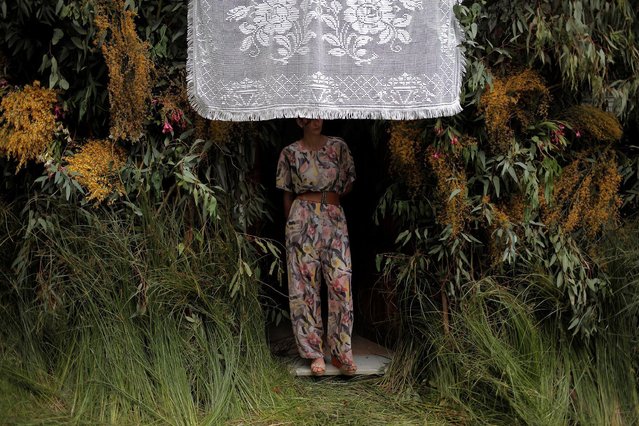
A woman looks out of her house with a decorated doorway during Corpus Christi day in Zahara de la Sierra, southern Spain, May 29, 2016. The village of Zahara de la Sierra celebrated the feast of Corpus Christi (or Body of Christ in Latin) by covering the streets and facades of houses with the branches of trees and grass. (Photo by Jon Nazca/Reuters)

A woman looks out of her house with a decorated doorway during Corpus Christi day in Zahara de la Sierra, southern Spain, May 29, 2016. The village of Zahara de la Sierra celebrated the feast of Corpus Christi (or Body of Christ in Latin) by covering the streets and facades of houses with the branches of trees and grass. (Photo by Jon Nazca/Reuters)
Details
30 May 2016 08:49:00
Women Wrestlers, Bolivia. Lucha libre (Bolivian wrestling) is one of the most popular sports in the country. Women wrestlers are known as cholitas and have in the last ten years become popular in the sport. Here, Carmen Rosa and Yulia la Pacena perform in a benefit show to raise money for the bathrooms of a school in La Paz, Bolivia, 26 June 2011

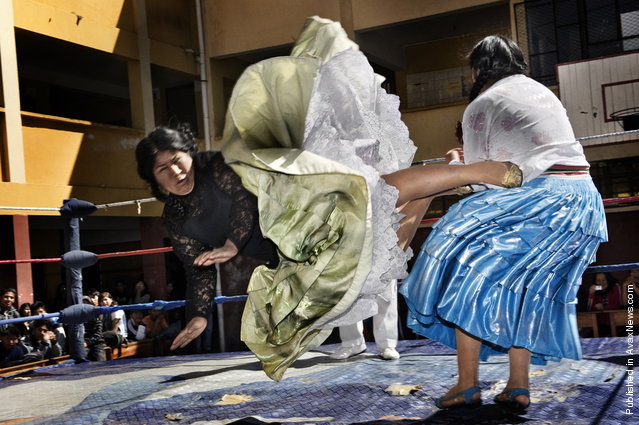
Women Wrestlers, Bolivia. Lucha libre (Bolivian wrestling) is one of the most popular sports in the country. Women wrestlers are known as cholitas and have in the last ten years become popular in the sport. Here, Carmen Rosa and Yulia la Pacena perform in a benefit show to raise money for the bathrooms of a school in La Paz, Bolivia, 26 June 2011. (Photo by Daniele Tamagni)
Details
11 Apr 2012 12:57:00
Fighters from Germany take up position before competing in the Medieval Combat World Championship at Malbork Castle, northern Poland, April 30, 2015. (Photo by Kacper Pempel/Reuters)

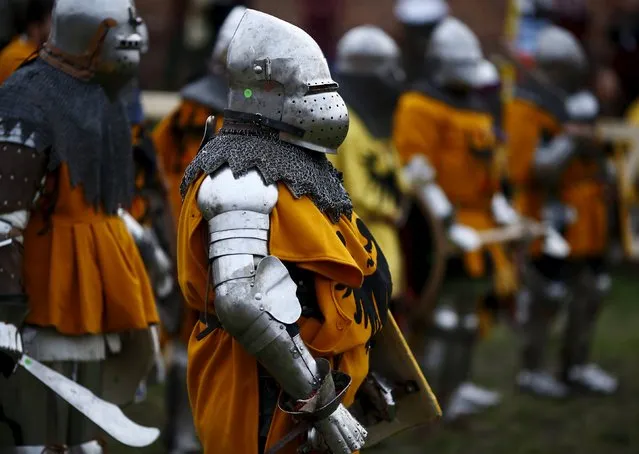
Fighters from Germany take up position before competing in the Medieval Combat World Championship at Malbork Castle, northern Poland, April 30, 2015. Medieval combat is a full contact sport that revives the foot based tournament fighting of medieval Europe. Countries fight in refereed matches where the objective is to get the opposing team to the floor. There are also duels with polearms, swords and shields where the number of hits landed are scored. The fighters, both male and female, wear heavy armours and weapons, mostly replicas of authentic pieces, and fight following the knights code of conduct. According to organizers, 25 nations from 6 continents are taking part in the Championships, which started on April 30 and will go on until May 3. (Photo by Kacper Pempel/Reuters)
Details
03 May 2015 12:02:00
A reveller dressed as “La Llorona” participates in a parade known as “La Calabiuza” on the eve of the Day of the Dead in Tonacatepeque, El Salvador on November 1, 2022. (Photo by Jose Cabezas/Reuters)

A reveller dressed as “La Llorona” participates in a parade known as “La Calabiuza” on the eve of the Day of the Dead in Tonacatepeque, El Salvador on November 1, 2022. (Photo by Jose Cabezas/Reuters)
Details
28 Dec 2023 21:12:00
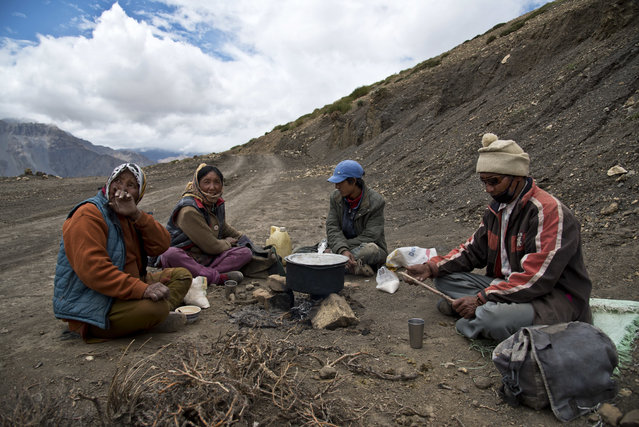
In this August 17, 2016, photo, from left to right, Chhering Chodom, 60, Tashi Yangzom, 50, Lobsang Chhering, 27, and Dorje Tandup, 58, drink milk tea on the side of the road. For centuries, the sleepy valley nestled in the Indian Himalayas remained a hidden Buddhist enclave forbidden to outsiders. Enduring the harsh year-round conditions of the high mountain desert, the people of Spiti Valley lived by a simple communal code – share the Earth's bounty, be hospitable to neighbors, and eschew greed and temptation at all turns. That's all starting to change, for better or worse. Since India began allowing its own citizens as well as outsiders to visit the valley in the early 1990s, tourism and trade have boomed. And the marks of modernization, such as solar panels, asphalt roads and concrete buildings, have begun to appear around some of the villages that dot the remote landscape at altitudes above 4,000 meters (13,000 feet). (Photo by Thomas Cytrynowicz/AP Photo)

In this August 17, 2016, photo, from left to right, Chhering Chodom, 60, Tashi Yangzom, 50, Lobsang Chhering, 27, and Dorje Tandup, 58, drink milk tea on the side of the road. For centuries, the sleepy valley nestled in the Indian Himalayas remained a hidden Buddhist enclave forbidden to outsiders. Enduring the harsh year-round conditions of the high mountain desert, the people of Spiti Valley lived by a simple communal code – share the Earth's bounty, be hospitable to neighbors, and eschew greed and temptation at all turns. That's all starting to change, for better or worse. (Photo by Thomas Cytrynowicz/AP Photo)

Details
15 Sep 2016 09:22:00