Loading...
Done
A woman walks in front of an art installation made of artificial fruits and vegetables during the  “Moscow Autumn” festival in central Moscow, September 14, 2015. (Photo by Maxim Zmeyev/Reuters)

A woman walks in front of an art installation made of artificial fruits and vegetables during the “Moscow Autumn” festival in central Moscow, September 14, 2015. (Photo by Maxim Zmeyev/Reuters)
Details
15 Sep 2015 14:58:00
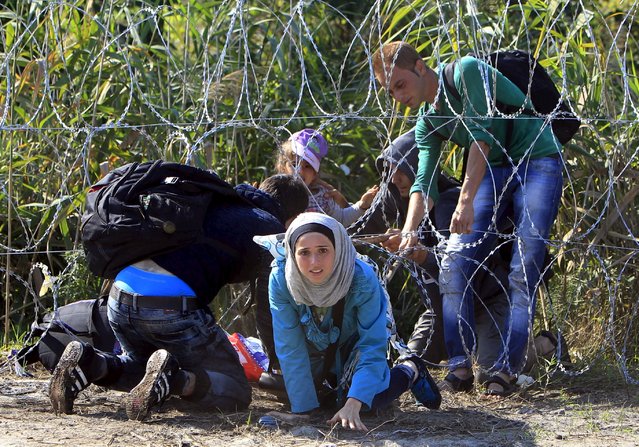
A Syrian migrant family enters Hungary at the border with Serbia near Roszke, Hungary August 28, 2015. (Photo by Bernadett Szabo/Reuters)

A Syrian migrant family enters Hungary at the border with Serbia near Roszke, Hungary August 28, 2015. As Europe struggles with its worst migrant crisis since World War II, Hungary has become, like Italy and Greece, a “frontline” state. So far this year, police say around 141,500 migrants have been intercepted crossing into Hungary, mostly from neighbouring Serbia. (Photo by Bernadett Szabo/Reuters)
Details
29 Aug 2015 11:33:00
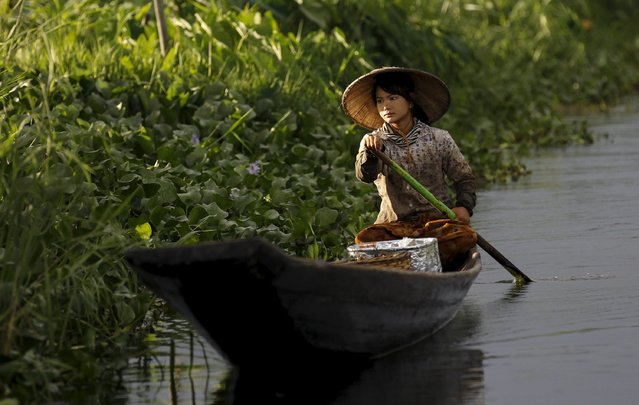
A woman rows her boat as she harvests tomatoes on Inle lake, in Myanmar's Shan State September 4, 2015. (Photo by Soe Zeya Tun/Reuters)

A woman rows her boat as she harvests tomatoes on Inle lake, in Myanmar's Shan State September 4, 2015. Inle is one of the country's most popular tourist sites. (Photo by Soe Zeya Tun/Reuters)
Details
06 Sep 2015 13:37:00
Refugees and migrants try to find a place on an already full train headed for Serbia, near the city of Gevgelija, The Former Yugoslav Republic of Macedonia, on February 24, 2016. Refugees and migrants from Iraq and Syria continue to pass through Macedonia on their way to the European Union. (Photo by Georgi Licovski/EPA)

Refugees and migrants try to find a place on an already full train headed for Serbia, near the city of Gevgelija, The Former Yugoslav Republic of Macedonia, on February 24, 2016. Refugees and migrants from Iraq and Syria continue to pass through Macedonia on their way to the European Union. (Photo by Georgi Licovski/EPA)
Details
25 Feb 2016 11:57:00
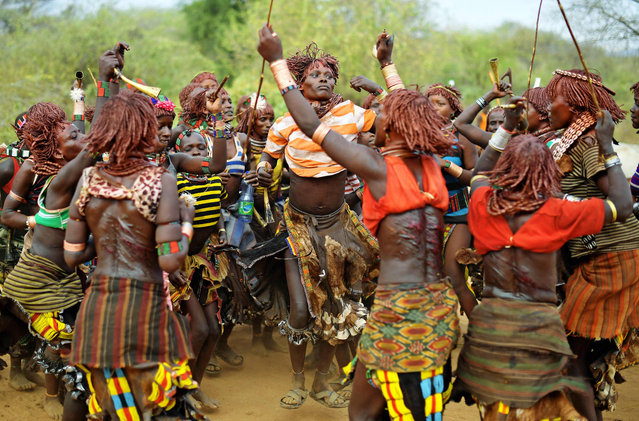
Hamar women dance before a bull jumping ceremony in Ethiopia's southern Omo Valley region near Turmi on September 19, 2016. The Hamar are a Nilotic ethnic group in Ethiopia. The construction of the Gibe III dam, the third largest hydroelectric plant in Africa, and large areas of very “thirsty” cotton and sugar plantations and factories along the Omo river are impacting heavily on the lives of tribes living in the Omo Valley who depend on the river for their survival and way of life. Human rights groups fear for the future of the tribes if they are forced to scatter, give up traditional ways through loss of land or ability to keep cattle as globalisation and development increases. (Photo by Carl De Souza/AFP Photo)

Hamar women dance before a bull jumping ceremony in Ethiopia's southern Omo Valley region near Turmi on September 19, 2016. The Hamar are a Nilotic ethnic group in Ethiopia. The construction of the Gibe III dam, the third largest hydroelectric plant in Africa, and large areas of very “thirsty” cotton and sugar plantations and factories along the Omo river are impacting heavily on the lives of tribes living in the Omo Valley who depend on the river for their survival and way of life. (Photo by Carl De Souza/AFP Photo)
Details
02 Oct 2016 08:45:00
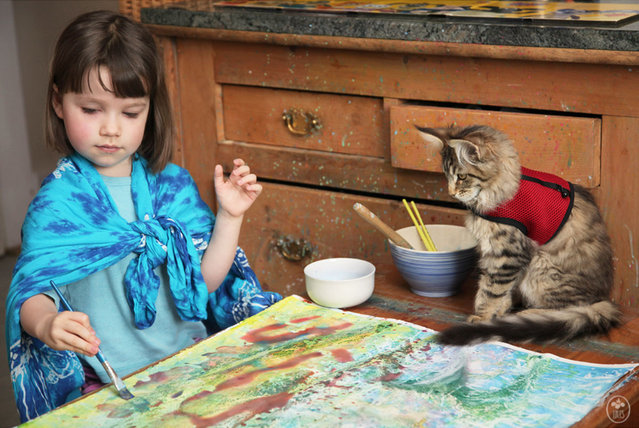
Iris Grace, The Five-Year-Old Autistic Art Prodigy

Paintings by Iris Grace, a 5 year old with an extraordinary talent to express herself through painting. She is Autistic and is only just starting to talk but is able to paint in a style far beyond her years. We wanted to share her art to raise awareness of her condition and inspire other families in similar situations to ours.
Details
30 Sep 2014 15:39:00
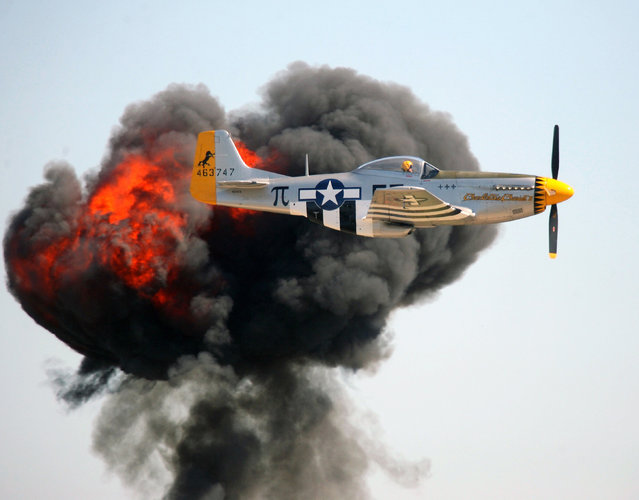
A P-51 Mustang named “Charlotte's Chariot” from the Southern Heritage Air Foundation flies past a cloud of smoke and fire from a nearby battle reenactment during the Wings Over Houston Airshow in Houston, on Saturday, November 1, 2014. Battle reenactments are part of the yearly show held at Ellington Airport. (Photo by Kar Hlava/AP Photo/Bay Area Citizen)

A P-51 Mustang named “Charlotte's Chariot” from the Southern Heritage Air Foundation flies past a cloud of smoke and fire from a nearby battle reenactment during the Wings Over Houston Airshow in Houston, on Saturday, November 1, 2014. Battle reenactments are part of the yearly show held at Ellington Airport. (Photo by Kar Hlava/AP Photo/Bay Area Citizen)
Details
08 Nov 2014 12:47:00
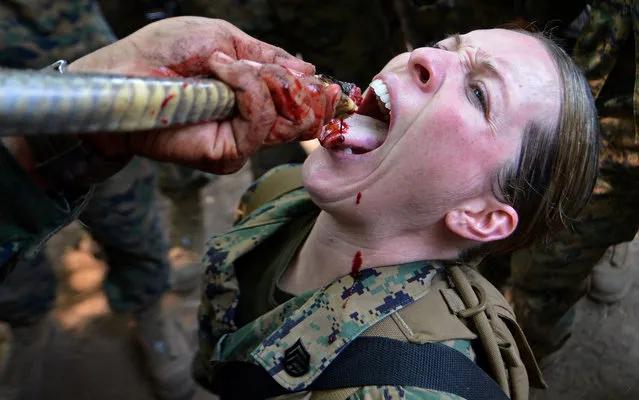
In a military base in the Thai province of Chon Buri February 20 U.S. Marines Navy with Thailand began their studies in jungle survival. The event is held in joint military exercises “Cobra Gold 2013”. During a jungle survival program February 20, 2013 taught by Royal Thai Special Forces in Sannapit, Thailand, U.S. Marines learned to catch cobras and drink their fresh blood, not to mention eat forest insects and pull the heads off of chicken. The training was part of Operation Cobra Gold 13, the 32nd edition of international military exercises hosted by the Thai. According to a U.S. Marines press release, Cobra Gold is the largest exercise of its kind in Asia and incorporates troops from five other nations in addition to the U.S. and Thailand. The Daily Mail reports that the Marines were invited to experience the local custom of drinking cobra blood after being taught to catch and kill cobras in the wild. As CNN notes, Cobra blood is believed to be a panacea and aphrodiasic in parts of Southeast Asia. In Jakarta, vendors can earn over $100 a night selling shots of cobra blood mixed with liquor. (Photo by Pornchai Kittiwongsakul/AFP Photo)


During a jungle survival program February 20, 2013 taught by Royal Thai Special Forces in Sannapit, Thailand, U.S. Marines learned to catch cobras and drink their fresh blood, not to mention eat forest insects and pull the heads off of chicken. The training was part of Operation Cobra Gold 13, the 32nd edition of international military exercises hosted by the Thai. According to a U.S. Marines press release, Cobra Gold is the largest exercise of its kind in Asia and incorporates troops from five other nations in addition to the U.S. and Thailand. The Daily Mail reports that the Marines were invited to experience the local custom of drinking cobra blood after being taught to catch and kill cobras in the wild. As CNN notes, Cobra blood is believed to be a panacea and aphrodiasic in parts of Southeast Asia. In Jakarta, vendors can earn over $100 a night selling shots of cobra blood mixed with liquor. (Photo by Pornchai Kittiwongsakul/AFP Photo)
Details
23 Feb 2013 11:52:00