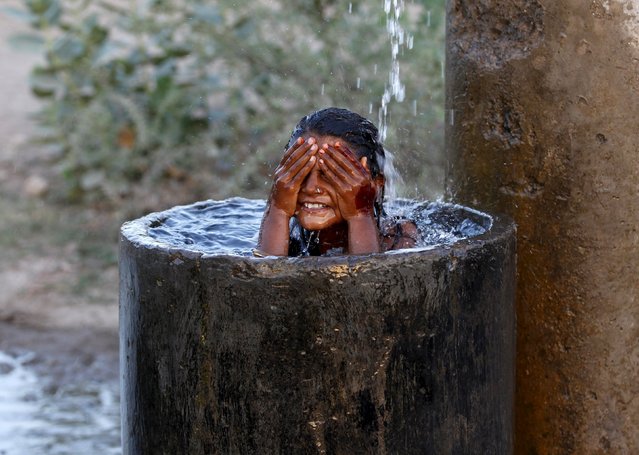
A girl bathes to cool off herself with water that is leaking from a broken pipe valve on a hot summer day on the outskirts of Ahmedabad, India, May 18, 2015. (Photo by Amit Dave/Reuters)
A paper rhacophorus arvalis (farmland green tree frog) of Taiwan (R) is surrounded by paper pandas at an exhibition called “Pandas on Tour” at the National Theater in Taipei on February 24, 2014. Some 1,600 paper made pandas are on display, designed by French artist Paulo Grangeon. (Photo by Mandy Cheng/AFP Photo)
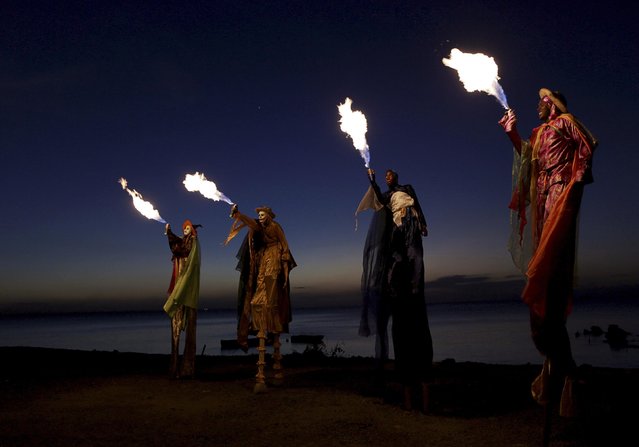
Members of the Kaisokah Moko Jumbies perform with fire on the waterfront near their San Fernando, Trinidad base February 10, 2015. (Photo by Andrea De Silva/Reuters)
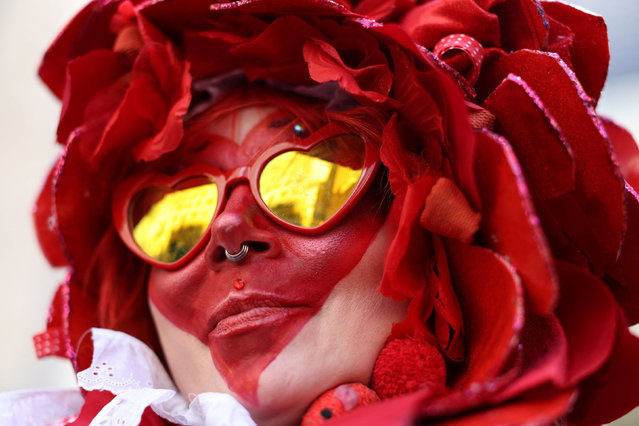
A person in costume is pictured during the annual Easter Parade and Bonnet Festival on 5th Ave in Manhattan, New York City, U.S., April 17, 2022. (Photo by Andrew Kelly/Reuters)
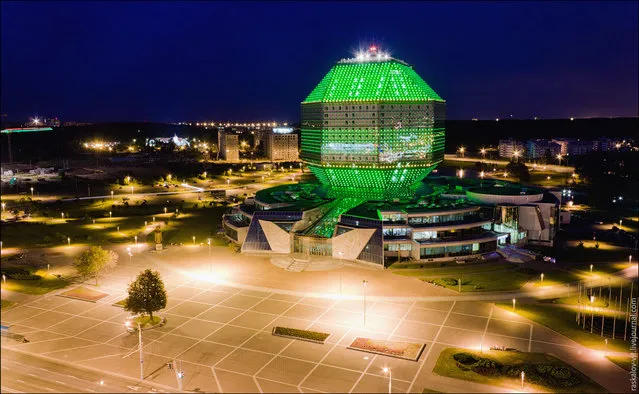
The earliest historic references to Minsk date to the 11th century 1067, when it was noted as a provincial city within the principality of Polotsk. The settlement developed on the rivers. In 1242, Minsk became a part of the Grand Duchy of Lithuania. It received town privileges in 1499.
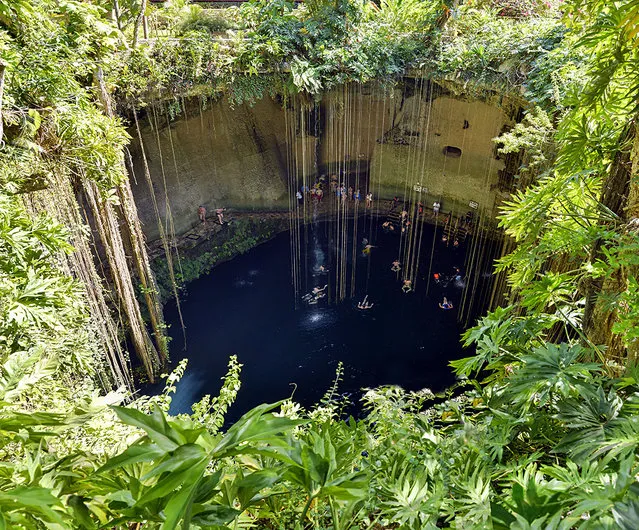
A cenote is a natural phenomenon, a sinkhole in the Earth’s surface. The Yucatan Peninsula in Mexico has an estimated 7,000 cenotes because it is primarily made up of porous limestone. For millions of years, rainfall slowly ate away at the limestone and a huge system of underground caves and caverns was formed. Many filled with water from rain or from the underground water table. When the roof of a water filled cave collapses, a cenote is born. The water found in a cenote may be fresh water, salt water, or both. Structurally it may be completely open, like a lake, almost completely closed with just a small opening at the top, or somewhere in between.