Loading...
Done
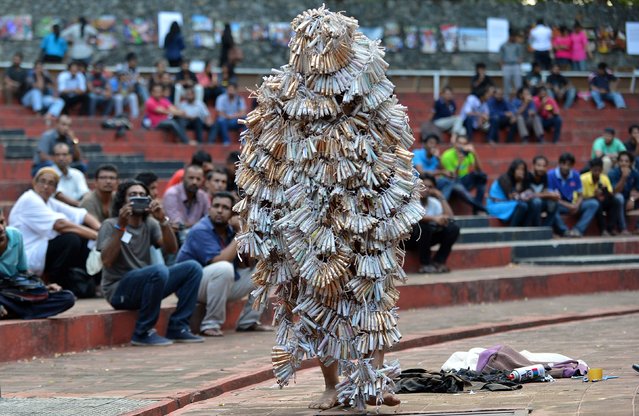
A Sri Lankan activist, who wrapped himself with fire crackers, walks in Colombo on July 23, 2014 to symbolically demonstrate against people burned during Anti-Tamil riots on the island thirty-one years ago. Official accounts placed the death toll at 400 while human rights activists put the toll at thousands. (Photo by Ishara S.Kodikara/AFP Photo)

A Sri Lankan activist, who wrapped himself with fire crackers, walks in Colombo on July 23, 2014 to symbolically demonstrate against people burned during Anti-Tamil riots on the island thirty-one years ago. Official accounts placed the death toll at 400 while human rights activists put the toll at thousands. (Photo by Ishara S.Kodikara/AFP Photo)
Details
26 Jul 2014 12:00:00
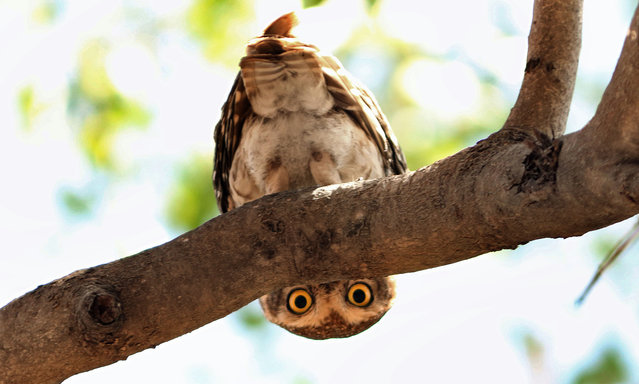
A spotted owlet appears to be playing peek-a-boo near Rancharda Lake in Ahmedabad, India on February 9, 2016. The species is common across the Indian subcontinent. (Photo by Caters News Agency)

A spotted owlet appears to be playing peek-a-boo near Rancharda Lake in Ahmedabad, India on February 9, 2016. The species is common across the Indian subcontinent. (Photo by Caters News Agency)
Details
14 Feb 2016 11:18:00
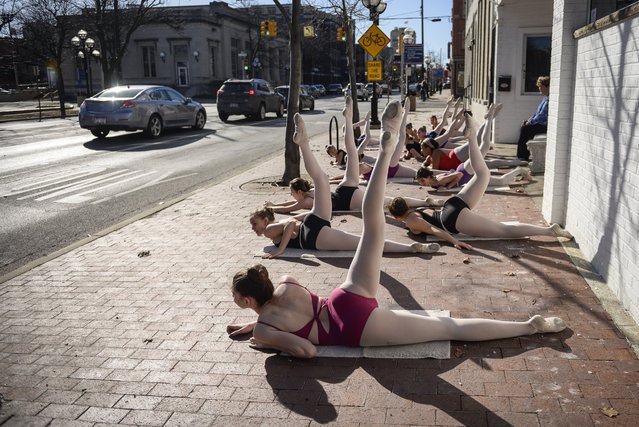
Students from CAS Ballet Theatre School stretch on the sidewalk Saturday, February 20, 2016, in Ann Arbor, Mich. (Photo by Junfu Han/The Ann Arbor News via AP Photo)

Students from CAS Ballet Theatre School stretch on the sidewalk Saturday, February 20, 2016, in Ann Arbor, Mich. (Photo by Junfu Han/The Ann Arbor News via AP Photo)
Details
21 Feb 2016 11:58:00
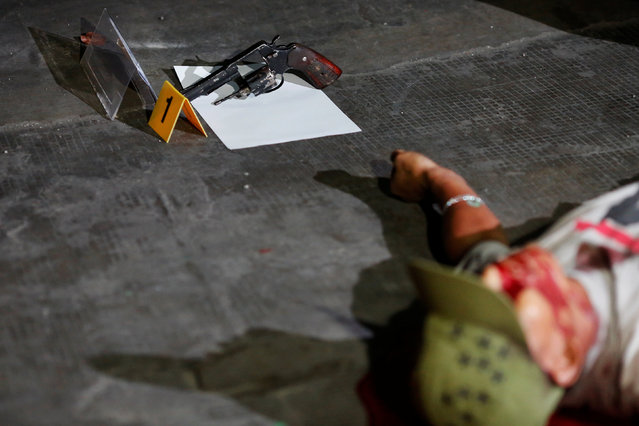
A gun is seen next to the body of a man was killed in a shootout with police in Manila, Philippines early October 21, 2016. According to the police, sachets containing substance believed to be drug shabu (Methamphetamine Hydrochloride) were found in the killed man's pockets. (Photo by Damir Sagolj/Reuters)

A gun is seen next to the body of a man was killed in a shootout with police in Manila, Philippines early October 21, 2016. According to the police, sachets containing substance believed to be drug shabu (Methamphetamine Hydrochloride) were found in the killed man's pockets. (Photo by Damir Sagolj/Reuters)
Details
24 Oct 2016 12:09:00
A Chinese shopper sleeps on a bed in the showroom of the IKEA store on July 6, 2014 in Beijing, China. Of the world's ten biggest Ikea stores, 8 of them are in China to cater to the country's growing middle class. The stores are designed with extra room displays given the tendency for customers to make a visit an all-day affair. Store management does not discourage shoppers from sleeping on Ikea furniture, even marking them with signs inviting customers to try them out. (Photo by Kevin Frayer/Getty Images)

A Chinese shopper sleeps on a bed in the showroom of the IKEA store on July 6, 2014 in Beijing, China. Of the world's ten biggest Ikea stores, 8 of them are in China to cater to the country's growing middle class. The stores are designed with extra room displays given the tendency for customers to make a visit an all-day affair. Store management does not discourage shoppers from sleeping on Ikea furniture, even marking them with signs inviting customers to try them out. (Photo by Kevin Frayer/Getty Images)
Details
09 Jul 2014 12:27:00


“Kumbh Mela is a mass Hindu pilgrimage in which Hindus gather at the Ganges river. The normal Kumbh Mela is celebrated every 3 years, the Ardh (half) Kumbh Mela is celebrated every six years at Haridwar and Prayag, the Purna (complete) Kumbh takes place every twelve years, at four places (Prayag (Allahabad), Haridwar, Ujjain, and Nashik). The Maha (great) Kumbh Mela which comes after 12 “Purna Kumbh Melas”, or 144 years, is held at Allahabad.

The last Ardh Kumbh Mela was held over a period of 45 days beginning in January 2007, more than 70 million Hindu pilgrims took part in the Ardh Kumbh Mela at Prayag, and on January 15, the most auspicious day of the festival of Makar Sankranti, more than 5 million participated. The previous Maha Kumbh Mela, held in 2001, was attended by around 60 million people, making it at the time the largest gathering anywhere in the world in recorded history”. – Wikipedia

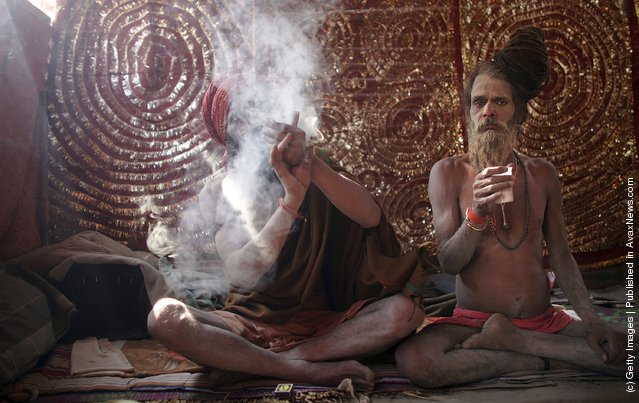
Photo: Sadhus (holy men) smoke at their camp near the ritual site at Sangam, the confluence of the Ganges, Yamuna and mythical Saraswati rivers during the Ardh Kumbh Mela festival (Half Pitcher festival) January 18, 2007 in Allahabad, India. Millions of Hindu pilgrims have flocked to the largest religious gathering in the world which lasts for 45 days in northern India. The festival commemorates the mythical conflict between gods and demons over a pitcher filled with the “nectar of immortality”. Devotees believe that taking a holy dip in the Ganges at this time washes away their sins and paves the path to salvation. (Photo by Mario Tama/Getty Images)

Details
30 Jun 2011 10:27:00
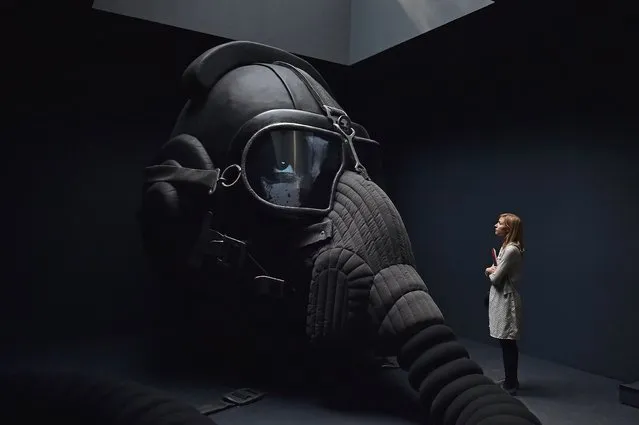
A visitor looks at a creation by Russian artist Irina Nakhova presented at the Russia's pavilion during the 56th International Art Exhibition (Biennale d'Arte) titled “All the Worlds Futures” on May 5, 2015 in Venice. (Photo by Gabriel Bouys/AFP Photo)

A visitor looks at a creation by Russian artist Irina Nakhova presented at the Russia's pavilion during the 56th International Art Exhibition (Biennale d'Arte) titled “All the Worlds Futures” on May 5, 2015 in Venice. (Photo by Gabriel Bouys/AFP Photo)
Details
09 May 2015 11:25:00
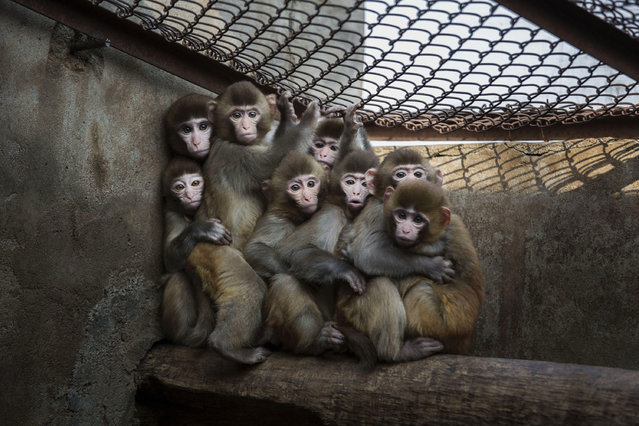
Macaque monkeys crowd together in their cage at a monkey farm on February 3, 2016 in Xinye county, Henan province, China. The area boasts a centuries-long and lucrative history of raising and training monkeys for performance. In Xinye, villagers are seeing an increase in business with the lunar calendar's “Year of the Monkey”. Farmers say most of the monkeys are bred and raised for domestic zoos, circuses, and performing groups, but add that some are also sold for medical research in China and the United States. Despite the popularity of the tradition, critics contend the training methods and conditions constitute animal cruelty. (Photo by Kevin Frayer/Getty Images)

Macaque monkeys crowd together in their cage at a monkey farm on February 3, 2016 in Xinye county, Henan province, China. The area boasts a centuries-long and lucrative history of raising and training monkeys for performance. In Xinye, villagers are seeing an increase in business with the lunar calendar's “Year of the Monkey”. Farmers say most of the monkeys are bred and raised for domestic zoos, circuses, and performing groups, but add that some are also sold for medical research in China and the United States. Despite the popularity of the tradition, critics contend the training methods and conditions constitute animal cruelty. (Photo by Kevin Frayer/Getty Images)
Details
31 Dec 2016 09:56:00