Loading...
Done
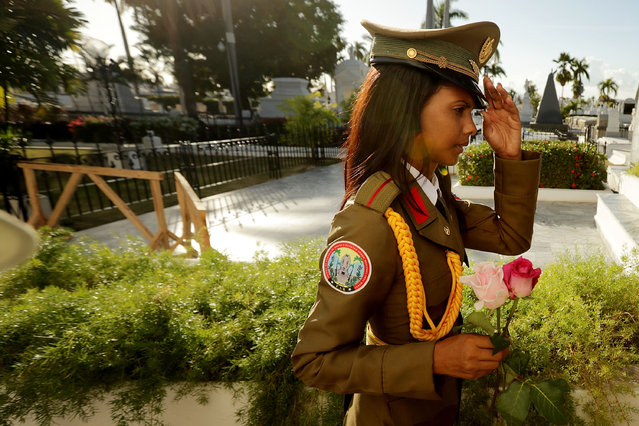
A military guard carries flowers through the Cementerio Santa Ifigenia where the remains of former Cuban President Fidel Castro were entombed December 4, 2016 in Santiago de Cuba, Cuba. The tomb stands to the side of a memorial to the rebel soldiers killed in an attack that Castro led on Santiago's Moncada barracks on July 26, 1953, and in front of the mausoleum of Cuban national hero Jose Marti. (Photo by Chip Somodevilla/Getty Images)

A military guard carries flowers through the Cementerio Santa Ifigenia where the remains of former Cuban President Fidel Castro were entombed December 4, 2016 in Santiago de Cuba, Cuba. The tomb stands to the side of a memorial to the rebel soldiers killed in an attack that Castro led on Santiago's Moncada barracks on July 26, 1953, and in front of the mausoleum of Cuban national hero Jose Marti. (Photo by Chip Somodevilla/Getty Images)
Details
06 Dec 2016 10:50:00
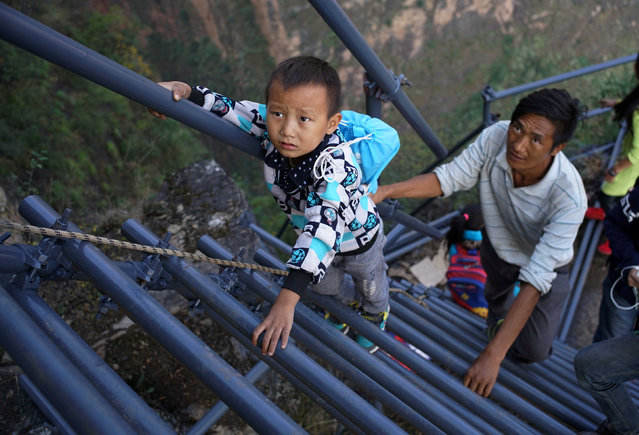
A student from “the cliff village” in Atule'er climbs newly-constructed steel ladders after school to go home for holidays, in Liangshan Sichuan province, China, November 19, 2016. The steel ladders which replaced the unsafe vine ladders shortened the time taken for the children to go home, from three hours to two. (Photo by Reuters/Stringer)

A student from “the cliff village” in Atule'er climbs newly-constructed steel ladders after school to go home for holidays, in Liangshan Sichuan province, China, November 19, 2016. The steel ladders which replaced the unsafe vine ladders shortened the time taken for the children to go home, from three hours to two. (Photo by Reuters/Stringer)
Details
07 Dec 2016 11:57:00
Cristine Angelie Garcia (C), 24, rides a jeepney on her way to work at a call centre for the midnight shift in Taguig city, Metro Manila, Philippines October 3, 2016. “Maybe there is another way where people do not need to die”, she said, adding she felt safer walking the streets at night. “I'm on Duterte's side. Maybe he's just misunderstood because he grew up on the streets”. (Photo by Ezra Acayan/Reuters)

Cristine Angelie Garcia (C), 24, rides a jeepney on her way to work at a call centre for the midnight shift in Taguig city, Metro Manila, Philippines October 3, 2016. “Maybe there is another way where people do not need to die”, she said, adding she felt safer walking the streets at night. “I'm on Duterte's side. Maybe he's just misunderstood because he grew up on the streets”. (Photo by Ezra Acayan/Reuters)
Details
29 Dec 2016 07:48:00
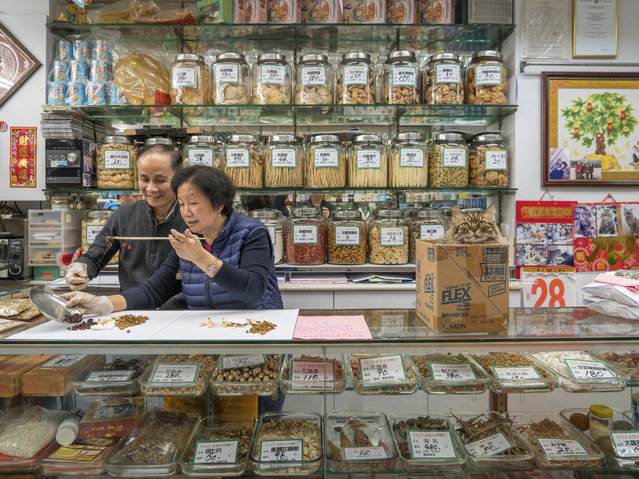
Hong Kong Shop Cats #17. Marcel Heijnen returned to Hong Kong in 2015 and found himself living without a cat for the first time in decades. Soon, though, he was indulging in what he calls “re-tail therapy” and found himself on a first-name basis with a number of cats in his neighbourhood, Sai Ying Pun. (Photo by Marcel Heijnen/Blue Lotus)

When Dutch photographer Marcel Heijnen moved to Hong Kong, the territory’s shop cats instantly caught his eye. While the “feline emperors” are the stars, his shots also offer insights into Hong Kong’s wares, from dried fish to paper. Here: Hong Kong Shop Cats #17. (Photo by Marcel Heijnen/Blue Lotus)
Details
03 Jan 2017 11:04:00
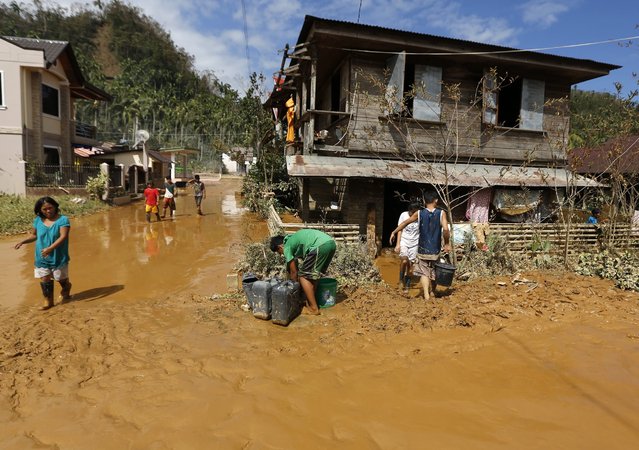
Filipino typhoon victims walk through heavy mud in the typhoon hit town of Taft, Samar island, Philippines, 08 December 2014. Typhoon Hagupit weakened into a tropical storm as it moved towards the Philippine capital after killing at least 27 people and displacing more than one million people in the eastern and central provinces. (Photo by Francis R. Malasig/EPA)

Filipino typhoon victims walk through heavy mud in the typhoon hit town of Taft, Samar island, Philippines, 08 December 2014. Typhoon Hagupit weakened into a tropical storm as it moved towards the Philippine capital after killing at least 27 people and displacing more than one million people in the eastern and central provinces. Hagupit slammed into the country's eastern coast on 06 December evening, bringing heavy rains and gale-force winds that flattened homes, ripped off roofs, and knocked out power and communications. (Photo by Francis R. Malasig/EPA)
Details
10 Dec 2014 11:37:00
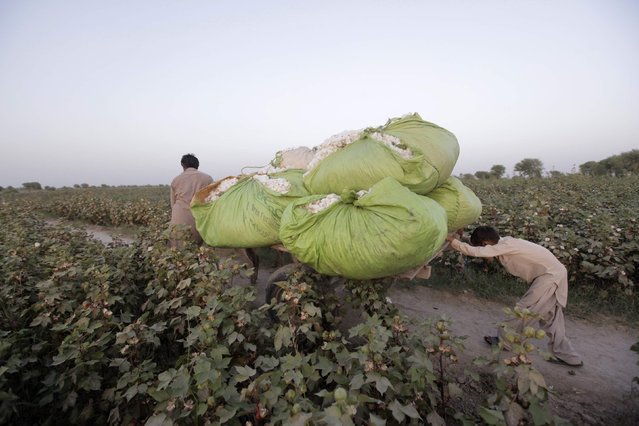
A boy pushes a donkey cart loaded with bundles of cotton blooms that were collected by women cotton pickers in Meeran Pur village, north of Karachi September 25, 2014. Women make up the bulk of Pakistan's half a million cotton producers, but labour rights activists say they are often exploited by overseers, who often withhold their wages and may subject some of them to sexual harassment. (Photo by Akhtar Soomro/Reuters)

A boy pushes a donkey cart loaded with bundles of cotton blooms that were collected by women cotton pickers in Meeran Pur village, north of Karachi September 25, 2014. Women make up the bulk of Pakistan's half a million cotton producers, but labour rights activists say they are often exploited by overseers, who often withhold their wages and may subject some of them to sexual harassment. (Photo by Akhtar Soomro/Reuters)
Details
10 Dec 2014 12:27:00
A woman attends a boxing class at Princess Women's Boxing Club in Shanghai December 3, 2014. Women have boxed as long as the sport has existed but for years they were relegated out of national and international competitions in many countries around the world. Female boxers entered the ring in an exhibition match at the 1904 Olympic Games, but it was more than a century later when they were given the green light to make their Olympic debut in London in 2012. (Photo by Carlos Barria/Reuters)

A woman attends a boxing class at Princess Women's Boxing Club in Shanghai December 3, 2014. Women have boxed as long as the sport has existed but for years they were relegated out of national and international competitions in many countries around the world. Female boxers entered the ring in an exhibition match at the 1904 Olympic Games, but it was more than a century later when they were given the green light to make their Olympic debut in London in 2012. (Photo by Carlos Barria/Reuters)
Details
10 Dec 2014 12:46:00
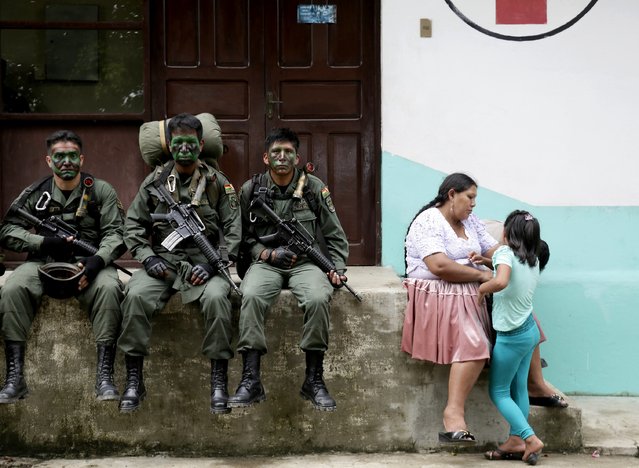
Members of the Bolivian combined forces of army and police rest at their headquarters at the end of their ceremony for the task of fighting against drugs and the eradication of coca leaves in Chimore, east of La Paz, December 10, 2014. The government of Bolivia's President Evo Morales eradicated some 11,000 hectares of illegal coca plants and confiscated nearly 192 tons of drugs in 2014, according to the local media. (Photo by David Mercado/Reuters)

Members of the Bolivian combined forces of army and police rest at their headquarters at the end of their ceremony for the task of fighting against drugs and the eradication of coca leaves in Chimore, east of La Paz, December 10, 2014. The government of Bolivia's President Evo Morales eradicated some 11,000 hectares of illegal coca plants and confiscated nearly 192 tons of drugs in 2014, according to the local media. (Photo by David Mercado/Reuters)
Details
12 Dec 2014 13:10:00