Loading...
Done
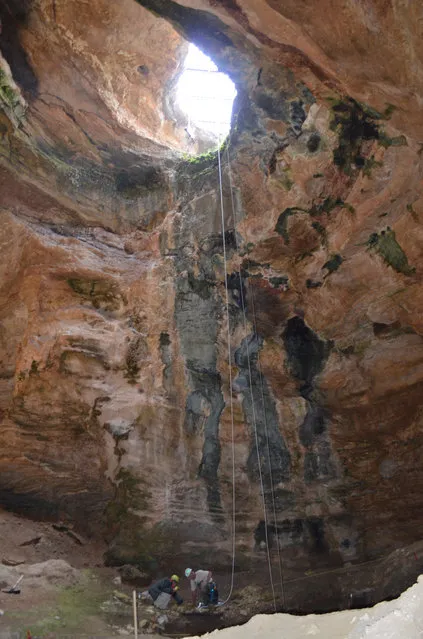
This July 2014 image provided by the Bureau of Land Management shows the interior of the Natural Trap Cave in north-central Wyoming. The cave holds the remains of tens of thousands of animals, including many now-extinct species, from the late Pleistocene period tens of thousands of years ago. Scientists have resumed digging for the first time in more than 30 years. (Photo by AP Photo/Bureau of Land Management)

This July 2014 image provided by the Bureau of Land Management shows the interior of the Natural Trap Cave in north-central Wyoming. The cave holds the remains of tens of thousands of animals, including many now-extinct species, from the late Pleistocene period tens of thousands of years ago. Scientists have resumed digging for the first time in more than 30 years. (Photo by AP Photo/Bureau of Land Management)
Details
10 Aug 2014 10:35:00
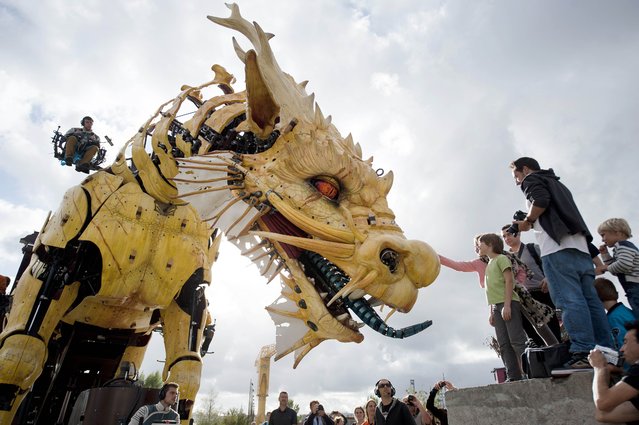
A mechanical horse-dragon made of wood and steel is presented to the public in Nantes, western France on August 26, 2014. This horse-dragon, created by the French artist Francois Delaroziere of “Les Machines de l'île” (The Machines of the Isle), is the hero of the show "Long Ma" which will be presented in Beijing on October 17, 2014 as part of the fiftieth anniversary of the relationship between France and China. (Photo by Jean-Sebastien Evrard/AFP Photo)

A mechanical horse-dragon made of wood and steel is presented to the public in Nantes, western France on August 26, 2014. This horse-dragon, created by the French artist Francois Delaroziere of “Les Machines de l'île” (The Machines of the Isle), is the hero of the show "Long Ma" which will be presented in Beijing on October 17, 2014 as part of the fiftieth anniversary of the relationship between France and China. (Photo by Jean-Sebastien Evrard/AFP Photo)
Details
30 Aug 2014 11:02:00
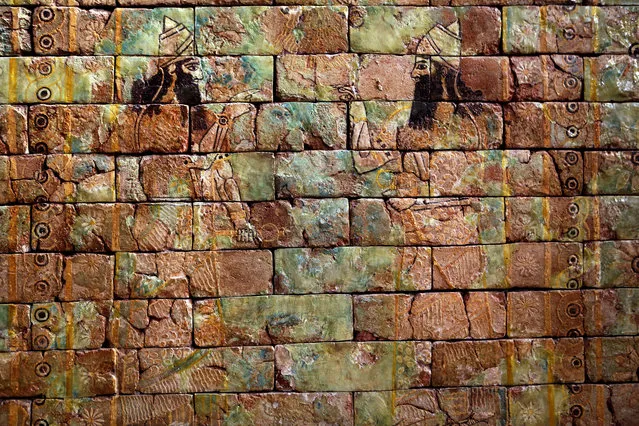
This Monday, September 15, 2014 photo shows glazed bricks displayed at the Iraqi National Museum in Baghdad. The Islamic State militants seek to purge society of all influences that don't conform with their strict, puritanical version of Islam. That means destroying not only relics seen as pagan but also Muslim sites they see as contradicting their ideology, particularly Sunni Muslim shrines they see as idolatrous as well as mosques used by Shiites, a branch of Islam they consider heretical. (Photo by Hadi Mizban/AP Photo)

This Monday, September 15, 2014 photo shows glazed bricks displayed at the Iraqi National Museum in Baghdad. The Islamic State militants seek to purge society of all influences that don't conform with their strict, puritanical version of Islam. That means destroying not only relics seen as pagan but also Muslim sites they see as contradicting their ideology, particularly Sunni Muslim shrines they see as idolatrous as well as mosques used by Shiites, a branch of Islam they consider heretical. (Photo by Hadi Mizban/AP Photo)
Details
21 Sep 2014 10:31:00
A picture made available on 13 May 2016 shows A Tiwa girl performing her traditional dance as they celebrated the Wanchuwa festival in Karbi Anglong District of Assam state, India, 11 May 2016. Wanchuwa is one of the most important festivals of the Tiwa tribal community living in the hills as it is related with agriculture which is the mainstay of their economy. Tiwas pray for a bountiful harvest during this festival and to protect their crops from pest and other natural calamities. (Photo by EPA/Stringer)

A picture made available on 13 May 2016 shows A Tiwa girl performing her traditional dance as they celebrated the Wanchuwa festival in Karbi Anglong District of Assam state, India, 11 May 2016. Wanchuwa is one of the most important festivals of the Tiwa tribal community living in the hills as it is related with agriculture which is the mainstay of their economy. Tiwas pray for a bountiful harvest during this festival and to protect their crops from pest and other natural calamities. Tiwa is a major tribe of Assam state who practice Jhum or shifting cultivation for their living in the hills. (Photo by EPA/Stringer)
Details
14 May 2016 11:45:00
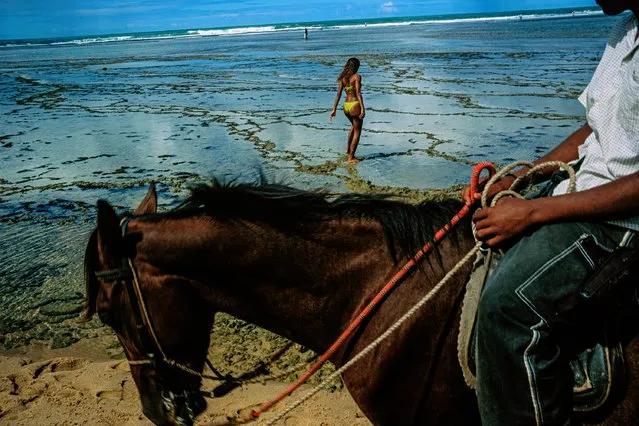
Praia du Forte, Bahia. “This was the lead picture for a National Geographic story on Bahia, because it was both mysterious as well as a “geography” picture showing where the slaves arrived from Nigeria. Beach pictures seem like they should be easy to take, but for me they are actually quite difficult. Too easy to fall into cliche. When I saw the kid coming on the horse, I quickly ran to see if I could make something with a woman in a bikini that was not a bikini shot”. (Photo by David Alan Harvey/The Guardian)

Praia du Forte, Bahia. “This was the lead picture for a National Geographic story on Bahia, because it was both mysterious as well as a “geography” picture showing where the slaves arrived from Nigeria. Beach pictures seem like they should be easy to take, but for me they are actually quite difficult. Too easy to fall into cliche. When I saw the kid coming on the horse, I quickly ran to see if I could make something with a woman in a bikini that was not a bikini shot”. (Photo by David Alan Harvey/The Guardian)
Details
20 Aug 2016 11:35:00
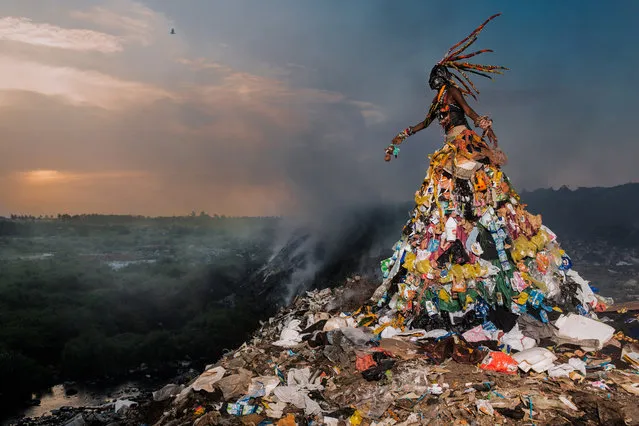
Fabrice Monteiro travelled to the most polluted places in Africa and created terrifying characters who roamed their midst dressed in eerie debris. They are spirits, he says, on a mission to make humans change their ways. Informed by Africa’s environmental problems, Fabrice Monteiro’s photographs aim to highlight urgent ecological issues all over the world. His series “The Prophecy” is on show at Photo Basel 2017 until 18 June. (Photo by Fabrice Monteiro/Photo Basel 2017/Mariane Ibrahim Gallery/The Guardian)

Fabrice Monteiro travelled to the most polluted places in Africa and created terrifying characters who roamed their midst dressed in eerie debris. They are spirits, he says, on a mission to make humans change their ways. Informed by Africa’s environmental problems, Fabrice Monteiro’s photographs aim to highlight urgent ecological issues all over the world. His series “The Prophecy” is on show at Photo Basel 2017 until 18 June. (Photo by Fabrice Monteiro/Photo Basel 2017/Mariane Ibrahim Gallery/The Guardian)
Details
17 Jun 2017 08:38:00
The winner of the Miss Tattoo Brazil 2014 contest, Bruna Barros, shows a tattoo that says 'My body, my rules' during Tattoo Week, the largest convention of art in the skin of Latin America, in Sao Paulo, Brazil, 14 July 2017. A tattooed woman beauty pageant, the new trends and techniques of the tattoo world, body piercing and the environment of the art of definitively painting the body, are all due to be addressed during the seventh edition of the “Tattoo Week Sao Paulo“. (Photo by Sebastiao Moreira/EPA)

The winner of the Miss Tattoo Brazil 2014 contest, Bruna Barros, shows a tattoo that says 'My body, my rules' during Tattoo Week, the largest convention of art in the skin of Latin America, in Sao Paulo, Brazil, 14 July 2017. A tattooed woman beauty pageant, the new trends and techniques of the tattoo world, body piercing and the environment of the art of definitively painting the body, are all due to be addressed during the seventh edition of the “Tattoo Week Sao Paulo“. (Photo by Sebastiao Moreira/EPA)
Details
19 Jul 2017 08:30:00
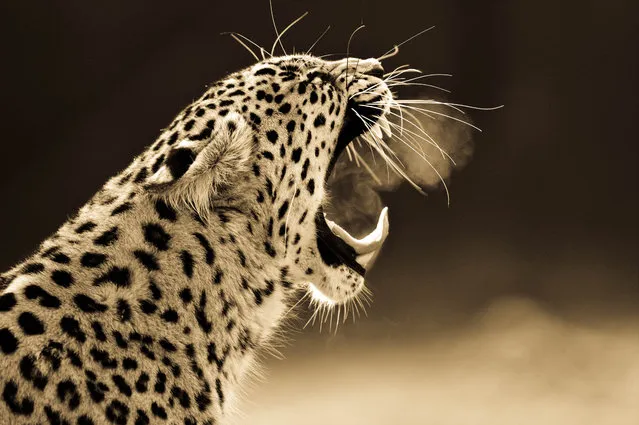
These romantic sepia shots show lovers enjoying quiet, unguarded moments together – but the subjects are not besotted couples; they are fearsome big cats. Freelance snapper Goran Anastasovski has devoted more than 10 years of his life to photographing big cats and other animals. The 46-year-old from Macedonia aims to emphasize their human qualities in his photographs. (Photo by Goran Anastasovski/Caters News)

These romantic sepia shots show lovers enjoying quiet, unguarded moments together – but the subjects are not besotted couples; they are fearsome big cats. Freelance snapper Goran Anastasovski has devoted more than 10 years of his life to photographing big cats and other animals. The 46-year-old from Macedonia aims to emphasize their human qualities in his photographs. (Photo by Goran Anastasovski/Caters News)
Details
11 Jan 2016 08:01:00