Loading...
Done
José Pereira de Souza plays an accordion as actress and model Tatiana Melo gives a television interview in Feira Nordestina outside of the Olympic periphery on Wednesday, August 17, 2016. (Photo by Aaron Ontiveroz/The Denver Post)

José Pereira de Souza plays an accordion as actress and model Tatiana Melo gives a television interview in Feira Nordestina outside of the Olympic periphery on Wednesday, August 17, 2016. (Photo by Aaron Ontiveroz/The Denver Post)
Details
19 Aug 2016 12:01:00
Resident Taina holds her brother Ysaque in the hallway outside their apartment in an occupied building in the Mangueira “favela” community on August 13, 2016 in Rio de Janeiro, Brazil. (Photo by Mario Tama/Getty Images,)

Resident Taina holds her brother Ysaque in the hallway outside their apartment in an occupied building in the Mangueira “favela” community on August 13, 2016 in Rio de Janeiro, Brazil. (Photo by Mario Tama/Getty Images)
Details
22 Aug 2016 12:18:00
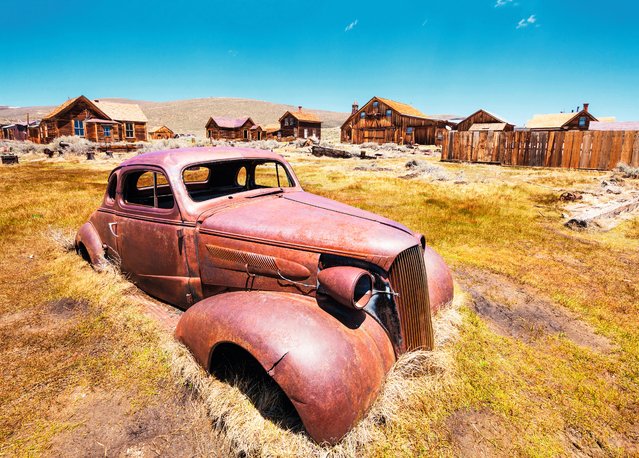
Bodie, Mono County, California. Gold was discovered at Bodie in 1859 (just after the initial California gold rush) and it went from mining camp to boomtown. Its decline began in 1880, when word spread of new boomtowns elsewhere. The Standard Consolidated Mine closed in 1913, and four years later the Bodie Railway was abandoned. By 1940 the population was down to 40. Today, Bodie is maintained in a state of arrested decay as a visitor attraction. (Photo by Alamy Stock Photo)

Kieron Connolly’s new book of photographs of more than 100 once-busy and often elegant buildings gives an idea of how the world might look if humankind disappeared. Here: Bodie, Mono County, California. Gold was discovered at Bodie in 1859 (just after the initial California gold rush) and it went from mining camp to boomtown. Its decline began in 1880, when word spread of new boomtowns elsewhere. The Standard Consolidated Mine closed in 1913, and four years later the Bodie Railway was abandoned. By 1940 the population was down to 40. Today, Bodie is maintained in a state of arrested decay as a visitor attraction. (Photo by Alamy Stock Photo)
Details
07 Sep 2016 09:50:00
People walk near a collapsed mosque following an earthquake in Meuredu, Pidie Jaya in the northern province of Aceh, Indonesia December 7, 2016. (Photo by Irwansyah Putra/Reuters/Antara Foto)

People walk near a collapsed mosque following an earthquake in Meuredu, Pidie Jaya in the northern province of Aceh, Indonesia December 7, 2016. (Photo by Irwansyah Putra/Reuters/Antara Foto)
Details
08 Dec 2016 12:55:00
“Early morning in Mandawa, rural Rajasthan: it was the morning of Diwali and the streets were swept by smiling women in brightly coloured sarees as I took an early morning cup of chai. Celebrations started later, when darkness fell”. (Photo by Hamish Scott-Brown/Guardian Witness)

“Early morning in Mandawa, rural Rajasthan: it was the morning of Diwali and the streets were swept by smiling women in brightly coloured sarees as I took an early morning cup of chai. Celebrations started later, when darkness fell”. (Photo by Hamish Scott-Brown/Guardian Witness)
Details
20 Dec 2016 12:57:00
People take part in the in the 41st annual Gay and Lesbian Mardi Gras parade in Sydney, New South Wales, Australia, 02 March 2019. (Photo by Steven Saphore/EPA/EFE)

People take part in the in the 41st annual Gay and Lesbian Mardi Gras parade in Sydney, New South Wales, Australia, 02 March 2019. The 41st parade features almost 200 floats. (Photo by Steven Saphore/EPA/EFE)
Details
04 Mar 2019 00:07:00
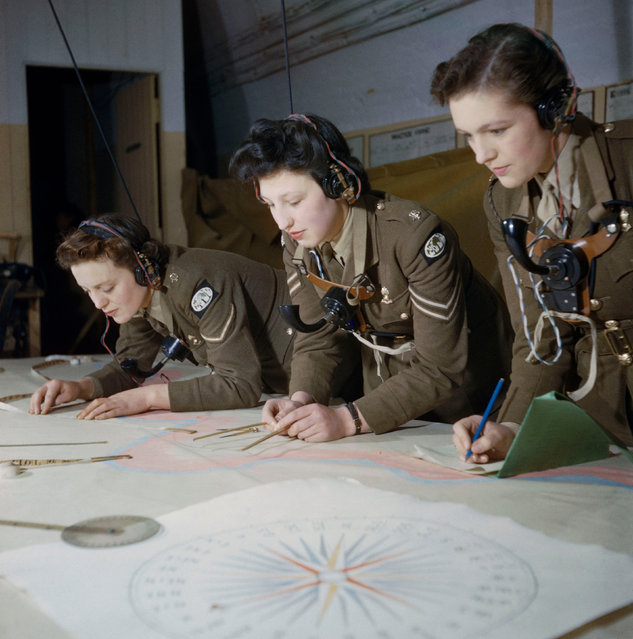
Auxiliary Territorial Service (ATS) plotters at work at Coastal Artillery Headquarters in Dover, December 1942. (Photo by Ted Dearberg/IWM/PA Wire)

Auxiliary Territorial Service (ATS) plotters at work at Coastal Artillery Headquarters in Dover, December 1942. The Auxiliary Territorial Service was the women's branch of the British Army during the Second World War. It was formed on 9 September 1938, initially as a women's voluntary service, and existed until 1 February 1949, when it was merged into the Women's Royal Army Corps. The ATS had its roots in the Women's Auxiliary Army Corps (WAAC), which was formed in 1917 as a voluntary service. During the First World War its members served in a number of jobs including clerks, cooks, telephonists and waitresses. The WAAC was disbanded after four years in 1921. (Photo by Ted Dearberg/IWM/PA Wire)

Details
13 Jul 2017 07:52:00
British Holidaymakers seen partying partying in Punta Bella main Street in Magaluf, a major holiday resort on the Spanish island of Majorca this summer, July 2017. (Photo by Splash News and Pictures)

British Holidaymakers seen partying partying in Punta Bella main Street in Magaluf, a major holiday resort on the Spanish island of Majorca this summer, July 2017. (Photo by Splash News and Pictures)
Details
19 Jul 2017 08:34:00