Loading...
Done
A view of the Tianducheng development in Hangzhou, Zhejiang Province August 1, 2013. Tianducheng, developed by Zhejiang Guangsha Co. Ltd., started constructing in 2007 and was known as a knockoff of Paris with a scaled-replica of the Eiffel Tower, standing 108 metres, and Parisian houses. Although designed to accommodate at least ten thousand people, Tianducheng remains sparsely populated and is now considered as a “ghost town”, according to local media. (Photo by Aly Song/Reuters)

A view of the Tianducheng development in Hangzhou, Zhejiang Province August 1, 2013. Tianducheng, developed by Zhejiang Guangsha Co. Ltd., started constructing in 2007 and was known as a knockoff of Paris with a scaled-replica of the Eiffel Tower, standing 108 metres, and Parisian houses. Although designed to accommodate at least ten thousand people, Tianducheng remains sparsely populated and is now considered as a “ghost town”, according to local media. (Photo by Aly Song/Reuters)
Details
06 Aug 2013 07:48:00
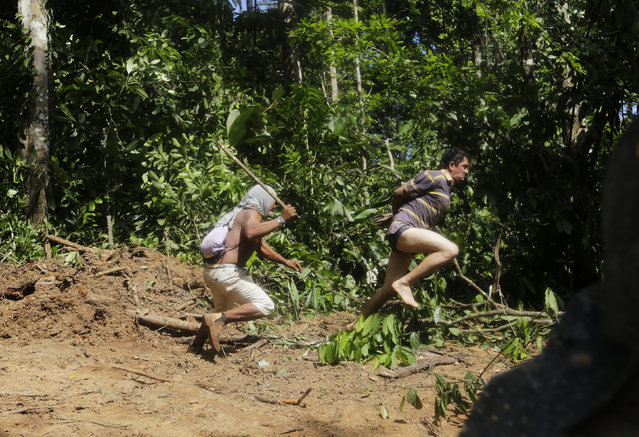
A Ka'apor Indian warrior (L) chases a logger who tried to escape after they captured him during a jungle expedition to search for and expel loggers from the Alto Turiacu Indian territory, near the Centro do Guilherme municipality in the northeast of Maranhao state in the Amazon basin, August 7, 2014. (Photo by Lunae Parracho/Reuters)

A Ka'apor Indian warrior (L) chases a logger who tried to escape after they captured him during a jungle expedition to search for and expel loggers from the Alto Turiacu Indian territory, near the Centro do Guilherme municipality in the northeast of Maranhao state in the Amazon basin, August 7, 2014. Tired of what they say is a lack of sufficient government assistance in keeping loggers off their land, the Ka'apor Indians, who along with four other tribes are the legal inhabitants and caretakers of the territory, have sent their warriors out to expel all loggers they find and set up monitoring camps in the areas that are being illegally exploited. (Photo by Lunae Parracho/Reuters)
Details
05 Sep 2014 11:41:00
A street vendor spreads vermilion powder used for worship during the Tihar festival, also called Diwali in Kathmandu, Nepal, November 9, 2015. Hindus all over Nepal are celebrating the Tihar festival during which they worship cows, which are considered a maternal figure, and other animals. (Photo by Navesh Chitrakar/Reuters)

A street vendor spreads vermilion powder used for worship during the Tihar festival, also called Diwali in Kathmandu, Nepal, November 9, 2015. Hindus all over Nepal are celebrating the Tihar festival during which they worship cows, which are considered a maternal figure, and other animals. Also known as the festival of lights, devotees also worship the goddess of wealth Laxmi by illuminating and decorating their homes using garlands, oil lamps, candles and colourful light bulbs. (Photo by Navesh Chitrakar/Reuters)
Details
18 Nov 2015 08:05:00
Real life doll Alina Kovalevskaya poses for a photograph on May 29, 2014 in Odessa, Ukraine. Alina Kovalevskaya is a walking, talking, breathing living doll on the lookout for her real-life Ken. (Photo by Aleksey Solodunov/Barcroft Media)

Real life doll Alina Kovalevskaya poses for a photograph on May 29, 2014 in Odessa, Ukraine. Alina Kovalevskaya is a walking, talking, breathing living doll on the lookout for her real-life Ken. The 21-year-old is from Odessa, Ukraine – the same city as real-life Barbie Valeria Lukyanova, who has made headlines around the world for her unique look and controversial opinions. The pair were friends, but their relationship has since soured. Alina has made a splash online, with her YouTube videos showing off her doll-like charms attracting hundreds of thousands of views. (Photo by Aleksey Solodunov/Barcroft Media)
Details
13 Jul 2014 11:14:00
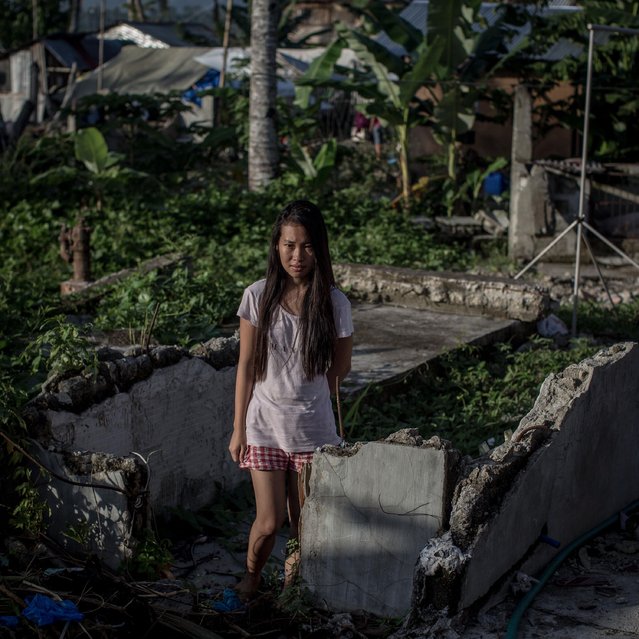
Typhoon Haiyan survivor Mariena Delacueva stands amongst the ruins of her families home on November 6, 2014 in San Antonio, Samar, Philippines. Mariena's looks after the property after her parents moved to Manila to find work so they can save enough money to rebuild the house. (Photo by Chris McGrath/Getty Images)

Typhoon Haiyan survivor Mariena Delacueva stands amongst the ruins of her families home on November 6, 2014 in San Antonio, Samar, Philippines. Mariena's looks after the property after her parents moved to Manila to find work so they can save enough money to rebuild the house. Residents of Leyte and surrounds are preparing for the 1-year anniversary since Super Typhoon Yolanda struck the coast on November 8, 2013, leaving more than 6000 dead and many more homeless. (Photo by Chris McGrath/Getty Images)
Details
11 Nov 2014 11:59:00
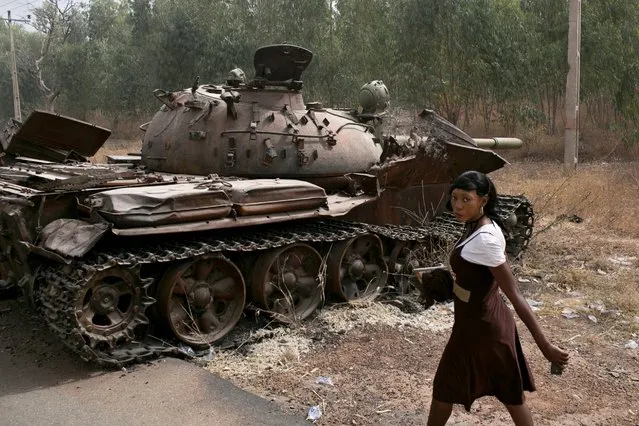
An abandoned tank left by Boko Haram, February 20, 2016, seen on the road to Michika, Nigeria – a town formerly occupied by the insurgents. On April 14, 2014, 300 schoolgirls in the Chibok village in Nigeria were kidnapped by the terrorist group, Boko Haram. Two years later, the majority of these girls are still missing. According to the Global Terrorism Index Report 2015, Boko Haram, which operates mainly in Nigeria, has become the most deadly terrorist group in the world. (Photo by Danielle Villasana)

An abandoned tank left by Boko Haram, February 20, 2016, seen on the road to Michika, Nigeria – a town formerly occupied by the insurgents. On April 14, 2014, 300 schoolgirls in the Chibok village in Nigeria were kidnapped by the terrorist group, Boko Haram. Two years later, the majority of these girls are still missing. According to the Global Terrorism Index Report 2015, Boko Haram, which operates mainly in Nigeria, has become the most deadly terrorist group in the world. (Photo by Danielle Villasana)
Details
22 Apr 2016 13:13:00
Takeoka Chisaka, Hiroshima, Japan. “One morning in August 1945, I was walking home from the night shift at a factory in Hiroshima. As I reached my door, there was a huge explosion. When I came to, my head was bleeding and I had been blasted 30m away”. (Photo and caption by Sasha Maslov)

Takeoka Chisaka, Hiroshima, Japan. “One morning in August 1945, I was walking home from the night shift at a factory in Hiroshima. As I reached my door, there was a huge explosion. When I came to, my head was bleeding and I had been blasted 30m away. The atomic bomb had detonated. When I found my mother, her eyes were badly burned. A doctor said they had to come out, but he didn’t have the proper tools so used a knife instead. It was hellish. I became a peace-worker after the war. In the 1960s, at a meeting at the UN, I met one of the people who created the atomic bomb. He apologised”. (Photo and caption by Sasha Maslov)
Details
11 May 2015 11:56:00


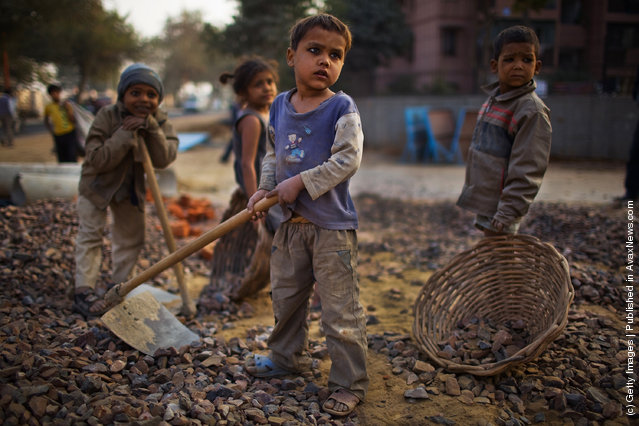
Indian children work nearby to their parents at a construction project in front of the Jawaharlal Nehru Stadium on January 30, 2010 in New Delhi, India. The children accompany their parents to the work site, where if they are prepared to work, they will receive money for bread an milk and be provided with dinner by the contractor. The sheer scale of the project has drawn an enormous population of migrant workers from all over India.
Details
20 May 2011 07:00:00