Loading...
Done
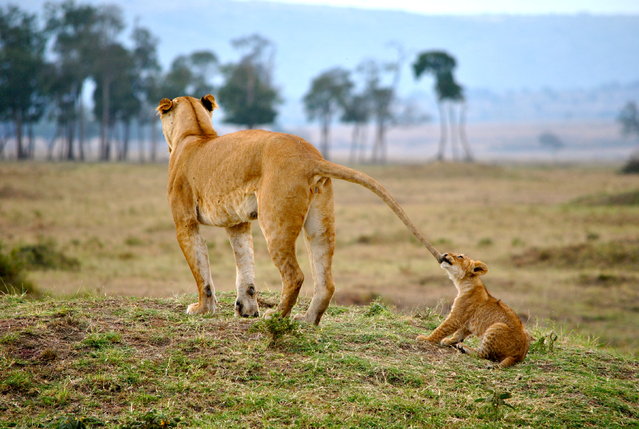
“A Mothers Tail”. A baby cub pulls on his mother's tail to get attention. Photo location: Masai Mara, Kenya. (Photo and caption by Tori Marsh/National Geographic Photo Contest)

“A Mothers Tail”. A baby cub pulls on his mother's tail to get attention. Photo location: Masai Mara, Kenya. (Photo and caption by Tori Marsh/National Geographic Photo Contest)
Details
21 Oct 2014 12:40:00
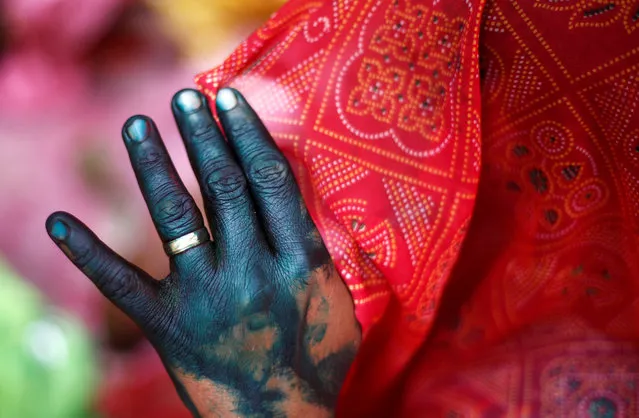
A woman holds her veil as she takes part in Huranga, a game played between men and women a day after Holi, at Dauji temple near Mathura, March 3, 2018. (Photo by Adnan Abidi/Reuters)

A woman holds her veil as she takes part in Huranga, a game played between men and women a day after Holi, at Dauji temple near Mathura, March 3, 2018. (Photo by Adnan Abidi/Reuters)
Details
12 Mar 2018 00:03:00
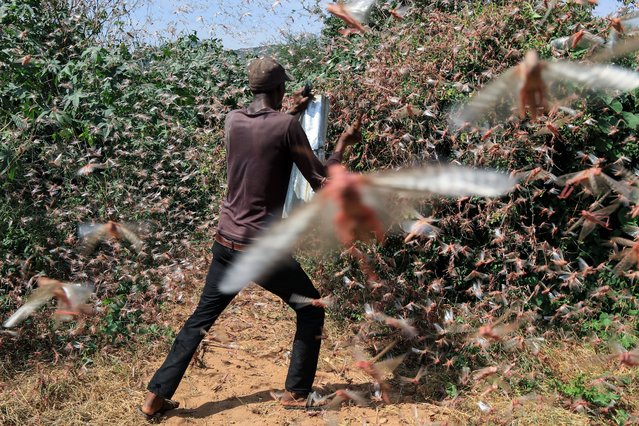
A man uses iron sheet to make noises, as a way of trying to disperse desert locusts that had invaded their farms during the second wave invasion in Kakongo village, in Nuu-Mwingi East, in Kitui, Kenya, 06 February 2021. The second wave invasion of the desert locusts in the country comes at a time where most famers are expecting to harvest their farm produce in the country. According to the United Nations Food and Agriculture Organization (FAO), on 04 February, warned numerous immature desert locust swarms persist in southern Ethiopia and Kenya. Some of the swarms are in community areas and therefore cannot be treated. In Kenya, immature swarms continue to spread westwards across northern and central counties where there are currently about 20 small swarms present, mostly about 50 hectares in size, it said. (Photo by Daniel Irungu/EPA/EFE)

A man uses iron sheet to make noises, as a way of trying to disperse desert locusts that had invaded their farms during the second wave invasion in Kakongo village, in Nuu-Mwingi East, in Kitui, Kenya, 06 February 2021. The second wave invasion of the desert locusts in the country comes at a time where most famers are expecting to harvest their farm produce in the country. (Photo by Daniel Irungu/EPA/EFE)
Details
25 Feb 2021 08:17:00
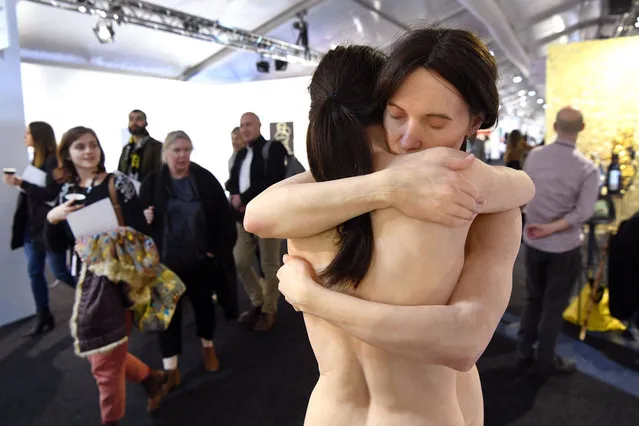
People walk past a sculpture entitled “Reunion” by artist Sam Jinks at a preview of the Melbourne Art Fair in Melbourne on August 1, 2018. The sculpture is made of silicone, pigment, resin and human hair. (Photo by William West/AFP Photo)

People walk past a sculpture entitled “Reunion” by artist Sam Jinks at a preview of the Melbourne Art Fair in Melbourne on August 1, 2018. The sculpture is made of silicone, pigment, resin and human hair. (Photo by William West/AFP Photo)
Details
02 Aug 2018 08:53:00
A resident of the Goodwin House senior living community, looks on as the DC area motown band “The Tribe” plays a social distance concert in their parking lot in Arlington, Virginia, during the coronavirus pandemic on April 14, 2020. (Photo by Andrew Caballero-Reynolds/AFP Photo)

A resident of the Goodwin House senior living community, looks on as the DC area motown band “The Tribe” plays a social distance concert in their parking lot in Arlington, Virginia, during the coronavirus pandemic on April 14, 2020. (Photo by Andrew Caballero-Reynolds/AFP Photo)
Details
20 Apr 2020 00:05:00
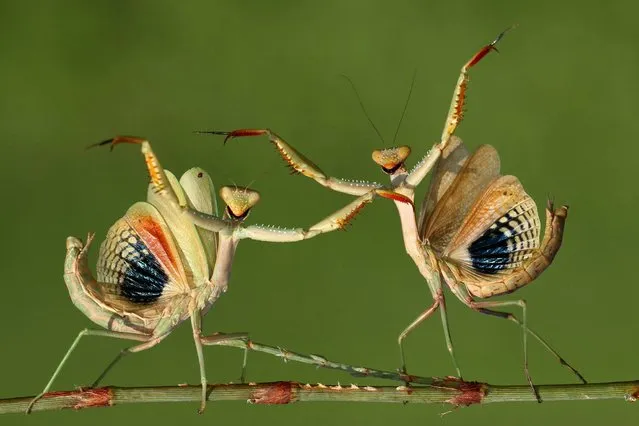
“Zeybeks”. That's Dance, Sunward and Zeybeks. (Photo by Hasan Baglar/2014 Sony World Photography Awards)

“Zeybeks”. That's Dance, Sunward and Zeybeks. (Photo by Hasan Baglar/2014 Sony World Photography Awards)
Details
07 Feb 2014 08:57:00
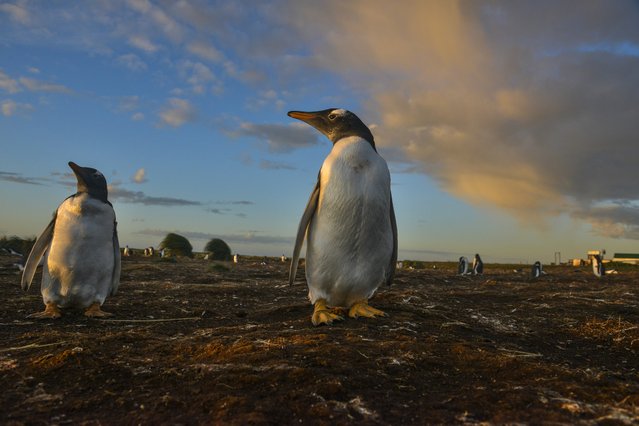
As the sun rises, Gentoo penguins start their day on Wednesday, February 17, 2016, on Sea Lion Island, Falkland Islands. Sea Lion Island, which lies about 10 miles to the south of mainland East Falkland, is the southern most human-inhabited island of the more than 750 islands and islets of the Falkland Islands. (Photo by Jahi Chikwendiu/The Washington Post)

As the sun rises, Gentoo penguins start their day on Wednesday, February 17, 2016, on Sea Lion Island, Falkland Islands. Sea Lion Island, which lies about 10 miles to the south of mainland East Falkland, is the southern most human-inhabited island of the more than 750 islands and islets of the Falkland Islands. (Photo by Jahi Chikwendiu/The Washington Post)
Details
02 Sep 2016 13:05:00
A Tibetan mastiff dog is displayed for sale at a mastiff show in Baoding, Hebei province, south of Beijing on March 9, 2013. Fetching prices up to around 750,000 USD, mastiffs have become a prized status-symbol amongst China's wealthy, with rich buyers across the country sending prices skyrocketing. Owners say the mastiffs, descendents of dogs used for hunting by nomadic tribes in central Asia and Tibet are fiercely loyal and protective. (Photo by Ed Jones/AFP Photo)

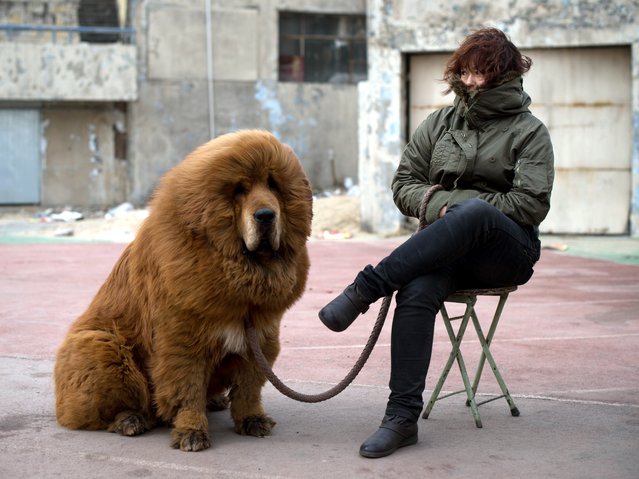
A Tibetan mastiff dog is displayed for sale at a mastiff show in Baoding, Hebei province, south of Beijing on March 9, 2013. Fetching prices up to around 750,000 USD, mastiffs have become a prized status-symbol amongst China's wealthy, with rich buyers across the country sending prices skyrocketing. Owners say the mastiffs, descendents of dogs used for hunting by nomadic tribes in central Asia and Tibet are fiercely loyal and protective. Breeders still travel to the Himalayan plateau to collect young puppies, although many are unable to adjust to the low altitudes and die during the journey. (Photo by Ed Jones/AFP Photo)
Details
02 May 2014 09:40:00