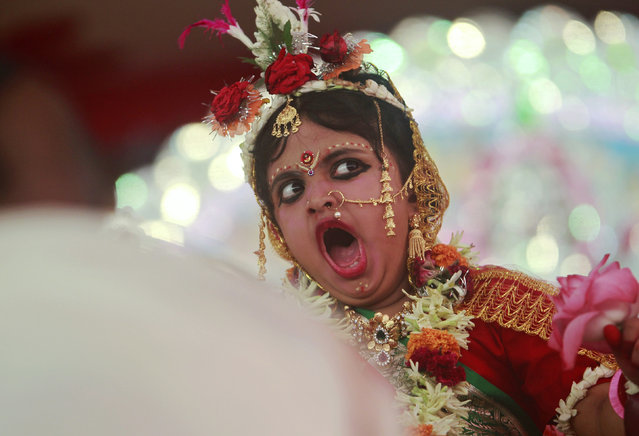
Satarupa Chakraborty, 5, dressed as a Kumari, yawns while she is worshipped by a Hindu priest during the religious festival of Durga Puja in Agartala October 2, 2014. (Photo by Jayanta Dey/Reuters)
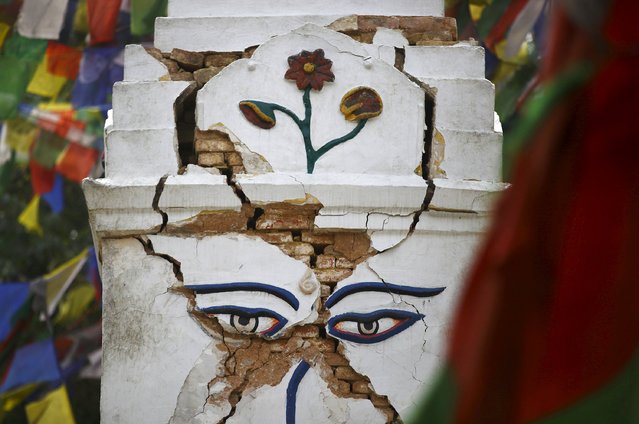
Cracks are seen on one of the shrines at Swoyambhunath Stupa, a UNESCO world heritage site, after Saturday's earthquake in Kathmandu, Nepal April 28, 2015. (Photo by Navesh Chitrakar/Reuters)
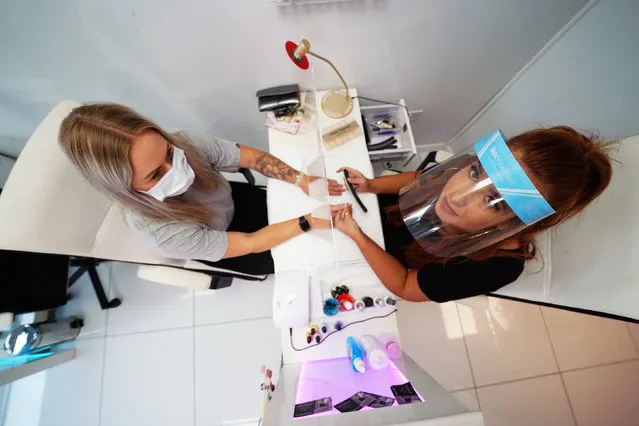
Beautician Alex Smith, 26, does the nails of Jules Aspen, 40, at the Madame Beauty salon in Chirton, North Tyneside, UK on July 13, 2020. Nail bars, beauty salons, tattoo and massage studios, physical therapy businesses, spas and piercing services are able to reopen in the latest lifting of restrictions in England. (Photo by Owen Humphreys/PA Images via Getty Images)
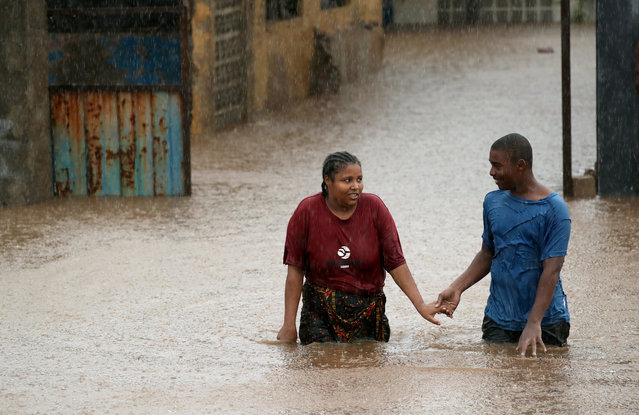
A man helps a woman through a flooded neighbourhood in the aftermath of Cyclone Kenneth, in Pemba, Mozambique, April 28, 2019. (Photo by Mike Hutchings/Reuters)
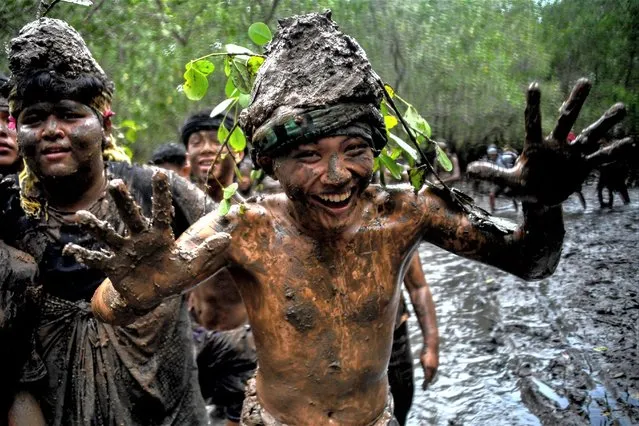
Balinese children take part in a traditional mud bath known as Mebuug-buugan, a day after Nyepi – the “Day of Silence”, aimed at neutralising bad traits in Kedonganan village on Indonesia's resort island of Bali on March 23, 2023. (Photo by Sonny Tumbelaka/AFP Photo)
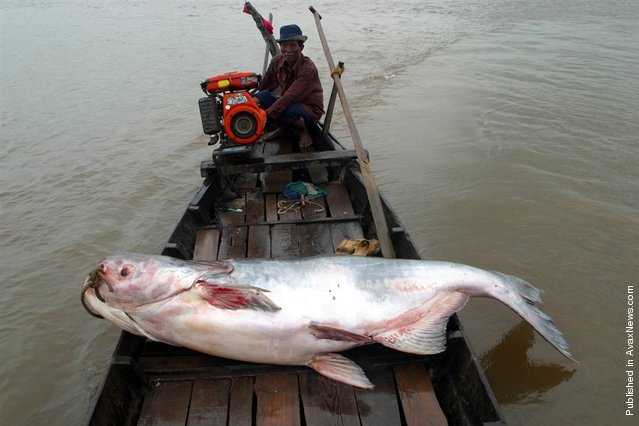
Among the fish populations that could be harmed by the Xayaburi dam in Laos is the critically endangered Mekong giant catfish, considered by the Guinness Book of World Records to be the world’s largest freshwater fish. The fish, which grows to 650 pounds and about 10 feet long, is only found in the Mekong River. It is migratory, moving between downstream habitats in Cambodia upstream to northern Thailand and Laos each year to spawn. Some experts fear the Xayaburi dam could block the migration and drive the giant catfish to extinction. (Photo by Courtesy of Zeb Hogan/University of Nevada, Reno)