Loading...
Done
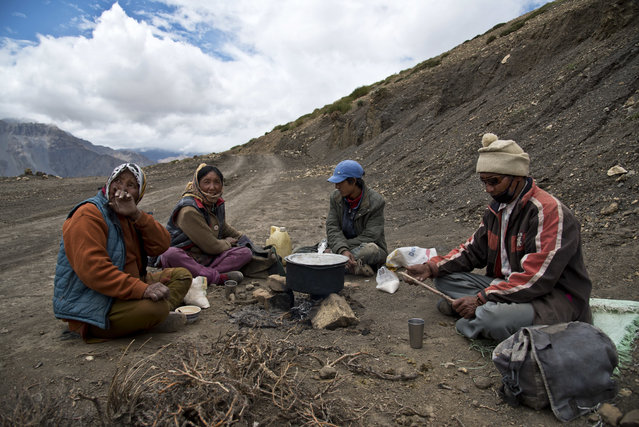
In this August 17, 2016, photo, from left to right, Chhering Chodom, 60, Tashi Yangzom, 50, Lobsang Chhering, 27, and Dorje Tandup, 58, drink milk tea on the side of the road. For centuries, the sleepy valley nestled in the Indian Himalayas remained a hidden Buddhist enclave forbidden to outsiders. Enduring the harsh year-round conditions of the high mountain desert, the people of Spiti Valley lived by a simple communal code – share the Earth's bounty, be hospitable to neighbors, and eschew greed and temptation at all turns. That's all starting to change, for better or worse. Since India began allowing its own citizens as well as outsiders to visit the valley in the early 1990s, tourism and trade have boomed. And the marks of modernization, such as solar panels, asphalt roads and concrete buildings, have begun to appear around some of the villages that dot the remote landscape at altitudes above 4,000 meters (13,000 feet). (Photo by Thomas Cytrynowicz/AP Photo)

In this August 17, 2016, photo, from left to right, Chhering Chodom, 60, Tashi Yangzom, 50, Lobsang Chhering, 27, and Dorje Tandup, 58, drink milk tea on the side of the road. For centuries, the sleepy valley nestled in the Indian Himalayas remained a hidden Buddhist enclave forbidden to outsiders. Enduring the harsh year-round conditions of the high mountain desert, the people of Spiti Valley lived by a simple communal code – share the Earth's bounty, be hospitable to neighbors, and eschew greed and temptation at all turns. That's all starting to change, for better or worse. (Photo by Thomas Cytrynowicz/AP Photo)
Details
15 Sep 2016 09:22:00
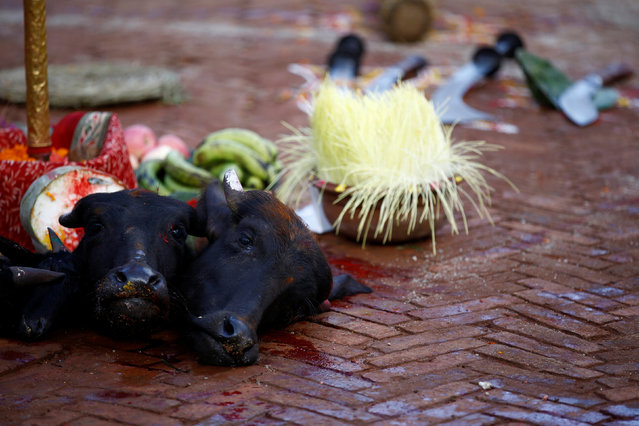
The heads of slaughtered water buffalos and a goat are lined up on the ground after the animals were sacrificed during “Dashain”, a Hindu religious festival in Kathmandu, Nepal October 10, 2016. (Photo by Navesh Chitrakar/Reuters)

The heads of slaughtered water buffalos and a goat are lined up on the ground after the animals were sacrificed during “Dashain”, a Hindu religious festival in Kathmandu, Nepal October 10, 2016. (Photo by Navesh Chitrakar/Reuters)
Details
12 Oct 2016 10:56:00
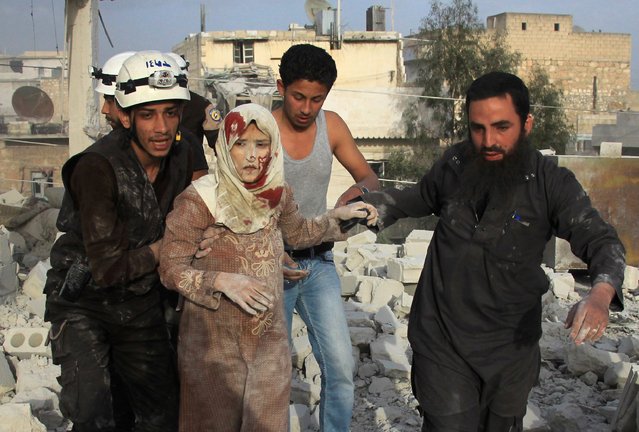
Syrian rescue workers and residents help an injured woman following a reported air strike by government forces on the rebel-held neighbourhood of Haydariya in the northern city of Aleppo on April 10, 2016. (Photo by Thaer Mohammed/AFP Photo)

Syrian rescue workers and residents help an injured woman following a reported air strike by government forces on the rebel-held neighbourhood of Haydariya in the northern city of Aleppo on April 10, 2016. (Photo by Thaer Mohammed/AFP Photo)
Details
12 Apr 2016 11:21:00
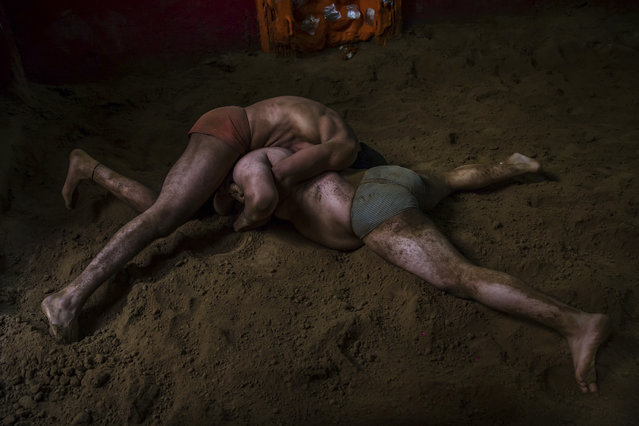
In this November 20, 2017 photo, Indian kushti wrestlers fight in the ring, during their daily training at an akhada, a kind of wrestling hostel at Sabzi Mandi, in New Delhi, India. (Photo by Dar Yasin/AP Photo)

In this November 20, 2017 photo, Indian kushti wrestlers fight in the ring, during their daily training at an akhada, a kind of wrestling hostel at Sabzi Mandi, in New Delhi, India. Like many traditions in rapidly modernizing India, kushti wrestling faces the threat of being left behind. But for many poor families, the ancient sport provides a glimmer of hope. (Photo by Dar Yasin/AP Photo)
Details
13 Dec 2017 07:35:00
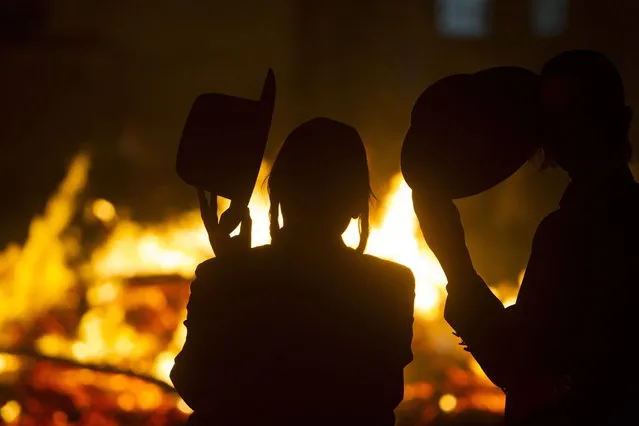
Ultra Orthodox Jewish men watch a bonfire during the Jewish holiday of Lag Ba-Omer in Jerusalem's Mea Shearim neighbourhood April 27, 2013. Israelis celebrate the Jewish holiday of Lag Ba-Omer, which marks the end of a plague in the Middle Ages that killed thousands of disciples of a revered rabbi in the holy land, by lighting bonfires across the country. (Photo by Ronen Zvulun/Reuters)

Ultra Orthodox Jewish men watch a bonfire during the Jewish holiday of Lag Ba-Omer in Jerusalem's Mea Shearim neighbourhood April 27, 2013. Israelis celebrate the Jewish holiday of Lag Ba-Omer, which marks the end of a plague in the Middle Ages that killed thousands of disciples of a revered rabbi in the holy land, by lighting bonfires across the country. (Photo by Ronen Zvulun/Reuters)
Details
28 Apr 2013 10:44:00


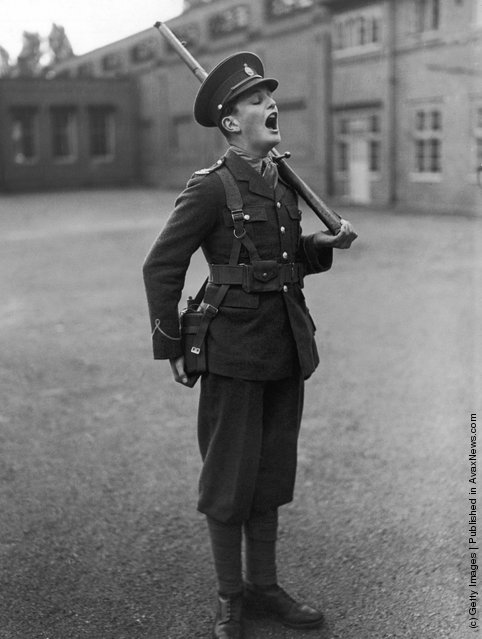
A member of the Eton public school O.T.C. (Officers Training Corps) practising shouting out orders during a training session, 20th January 1940. (Photo by Hulton Archive/Getty Images)
Details
04 Jun 2011 06:46:00


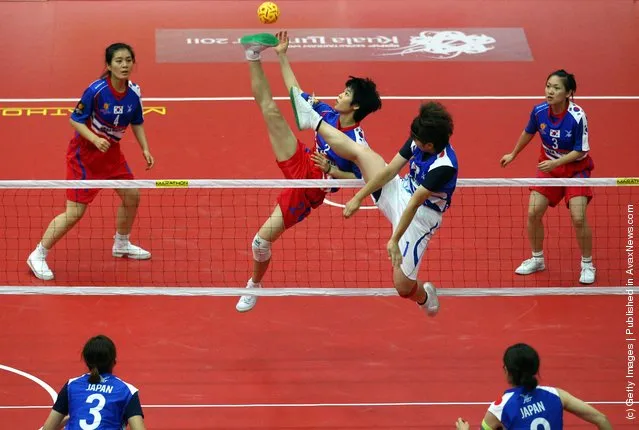
“Sepak takraw or kick volleyball, is a sport native to the Malay-Thai Peninsula. Sepak takraw differs from the similar sport of volleyball in its use of a rattan ball and only allowing players to use their feet, knee, chest and head to touch the ball. It is a popular sport in Indonesia, Malaysia, Thailand, Singapore, Myanmar, Vietnam, Cambodia, Laos, and Philippines”. – Wikipedia

Photo: Hyun Ju Kim of Korea kicks over the net against Yukie Sato of Japan during the round robin match between Korea and Japan during day one of the ISTAF Sepaktakraw World Cup at Titiwangsa Stadium on July 21, 2011 in Kuala Lumpur, Malaysia. (Photo by Ryan Pierse/Getty Images for UFA Sports)
Details
23 Jul 2011 11:45:00
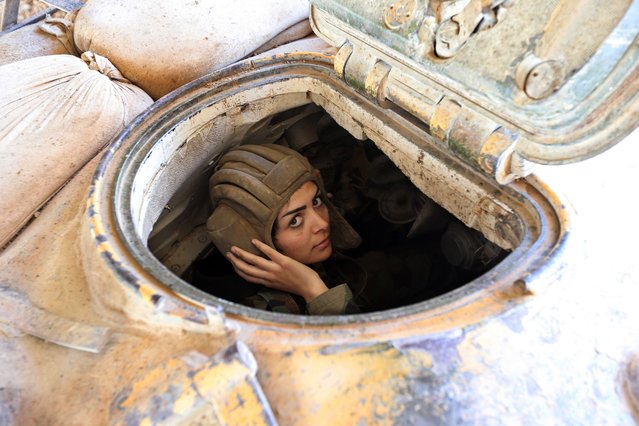
A female Syrian soldier from the Republican Guard commando battalion drives a tank during clashes with rebels in the restive Jobar area, in eastern Damascus, on March 25, 2015. The female battalion, which was created nearly a year ago, consists of 800 female soldiers who are positioned in the suburbs of the Syrian capital where they monitor and secure the frontlines with snipers, rockets and machine guns. (Photo by Joseph Eid/AFP Photo)

A female Syrian soldier from the Republican Guard commando battalion drives a tank during clashes with rebels in the restive Jobar area, in eastern Damascus, on March 25, 2015. The female battalion, which was created nearly a year ago, consists of 800 female soldiers who are positioned in the suburbs of the Syrian capital where they monitor and secure the frontlines with snipers, rockets and machine guns. (Photo by Joseph Eid/AFP Photo)
Details
26 Mar 2015 12:01:00