Loading...
Done
Lebanese women smoke nargileh (water pipe) and watch a streaming broadcast of the FIFA World Cup 2022 group G soccer match between Brazil and Switzerland, at a café-restaurant in the area of Sabtiyeh, north of Beirut, on November 28, 2022. Lebanon being hit hard by the economic crisis, the country did not obtain the rights to broadcast the 2022 World Cup this year, depriving Lebanese fans of the World Cup. (Photo by Joseph Eid/AFP Photo)

Lebanese women smoke nargileh (water pipe) and watch a streaming broadcast of the FIFA World Cup 2022 group G soccer match between Brazil and Switzerland, at a café-restaurant in the area of Sabtiyeh, north of Beirut, on November 28, 2022. Lebanon being hit hard by the economic crisis, the country did not obtain the rights to broadcast the 2022 World Cup this year, depriving Lebanese fans of the World Cup. (Photo by Joseph Eid/AFP Photo)
Details
22 Dec 2022 05:45:00
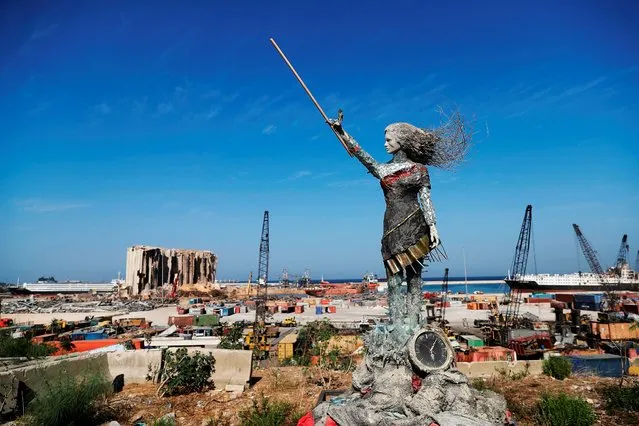
A statue of a woman made out of glass and rubble that resulted from the Beirut port mega explosion August 04, is placed opposite to the site of the blast in the Lebanese capital's harbour to mark the one year anniversary of the beginning of the anti-government protest movement across the country on October 20, 2020. Hundreds marched in Beirut on the weekend to mark the first anniversary of a non-sectarian protest movement that has rocked the political elite but has yet to achieve its goal of sweeping reform. (Photo by Joseph Eid/AFP Photo)

A statue of a woman made out of glass and rubble that resulted from the Beirut port mega explosion August 04, is placed opposite to the site of the blast in the Lebanese capital's harbour to mark the one year anniversary of the beginning of the anti-government protest movement across the country on October 20, 2020. Hundreds marched in Beirut on the weekend to mark the first anniversary of a non-sectarian protest movement that has rocked the political elite but has yet to achieve its goal of sweeping reform. (Photo by Joseph Eid/AFP Photo)
Details
24 Dec 2020 00:01:00
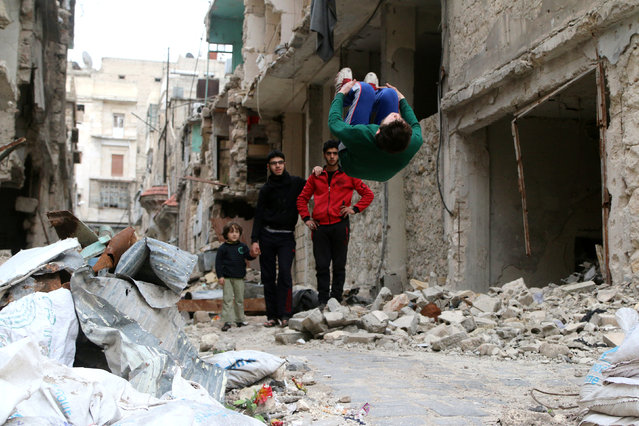
Gymnast Ahmad al-Sawas performs gymnastic moves near damaged buildings in the rebel-held Bustan al-Qasr neighbourhood of Aleppo, Syria March 26, 2016. As Syrian gymnast Ahmad al-Sawas watched his country fall apart, his Olympic dream collapsed too. The last national champion before the fighting began, he knew that supporting the anti-government side in the five-year-old civil war would prevent him from being selected for the Rio Games. “I chose to be an athlete who participates in the revolution”, said Ahmad, who trains where he can for two hours a day – be it on a mattress on a soccer field, in a local hall or somersaulting off a wall. (Photo by Abdalrhman Ismail/Reuters)

Gymnast Ahmad al-Sawas performs gymnastic moves near damaged buildings in the rebel-held Bustan al-Qasr neighbourhood of Aleppo, Syria March 26, 2016. As Syrian gymnast Ahmad al-Sawas watched his country fall apart, his Olympic dream collapsed too. The last national champion before the fighting began, he knew that supporting the anti-government side in the five-year-old civil war would prevent him from being selected for the Rio Games. (Photo by Abdalrhman Ismail/Reuters)
Details
05 Aug 2016 13:25:00
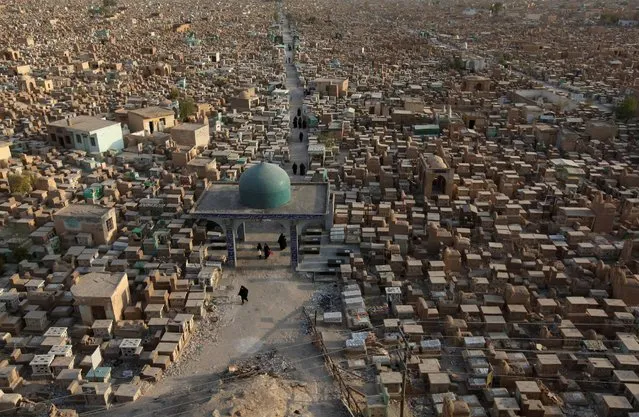
The Wadi al-Salam cemetery, Arabic for “Peace Valley”, is seen in Najaf, south of Baghdad, Iraq August 3, 2016. The world's largest cemetery, in Iraq's Shi'ite holy city of Najaf, is expanding at double its usual rate as Shi'ite militias bury their dead from the war against Islamic State. The Wadi al-Salam cemetery, Arabic for “Peace Valley” has a special place in the hearts of Shi'ite Muslims as it surrounds the Mausoleum of their first imam, Ali Bin Abi Talib, a cousin and son-in-law of Prophet Mohammad. (Photo by Alaa Al-Marjani/Reuters)

The Wadi al-Salam cemetery, Arabic for “Peace Valley”, is seen in Najaf, south of Baghdad, Iraq August 3, 2016. The world's largest cemetery, in Iraq's Shi'ite holy city of Najaf, is expanding at double its usual rate as Shi'ite militias bury their dead from the war against Islamic State. The Wadi al-Salam cemetery, Arabic for “Peace Valley” has a special place in the hearts of Shi'ite Muslims as it surrounds the Mausoleum of their first imam, Ali Bin Abi Talib, a cousin and son-in-law of Prophet Mohammad. (Photo by Alaa Al-Marjani/Reuters)
Details
24 Aug 2016 11:38:00
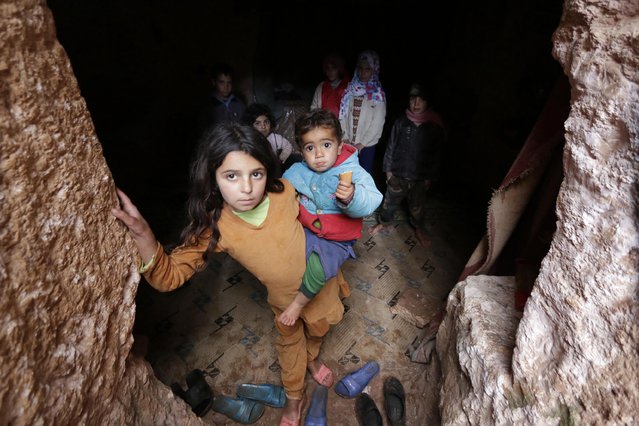
Mariam, a 9-year-old girl, carries her brother as she stands with other children at an underground ancient cemetery in Jabal al-Zawiya in the southern countryside of Idlib November 26, 2014. (Photo by Khalil Ashawi/Reuters)

Mariam, a 9-year-old girl, carries her brother as she stands with other children at an underground ancient cemetery in Jabal al-Zawiya in the southern countryside of Idlib November 26, 2014. Residents are using ancient caves and cemeteries as underground shelters to hide in during shelling from forces loyal to President Bashar al-Assad. Picture taken November 26, 2014. (Photo by Khalil Ashawi/Reuters)
Details
28 Nov 2014 11:51:00
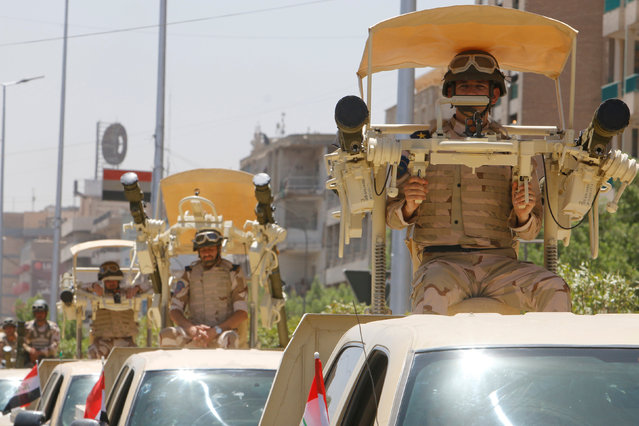
Iraqi security forces vehicles take part in a military parade in the streets of Baghdad, Iraq July 12, 2016. (Photo by Khalid al Mousily/Reuters)

Iraqi security forces vehicles take part in a military parade in the streets of Baghdad, Iraq July 12, 2016. Social media activists posted images of tanks, armored vehicles, cannons, soldiers, police officers, and PMF members in Saadoun Street. The photos spiked a rumor of military coup. Military and security advisor and expert Lt. Diyaa al-Wakil said that it is only normal for such rumors to spread since there were no prior announcements about the training. (Photo by Khalid al Mousily/Reuters)
Details
13 Jul 2016 13:47:00
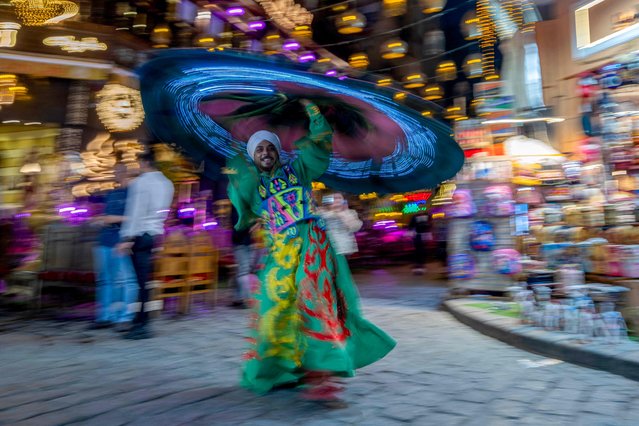
An Egyptian dancer performs the Tanoura outside a coffee shop at al-Muizz street in the old Islamic quarter of Cairo on August 29, 2024. (Photo by Khaled Desouki/AFP Photo)

An Egyptian dancer performs the Tanoura outside a coffee shop at al-Muizz street in the old Islamic quarter of Cairo on August 29, 2024. (Photo by Khaled Desouki/AFP Photo)
Details
14 Oct 2024 03:08:00
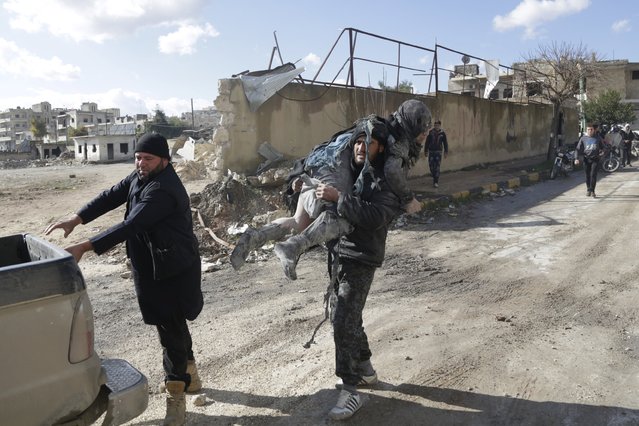
A man carries an injured woman in a site hit by what activists said were airstrikes carried out by the Russian air force in the rebel-controlled area of Maaret al-Numan town in Idlib province, Syria January 9, 2016. (Photo by Khalil Ashawi/Reuters)

A man carries an injured woman in a site hit by what activists said were airstrikes carried out by the Russian air force in the rebel-controlled area of Maaret al-Numan town in Idlib province, Syria January 9, 2016. At least 70 people died in what activists said where four vacuum bombs dropped by the Russian air force in the town of Maaret al-Numan; other air strikes where also carried out in the towns of Saraqib, Khan Sheikhoun and Maar Dabseh, in Idlib. (Photo by Khalil Ashawi/Reuters)
Details
10 Jan 2016 12:08:00