Loading...
Done
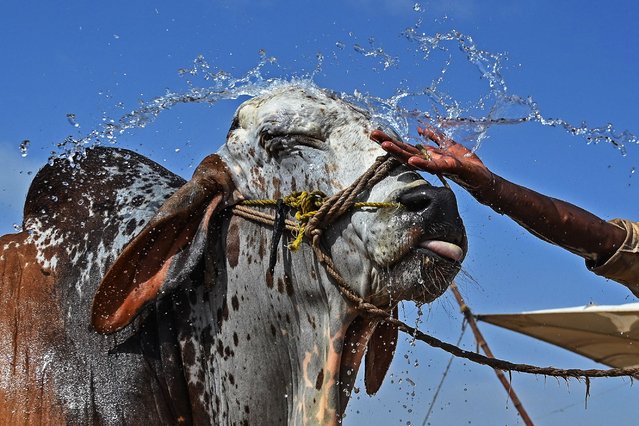
A livestock vendor gives bath to a bull at a cattle market ahead of the Muslim festival of Eid al-Adha, on the outskirts of Karachi on June 10, 2024. (Photo by Asif Hassan/AFP Photo)

A livestock vendor gives bath to a bull at a cattle market ahead of the Muslim festival of Eid al-Adha, on the outskirts of Karachi on June 10, 2024. (Photo by Asif Hassan/AFP Photo)
Details
27 Jun 2024 03:27:00
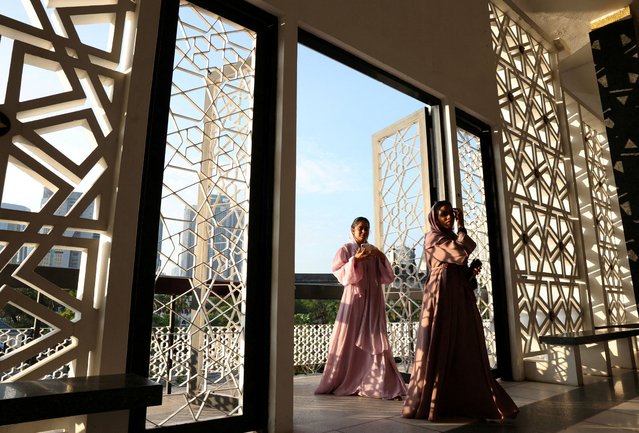
Muslims women walk to the prayer hall of a mosque for a mass prayer during Eid al-Adha celebrations at Kuala Lumpur, Malaysia, on June 17, 2024. (Photo by Hasnoor Hussain/Reuters)

Muslims women walk to the prayer hall of a mosque for a mass prayer during Eid al-Adha celebrations at Kuala Lumpur, Malaysia, on June 17, 2024. (Photo by Hasnoor Hussain/Reuters)
Details
11 Sep 2024 04:07:00
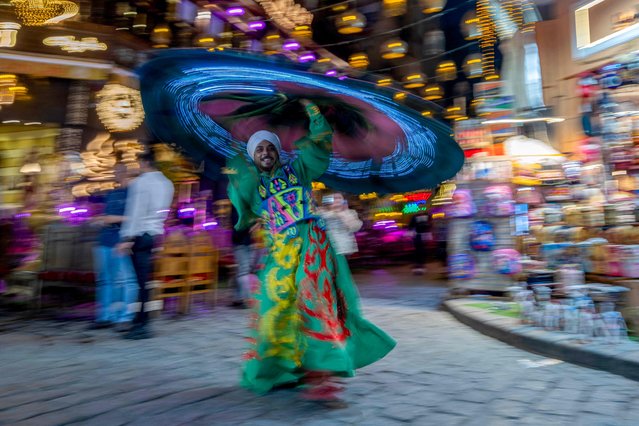
An Egyptian dancer performs the Tanoura outside a coffee shop at al-Muizz street in the old Islamic quarter of Cairo on August 29, 2024. (Photo by Khaled Desouki/AFP Photo)

An Egyptian dancer performs the Tanoura outside a coffee shop at al-Muizz street in the old Islamic quarter of Cairo on August 29, 2024. (Photo by Khaled Desouki/AFP Photo)
Details
14 Oct 2024 03:08:00
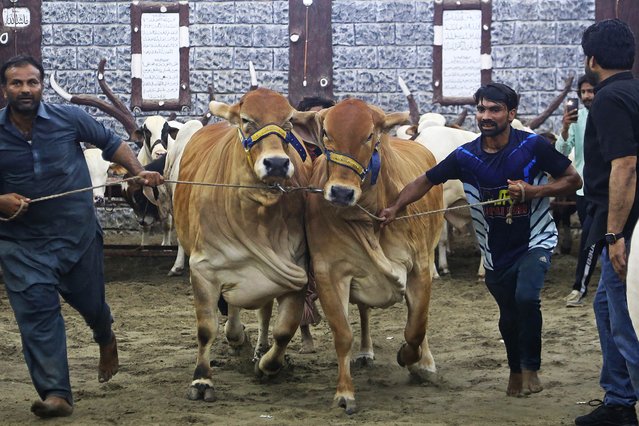
Livestock vendors displays their bulls to customers at a cattle market in Hyderabad, in Pakistan's Sindh province on May 20, 2025, ahead of the upcoming Muslim festival of Eid al-Adha. (Photo by Husnain Ali/AFP Photo)

Livestock vendors displays their bulls to customers at a cattle market in Hyderabad, in Pakistan's Sindh province on May 20, 2025, ahead of the upcoming Muslim festival of Eid al-Adha. (Photo by Husnain Ali/AFP Photo)
Details
20 Jun 2025 04:07:00
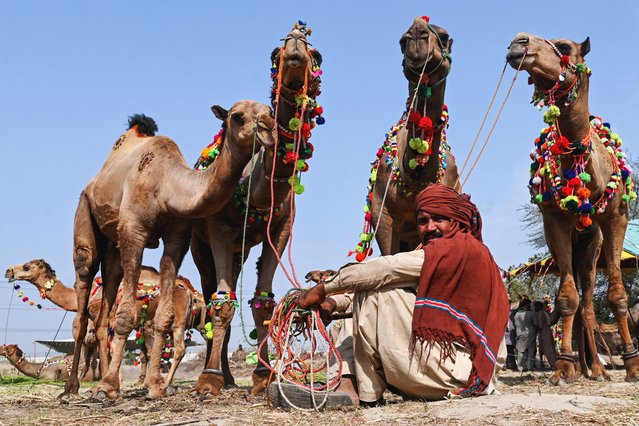
A herder sits amidst his camels at a cattle market in Lahore on June 3, 2025, ahead of the Muslim festival of Eid al-Adha. (Photo by Arif Ali/AFP Photo)

A herder sits amidst his camels at a cattle market in Lahore on June 3, 2025, ahead of the Muslim festival of Eid al-Adha. (Photo by Arif Ali/AFP Photo)
Details
25 Jul 2025 03:22:00
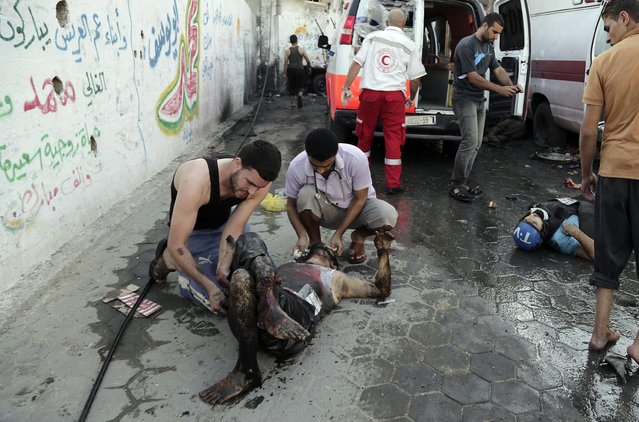
In this July 30, 2014 photo, neighbors help gravely injured Mohammed al-Selek, 39, wounded by an Israeli mortar strike as he lays next to the body of Palestinian journalist Rami Reyan who was killed, in the Shijaiyah neighborhood of the northern Gaza Strip. Al-Selek's life changed forever last July 30, when the shells slammed into his home killing all his three children, his father and six other relatives. (Photo by Adel Hana/AP Photo)

In this July 30, 2014 photo, neighbors help gravely injured Mohammed al-Selek, 39, wounded by an Israeli mortar strike as he lays next to the body of Palestinian journalist Rami Reyan who was killed, in the Shijaiyah neighborhood of the northern Gaza Strip. Al-Selek's life changed forever last July 30, when the shells slammed into his home killing all his three children, his father and six other relatives. A year later, al-Selek, who lost his leg during the airstrike, still struggles to recover and come to terms with his family's loss in the 50-day Israel-Hamas war. (Photo by Adel Hana/AP Photo)
Details
07 Jul 2015 11:28:00
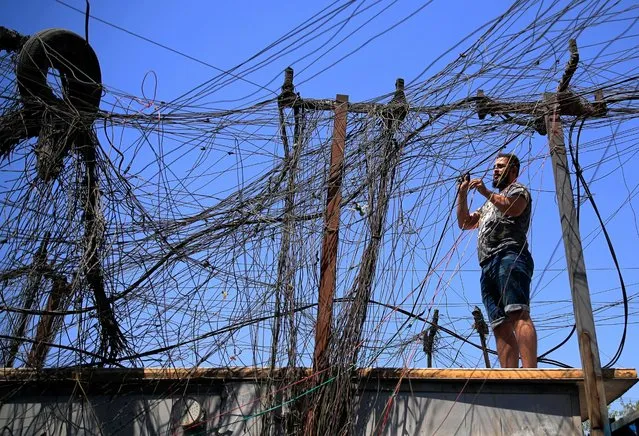
Muqtada Haider turns the switches to transfer electricity to private homes in Baghdad, Iraq, Friday, September 10, 2021. In Iraq, electricity is a potent symbol of endemic corruption, rooted in the country’s sectarian power-sharing system. This contributes to chronic electrical outages of up to 14 hours a day in a major oil-producing nation with plentiful energy resources. (Photo by Hadi Mizban/AP Photo)

Muqtada Haider turns the switches to transfer electricity to private homes in Baghdad, Iraq, Friday, September 10, 2021. In Iraq, electricity is a potent symbol of endemic corruption, rooted in the country’s sectarian power-sharing system. This contributes to chronic electrical outages of up to 14 hours a day in a major oil-producing nation with plentiful energy resources. (Photo by Hadi Mizban/AP Photo)
Details
29 Sep 2021 08:03:00
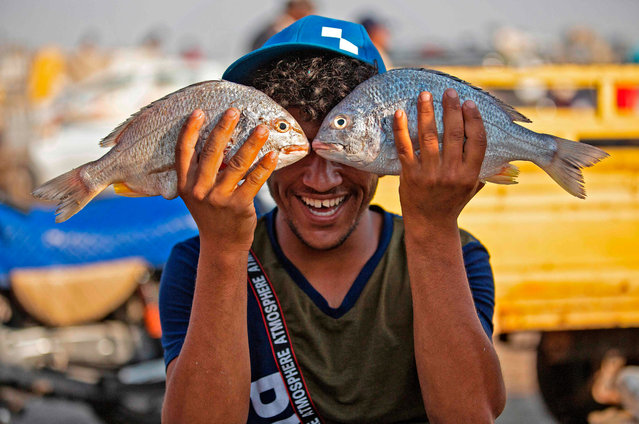
A youth poses while holding two fishes before his face in Iraq's southern port city of al-Faw, 90 kilometres south of Basra near the Shatt al-Arab and the Gulf, on May 18, 2020. In Iraq, a national lockdown to halt the COVID-19 coronavirus pandemic has found some unexpected fans: local businesses who no longer have to compete with Turkish, Iranian or Chinese imports. Those countries, as well as Saudi Arabia, Jordan and Kuwait, typically flood Iraqi markets with inexpensive products at prices local producers can't compete with. (Photo by Hussein Faleh/AFP Photo)

A youth poses while holding two fishes before his face in Iraq's southern port city of al-Faw, 90 kilometres south of Basra near the Shatt al-Arab and the Gulf, on May 18, 2020. In Iraq, a national lockdown to halt the COVID-19 coronavirus pandemic has found some unexpected fans: local businesses who no longer have to compete with Turkish, Iranian or Chinese imports. Those countries, as well as Saudi Arabia, Jordan and Kuwait, typically flood Iraqi markets with inexpensive products at prices local producers can't compete with. (Photo by Hussein Faleh/AFP Photo)
Details
02 Jul 2020 00:01:00