Loading...
Done


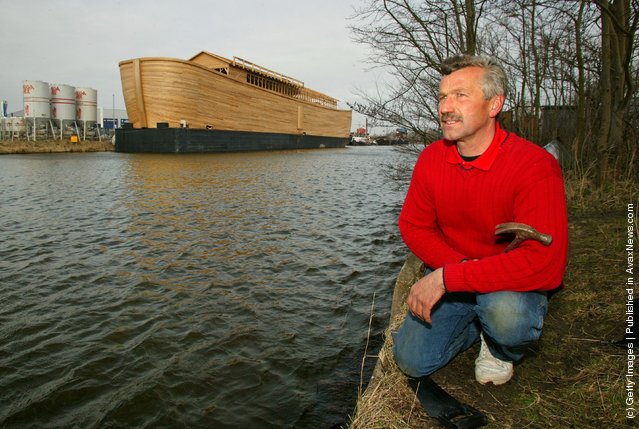
A 70-metre-long Noah's Ark replica constructed of steel and American cedar on March 31, 2005 in Schagen, Netherlands. (Photo by Michel Porro/Getty Images)
Details
29 May 2011 12:25:00
Steve Jobs Dies

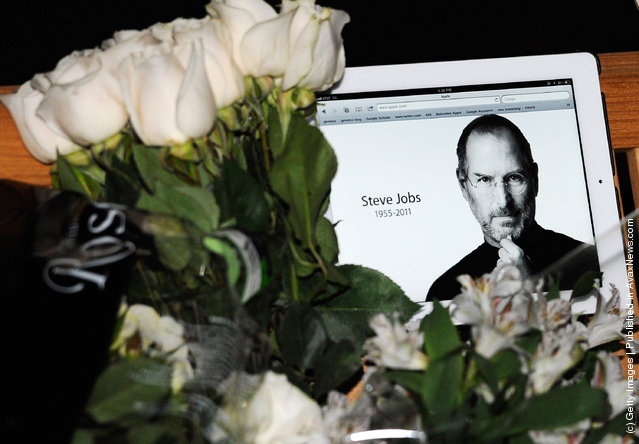
Flowers and an iPad showing a picture of Steve Jobs are placed at a makeshift memorial for Steve Jobs at the Apple headquarters on October 5, 2011 in Cupertino, California. Jobs, 56, passed away after a long battle with pancreatic cancer... (Photo by Kevork Djansezian/Getty Images)
Details
06 Oct 2011 07:08:00
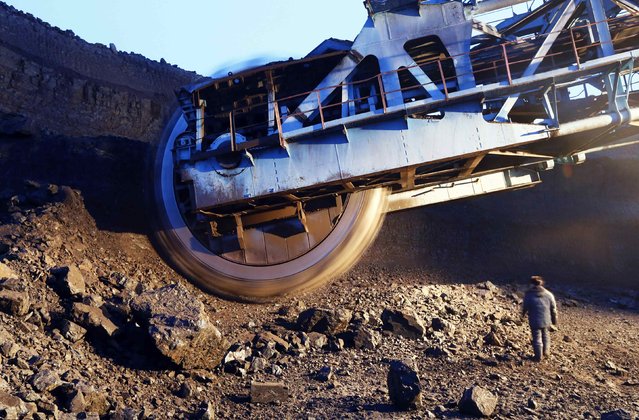
An employee walks near a rotary dredge which works on the coal face of the Borodinsky opencast colliery, near the Siberian town of Borodino, east of Krasnoyarsk, December 9, 2014. The Borodinsky colliery, 9 km (5.6 miles) long and more than 100 meters (328 feet) deep, annually produces more than 20 million tons of coal and is considered to be the biggest opencast coal mine in Russia, according to official representatives. (Photo by Ilya Naymushin/Reuters)

An employee walks near a rotary dredge which works on the coal face of the Borodinsky opencast colliery, near the Siberian town of Borodino, east of Krasnoyarsk, December 9, 2014. The Borodinsky colliery, 9 km (5.6 miles) long and more than 100 meters (328 feet) deep, annually produces more than 20 million tons of coal and is considered to be the biggest opencast coal mine in Russia, according to official representatives. (Photo by Ilya Naymushin/Reuters)
Details
11 Dec 2014 13:29:00
A devotee takes a holy bath in River Saali in Sankhu on the first day of Swasthani Brata Katha festival in Kathmandu January 5, 2015. During the month long festival, devotees recite one chapter of a Hindu tale daily from the 31-chapter sacred Swasthani Brata Katha book that is dedicated to God Madhavnarayan and Goddess Swasthani, alongside various other gods and goddess and the miraculous feats performed by them. (Photo by Navesh Chitrakar/Reuters)

A devotee takes a holy bath in River Saali in Sankhu on the first day of Swasthani Brata Katha festival in Kathmandu January 5, 2015. During the month long festival, devotees recite one chapter of a Hindu tale daily from the 31-chapter sacred Swasthani Brata Katha book that is dedicated to God Madhavnarayan and Goddess Swasthani, alongside various other gods and goddess and the miraculous feats performed by them. (Photo by Navesh Chitrakar/Reuters)
Details
06 Jan 2015 12:22:00
Black Nazarene devotees clamber on top of one another to to touch the cross on January 9, 2015 in Manila, Philippines. The Feast of the Black Nazarene culminates in a day long procession on January 9 as barefoot devotees march to see and touch the image of the Black Nazarene. (Photo by Dondi Tawatao/Getty Images)

Black Nazarene devotees clamber on top of one another to to touch the cross on January 9, 2015 in Manila, Philippines. The Feast of the Black Nazarene culminates in a day long procession on January 9 as barefoot devotees march to see and touch the image of the Black Nazarene. The Black Nazarene is a dark wood sculpture of Jesus brought to the Philippines in 1606 from Spain and considered miraculous by Filipino devotees. The event falls a week ahead of the visit of Pope Francis who will travel to Leyte and Manila during his visit to the Philippines from January 15–19. The visit is expected to attract crowds in the millions as Filipino Catholics flock to catch a glimpse of the leader of the Catholic Church. The Philippines is the only Catholic majority nation in Asia with around 90 percent of the population professing the faith. (Photo by Dondi Tawatao/Getty Images)
Details
11 Jan 2015 13:46:00
Devotees take a holy bath during the Swasthani Brata Katha festival in Kathmandu January 20, 2015. During the month-long festival, devotees recite one chapter of a Hindu tale daily from the 31-chapter sacred Swasthani Brata Katha book that is dedicated to God Madhavnarayan and Goddess Swasthani, alongside various other gods and goddesses and the miraculous feats performed by them. (Photo by Navesh Chitrakar/Reuters)

Devotees take a holy bath during the Swasthani Brata Katha festival in Kathmandu January 20, 2015. During the month-long festival, devotees recite one chapter of a Hindu tale daily from the 31-chapter sacred Swasthani Brata Katha book that is dedicated to God Madhavnarayan and Goddess Swasthani, alongside various other gods and goddesses and the miraculous feats performed by them. The devotees also go on pilgrimages to various temples, perform religious rituals, take a holy bath in the rivers and fast for a month, especially among women who believe fasting helps in their family's well-being or in getting them a good husband. (Photo by Navesh Chitrakar/Reuters)
Details
21 Jan 2015 13:50:00
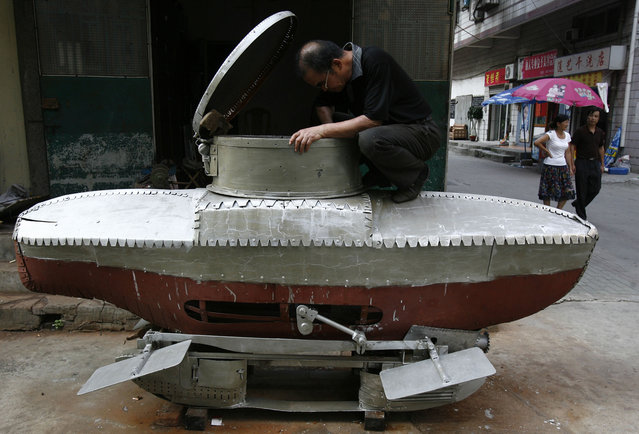
Li Yuming, a local farmer who is interested in scientific invention, works on his unfinished miniature submarine “Xiaguang V” on the outskirts of Wuhan, capital of central China's Hubei province August 24, 2007. “Xiaguang V”, which is 3-metre long, 1.2-metre in height, has a maximum diving depth of 20 metres, and can hold two adults and one child at the same time. The submarine will be used for tour after safety test, local media said. (Photo by Reuters/Stringer)

Li Yuming, a local farmer who is interested in scientific invention, works on his unfinished miniature submarine “Xiaguang V” on the outskirts of Wuhan, capital of central China's Hubei province August 24, 2007. “Xiaguang V”, which is 3-metre long, 1.2-metre in height, has a maximum diving depth of 20 metres, and can hold two adults and one child at the same time. The submarine will be used for tour after safety test, local media said. (Photo by Reuters/Stringer)
Details
09 Sep 2013 10:44:00
On August 31, 2012, a long filament of solar material that had been hovering in the sun's atmosphere, the corona, erupted out into space at 4:36 p.m. EDT. The coronal mass ejection, or CME, traveled at over 900 miles per second. The CME did not travel directly toward Earth, but did connect with Earth's magnetic environment, or magnetosphere, causing aurora to appear on the night of Monday, September 3. (Photo by NASA/GSFC/SDO)

On August 31, 2012, a long filament of solar material that had been hovering in the sun's atmosphere, the corona, erupted out into space at 4:36 p.m. EDT. The coronal mass ejection, or CME, traveled at over 900 miles per second. The CME did not travel directly toward Earth, but did connect with Earth's magnetic environment, or magnetosphere, causing aurora to appear on the night of Monday, September 3. (Photo by NASA/GSFC/SDO via The Atlantic)
Details
14 Sep 2012 09:01:00