Loading...
Done
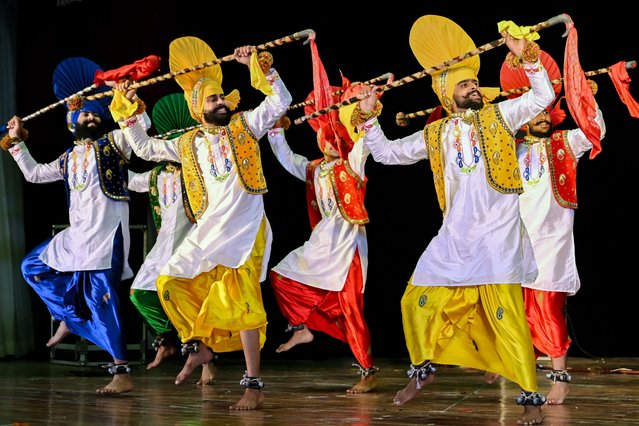
Students perform during a “Bhangra” folk dance competition at a university in Amritsar on October 29, 2024. (Photo by Narinder Nanu/AFP Photo)

Students perform during a “Bhangra” folk dance competition at a university in Amritsar on October 29, 2024. (Photo by Narinder Nanu/AFP Photo)
Details
19 Nov 2024 03:39:00
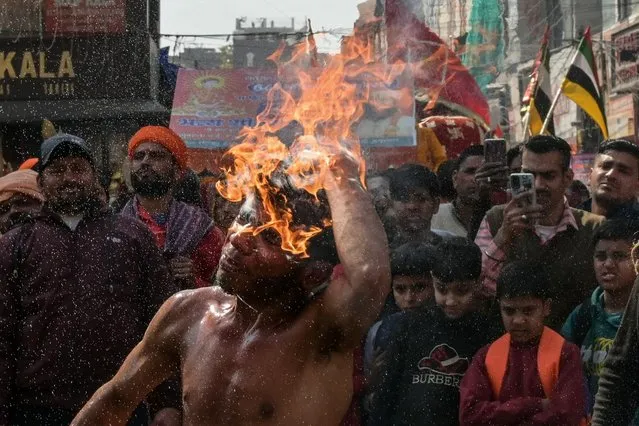
A dancer performs a fire breathing act during a procession to mark the 669th anniversary of the birth of Hindu Guru Bawa Lal Dayal in Amritsar on February 9, 2024. (Photo by Narinder Nanu/AFP Photo)

A dancer performs a fire breathing act during a procession to mark the 669th anniversary of the birth of Hindu Guru Bawa Lal Dayal in Amritsar on February 9, 2024. (Photo by Narinder Nanu/AFP Photo)
Details
22 Feb 2024 07:21:00
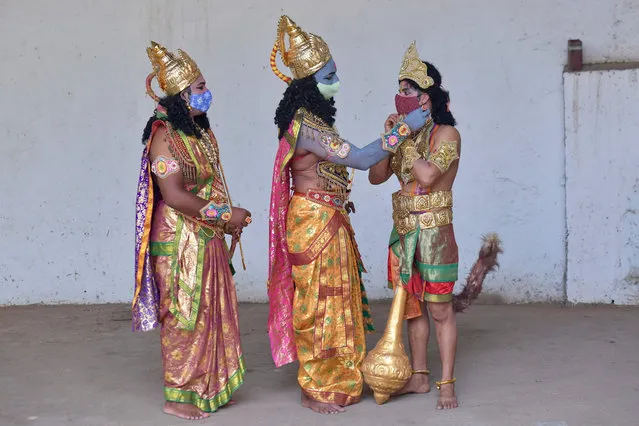
Men dressed as Hindu deities from the epic Ramayan wear face masks before going on a public awareness campaign against the spread of the Covid-19 coronavirus, on the occasion of the Hindu festival “Ram Navami”, in Bangalore on April 21, 2021. (Photo by Manjunath Kiran/AFP Photo)

Men dressed as Hindu deities from the epic Ramayan wear face masks before going on a public awareness campaign against the spread of the Covid-19 coronavirus, on the occasion of the Hindu festival “Ram Navami”, in Bangalore on April 21, 2021. (Photo by Manjunath Kiran/AFP Photo)
Details
27 Apr 2021 09:49:00
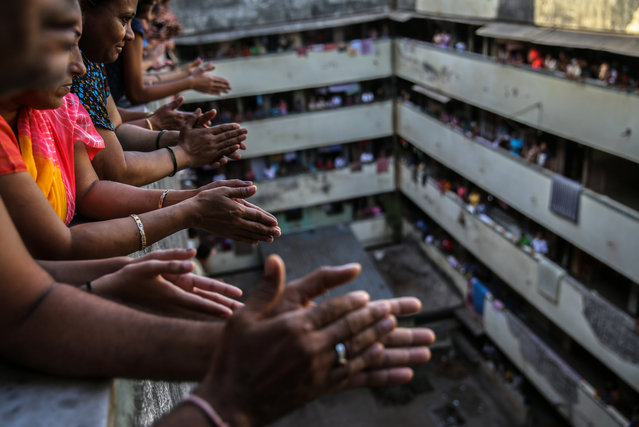
Indian people bang utensils and clap from the balconies of a residential building in Mumbai, India, 22 March 2020. Prime Minister Narendra Modi asks citizens to impose self-curfew to fight Coronavirus COVID-19 and also ask them to clap, bang the bells and utensils at 5pm Indian time to mark of respect and to thank the medical staff and others working 24 hours, during Covid-19 outbreak to keeping the Indians safe. (Photo by Divyakant Solanki/EPA/EFE)

Indian people bang utensils and clap from the balconies of a residential building in Mumbai, India, 22 March 2020. Prime Minister Narendra Modi asks citizens to impose self-curfew to fight Coronavirus COVID-19 and also ask them to clap, bang the bells and utensils at 5pm Indian time to mark of respect and to thank the medical staff and others working 24 hours, during Covid-19 outbreak to keeping the Indians safe. (Photo by Divyakant Solanki/EPA/EFE)
Details
29 Mar 2020 00:05:00
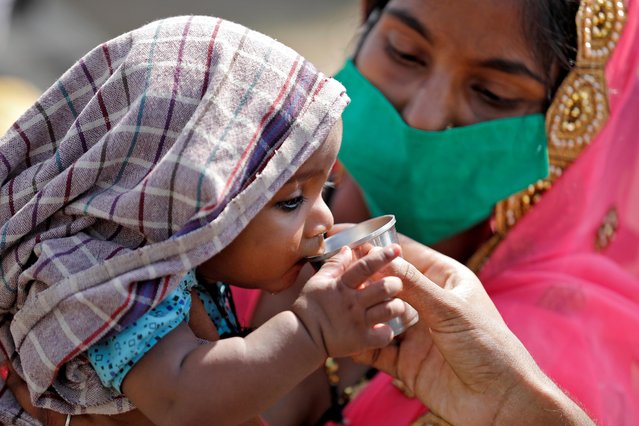
A child of a migrant worker drinks water as his mother holds him while waiting in a queue for transport to reach to a railway station to board a train to their home state of northern Uttar Pradesh, after a limited reopening of India's giant rail network following a nearly seven-week lockdown to slow the spreading of the coronavirus disease (COVID-19), in Ahmedabad, India, May 15, 2020. (Photo by Amit Dave/Reuters)

A child of a migrant worker drinks water as his mother holds him while waiting in a queue for transport to reach to a railway station to board a train to their home state of northern Uttar Pradesh, after a limited reopening of India's giant rail network following a nearly seven-week lockdown to slow the spreading of the coronavirus disease (COVID-19), in Ahmedabad, India, May 15, 2020. (Photo by Amit Dave/Reuters)
Details
23 May 2020 00:01:00
A watchmaker waits for customers during a government-imposed nationwide lockdown as a preventive measure against the COVID-19 coronavirus in Chennai on June 29, 2020. (Photo by Arun Sankar/AFP Photo)

A watchmaker waits for customers during a government-imposed nationwide lockdown as a preventive measure against the COVID-19 coronavirus in Chennai on June 29, 2020. (Photo by Arun Sankar/AFP Photo)
Details
07 Jul 2020 00:01:00
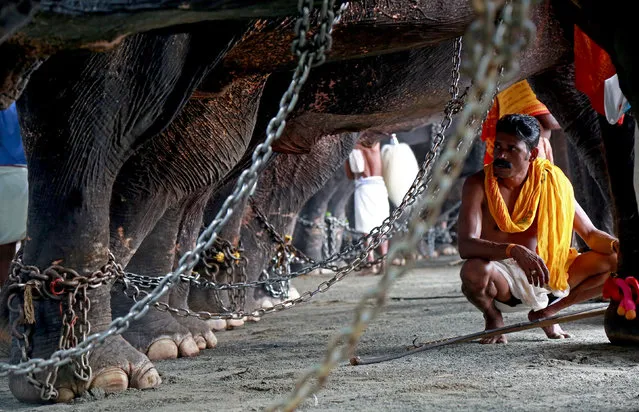
A mahout guards the elephants during the annual Vrischikolsavam festival, which features a colourful procession of decorated elephants along with drum concerts, at a temple in Kochi, India, November 18, 2017. (Photo by Sivaram V/Reuters)

A mahout guards the elephants during the annual Vrischikolsavam festival, which features a colourful procession of decorated elephants along with drum concerts, at a temple in Kochi, India, November 18, 2017. (Photo by Sivaram V/Reuters)
Details
22 Nov 2017 06:18:00
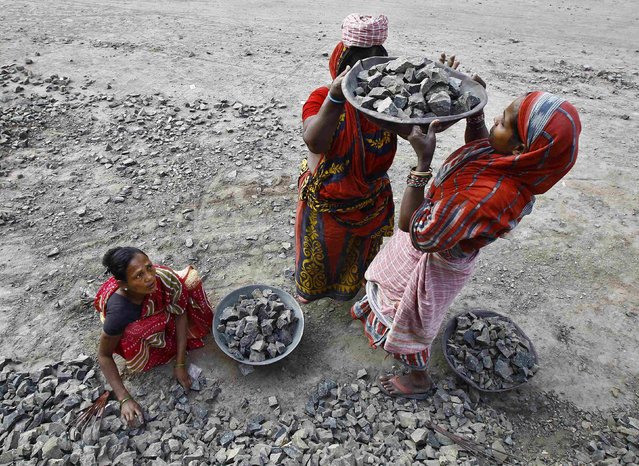
Women labourers work at the construction site of a road in Kolkata January 8, 2015. Across towns and cities in India, it is not uncommon to see women cleaning building sites, carrying bricks and or shoveling gravel - helping construct the infrastructure necessary for the country's economic and social development. (Photo by Rupak De Chowdhuri/Reuters)

Women labourers work at the construction site of a road in Kolkata January 8, 2015. Across towns and cities in India, it is not uncommon to see women cleaning building sites, carrying bricks and or shoveling gravel – helping construct the infrastructure necessary for the country's economic and social development. They help build roads, railway tracks, airports, and offices. They lay pipes for clean water supplies, cables for telecommunications, and dig the drains for sewage systems. But although women make up at least 20 percent of India's 40 million construction workers, they are less recognized than male workers with lower pay and often prone to safety hazards and sexual harassment. They are often unaware of their rights or scared to complain, say activists now trying to campaign for better treatment of women in the construction industry. (Photo by Rupak De Chowdhuri/Reuters)
Details
15 Jan 2015 13:47:00