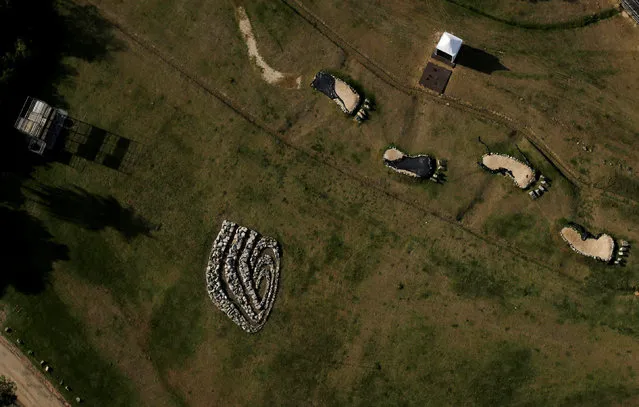
An aerial view shows the the Mountain Bike course at the X-Park at Deodoro Olympic Park ahead of the 2016 Rio Olympics in Rio de Janeiro, Brazil, July 16, 2016. (Photo by Ricardo Moraes/Reuters)
Christ the Redeemer is seen from the Vista Chinesa (Chinese View) during sunrise in Rio de Janeiro, Brazil, May 4, 2016. Rio de Janeiro is a marvel and a mess all at once. When it hosts the first ever Olympics in South America, starting Aug. 5, visitors will see a city whose stunning topography – stark, verdant mountains loom over packed and playful beaches – competes only with the drama of daily life here. (Photo by Ricardo Moraes/Reuters)
Women take a photo in the late afternoon sun during the Coachella Valley Music and Arts Festival on April 17, 2017 in Indio, California. (Photo by Carlo Allegri/Reuters)
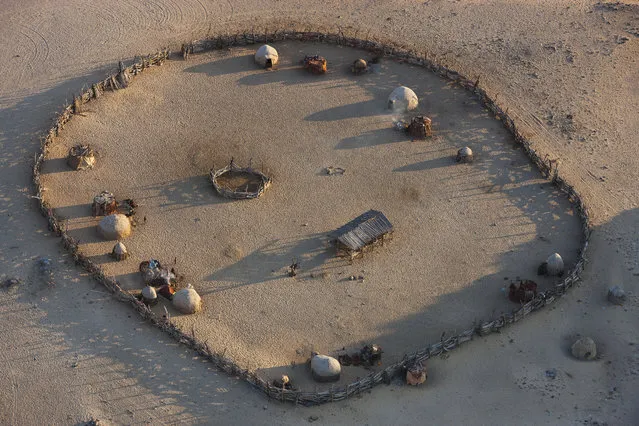
An aerial view of a livestock enclosure of the Himba people, in October, 2014, in the Namib Desert, Namibia. A photographer has captured a bird's eye view of the stunning Namib Desert from a paraglider. Theo Allofs travels the world taking stunning pictures of untouched landscapes from a unique perspective. Soaring 300 metres above ground, Theo shot the yellow sand dunes, dry red river beds and remote townships in Namibia. (Photo by Theo Allofs/Barcroft Media)
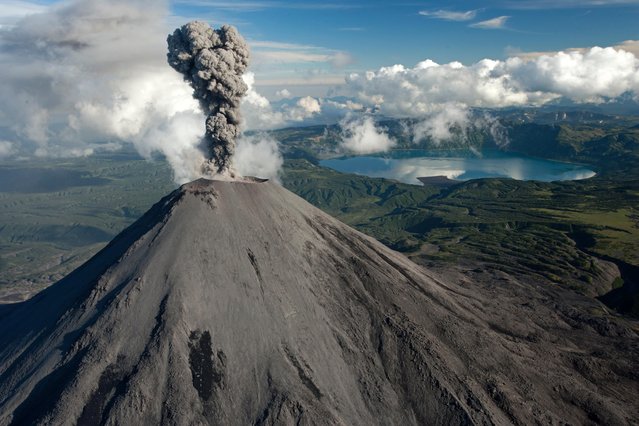
Since 2003, photographer Sergey Fomin has been shooting Russia’s most attractive natural, historical, and architectural objects from different aircrafts. Photo: “An Explosive Scene”. The 1,486-meter-high Karymskii Volcano in Kamchatka. (Photo by Sergey Fomin)
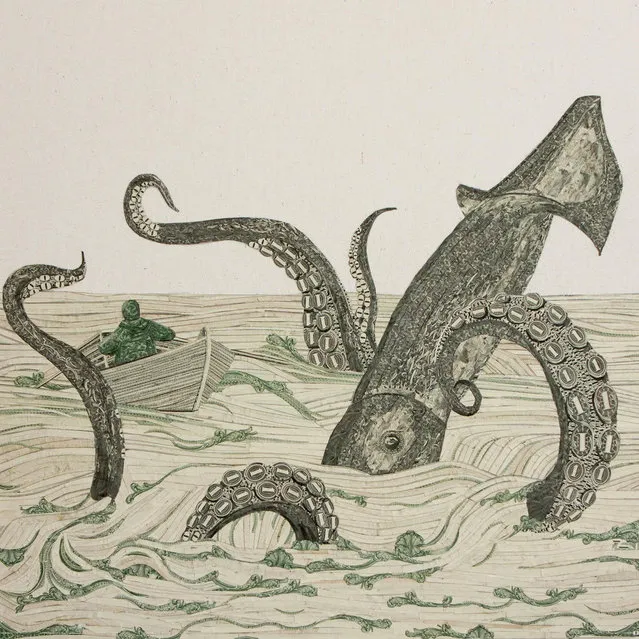
These amazing pieces of artwork from a series called “TaxCut” have been created entirely out of money. Chad Person an artist from California created these collages from hundreds of tiny pieces of American dollar bills. Photo: Kraken. (Photo by Chad Person/Caters News)
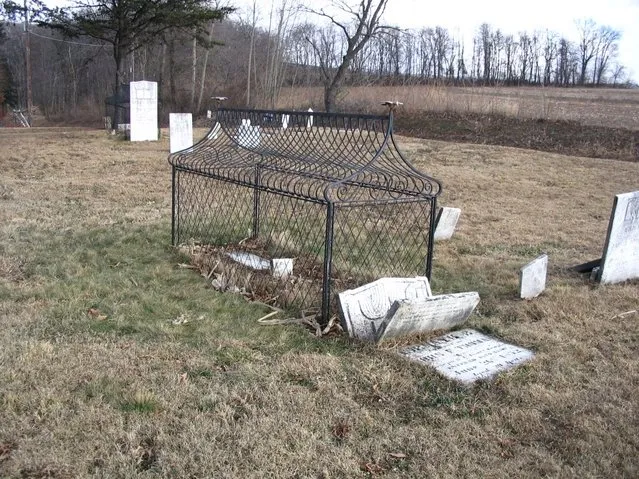
Mortsafes were contraptions designed to protect graves from disturbance. Resurrectionists had supplied the schools of anatomy in Scotland since the early 18th century. This was due to the necessity for medical students to learn anatomy by attending dissections of human subjects, which was frustrated by the very limited allowance of dead bodies – for example the corpses of executed criminals – granted by the government, which controlled the supply.